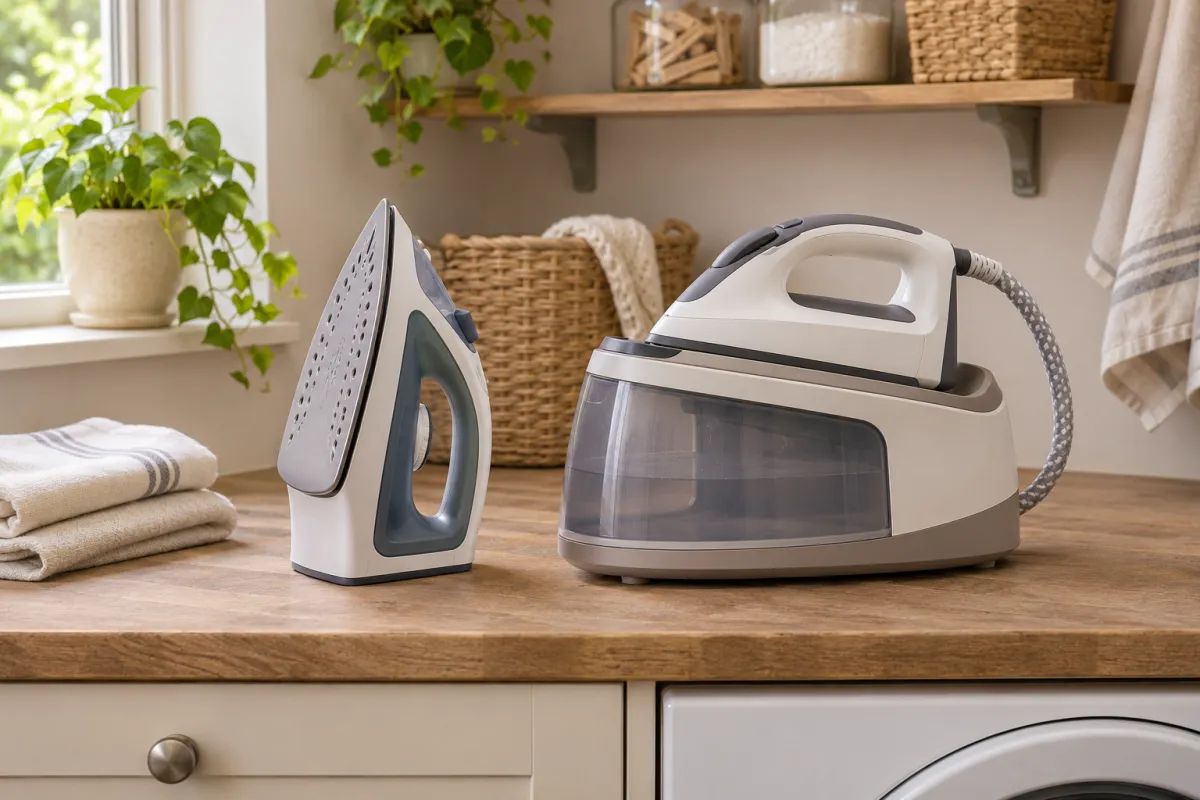
If you mostly iron a couple of shirts or tomorrow’s school uniform, a conventional steam iron is the easier choice. It takes up little cupboard space, and you can put it away once it has cooled. If your usual load is several shirts followed by a duvet cover, a steam generator earns a look. Its water tank sits in a separate base, so the iron itself can be lighter and the tank can hold more water.
A cordless iron suits a different job. The lead stays out of your way as you turn a shirt, but you have to return the iron to its powered dock to reheat.
Which type suits your ironing?
| Type | Best for | What to check |
|---|---|---|
| Corded steam iron | Short or mixed loads, with continuous heat from the mains. | The tank adds weight in your hand when full. Check the lead reaches your board and that you can refill the small tank easily. |
| Cordless steam iron | Shirts and quick touch-ups where you often stop to turn the fabric. | It still needs a socket for the dock. The dock must sit securely within reach, and you’ll pause to reheat during long passes. |
| Steam generator | Regular baskets or bedding where more sustained steam and fewer refills can help. | Usually costs more upfront. Allow room for the base and hose, and check whether the tank lifts out. |
Compare the models in our Best Irons guide once you know which routine sounds like yours.
Start with what’s usually in your basket
A couple of shirts or a uniform
A basic corded model like the Russell Hobbs Supreme Steam 23061 makes sense for lighter clothes. It’s worth moving up to a stronger conventional iron if thick cotton or denim regularly needs several passes. If it’s the trailing lead you dislike, consider cordless. Returning the iron to its dock while you turn a sleeve is easier to work into your routine than stopping partway down a sheet.
A mixed pile with the odd sheet
If you want the freedom to switch as you go, the Tower CeraGlide T22008 can be used cordless for collars and cuffs or plugged in for longer passes. If you spend most of the time on larger items, a corded iron lets you keep going without returning to a dock. Judge the weight with water in the iron, especially if you lift it repeatedly to reposition clothes.
A weekly pile of bedding, linen and shirts
A separate tank is most useful if you regularly stop to refill or find a full iron tiring to lift. A generator that maintains a stronger flow of steam can also help with stubborn creases in heavier cotton and linen. Compare the extra cost with how often you press those fabrics. Check both weights before you buy. The Philips PerfectCare 6000 PSG6026/20 has a 1.18 kg iron, but the iron and base weigh 3.4 kg together before you add water. If you carry the whole set from a cupboard each time, a smaller base and a tank you can lift out for refilling may matter more than the lightest iron.
Check the controls too. The Tefal Express Essential SV6115G0 lets you choose heat and steam yourself and has a fixed tank. The Philips PerfectCare 6000 PSG6026/20 uses one temperature setting for ironable fabrics and has a tank you can take to the sink.
What you get for paying more
Compare continuous steam if your main frustration is a pile of stubborn creases. The figure in grams per minute describes the regular flow. A steam boost is a short burst for a difficult spot. The Tefal Express Essential SV6115G0, for example, is rated at up to 120 g/min of continuous steam. Treat figures like that as a way to compare specifications. How easily a crease comes out also depends on the fabric, the heat it can take and how you use the iron.
Look at what actually slows you down. If it’s turning a shirt or wrestling with the lead, a bigger tank won’t solve it. If the tank runs dry halfway through a duvet cover, extra capacity can make the job less stop-start. Check how you refill before buying. With a fixed tank you bring water to the base. With a lift-out tank you can refill it at the sink while the base stays beside the board.
Make room for the dock or generator base
Keep your current board if the pressing surface is firm and you can set the iron down safely. A cordless dock needs a steady spot within reach. A generator base needs enough room for its full footprint and hose. Measure the space you have with the board open and the plug in reach. If the base would take up the wide end where you lay out shirts or sheets, put it on a suitable separate surface.
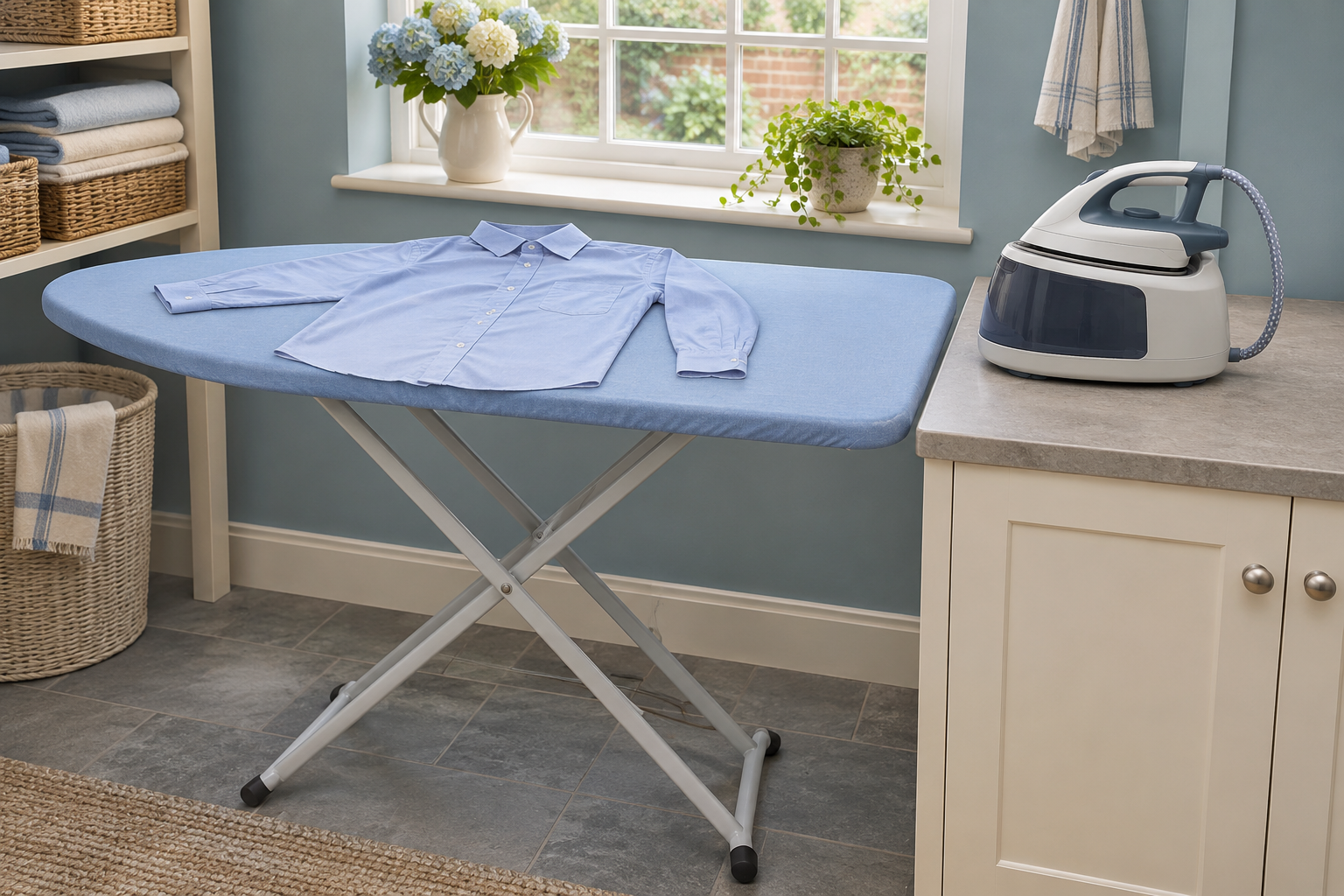
A stable, heat-resistant surface beside the board gives the generator base somewhere to sit and leaves room to spread out a shirt. Credit: Product Inspector
For a board with a generator tray, check the tray’s inside dimensions and its load limit against the unit with a full tank. Make sure all feet can rest flat. The Philips PerfectCare 6000 PSG6026/20 measures 36.8 × 16.8 cm overall, so its footprint is within a 40 × 22 cm tray. You still need to check the filled weight and how it sits before using the tray. Try the layout before you replace an otherwise good board.
Measure the cupboard as well. Allow room for the hose or lead, and check how you’ll carry the unit. A light iron in your hand can still come with a heavy base. Check the manual for cooling and storage before you wind up a lead or pack the appliance away.
Check how you’ll handle limescale
Check the exact model’s cleaning routine before you buy, especially if you live in a hard-water area. Look for how you’ll know it needs cleaning, where you’ll empty it and whether it comes with a cleaning container. The Philips PerfectCare 6000 PSG6026/20 uses a cleaning cycle with its supplied container. Other generators use a drain knob, which can mean waiting for the unit to cool before you can empty it. Check the instructions for the model you’re considering.
Follow the manufacturer’s instructions on the water to use and the cleaning routine.
Buying second-hand or checking an iron you own? The UK recall covers some Philips steam generators with model numbers starting GC96 or PSG8, including affected batches of the PerfectCare Elite Plus GC9682/86. Check the model and batch code underneath the appliance against Philips’ recall instructions. If yours is affected, stop using it and unplug it.
Which iron is worth buying?
Check the garment care label before choosing a heat or steam setting. A handheld garment steamer is handy for relaxing creases on clothes on a hanger. If you want a crisp collar or a sharp crease, an iron and board give you a flat surface to press against.
Buy for the ironing you actually do each week. A corded iron is the straightforward choice for a small or mixed pile. Go cordless if the lead gets in your way and you can reheat while turning clothes. Pay extra for a generator if you regularly press heavy fabrics or stop to refill, and you have somewhere to put the base.
Sources and checks
- Tefal Express Essential SV6115G0 specifications give the continuous steam rating and tank details.
- Philips PerfectCare 6000 PSG6026/20 specifications give the iron and system weights and the dimensions to compare with your board and storage space.
- Philips descaling instructions show the cleaning-container and drain-knob routines and which models use them.
Before buying, check the exact model’s dimensions, care instructions, warranty and current price.