A dryer can look like a good deal until you work out where the water from each load will go. In a flat without an outside vent, that can settle one part of the decision straight away. If you already have a vent, how often you dry clothes helps decide whether to reuse it or pay more upfront for a heat pump.
How the three types compare
| Dryer type | Where the moisture goes | When it makes sense |
|---|---|---|
| Heat pump | Into a tank, or a suitable drain on compatible models. | Regular drying. It reuses heat and usually uses less electricity. Compare the upfront price and full-load cycle time. |
| Conventional condenser | Into a tank, or a suitable drain on compatible models. | Occasional drying without an outside vent, especially if the purchase price is lower. Frequent loads can narrow the saving. |
| Vented | Outdoors as damp air through an exhaust hose. | A lower-cost replacement where a suitable vent is already in place. Allow room for the hose and check the cost of regular loads. |
A heat pump is also a type of condenser. Here, “conventional condenser” means the kind that heats air with an electric element. Both collect water from the load, but a heat pump reuses heat as it dries.
When lower running costs are worth paying for
To compare how much electricity dryers use, look for kilowatt-hours (kWh) for the same programme and load. You may see older and newer energy labels when comparing tumble dryers in Great Britain. Older labels give a weighted yearly figure based on a mix of full and partial loads. The newer format gives a figure per 100 Eco cycles. Compare like with like, or find comparable cycle figures on the product information sheets. The letters alone can give the wrong impression when the labels use different scales.
The 8 kg AEG 5000 TXH508A4R lists 1.93 kWh and 178 minutes for a full standard cotton cycle. At an illustrative 26p per kWh, that is about 50p. A dryer using 4 kWh for an equivalent load would cost £1.04. At 150 such loads a year, the difference would be about £81. The 4 kWh figure is an example, and your actual cost depends on the programme, how wet the washing is and the unit rate on your bill.
If you dry a couple of loads a month, a lower purchase price may matter more. If the dryer is on most days, compare the difference in running costs with the price gap and check whether the full cotton cycle fits your routine.
Check the room and the loads you dry
- Vent or drain. A vented dryer needs a suitable exhaust route outdoors. With a condenser or heat pump, check where the tank comes out and whether you can lift it comfortably when full. If you want to drain it directly, check that the model supports it and that your waste connection fits the installation instructions.
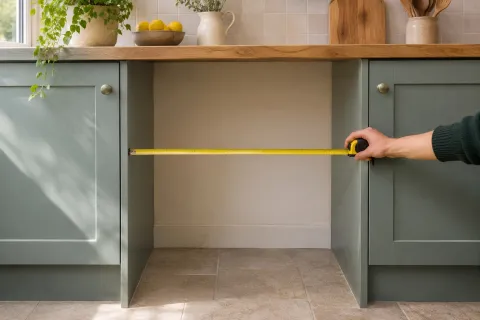
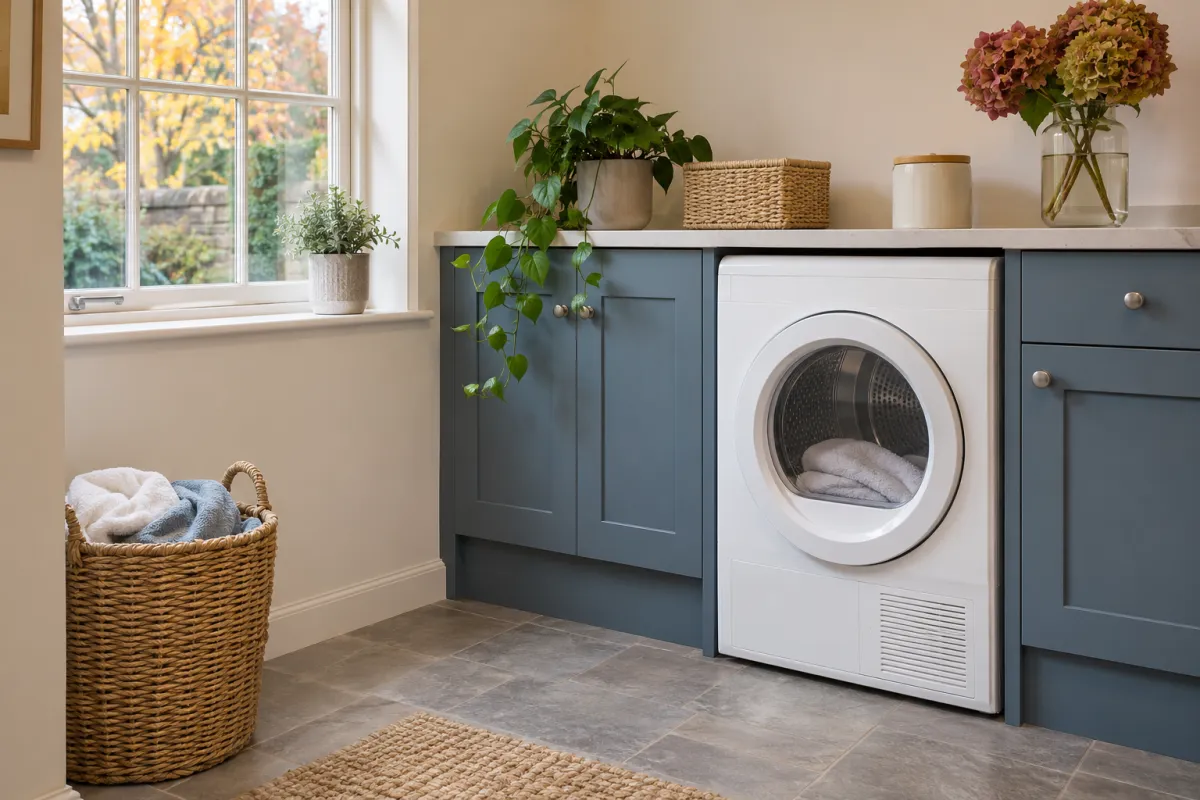
- Room temperature and airflow. A garage or shed can be colder than the model’s permitted operating range. Check the manual for the temperatures and clearances it needs. A machine that fits behind a matching kitchen door must be designed for that installation. Built-in and freestanding describe the fit, independently of how the machine dries.
- Space in front and behind. Allow for the door swing, the basket you’ll use and any protruding hoses. For stacking, check the exact washer and dryer are compatible and use the manufacturer’s specified kit.
- The programme’s own load limit. The headline kilogram rating usually describes cotton. Synthetics and bedding may have smaller limits, and a bulky duvet needs room to turn. The same principle applies when you’re deciding what size washing machine you need.
Make sure it is easy to look after
Check the garment labels and clean the lint filter after each load. Keep the vents clear and let the cool-down stage finish. Check the manual for the electrical requirements and use a suitable wall socket. If the dryer collects water in a tank, check how often you’ll have to empty it. The manual will tell you which filters or parts of the condenser you can clean and how to reach them. That’s worth checking in advance if the machine will be low under a worktop.
For regular laundry, a heat pump is usually the first type worth pricing up. A conventional condenser can make sense for occasional loads when an outdoor exhaust is impractical. If you already have a suitable vent and use the dryer sparingly, a lower-priced vented replacement may be all you need.
Sources and checks
- GOV.UK guidance on tumble dryer energy labels explains the label formats you may see when shopping in Great Britain.
- AEG’s TXH508A4R manual gives energy use and cycle times for full and partial cotton loads in the product information sheet.
- London Fire Brigade’s white goods advice covers dryer filters, safe use and product recalls.