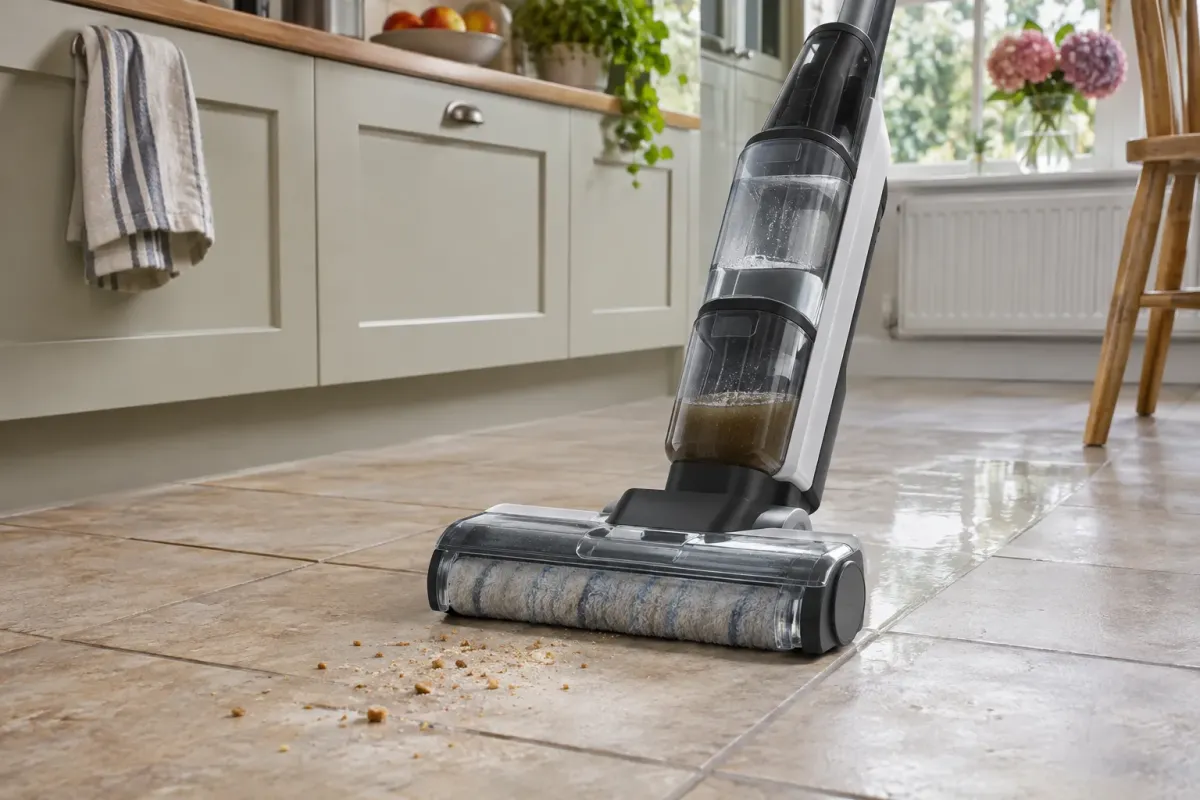
A trail of crumbs and a sticky patch need different kinds of cleaning. A steam mop uses heat and a pad or roller to loosen and collect dirt. A vacuum mop washes the floor while collecting suitable debris and dirty water. That difference matters more than which machine promises the most impressive clean.
For regular mixed wet and dry mess on suitable hard floors, start with a vacuum mop. For steam cleaning after loose dirt has been removed, consider a steam mop. Check your floor's care instructions first: a floor that tolerates damp mopping does not automatically tolerate steam.
Steam mop or vacuum mop at a glance
This comparison describes a conventional pad-based steam mop and a washing vacuum mop. Machines that combine functions need a closer look.
| Your cleaning job | Steam mop | Vacuum mop |
|---|---|---|
| Crumbs with sticky marks | Remove loose debris first, then steam-clean. | Can collect suitable debris while washing; pickup limits vary. |
| Where the dirt goes | Onto the cleaning pad, or into the roller system on some models. | Into a dirty-water tank, with solids caught in the tank or separator. |
| Floor permission | Both floor and machine instructions must permit steam. | Both must permit the machine's wet-cleaning method. |
| After cleaning | Cool the machine, remove and wash the pad; follow water-system care. | Empty and rinse the tank, clear debris, and clean and dry the roller and filters as instructed. |
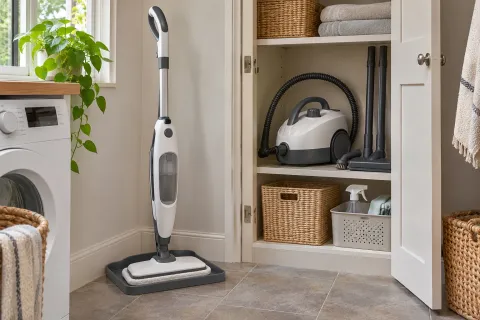
| Power and storage | Many use a cable and need somewhere safe to cool. | Check corded or battery power, plus room for the tray or dock. |
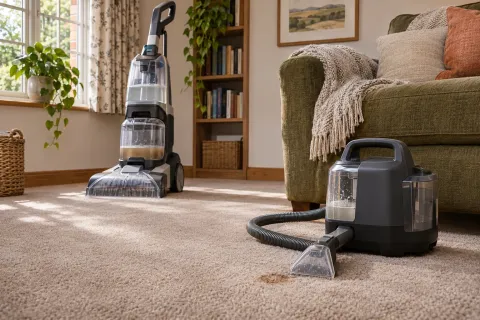
| Carpets and sofas | A carpet attachment may let the mop freshen suitable carpet; it does not wash carpet and suck the dirty water back out. | Most floor washers need a separate dry vacuum for these jobs; check any specific extra mode. |
For machines that fit these routines, compare vacuum mops for washing and pickup, or steam mops for steam-permitted floors.
Start with the mess you clean most often
Crumbs, muddy footprints and small spills
A vacuum mop makes most sense when you repeatedly have loose dirt and washable marks in the same area: beside the dining table, across a permitted kitchen floor or inside the back door. Collecting debris and washing together can save a separate pass with a vacuum.
That does not mean every mess can go through it. Remove sharp pieces, oversized debris and anything the instructions exclude. A wet floor washer is not permission to collect hazardous liquids or tackle an unlimited spill. Check what it can pick up, rather than judging it by a video of cereal disappearing.
When comparing vacuum mops, check washing, edge reach, separate dry-vacuum modes and the cleaning required afterwards. Those differences can matter as much as the first pass across the floor.
Regular steaming of an already cleared floor
A conventional steam mop suits someone who is happy to vacuum or sweep first and then clean a compatible floor with steam. It avoids a dirty-water tank, although the pad still needs changing and washing. A dirty pad does not become clean simply because the machine makes steam.
There is no useful universal winner for dried-on marks. Heat, roller action, water delivery, the floor surface and the particular stain all affect the result. Compare exact machines and their limitations; do not assume steam always cleans better or that washing always leaves the floor drier.
Check the floor before choosing the machine
“Sealed hard floors” is a starting description, not blanket permission. Identify the floor's brand and range where possible, then check its cleaning instructions alongside the appliance manual. Pay attention to joints, damaged finishes and limits on heat, moisture and cleaning solution.
Wood, laminate and vinyl are not single materials with one care rule. Some ranges permit a particular steam-cleaning method; others do not. Water resistance alone does not settle the question. If the floor's instructions rule out steam, a steam mop is the wrong purchase even if the cleaner lists that general floor type.
A vacuum mop also needs permission for wet machine cleaning. Do not substitute its water setting for the floor maker's advice, or assume that a low-water mode makes it suitable for an otherwise excluded floor. If you cannot establish the floor's requirements, use its recommended cleaning method while you check.
The clean is not finished when the floor is done
Think about what happens after putting the machine down. With a steam mop, that means letting it cool safely, removing the pad and following its washing instructions. Keep hot or wet pads away from floors that could be marked, and follow the manual's water and limescale-care directions.
With a vacuum mop, the floor dirt has moved into the machine. A self-cleaning cycle helps rinse the roller; it does not dispose of the dirty tank's contents or remove every trapped hair. Empty and clean the tank, clear the separator and head, and dry removable parts as instructed. A heated drying dock can help with the roller but does not take over those jobs.
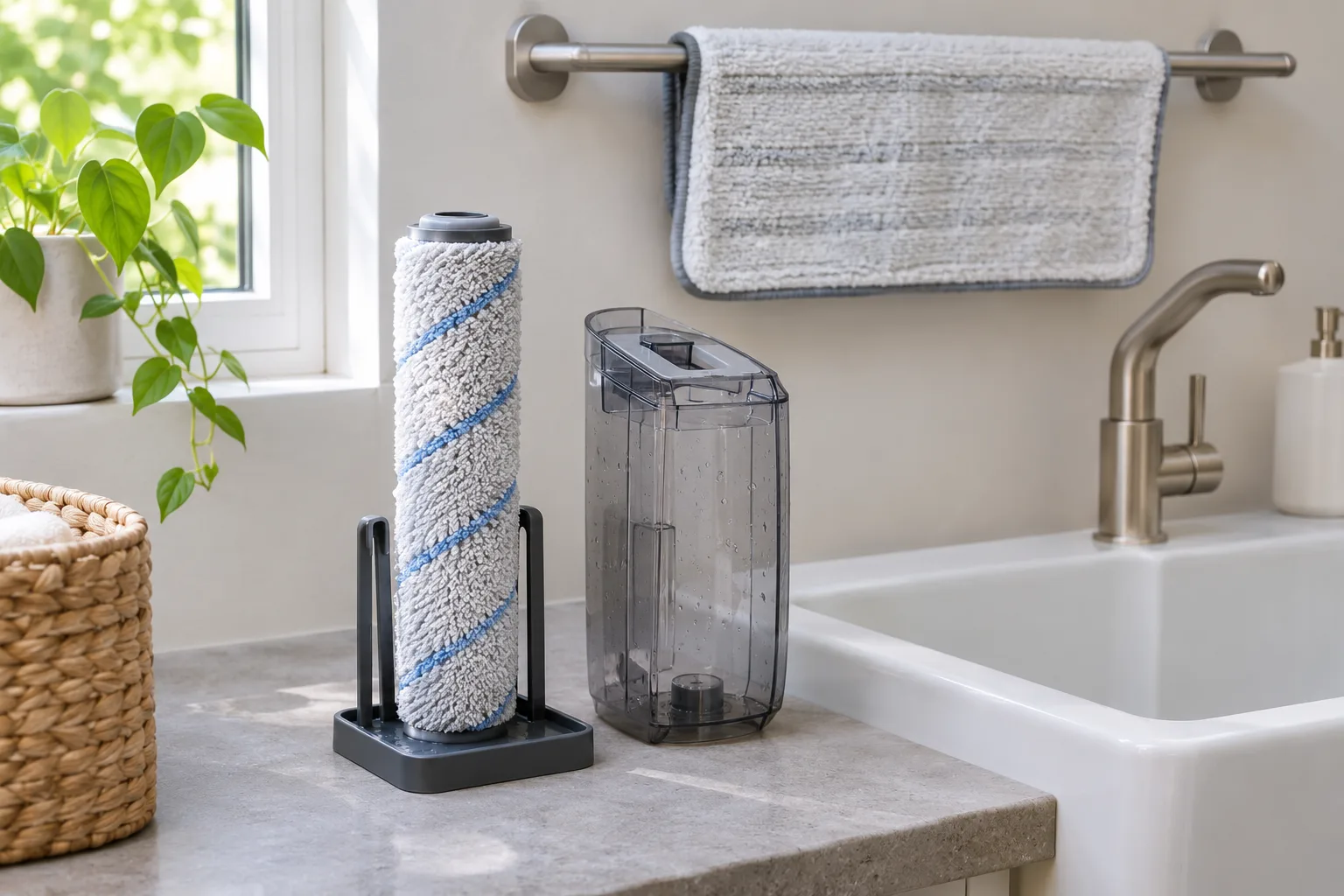 Tank and roller care continues after the floor is clean; leave parts to dry as the instructions require. Credit: Product Inspector.
Compare routines, not just cycle names. Can you remove the roller easily? Where will it dry? Can you rinse the tank without wrestling with its lid? A machine that saves a floor-cleaning pass may still be a poor fit if you dislike handling wet dirt afterwards.
Allow for refills, replacements and a parking place
The purchase price is only part of the commitment. Steam mops need washable pads or rollers and, on some designs, water-treatment parts. Vacuum mops may need the specified cleaning solution, replacement rollers and filters. Check exact compatibility and replacement availability before buying; products from the same brand are not necessarily interchangeable.
Use only the water and additives allowed by the machine's instructions. Ordinary household detergent is not a safe default for a floor washer, and a steam mop's tank should not be treated as a place to add fragrance or floor cleaner. The correct choice also has to suit the floor.
Measure the stored machine with its tray or dock, including the space needed to remove tanks. A cordless washer needs a practical charging position. A corded cleaner needs a useful socket route and cable storage. Check carrying weight with water aboard, especially if you plan to clean on more than one floor.
Watch for machines that cross the categories
The names are less tidy than the comparison suggests. Some steam cleaners collect debris, while some floor washers add steam. The Shark SteamPickUp SD200UK uses a rotating roller to collect modest debris while steaming. That does not make every steam mop a debris collector, or give it the same system for sucking up dirty water as a washing vacuum mop.
Likewise, a “vacuum-only” mode on a floor washer needs checking for its permitted surfaces and uses. It is not automatic proof that the machine replaces a dry vacuum on stairs, upholstery and carpets. Keep a suitable vacuum for the jobs the washer cannot do.
If you want steam for taps, grout or other permitted detail jobs as well as floors, the separate steam mop vs cylinder steam cleaner comparison explains tools and reach. That is a different decision from whether you want to wash and collect floor mess together.
Which would fit your routine?
- Choose a vacuum mop when suitable hard floors regularly need both debris pickup and washing, and you will clean the tank and roller after use.
- Choose a steam mop when your floors permit steam, you already remove loose dirt separately and you prefer looking after pads to handling a dirty-water tank.
- Keep your existing setup if the floor rules out both methods, most of the home is carpeted, or the extra machine would save little effort.
Start with the mess and maintenance you actually face, then check the floor area, carrying and storage you have. You do not need one of each to clean a hard floor well.
Sources and checks
- Tineco FLOOR ONE S5 support: check debris pickup, carpet restrictions, tank warnings and filter drying for this floor washer.
- Quick-Step laminate care: find cleaning guidance for the flooring range, rather than relying on a general “hard floor” claim.