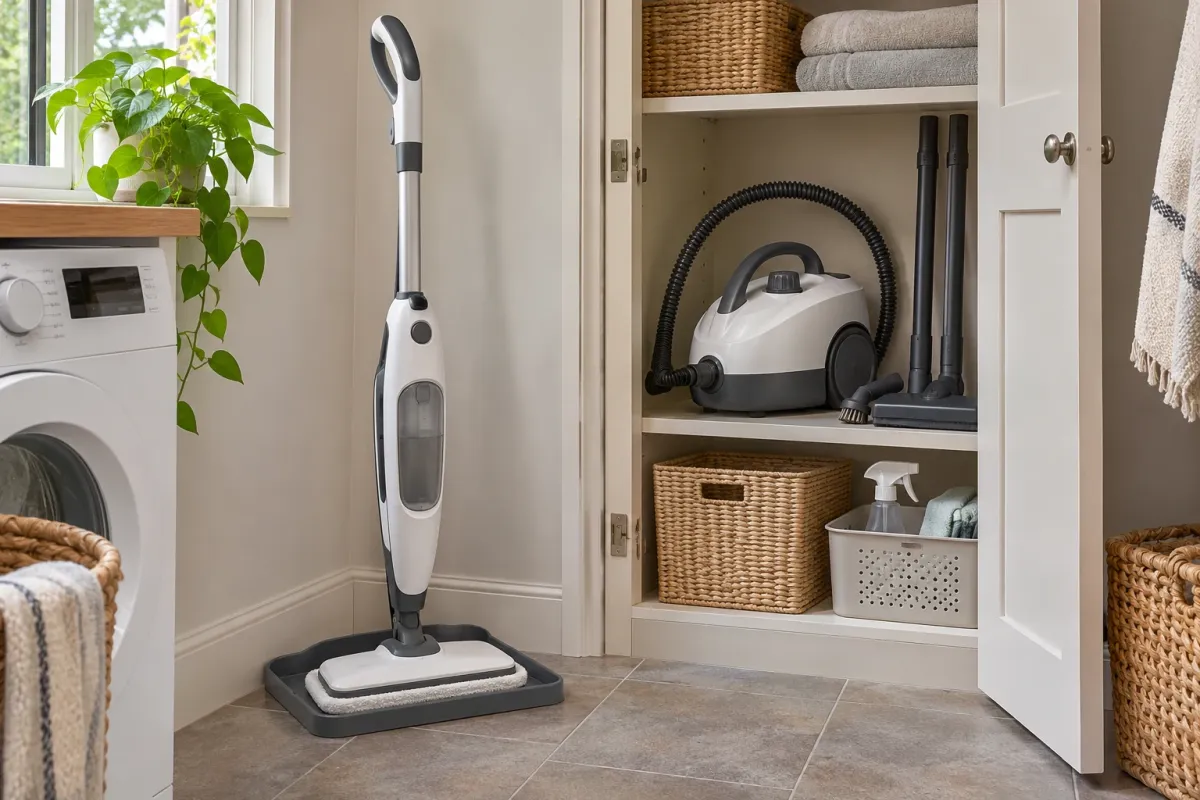
A steam mop is usually the more convenient choice for regular hard-floor cleaning. A cylinder steam cleaner makes more sense when you also want to work around taps, tiled walls and awkward corners, with the main body resting on the floor. Before choosing either, check that the surfaces you want to clean can take steam.
A mop is itself a steam cleaner. The useful distinction is between an upright you push across the floor and a separate body connected to a hose. Some upright mops also detach into handheld cleaners, so you do not always need a cylinder to clean above floor level.
Steam mop or cylinder: the main differences
| What matters to you? | Steam mop | Cylinder steam cleaner |
|---|---|---|
| Regular floor cleaning | One upright appliance to move around; a good starting point for frequent floor-only jobs. | A floorhead connects to the hose and tubes; you also need room to move the body. |
| Taps, tiles and detail work | A floor-only mop cannot do these jobs. Look for a detachable handheld and the right tools. | Usually the stronger reason to choose one: a hose and small tools reach beyond the floor. |
| Weight in your hand | You steer the upright; after conversion, you may need to hold the handheld body too. | The main body stays on the floor while you hold the hose and tool. |
| Refilling | Tank size and the refill procedure vary. A small tank may interrupt a larger clean. | Some refill during use; others need a cooling break before the boiler can be opened. |
| Storage | Check height, head width and space for any detachable tools. | Allow for the body, hose, floor tubes and loose attachments together. |
| Work afterwards | Wash and dry pads; models with a debris roller need extra emptying and cleaning. | Wipe away loosened dirt, clean cloths and brushes, and follow the boiler-care instructions. |
For floor-first choices, compare our recommended steam mops. Our broader steam cleaner guide compares cylinders, handhelds and upright alternatives for mixed jobs.
Start with three jobs you will actually do
Write down your three most frequent cleaning jobs before looking at accessory counts. A kitchen floor every few days is a different purchase from a longer session around bathroom tiles and fittings.
- Mainly open hard floors: start with a steam mop, provided the floor permits steam. Look at how easily its head fits around furniture, the grip and the cable.
- Floors plus regular detail work: compare a cylinder with a convertible mop. Think about how long you will hold each tool, rather than just how many attachments come in the box.
- Only small, occasional jobs: a compact handheld may be enough. A large floor kit is wasted space if it rarely leaves the cupboard.
For a tiled kitchen and bathroom on the same floor, a cylinder can stay nearby while you change tools. In a home where the cleaner must go upstairs every time, carrying the body, water and hose may outweigh that convenience. A smaller appliance can be the better purchase even when its tank needs more frequent attention.
Floors favour a mop; detail work changes the choice
A dedicated mop keeps the task straightforward: fit a clean pad, prepare the floor and work across it. Powered pads can reduce scrubbing effort, but they do not turn a floor-only machine into a handheld cleaner.
A cylinder separates the steam-producing body from the tool in your hand. That is useful when you want to move between an open floor, tile joints and small fittings. Buy for the attachments you need, not the biggest number on the box. A suitable small brush, detail nozzle and cloth-covered hand tool can be more valuable than several near-identical brushes.
Above-floor reach is not permission to steam every surface. Paint, glued edges, delicate finishes and unsuitable seals can be damaged. Check the surface instructions as well as the cleaner manual, and choose brushes that will not scratch the material.
A convertible such as the Vax Steam Fresh Total Home CDST-SFXT bridges the two jobs with a detachable handheld and hose. Its versatility comes with a heavier upright body and a small water tank. It is worth comparing with a cylinder if you want mixed cleaning but prefer storing an upright appliance.
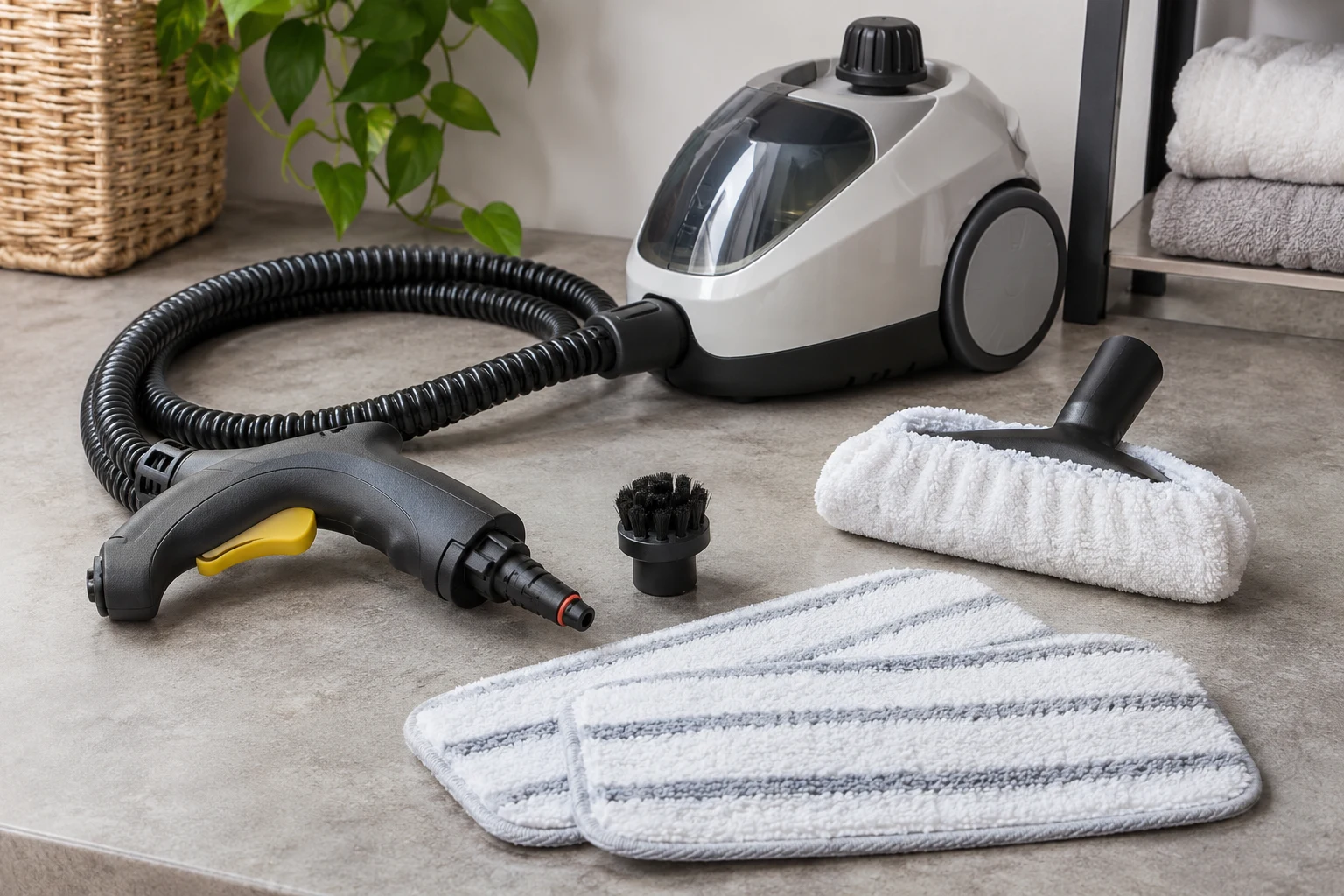 Match the small tools to the jobs you do, and allow for washing and drying the cloths afterwards. Credit: Product Inspector.
Compare carrying weight with working weight
The lightest figure on a specification sheet does not tell you how a cleaner will feel throughout a job. Check whether the stated weight includes water and accessories, then consider what you will actually lift.
With a cylinder, much of the weight stays on the floor during cleaning. You still have to carry it between floors and find somewhere stable for it while working. With a detachable handheld, you may hold the water and heater as well as the tool. A short demonstration of that position can reveal more than comparing the whole-machine weights.
- Can you manage the handle and steam trigger comfortably?
- Will the floorhead reach beneath the furniture you clean most often?
- Can the body remain stable without pulling the hose tight?
- Does the quoted reach include the hose, or is it the power-cable length?
Check the journey from cupboard to cleaning area. Narrow stairs, a crowded landing and several socket changes can make a capable cleaner inconvenient enough to leave unused.
Refilling matters more than tank size alone
A bigger tank can support a longer session, but it also adds water weight. More importantly, two cylinders can have quite different refill arrangements.
The Kärcher SC 3 Deluxe Home has a water reservoir that can be topped up during use. The Dupray Neat needs a cooling break before its boiler is opened. For a stop-start kitchen clean, easy refilling and quick preparation can matter more than a long advertised runtime.
Follow the exact model’s refill procedure. A separate refill tank and a boiler cap are not interchangeable. Never assume a hot boiler can be opened because another cleaner allows refilling during use. Allow for warming up again where required, as well as the cooling time.
For mops, consider whether the tank is removable, how awkward it is to fill and whether its capacity fits your usual cleaning area. Advertised runtime also depends on steam output and how you use the machine; a large headline figure is not a promise for every setting.
Neither is automatically right for your floor
Do not buy either appliance on the strength of an “all sealed floors” label alone. Both the flooring manufacturer and the cleaner instructions must permit the method. Water resistance is not the same as permission to apply heat and steam, and different ranges from the same flooring brand can have different care rules.
Check the exact floor range, including any restrictions on pads, output and movement. If you cannot establish that steam is suitable, choose the floor manufacturer’s recommended cleaning method instead. A hidden-area test can reveal an immediate problem; it does not cancel a restriction or establish long-term suitability.
A carpet glider is also easy to misunderstand. Where permitted, it helps a steam head move over carpet for refreshing. It does not spray, wash and extract dirty water like a carpet-cleaning machine. For room washing versus isolated stains, our carpet cleaner and spot cleaner comparison explains that separate choice.
Allow for preparation, wiping and maintenance
Most steam cleaners loosen dirt rather than vacuum it up. Sweep or vacuum loose grit and debris first unless the particular machine is designed to collect it. Pads then need changing when dirty; detail work often leaves loosened dirt and moisture to wipe away.
There are exceptions, including steam appliances with a debris-collecting roller. Judge those on their own design and cleaning routine. They do not make ordinary steam mops debris collectors. If picking up everyday mess while washing is your priority, compare vacuum mops as a separate option rather than assuming any steam cleaner does both.
Plan where wet pads, cloths and tools will dry. A cylinder with plenty of attachments needs storage for them as well as the body. An upright may need a tall cupboard or space for a broad head, so neither is automatically the smaller choice.
Water-hardness care also varies: one cleaner may use a replacement cartridge while another needs a specified boiler-cleaning routine. Follow its instructions for water and additives. Do not put detergent, vinegar or fragrance into a steam-water tank unless the exact instructions expressly allow it; an approved separate solution compartment is a different system.
Which should you buy?
Choose a steam mop when regular cleaning of suitable hard floors is the main job. A comfortable grip, manageable head and easy everyday setup will usually be more useful than attachments you rarely use.
Choose a cylinder when you have enough suitable detail-cleaning jobs to justify the hose, tools and storage. Its strongest practical advantage is letting you work with a tool while the main body stays on the floor. Check the refill arrangement and the weight you will carry between rooms.
A convertible mop is the middle option for floors and occasional handheld work; a small handheld suits focused jobs. The best choice is the one that fits the surfaces, carrying and cleaning routine you actually have.
Sources and checks
- Kärcher SC 3 Deluxe instructions: check reservoir filling, tools and surface restrictions.
- Dupray Neat manual and support: check the boiler refill and cooling procedure for your machine.