If the windows mist up while a load hangs on the rack, look at how the room gets rid of moisture before you buy a heated airer. A dehumidifier can collect water from the air while the clothes dry. Heated rails help warm the washing itself, which is useful for smaller loads in a room that can already clear the damp air.
Match the drying method to the room
| Drying method | When it makes sense | What happens to the moisture |
|---|---|---|
| Unheated rack | Light loads, useful ventilation and time to let them dry. | Goes into the room air and needs a way out. |
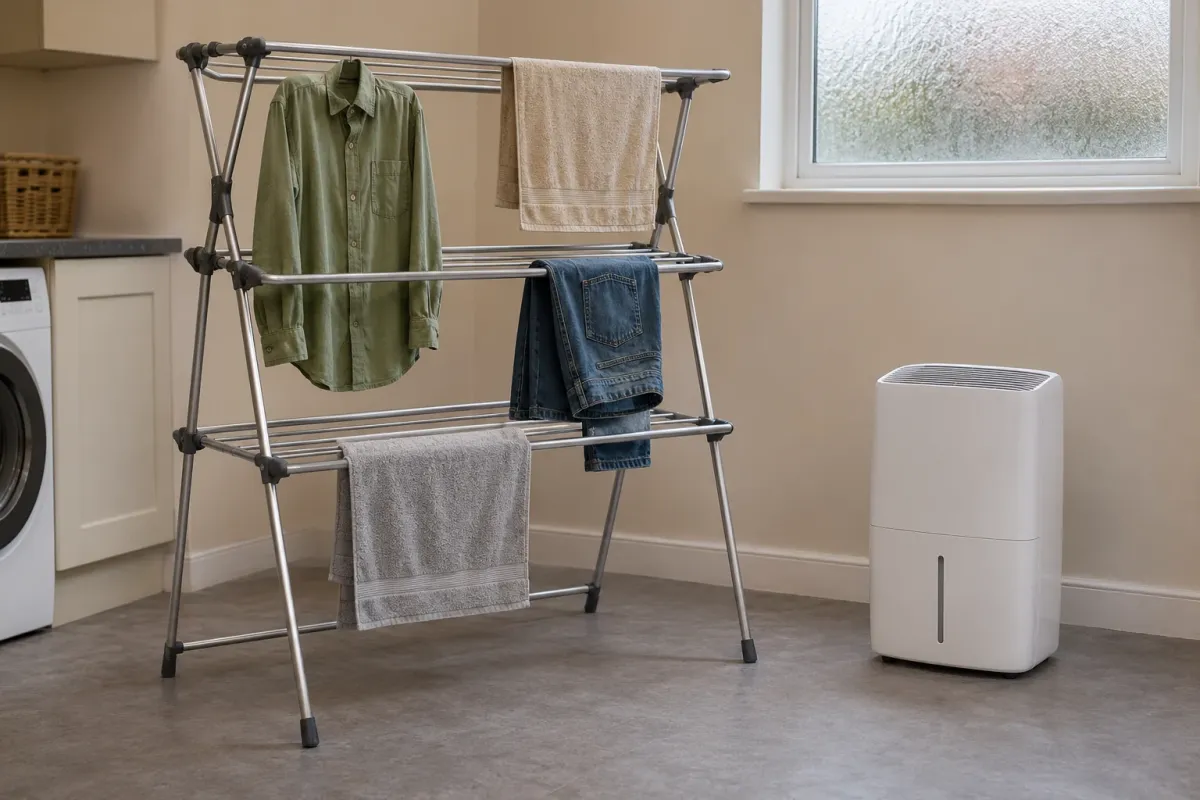
| Rack with a dehumidifier | Regular indoor loads in a room where moisture lingers. | The dehumidifier collects water from the air into a tank or a suitable drain. |
| Heated rails | Small loads you can spread out, with ventilation to carry away the damp air. | Leaves the washing as vapour and passes into the room. |
| Heated drying pod | Shirts or similar garments with room to hang apart inside the cover. | Leaves through the cover’s vents and passes into the room. |
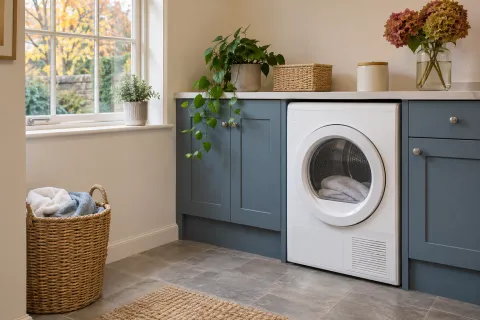
| Tumble dryer | Frequent loads of towels or bedding that need a predictable turnaround. | Goes into a tank or drain on condenser and heat-pump models, or outside through a vent on a vented dryer. |
If your rack already fits a full wash, you may only need to compare dehumidifiers. If the rack itself is too small or awkward to open, our clothes airer picks include folding racks, heated rails and pods.
Try your existing rack with a better-spaced load
Space between garments makes it easier for air to reach both sides. Try putting thinner items on the inner rails and leaving the longer, thicker pieces on the outside. Unfold towels where you have the rail space, and keep jeans from resting against other clothes. A faster final spin can also help when the fabric and wash programme allow it.
Give a well-spaced load a try in a ventilated room. If it dries in time and the room clears afterwards, keep your rack. When only the waistband of a pair of jeans or the fold in a towel stays wet, try turning or repositioning those pieces first. When most of the load stays damp and condensation lingers, choose a way to move the moisture out of the room.
When a rack and dehumidifier work well together
A dehumidifier is worth considering if you dry washing indoors several times a week and damp air tends to hang around. A larger rack can hold a whole wash, and the same appliance can help with everyday moisture between loads. Use it in a suitably sized room, on a level floor, clear of the washing and out of the path of drips. Leave the clearances in the manual around the intake and outlet. Check that the tank is easy to empty and that you can still walk past the rack safely.
Check the temperature where the laundry actually dries. A compressor model, which cools air so the moisture condenses into water, is a sensible starting point for a heated living space. In an unheated room, compare extraction and power figures at the temperatures you expect. A desiccant model uses an absorbent material to remove water and can keep extracting in cooler conditions, although it can draw more power. A headline litres-per-day figure measured in warm, humid air gives little indication of how long your load will take in a cold spare room.
In one National Energy Action trial, a dehumidifier and a separate fan running at full speed helped dry a mixed load in about six hours. The load and room conditions will change that time. If you already have a rack and dehumidifier, check whether giving the clothes more space improves drying before buying another appliance.
Ventilation and recurring damp
Follow the appliance instructions and keep the home’s normal ventilation working, including small window vents and extractor fans. If damp patches or mould keep returning, or you can see signs of a leak, get the underlying cause checked. If you rent, report it to your landlord or housing provider.
When to pay for heat or faster airflow
Heated rails suit a few well-spaced pieces. The fabric touching a rail warms first, so folds and thick seams can still lag. A pod blows warm air around hanging clothes and suits shirts and school uniform when there’s space between pieces. Check the hanging length and how much fits with the cover closed. Towels and bedding are awkward if they have to bunch up to fit.
Follow the instructions for the exact airer. Use only a cover made for that model, keep vents clear and choose a suitable dry location for anything plugged in. A vented cover can hold warm air around the clothes, and the room still needs a way to clear the released moisture.
If towels and bedding regularly fill the rack, compare tumble dryers as well. A suitable installation and the ability to finish a bulky load in one cycle can justify the space and up-front cost. Check drying labels, the programme’s load limit and where the water will go before buying.
Electricity cost per dry load
Multiply the electricity used in kilowatt-hours (kWh) by the unit rate on your bill. A 300 W appliance drawing that power for five hours uses 1.5 kWh. At 26.32p per kWh, the October to December 2026 average for a default tariff paid by Direct Debit in Great Britain, that comes to about 39p. A timer or humidity control can change how much electricity an appliance uses during those five hours. An unheated rack uses no electricity itself. If one method means putting the heating on in a room you’d usually leave cold, allow for that extra cost too.
For a comparison at home, use the same kind and size of load, the same spin speed and a similar room temperature. If the appliance instructions allow a suitably rated plug-in energy meter, record the kWh until the thickest items are dry enough to put away. If you try running a heated airer and a dehumidifier together, allow the space required by both manuals and add the electricity used by both. The extra running cost is only worth considering if it solves a drying problem you can see in those comparable loads.
Which is worth buying?
- For a room that stays clammy after indoor drying, start with a suitable dehumidifier and the rack you already own.
- For a few pieces you need sooner, heated rails or a pod can help if you can spread the washing out and the room can clear the damp air.
- For back-to-back loads of towels or bedding, a tumble dryer is easier to justify if you have somewhere suitable to put it.
Sources and checks
- Ofgem’s October to December 2026 electricity rates give the Direct Debit average used in the worked example.
- National Energy Action’s laundry appliance measurements show how power and running time vary with the equipment and load.
- GOV.UK guidance on damp and mould covers ventilation and what landlords and tenants can do about recurring problems in England.