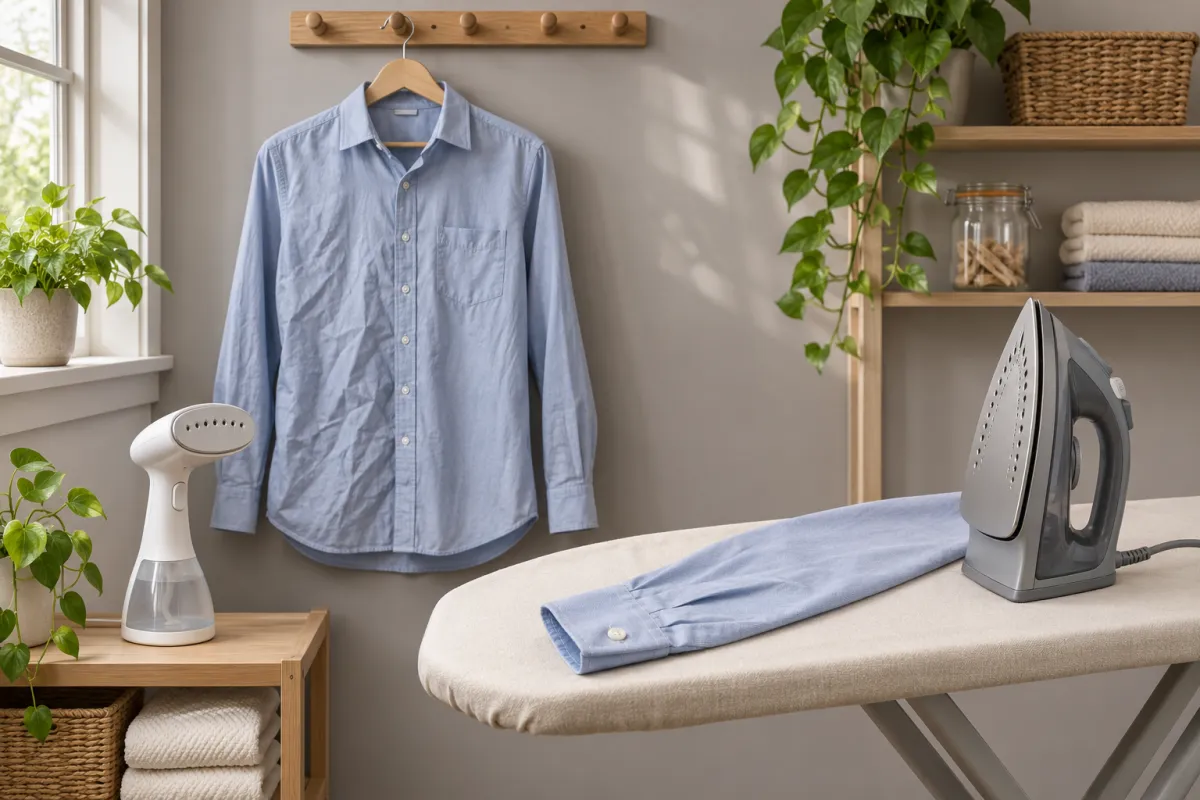
When a dress comes out of the wardrobe with a fold down the front, a clothes steamer can soften the crease while it hangs. When you need crisp cuffs and a collar that holds its shape, lay the shirt flat and use an iron. For everyday clothes that just need a quick once-over, the deciding factor is often how much effort it takes to set up, use and put away each tool.
If you already have a steam iron, look for a vertical steam setting before buying another appliance. If it still feels like too much work to get out for one outfit, use our best clothes steamers guide to compare handheld and upright options.
Clothes steamer or iron at a glance
Scroll across on a small screen to see the iron column.| What you need | Clothes steamer | Iron |
|---|---|---|
| Tidy one outfit | Soften light creases on a hanger near a socket. | Get a flatter finish. Some steam irons can also steam on a hanger. |
| Press cuffs or a trouser crease | Check whether the model can press small areas flat. | Use the hot base and a firm surface to set a crisp edge. |
| Get through a weekly batch | Use a stand and floor tank for several hanging garments. | Set up the board once for several shirts, trousers or pieces of linen. |
| Pack for a trip | A folding handheld saves space. Check the voltage as well as the plug. | Check what your accommodation already provides before packing one. |
Start with the clothes you actually wear
One slightly creased shirt. If you just want the front and sleeves to look smoother under a jumper, a steamer can be enough. If the collar and cuffs will be on show and you want them to hold their shape, get the board out. The same shirt can call for different tools depending on the finish you want.
A pleated skirt or a heavier garment. Steam can soften packing wrinkles between existing pleats when the garment allows it. If you want to re-form a sharp pleat, use the garment maker's pressing instructions. For heavy cotton, thick linen or a deep fold across a wide panel, an iron gives you a firm surface and pressure where you need it. Published hands-on steamer tests found that some models left clothes damp and still creased, so allow more time or change tools if the first passes leave the fold in place.
A weekly pile. Once the board is up, there is little setup between shirts, and a broad flat surface helps when you press linen. For several pieces that only need hanging touch-ups, a standing steamer with a floor tank saves you from holding the water. Check whether its stand simply holds a hanger or gives the garment something to press against. A small handheld is easier to put away, but you may have to pause for water and hold its full weight for longer.
Check the label, lining and trim
Turn the garment inside out and find the care label before you switch either appliance on. The dots in an iron symbol set the permitted temperature. Some labels specify low heat without steam. If the label rules out steam, leave it off. If the label rules out ironing or you cannot tell what is permitted, ask the garment maker before trying a steamer.
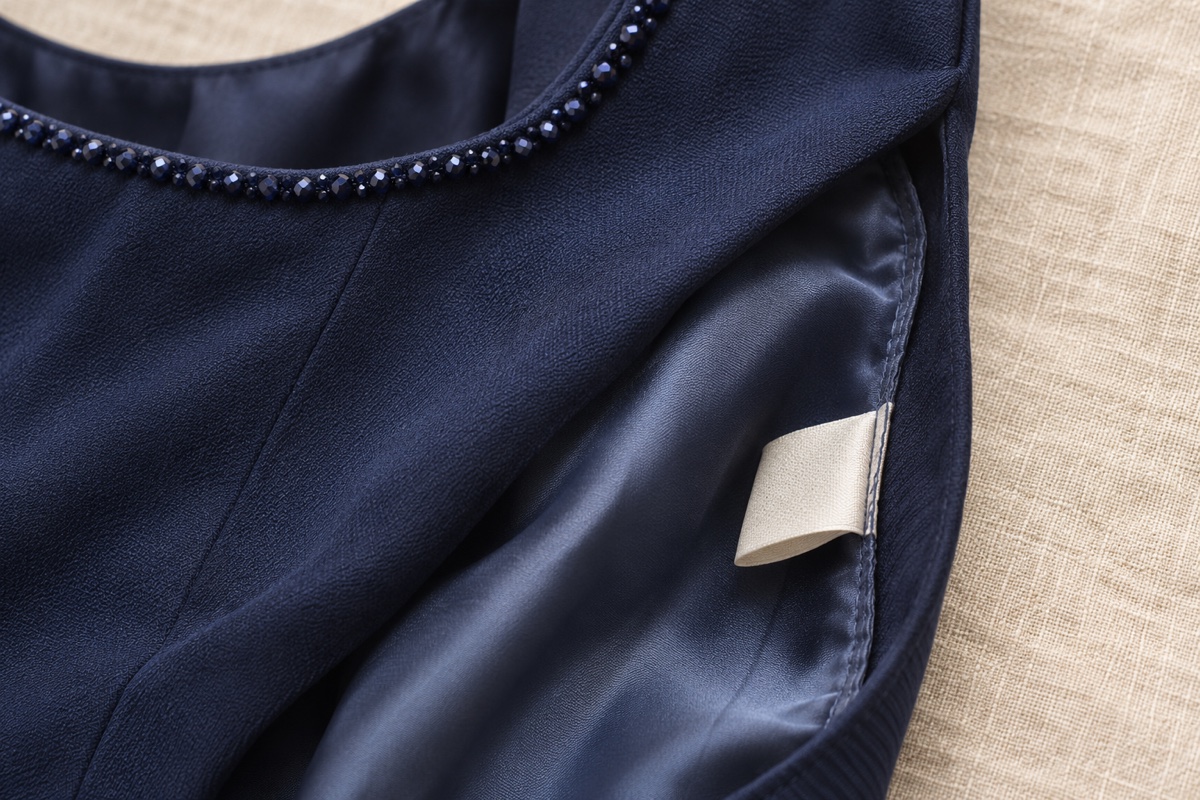
Look inside the garment for the care label. Check the lining and trim as well as the outer fabric before applying heat or steam. Credit: Product Inspector.
Think of a lined occasion dress with a fold from storage. The outer fabric might tolerate steam while the lining or decoration needs different care. Follow the instructions for the whole garment and the exact appliance, especially on silk, synthetics, prints and embellishments. If both allow it, test an inconspicuous patch first. Leave enough time for the garment to dry before wearing it. For stains or soiling, follow the washing or dry-cleaning instructions on the label.
Once you know the garment can be steamed, check your setup. Use a secure hanging point near a socket, with room to move down the full length without stretching the lead. Keep the hot head and steam away from skin and surfaces that could be damaged. Take the garment off before steaming it.
Try the iron you own before buying a steamer
Some steam irons can direct a burst of steam at a hanging garment. Check the exact manual for the setting, the permitted distance from the fabric and where to rest the iron. For an occasional crease this may be all you need. A dedicated handheld earns its space if the iron feels awkward to hold upright or you regularly want to finish several areas on the hanger.
A steamer that also presses can cover the opposite case. If you do mostly hanging work and want to tidy one cuff or hem, check whether the manual permits pressing on a flat, heat-resistant surface. A heated plate does not tell you that by itself. A vertical-only steamer can leak if you hold it flat. For several shirt fronts, collars and cuffs in one session, a dedicated iron is the easier choice.
Check refills, upkeep and travel before you buy
Think about the whole session. A quick heat-up helps only if you can get the hanger ready, reach the hem and finish without repeated refills or waiting for damp patches to dry. If you find a heavy appliance awkward, check its filled weight and whether you need to hold a trigger down. Look up what water your model takes and how it is emptied or descaled. Follow the manual for hard water and additives.
Check what you would pack. A folding steamer makes sense for regular trips if the destination’s supply matches the appliance’s voltage and frequency ratings. An adaptor changes the plug fit only. Choose one that can handle the appliance’s power and has the earth connection it needs. If a trip is a one-off, ask whether an iron and board are available where you are staying.
Which should you buy first?
Start with an iron if you regularly press shirts, trousers or flat linen. Start with a steamer if most of your clothes only need hanging touch-ups and the label permits steam. Choose a handheld for brief jobs or a standing model if you often steam several garments and can store the stand. If you have an iron that already does the occasional vertical job well, use it until you can point to a job you would do more often with a steamer.
Sources and checks
- GINETEX care symbols explains ironing temperatures and which labels rule out steam.
- The Tefal steam iron instructions show how an iron with vertical steam can be used on a hanging garment.
- The Russell Hobbs Steam Genie 2-in-1 manual (PDF) shows when a hybrid can press details on a heat-resistant surface.
- The Tefal AeroSteam instructions explain why a model designed only for vertical use can leak when held flat.
- Electrical Safety First’s travel adaptor guidance explains how to check voltage, power and earthing before you pack.