In this article
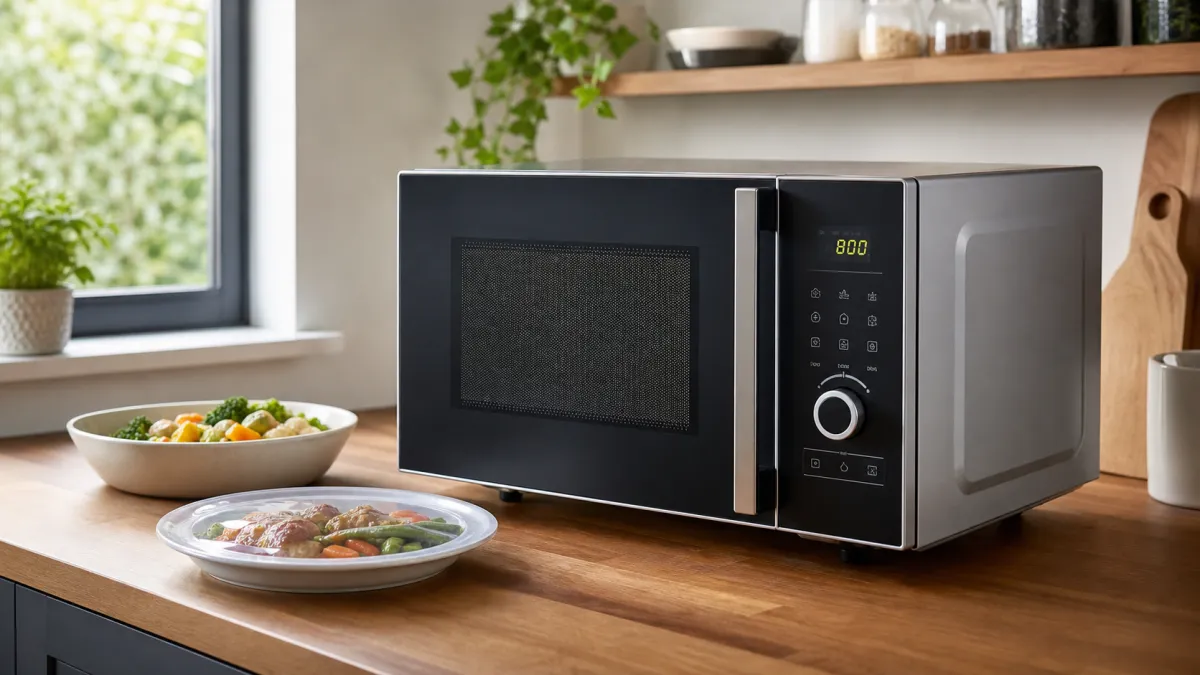
For most UK kitchens, an 800W or 900W microwave is the sensible wattage to buy. It is powerful enough for everyday reheating, defrosting and ready-meal cooking without pushing you into the larger, pricier models that only make sense when you regularly heat bigger portions or want a combination microwave.
Wattage is still worth checking. A 700W microwave can be perfectly usable in a small kitchen, but it will usually need more time. A 1000W model can be quicker, but it does not automatically cook more evenly or make a poor microwave better. The best choice is the power level that fits your portions, your patience and the kind of microwave you are buying.
Start with what wattage really means
Microwave wattage is the oven's output power: broadly, how much microwave energy it can deliver to the food. A higher number usually means faster heating, but it is not a complete performance score.
The wattage on the box is not a promise that every meal will cook perfectly in less time. Cavity shape, turntable or flatbed design, sensor programmes, defrost settings, dish size and how you arrange the food all affect the result. This is why two microwaves with the same power rating can still feel different in everyday use.
Use wattage to choose the right speed range, then check the controls, usable space and cooking features before deciding.
Which microwave wattage should you choose?
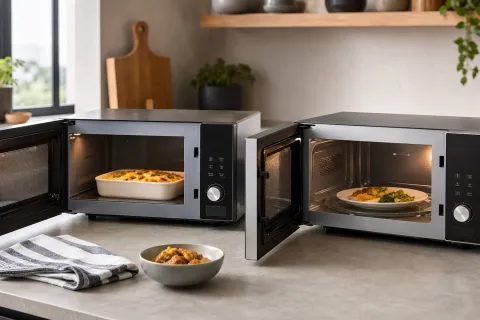
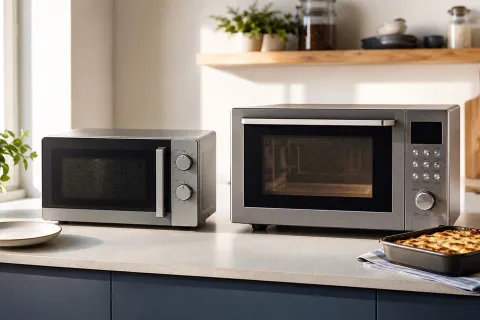
The useful range for most home microwaves sits between 700W and 1000W. You do not need to chase the highest number unless it suits how you cook.
| Wattage range | Best fit | Main trade-off |
|---|---|---|
| 700W | Occasional reheating, compact kitchens and simple defrosting. | Slower heating and more need to adjust packet instructions. |
| 800W | Everyday solo microwaves and ready meals. | Still needs stirring and standing time for thicker food. |
| 900W | Busy households, larger portions and regular leftovers. | Often costs more and may come in a larger appliance. |
| 1000W or more | Premium models, some flatbed designs and combination microwaves. | Worth it only if the rest of the microwave suits your cooking. |
Already know your likely range? Compare our main microwave guide, or narrow the choice with solo microwaves and combination microwaves.
700W is enough for light use, but patience matters
A 700W microwave can suit a small flat, student kitchen, spare room or light-use household. It is usually fine for warming drinks, softening butter, simple defrosting and reheating modest portions when you are not in a rush.
The compromise is speed. Many packet instructions are written around a specified microwave power, often with different timings for different wattages. If your microwave is lower-powered than the instruction assumes, you may need to cook for longer, stir more carefully and check the food before serving.
Choose 700W only when compact size, low price or occasional use matters more than speed. If the microwave will handle daily family leftovers, bigger ready meals or batch-cooked portions, 800W or 900W is usually a better starting point.
800W is the everyday baseline
An 800W microwave is the most comfortable baseline for normal home use. It gives enough power for ready meals, leftovers, porridge, steamed vegetables, defrosting and quick reheating without making the appliance unusually large or expensive.
This is the wattage range where many solo microwaves make the most sense. If you mainly want a straightforward appliance for reheating and defrosting, a good 800W model with clear controls, a usable internal space and sensible presets will usually be more useful than a higher-powered microwave with awkward controls.
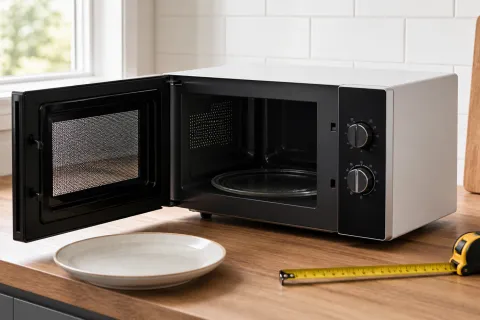
For a first microwave, a replacement solo model or a compact kitchen, 800W is rarely a bad choice. Just check that your plates and containers fit, because usable space can matter more than another 100W.
900W is better for regular meals and bigger portions
Move up to 900W if the microwave will be used every day, especially for larger plates, family leftovers, batch cooking, soups, sauces or denser foods that take longer to heat through. The extra power can save time and reduce the feeling that everything needs another minute.
It can also make sense if several people use the microwave at different times of day. Breakfast porridge, lunch leftovers and evening reheating are easier to live with when the microwave does not feel underpowered.
The trade-off is that 900W models may be larger, more expensive or tied to feature sets you do not need. If your real use is reheating one small bowl now and again, the extra power is not automatically worth paying for.
1000W-plus is useful only when the rest of the microwave earns it
A 1000W or higher microwave can be useful, but it is not the automatic best buy. At this level you are often looking at premium solo models, flatbed designs or combination microwaves that add oven or grill-style cooking.
For a combination microwave, higher microwave power can be part of a more capable appliance, but it should sit alongside the features that actually change what you can cook: oven temperature range, grill quality, usable tray space, automatic programmes and easy cleaning. If you only need reheating, a high-powered combination model may be more appliance than you need.
Buy 1000W-plus for a clear reason: speed, larger portions, premium controls or combination cooking. Do not buy it just because the number is bigger.
Power levels matter as much as maximum wattage
The maximum wattage tells you the top end, but everyday cooking often uses lower power levels. Defrosting, softening, melting chocolate and reheating delicate food all benefit from gentler power.
Some microwaves reduce power by cycling full power on and off. Others use inverter-style control, which is designed to deliver lower power more smoothly. In plain English, an inverter microwave tries to avoid blasting food in short bursts when you ask for a lower setting.
This can be helpful for defrosting, reheating sauces and cooking food that is prone to hot edges and cold centres. It is still not magic: you still need sensible containers, stirring and standing time. But it is one reason a lower headline wattage on a well-designed microwave can feel better than a bigger number on a basic one.
Why wattage does not remove stirring and standing time
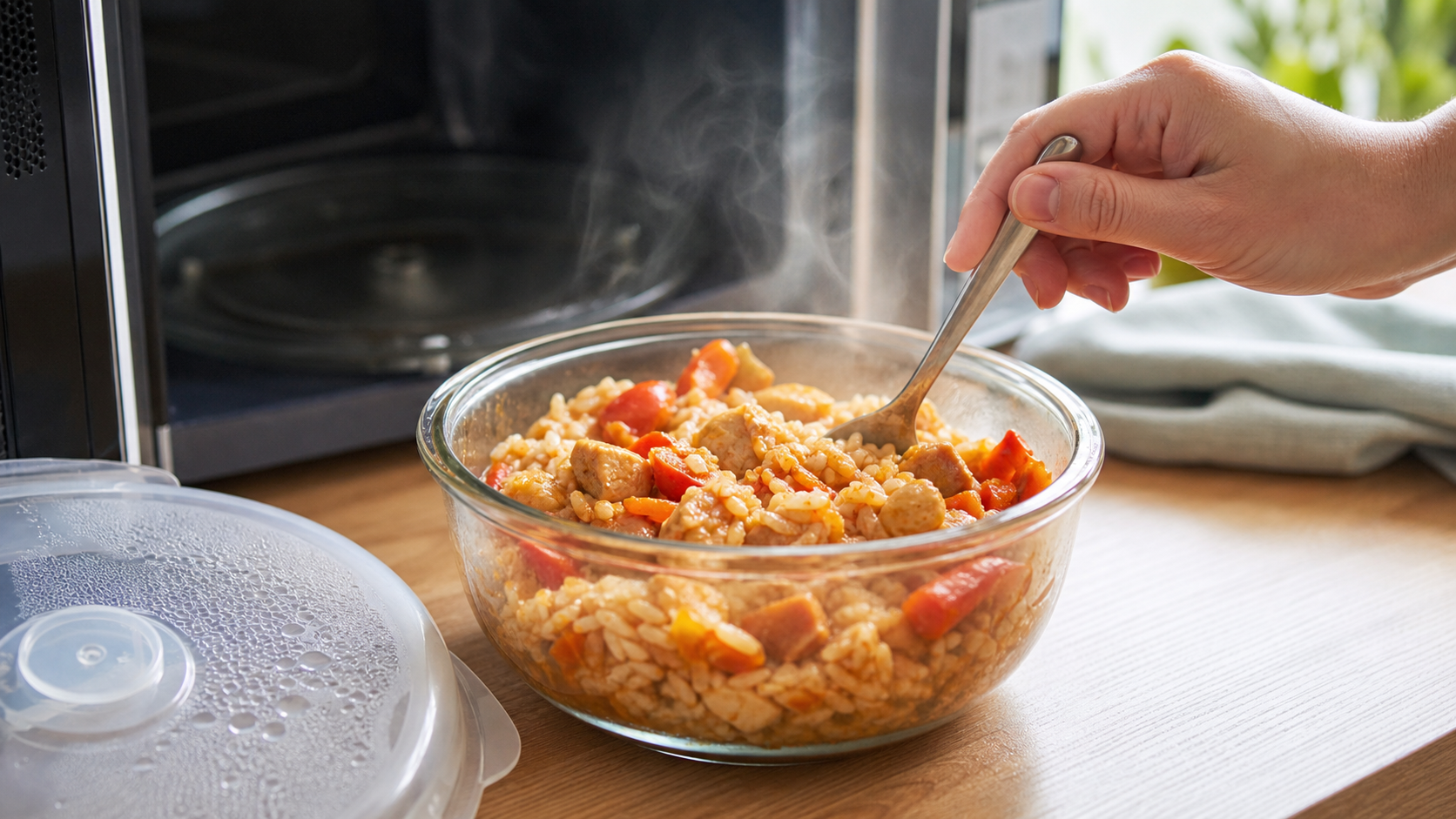
Microwaves heat food unevenly because food shape, moisture, thickness and container choice all change how heat moves. A higher wattage speeds up parts of the job, but it does not remove the need to stir, turn, rearrange or let food stand when the instructions call for it.
Standing time is the pause after microwaving. The food keeps evening out as heat moves through it, which is why a bowl can be too hot at the edge and still cooler in the middle straight from the microwave.
For leftovers and ready meals, wattage is only half the check: follow the instructions for your microwave rating, stir where advised, and let the food stand when the label says so.
Do not judge a microwave by wattage alone
Once you have picked a sensible power range, compare the parts that change daily use. A slightly lower-powered microwave can be the better buy if it is easier to use and fits your kitchen properly.
- Usable space: check plate diameter, dish height and whether a turntable restricts awkward containers.
- Controls: make sure common jobs such as adding 30 seconds, lowering power and defrosting are obvious.
- Format: choose a solo microwave for reheating and defrosting, or a combination microwave when oven-style cooking is genuinely useful.
- Cleaning: flat interiors, simple enamel finishes and fewer awkward ledges can matter more than another power step.
- Noise and placement: a powerful microwave still needs to fit the worktop, ventilation space and plug position.
The sensible choice for most kitchens
If you want the short answer, buy an 800W or 900W microwave. Choose 800W for a compact, straightforward solo model. Choose 900W if the microwave is used daily, handles larger portions or needs to feel quicker for family meals.
Drop to 700W only when light use, budget or compact size is the priority. Step up to 1000W-plus only when the whole appliance makes sense, especially if you are buying a premium flatbed or combination microwave.
The right wattage should make the microwave feel easy to live with. It should not be the only reason you buy it.
Find the right microwave
Narrow down your options
Use the finder for a shortlist based on your needs, or browse and filter the catalogue yourself.
Sources and checks
These links are useful when you want to check the practical details behind microwave reheating and premium power-control claims before buying.
- Food Standards Agency cooking guidance explains why shoppers should follow microwave instructions, stir or turn food where advised, and allow standing time.
- Sage Combi Wave 3 in 1 shows how one UK microwave manufacturer presents inverter-style power control on a premium combination model.