In this article
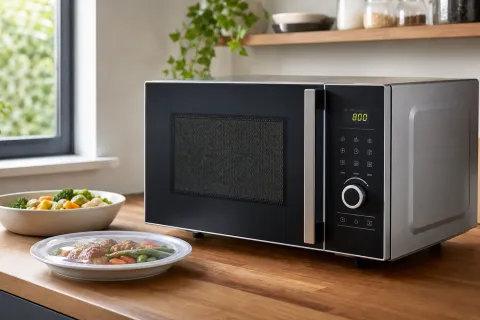
A flatbed microwave is a microwave without the familiar rotating glass plate. Instead of sitting on a turntable, the food rests on a flat base while the appliance spreads microwave energy around the cavity in other ways.
That sounds like a small design change, but it affects the way the microwave feels every day. A flatbed can take wider dishes, wipe clean more easily and feel less fiddly when you are reheating awkward containers. A turntable model is usually cheaper, familiar and perfectly good for plates, bowls and everyday leftovers.
For most shoppers, the better choice is not the technology in isolation. It is the food, dishes and cleaning routine you repeat most often.
Start with the dishes you actually use
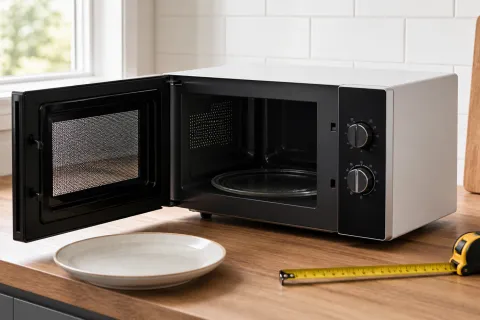
The strongest reason to buy a flatbed microwave is usable space. A turntable model may have a decent litre capacity on paper, but the rotating plate decides what can move freely. If a square container catches the wall or a dinner plate bumps the door, the practical space is smaller than the headline capacity suggests.
Flatbed designs remove that rotating circle. That makes them more forgiving with rectangular ovenproof dishes, wide plates, meal-prep containers and awkward leftovers. It can also help in a combination microwave, where the appliance is being used more like a compact oven as well as a reheater.
If you mainly warm mugs, bowls, small plates and supermarket ready meals, a turntable usually feels less restrictive. The dish already suits the shape of the appliance.
Where flatbed is worth paying for
A flatbed is most worth considering when at least two of these are true:
- You often use rectangular or square dishes.
- Your dinner plates are large enough to catch on smaller turntables.
- You want a combination microwave for oven-style cooking as well as reheating.
- You regularly cook or reheat family-sized portions.
- You hate lifting out the glass plate and roller ring to clean underneath.
That does not mean every flatbed model is automatically premium or better at everything. You still need to check the wattage, controls, internal height, accessories, door clearance and outside dimensions. Flatbed removes one source of frustration; it does not make a poor microwave good.
When a normal turntable is still fine
A standard turntable microwave remains the sensible value choice for many kitchens. It is a simple design, widely available and usually cheaper than a comparable flatbed model. For solo microwaves used mostly for reheating, defrosting and quick cooking, it can be all you need.
Turntables also make the movement obvious. The food rotates through the cavity, which helps reduce the chance that one side sits in the same hot or cool spot for the whole cycle. You should still stir, turn or stand food when the instructions say so, but the rotating plate does some of the work for ordinary bowls and plates.
If your main priority is keeping the spend down, start with our solo microwave guide. If you want the broadest set of options, including models with more cooking modes, our main microwave guide is the better starting point.
The practical differences
| Buying check | Flatbed microwave | Turntable microwave |
|---|---|---|
| Usable space | Better for rectangular dishes, wider plates and containers that would catch while rotating. | Best with round plates, bowls and dishes that fit comfortably on the glass tray. |
| Cleaning | Usually easier to wipe because there is no loose plate and roller ring to remove. | The glass plate is easy to wash, but spills can collect underneath the turntable parts. |
| Reheating | Can work well, but you should still stir, turn and let food stand when needed. | The rotation helps with ordinary plates and bowls, but cold spots can still happen. |
| Combination cooking | Often feels more oven-like when using trays, racks or larger dishes. | Still useful, but the turntable and accessories can limit dish shape and placement. |
| Value | Worth paying extra for repeated space or cleaning benefits. | Usually the better-value choice for simple reheating and compact kitchens. |
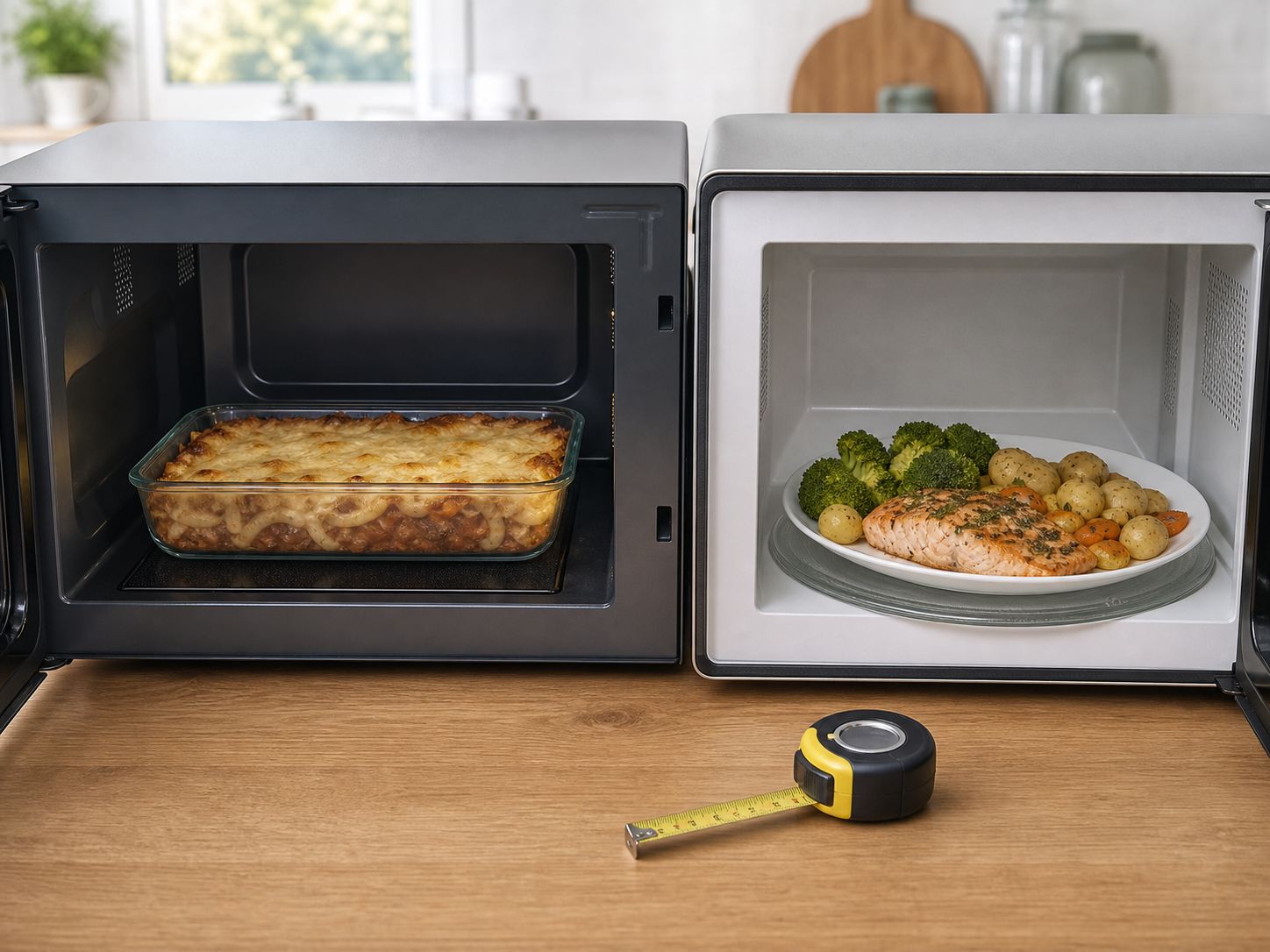
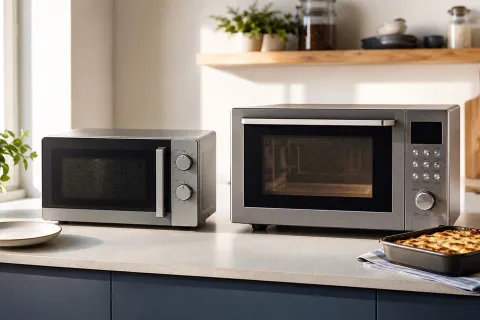
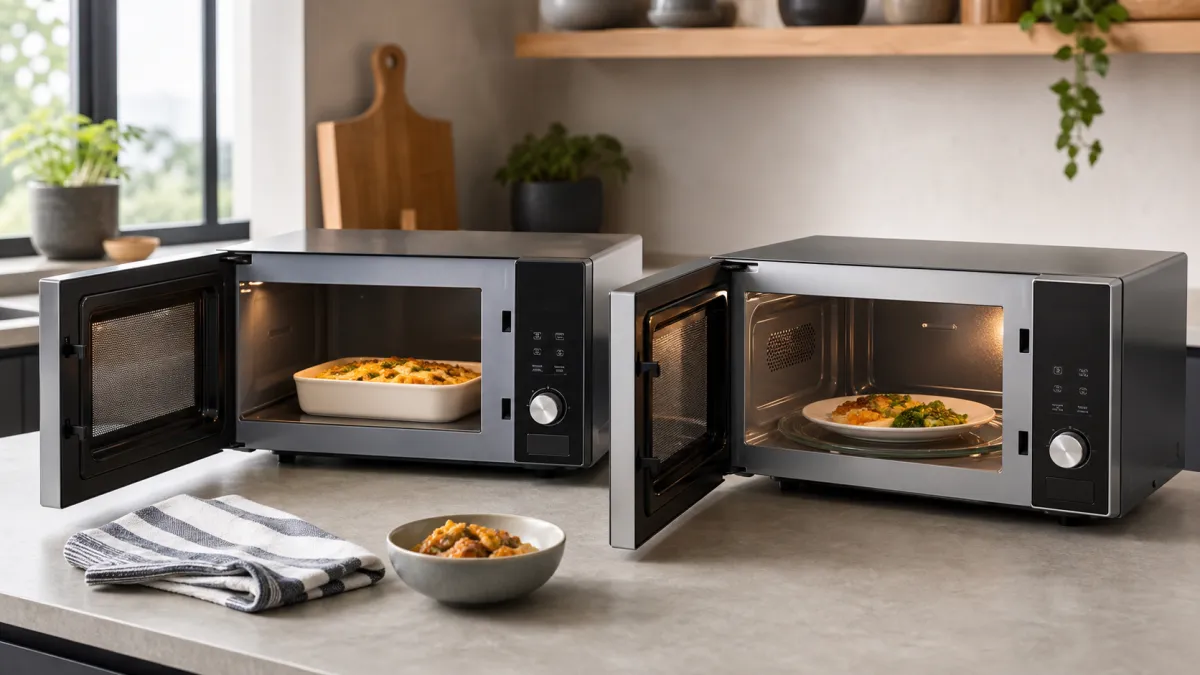
Flatbed interiors can make rectangular dishes easier to use; turntables still work well when plates rotate freely.
Cleaning is a real advantage, not just a nice extra
Microwave spills are easier to deal with when the base is clear. On a flatbed, you can usually wipe the floor of the cavity directly. On a turntable, you may need to lift out the glass plate, remove the roller ring and clean the track underneath. None of that is difficult, but it is exactly the sort of small job that gets skipped until the splatter has baked on.
A microwave plate cover* can help whichever design you choose. It reduces splatter, keeps moisture around leftovers and makes the cleaning difference between the two designs less dramatic.
Reheating still needs stirring, turning and standing
Do not buy a flatbed because you expect it to remove every cold spot. Microwaves can heat unevenly, especially with dense leftovers, thick sauces, rice dishes and food piled high in the middle of a container.
For safety, treat reheating as a proper cooking step: stir food while it reheats, turn it where needed and make sure it is steaming hot throughout. That matters for both flatbed and turntable models because dense leftovers, sauces and rice dishes can still develop hot and cold pockets.
The useful difference is practical rather than magical: a flatbed can make it easier to use a shallow rectangular dish, spread food out and stir it properly. A turntable can be just as sensible for a round plate or bowl when the food has room to rotate and you follow the packet or recipe instructions.
Combination microwaves make the flatbed case stronger
The flatbed argument becomes stronger when you are buying a combination microwave. Combi models add oven, grill or air-fry-style functions depending on the appliance, so dish shape, tray position and internal height start to matter more.
If you want a combi microwave to stand in for a small oven, a flatbed cavity can feel more natural. It may let you use trays and rectangular dishes more comfortably, and it avoids the feeling that everything has to be built around a spinning plate.
If the combi function is only an occasional extra, do not overpay for flatbed alone. A good turntable combi can still be the better buy if it has the right controls, accessories and footprint for your kitchen.
Check the measurements, not just the litre capacity
Litre capacity is a blunt guide. Before choosing either design, check:
- the internal width, depth and height if the retailer or manual provides them;
- the largest plate or dish you want to use;
- whether the door needs extra clearance at the side;
- the external width and depth on your worktop;
- whether racks, trays or crisping plates reduce the usable height.
For turntable models, also check the turntable diameter. For flatbed models, check the usable floor area and any raised edges or guides that affect where a dish can sit.
So, which should you buy?
Buy a flatbed microwave if the extra usable space will change what you can put inside. It is most convincing for larger plates, rectangular dishes, frequent family reheating, easy cleaning and combination models that you want to use like a compact oven.
Buy a turntable microwave if you mainly want a reliable, good-value appliance for everyday reheating. If your plates fit, your containers rotate cleanly and you do not mind removing the glass tray for cleaning, a turntable is still the sensible default.
The best test is simple: measure your biggest everyday plate or dish before you shop. If it fits comfortably on a turntable, you may not need to pay extra. If the dish shape is the frustration, flatbed is the upgrade that can make the microwave feel genuinely more useful.
Find the right microwave
Narrow down your options
Use the finder for a shortlist based on your needs, or browse and filter the catalogue yourself.
Sources and checks
These checks are useful when judging microwave reheating claims and day-to-day safety advice.
- Food Standards Agency cooking and reheating guidance explains why reheated food should be steaming hot throughout and why stirring or turning food helps reduce cold pockets in microwaved leftovers.