The Short Answer
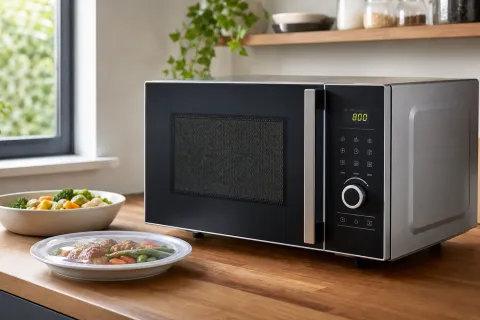
Choose a solo microwave if you mainly want fast reheating, defrosting, ready meals, jacket potatoes, porridge, steamed vegetables and simple everyday cooking. It is the cheaper, simpler and usually neater option.
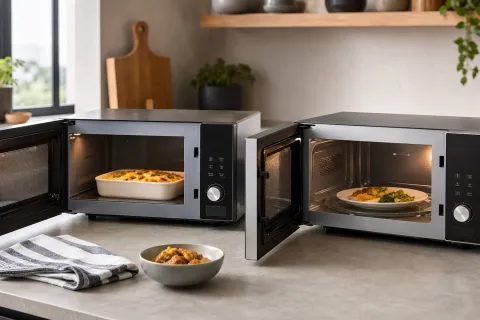
Choose a combination microwave if you want one appliance to microwave, grill and cook with hot fan-assisted air. A good combi can brown, crisp, roast and bake in ways a solo microwave cannot, so it can work as a compact second oven or a space-saving main cooking appliance in a small kitchen.
The mistake is buying the more complicated model because it sounds more capable, then using it only for reheating. If that is your routine, a solo model is the better buy. If you regularly want crisp toppings, oven-style results, or a backup for small meals without heating a full oven, a combination microwave earns its place.
If you are ready to compare current recommendations, start with our best microwaves guide, or go straight to the format-specific shortlists for solo microwaves and combination microwaves.
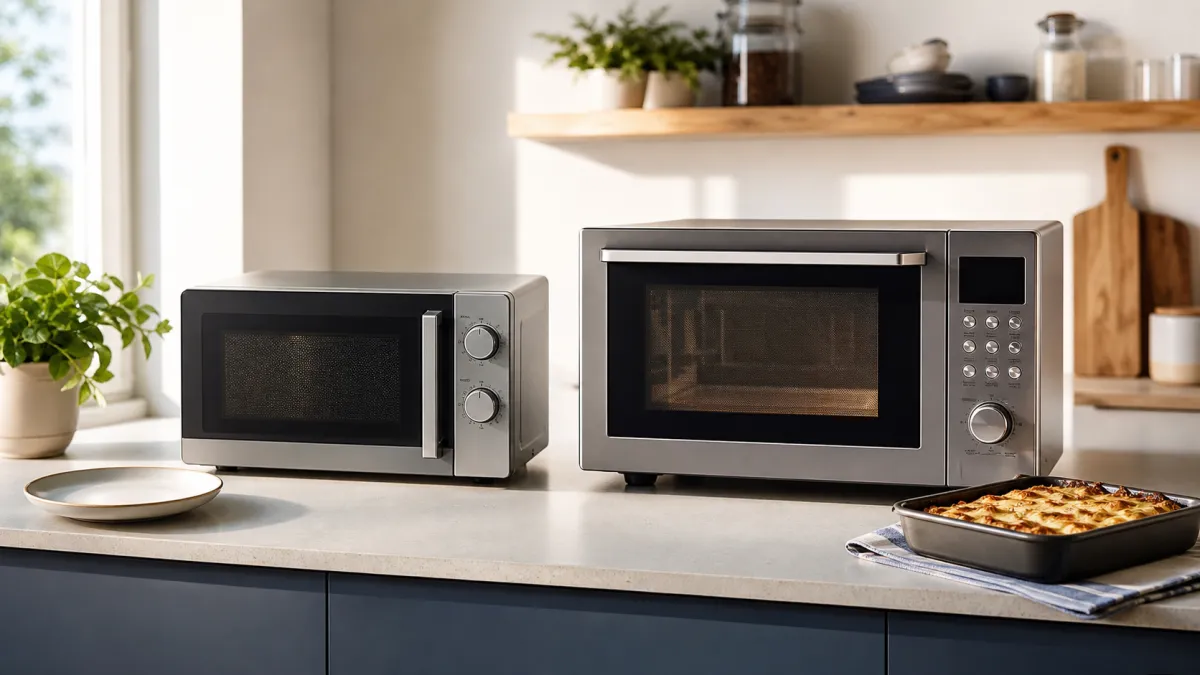
Solo vs Combination Microwaves at a Glance
| Decision point | Solo microwave | Combination microwave |
|---|---|---|
| Best for | Reheating, defrosting, drinks, ready meals, leftovers and simple microwave cooking. | Small-batch oven-style cooking, browning, crisping, roasting, baking and flexible meal prep. |
| Main advantage | Simple controls, lower price and less space taken up on the worktop. | More cooking methods in one appliance, often useful as a second oven. |
| Main limitation | It cannot brown, crisp or bake like an oven. | Costs more, needs more learning, and can be wasted if you only reheat food. |
| Food texture | Good for heating moisture-rich food, weaker for pastry, pizza bases and crisp toppings. | Much better for browned cheese, roasted edges, pastry, grilled toppings and small oven dishes. |
| Space | Often compact and easier to store or fit into a small kitchen. | Usually larger and heavier, with extra clearance and accessories to store. |
| Value | Best value when microwave-only tasks cover most meals. | Best value when it genuinely replaces some oven or grill use. |
What a Solo Microwave Does Best
A solo microwave is the standard microwave most people picture. It uses microwave power for heating, cooking and defrosting, without a grill element or convection fan. That makes it straightforward to use and usually cheaper to buy.
For many households, that is enough. A solo model is ideal for reheating leftovers, warming soup, cooking porridge, softening butter, steaming vegetables, defrosting ingredients and heating ready meals that are designed for microwave cooking. If your microwave is mainly a convenience appliance, simplicity is a strength rather than a compromise.
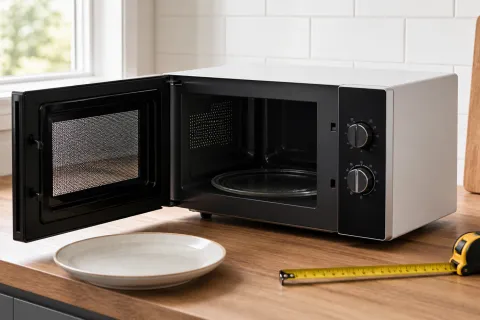
Solo microwaves are also easier to shop for. You can focus on the basics: capacity, external dimensions, wattage, control layout, turntable or flatbed design, cleaning, visibility through the door and whether your plates or containers fit comfortably.
What a Combination Microwave Adds
A combination microwave, often called a combi microwave, adds oven-style cooking functions to the microwave. Most combine microwave power with a grill and convection heating, so the appliance can heat food quickly while also browning or crisping the outside.
That extra heat changes the kind of food you can make. A combi is better suited to pizza, gratins, baked pasta, roasted vegetables, small joints, crisp-topped ready meals, pastries and quick bakes. It is especially useful when a full-size oven feels excessive for one tray or when the main oven is already busy.
The trade-off is complexity. Combination models tend to have more modes, more accessories and more cleaning decisions. You need to know when to use microwave-only, grill-only, convection-only or a combined mode. You also need to follow the manual carefully on cookware, because a rack or tray that is safe in grill or convection mode may not be suitable for microwave mode.
Where Grill Microwaves Fit
A grill microwave sits between the two. It works like a solo microwave but adds a grill element for browning the top of food. That can help with cheese on toast, crisping the surface of a ready meal, or improving pizza and bacon compared with microwave-only cooking.
It is not the same as a full combination microwave. A grill microwave can brown from above, but it does not usually circulate hot air like a fan oven. If your main goal is baked or roasted results, a combination model is the stronger choice. If you only want a little browning on top, a grill microwave may be a cheaper middle ground.
Running Costs, Space and Everyday Use
Microwaves can be an efficient way to heat suitable food because they heat the food directly rather than heating a large oven cavity. That does not mean every combination microwave meal will be cheaper than every oven meal. The real cost depends on the appliance power, cooking mode, preheating, portion size and how long the food runs for.
For reheating a bowl of leftovers, a solo microwave is hard to beat. For a small tray bake, a combination microwave may avoid heating a full-size oven. For a large family meal or several shelves of food, the main oven may still make more sense. Buy for the way you cook most weeks, not for the most ambitious meal you might cook once.
Space matters too. Combination microwaves are often deeper, heavier and hotter around the casing during oven-style modes. Check the external dimensions, door swing, ventilation clearance and whether the appliance can safely live where you intend to put it. A model that technically fits but blocks your prep space will become annoying quickly.
Choose a Solo Microwave If...
- You mainly reheat, defrost and cook microwave-ready food.
- You want the lowest sensible price.
- You prefer simple controls and fewer accessories.
- You already have an oven, air fryer or grill for crisping and browning.
- You have limited worktop or cupboard space.
- You are buying for a student room, office kitchen, rental property or simple backup appliance.
Choose a Combination Microwave If...
- You want microwave speed plus browned or crisped results.
- You regularly cook small oven-style meals and do not want to heat the main oven.
- You need a second oven for busy mealtimes.
- You live in a small kitchen where one flexible appliance is better than several gadgets.
- You are willing to learn the modes and keep the accessories organised.
- You make foods that suffer in a solo microwave, such as pastry, pizza, gratins or crisp-topped dishes.
Buying Checks Before You Decide
Before choosing either type, check the practical details that affect everyday ownership.
- Capacity: litres help comparison, but the usable shape matters. Check whether your dinner plates, bowls and baking dishes fit.
- External size: leave the clearance required by the manual, especially for combination models running hot-air or grill modes.
- Wattage: higher microwave wattage can heat faster, but usable presets, evenness and instructions matter too.
- Controls: simple dials can be easier for reheating; combi models benefit from clear mode buttons and readable displays.
- Cleaning: look at the interior coating, removable parts and whether racks or trays will be awkward to wash.
- Cookware: use microwave-safe containers for microwave modes, and follow the manual for any metal racks, trays or crisping plates supplied with a combination model.
- Food safety: when reheating leftovers, stir where practical and make sure food is piping hot throughout before eating.
The Verdict
A solo microwave is the right choice for most people who want a dependable everyday reheating appliance. It is cheaper, simpler and easier to fit into a busy kitchen.
A combination microwave is worth paying for when you will use the extra cooking modes often enough: crisping, browning, baking, roasting small portions or acting as a second oven. If those jobs would otherwise mean turning on a full oven for one dish, the extra flexibility can be genuinely useful.
The clearest rule is this: buy solo for convenience, buy combination for versatility.
Ready to compare models? Start with our best microwaves guide, or go straight to the solo microwave shortlist and combination microwave recommendations.
Sources and Checks
These links are useful if you want to check the appliance types and safety guidance before buying.
- Samsung UK microwave buying guide: explains solo, grill and combination microwave types, including convection and grill functions.
- AO microwave buying guide: gives a UK retailer view of microwave types, capacities and fit checks.
- Energy Saving Trust appliance guidance: useful context on choosing suitable appliances and why size and use pattern affect energy consumption.
- Food Standards Agency cooking guidance: covers safe reheating, including stirring microwave-heated food and checking it is hot throughout.