In this article
A good kettle should disappear into the rhythm of the kitchen: easy to fill, quick enough for busy mornings, steady to pour and simple to keep clean. The details that decide that are not always the headline ones. A large capacity, polished finish or smart feature can look appealing, but everyday use depends more on minimum fill, water-level visibility, handling and limescale control.
Start with the parts you touch and check every day. The right kettle should suit the amount of water you normally boil, the space where it sits, the drinks you make most often and the person who finds it hardest to lift or pour.
The kettle checks that matter first
| Check | Why it matters | What to look for |
|---|---|---|
| Minimum fill | A large kettle can still waste energy if it makes you boil more water than one mug needs. | Look for a low minimum fill, ideally around one mug, with clear markings you can read quickly. |
| Capacity | Maximum capacity only matters when you regularly make several drinks or fill pans. | 1.5L to 1.7L suits most households; smaller 1L models can be easier to lift in compact homes. |
| Power | Higher wattage usually boils faster, but it is not a substitute for boiling the right amount. | A 3kW kettle is the usual fast-boil choice; judge it alongside minimum fill and noise. |
| Temperature control | Useful for green tea, coffee and repeated drinks, unnecessary if you only make standard tea. | Choose presets or adjustable temperatures only if you will actually use them. |
| Handling | Filling, lifting and pouring are the daily comfort tests. | Check grip shape, lid opening, balance, weight when full, and whether steam escapes near your hand. |
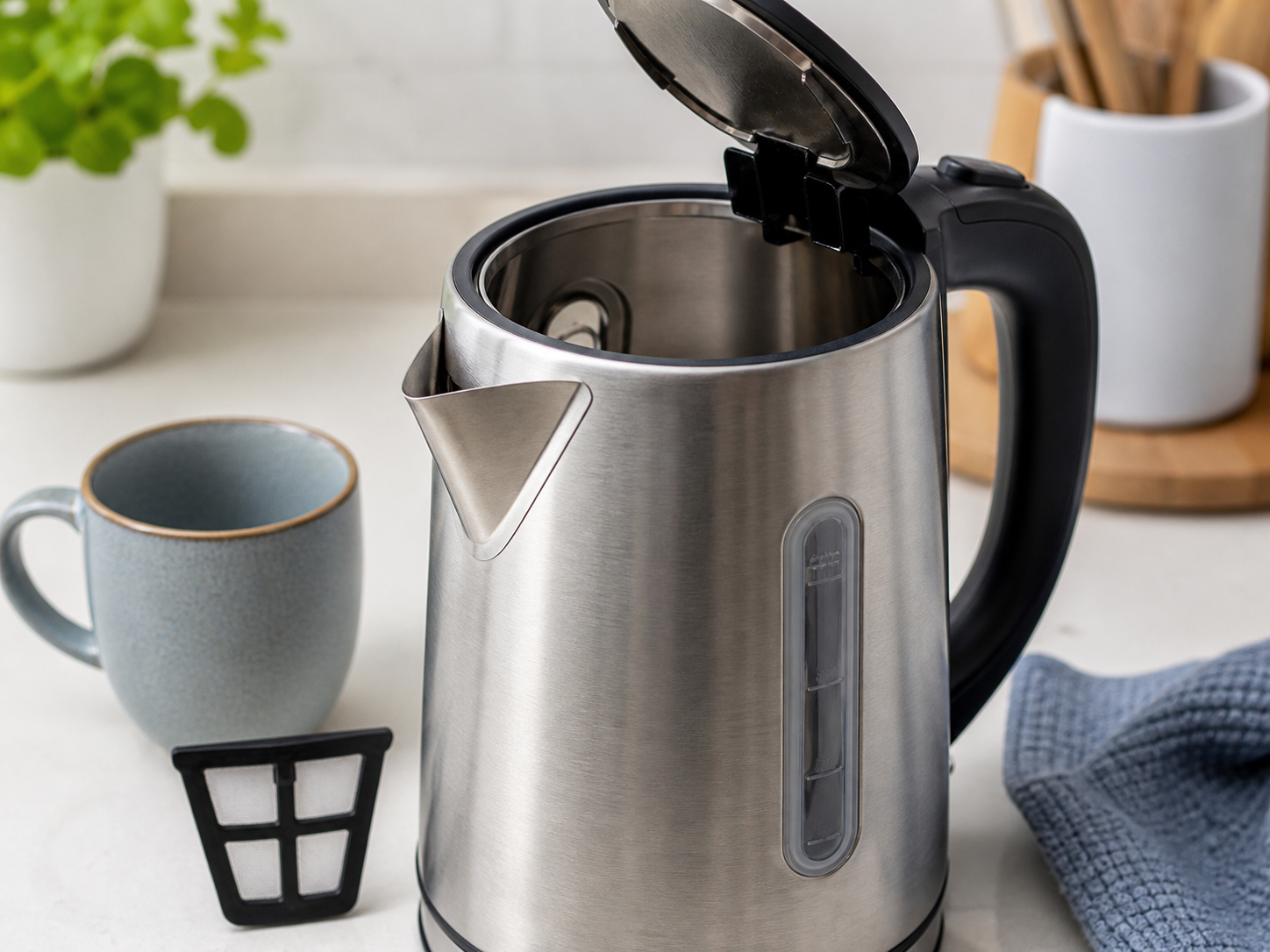
| Cleaning | Limescale and tea splashes make some kettles age faster than others. | Prefer a removable limescale filter, wide opening, simple surfaces and a water window that is not awkward to wipe. |
If that checklist already gives you a clear brief, compare models in our best kettles guide. The rest of this article explains the trade-offs behind each check, so you can avoid paying for features that will not improve daily use.
Capacity is not the same as usefulness
Most full-size kettles sit around 1.5L to 1.7L, which is enough for several mugs or a pan of boiling water. That capacity is useful for families, home workers who make rounds of drinks, or anyone who fills a cafetiere, saucepan or hot-water bottle. It is less useful if the kettle is heavy, awkward to fill, or too tall for the space under your wall cabinets.
For one or two people, a smaller kettle can be the better everyday choice. A compact 1L model is easier to lift, takes less space and may suit a small kitchen better than a large jug kettle that is usually half empty. The compromise is that it will feel limiting when guests arrive or when you need hot water for cooking.
Judge capacity by your normal day, not your busiest day. A kettle that is right for nine out of ten uses will feel better than one bought for an occasional full-house breakfast.
Minimum fill is the hidden running-cost feature
Minimum fill is one of the easiest kettle details to miss. It tells you the smallest amount of water the kettle is designed to boil safely and effectively. A low minimum fill matters because many everyday uses are single mugs: tea, instant coffee, a small cafetiere, gravy granules, oats or a quick top-up for cooking.
A kettle with a 1.7L maximum but a high minimum fill can push you into boiling more water than you need. A kettle with clear cup markings and a lower minimum fill makes it easier to use only enough water. That is usually more useful than chasing a slightly faster boil time on paper.
Check the water window before buying. Side windows can be hard to read if the kettle sits against a wall, under cupboards or in a dim corner. Dual windows help left- and right-handed users. Internal cup markers can be useful, but only if the lid opens wide enough to see them while filling.
Fast boil is useful, but not the whole answer
A 3kW kettle is usually the fast-boil option in the UK, and it is worth considering if your household makes several drinks a day. Speed matters most in the morning, during work breaks and when several people are waiting for hot drinks at once.
That does not mean every buyer needs the most powerful kettle. Fast-boil models can be noisier, their exterior can get hot depending on the design, and the speed advantage shrinks if you routinely overfill. If you mainly make one mug at a time, a kettle with a low minimum fill and clear water markings may feel quicker in real use because you are not heating spare water.
Temperature control is worth paying for only when it changes what you drink
Variable-temperature kettles are useful when you drink more than standard black tea. Green tea, white tea, some speciality coffees and baby-bottle routines can benefit from water below a full rolling boil. A kettle with presets or adjustable temperatures saves you from boiling and waiting for the water to cool.
The drawback is cost and complexity. Temperature-control kettles usually cost more, add buttons or displays, and can introduce another part of the appliance to learn and clean. If you mostly make everyday black tea, instant coffee or boiling water for cooking, a simple single-temperature kettle may be the better buy.
- Choose temperature control if you regularly brew green tea, loose-leaf tea, pour-over coffee or drinks where boiling water tastes harsh.
- Skip it if everyone in the house presses boil and walks away.
- Check the increments if you care about precision. Presets are simpler; 5C steps are more flexible.
- Look for a clear display if several people will use it. Hidden button sequences defeat the point.
Handling decides whether the kettle feels good every day
Some kettle flaws only show up when you fill and pour. A handle can look comfortable in a photo but feel slippery with damp hands. A lid can look neat but be too small for easy filling. A spout can look elegant but dribble when you pour slowly into a narrow mug.
Think about who will use the kettle. A lighter 1L model, large switch, clear water windows and easy-open lid can be more valuable than premium materials if lifting is a concern. For families or shared kitchens, a stable base and clear on/off indicator reduce everyday frustration.
Also check where the kettle will live. The safest and most convenient position is not always the prettiest one: you want the base on a stable worktop, the cable under control, the steam away from wall units where practical, and enough room to fill and pour without stretching across the sink.
Limescale and cleaning should shape your shortlist
If you live in a hard-water area, limescale is not a minor detail. It can build up inside the kettle, collect around the filter, make the water window look cloudy and leave flakes in drinks if the filter is poor or absent. That does not mean you need a specialist kettle, but it does mean cleaning access matters.
Look for a removable limescale filter that feels easy to take out and replace. A wide lid helps you rinse and descale the inside properly. Glass kettles make scale easier to see, which some buyers like, but they also show marks quickly. Stainless steel can hide marks better on the outside, although the inside still needs routine descaling.
Decorative ridges, awkward seams and tiny lid openings may look harmless at first. They are the parts you notice once the kettle has been through months of tea rounds, steam and hard water.
Materials, style and matching sets
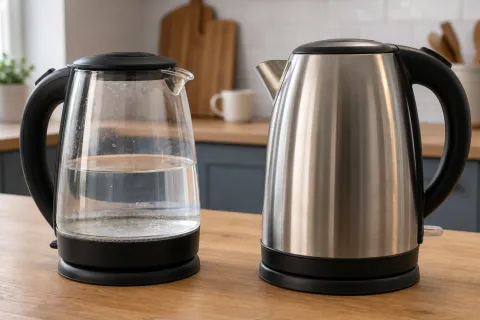
Stainless steel is the safe all-round choice for many shoppers: durable, familiar and easy to match with other appliances. Glass gives a clean visual look and lets you see the water level clearly, but it can show limescale and fingerprints. Plastic kettles are often lighter and cheaper, but buyers who dislike plastic near hot water may prefer stainless steel or glass interiors.
Style-led kettles can be worth buying if the appliance lives permanently on display. The important thing is to separate design from usability. A good-looking kettle with a stiff lid, poor water window or high minimum fill will not feel premium for long.
If you want a coordinated breakfast corner, compare kettle and toaster sets, but do not let the set override the kettle checks. The right set is one where both appliances suit your routine, not just one where the colour matches the tiles.
Smart features, keep-warm and hot-water alternatives
Smart kettles, app controls and voice controls are niche rather than essential. They make sense if you already use smart-home routines, want water ready at a predictable time, or like controlling appliances from another room. For many homes, the novelty fades and the kettle becomes a normal boil button again.
Keep-warm can be more useful. It suits repeated drinks, home offices and households where people arrive in the kitchen a few minutes apart. The trade-off is that it uses extra energy compared with boiling only when needed, so it is best as an occasional convenience rather than a permanent default.
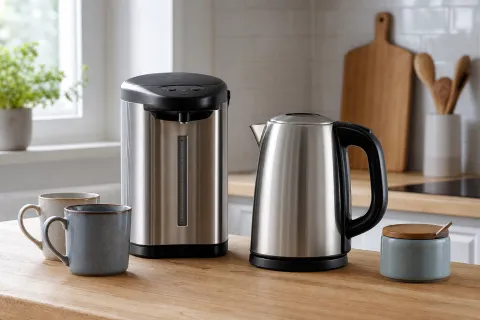
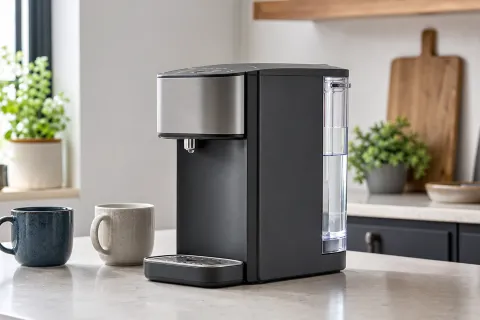
If your real need is repeated small amounts of hot water, especially for tea rounds or instant drinks, a hot water dispenser may be worth comparing. A normal kettle is still more flexible for filling pans, cafetieres and hot-water bottles, but a dispenser can suit buyers who mostly want mug-by-mug hot water.
Mistakes to avoid before you buy
- Buying by maximum capacity alone. Check minimum fill and lifting comfort as well as headline litres.
- Assuming fast boil means efficient use. Fast is useful, but boiling spare water still wastes time and electricity.
- Ignoring the water window. If you cannot read it where the kettle sits, you will guess and overfill.
- Paying for temperature control you will not use. It is excellent for some drinks and unnecessary for others.
- Choosing style before cleaning access. A cramped lid and awkward filter make hard-water maintenance more irritating.
- Forgetting left- and right-handed use. Window position, button placement and pouring angle can make a difference in shared kitchens.
Verdict: buy the kettle you will use properly
The best kettle for most homes is not the one with the longest feature list. It is the one that fits your normal fill amount, pours confidently, shows the water level clearly, cleans without a fight and suits the space where it will live.
Spend more when the upgrade solves a real problem: a lower minimum fill for single mugs, temperature control for delicate drinks, an easier-grip design for lighter handling, or a sturdier build if you want the appliance to last. Spend less when the extras are mainly decorative or will be ignored after the first week.
The simplest rule is this: choose around your daily friction point. If you waste water, prioritise minimum fill. If you wait too long, prioritise boil speed. If green tea or coffee tastes harsh, consider temperature control. If limescale annoys you, prioritise cleaning access. Then compare models that meet that brief, rather than letting colour, brand or smart features make the decision for you.
Sources and checks
These references are useful for checking the energy and safety principles behind the buying advice.
- Energy Saving Trust home appliances guidance explains why boiling only the water you need is a sensible everyday energy habit, which is why minimum fill and readable water markings matter when choosing a kettle.
- Electrical Safety First kitchen safety guidance gives broader safety advice for kitchen appliances, water and sockets; use it alongside the article's checks on stable placement, cable position and handling.