In this article
A hot water dispenser is worth paying extra for only when its features make every cup easier, cleaner or safer. The best upgrades are practical: measured dispensing, useful temperature choices, a tank you can refill without fuss, and controls that reduce scald risk.
The least useful upgrades are the ones that sound impressive but do not change your day-to-day routine. A very fast first cup is handy, but it matters less if the machine splashes, needs constant refilling or makes descaling awkward.
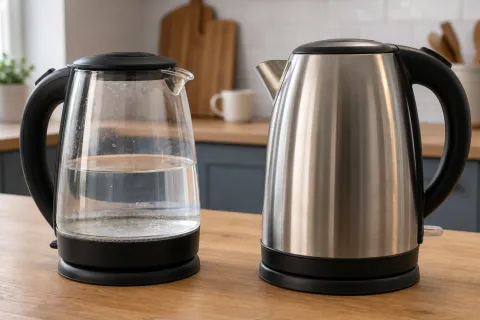
This guide assumes you already like the idea of a countertop hot water dispenser. If you are still choosing between a dispenser and a kettle, the broad trade-off is different: kettles are cheaper and flexible, while dispensers are better when measured hot water is the repeated job.
Start with the features that change daily use
| Feature | Worth paying for? | Why it matters |
|---|---|---|
| Variable cup volume | Usually yes | Stops the pour at the amount you actually need, so you are not stuck with one mug size or wasted hot water. |
| Temperature options | Yes for mixed drinks | Useful for green tea, instant coffee, hot chocolate and cooler drinks for children, but less important if you only want boiling water. |
| Larger removable tank | Yes for busy households | Reduces refills during morning rounds, but only if the tank is easy to lift, fill and see. |
| Adjustable or removable drip tray | Yes if you use different mugs | Helps with taller mugs, travel cups and splash control. A fixed low tray can be annoying. |
| Built-in filter system | Maybe | Can help in hard-water areas, but replacement cartridges need to be easy to buy for that exact model. |
| Child lock or dispense lock | Yes in family kitchens | Hot water is still a scald risk, so lockable controls and stable placement matter more than sleek styling. |
| Fast boil or first-cup claims | Only after the basics | Speed is useful, but not if the dispenser is noisy, splashy, hard to descale or awkward to refill. |
Compare the right appliance once the priorities are clear
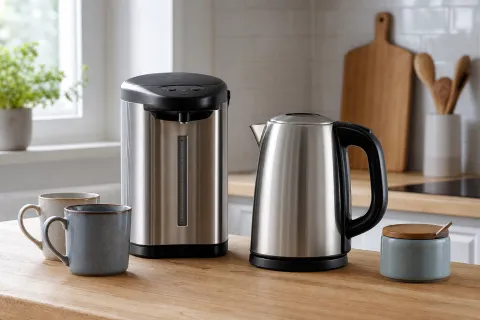
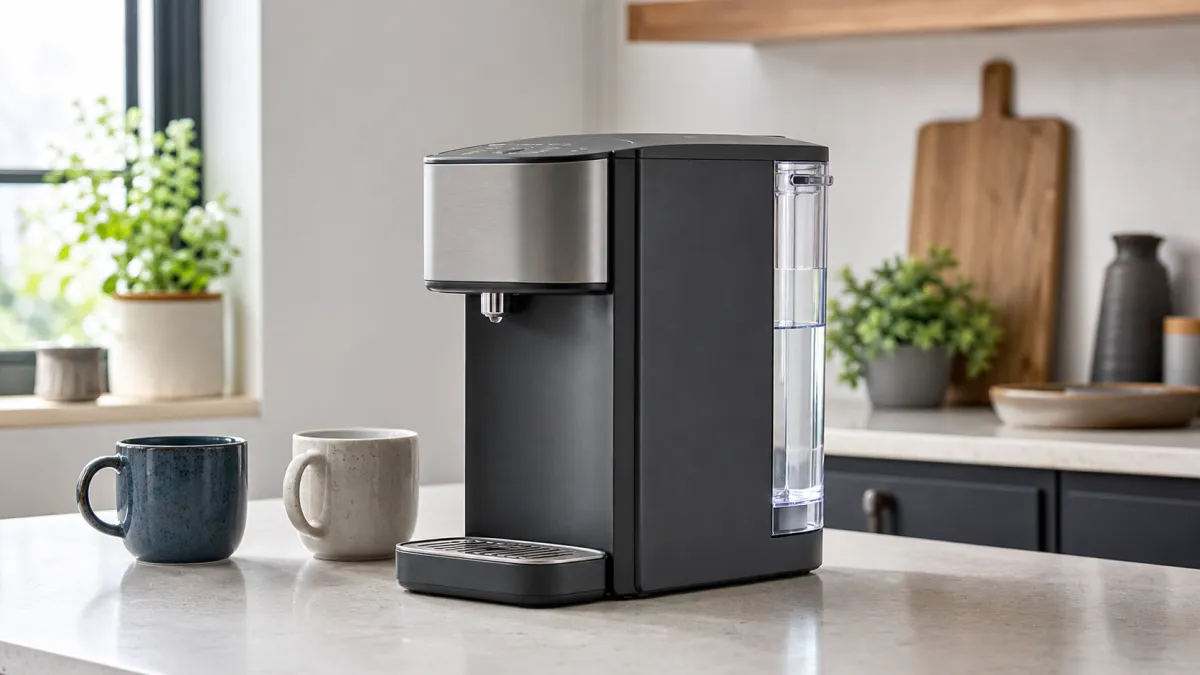
If measured cups, a large tank and safer dispensing are the features you want, start with our hot water dispenser guide. If you mainly want a cheaper appliance for tea rounds, compare kettles instead. Coffee drinkers who care most about espresso, milk drinks or pod systems should check whether a coffee machine solves the real problem better.
Variable volume is the headline feature to pay for
Variable volume means the dispenser can stop at different amounts of water rather than giving you one fixed pour. In everyday terms, it lets you fill a small cup, a large mug or a bowl of instant noodles without standing over the machine pressing stop manually.
This is the feature that most clearly separates a better dispenser from a basic one. It matters because hot water dispensers are usually bought for convenience. If the machine still needs careful supervision for every mug, some of that convenience disappears.
Check how the volume is controlled. A simple dial may be fine if the markings are clear. Digital controls can be more precise, but only if they are quick to use and do not make a basic cup of tea feel like programming a microwave.
Temperature options matter only if your drinks need them
A dispenser with several temperature settings can be useful if your household drinks more than standard tea. Cooler settings can suit green tea, some instant coffees, hot chocolate, baby-bottle warming routines where the appliance manual permits it, or drinks you want to cool faster.
Do not overpay for a long temperature list if you will always choose the hottest setting. For many buyers, a simple boiling-water dispenser with good volume control is more useful than a machine with several temperatures and awkward controls.
If temperature control is a priority, look for clear labels and a memory setting. Having to reset the temperature every time can become irritating, especially in a shared kitchen.
The tank should match your busiest hot-water round
Tank size sounds simple, but bigger is not automatically better. A larger tank means fewer refills, which helps if several people make drinks in the morning or if the dispenser is used for instant soups and hot-water bottles as well as mugs.
The trade-off is weight and handling. A full removable tank can be awkward to lift from a low worktop or fill in a small sink. A tank that looks generous on paper may still be annoying if the fill hole is narrow, the handle is flimsy or the water window is hard to read.
Choose the tank around the busiest round you actually make, not the largest capacity in the shop.
Drip trays and mug clearance are easy to underrate
A dispenser can have excellent controls and still feel poor if your favourite mug does not fit properly. Check the space between the spout and drip tray, especially if you use taller mugs, travel cups or insulated cups.
An adjustable or removable drip tray gives you more flexibility. It can also make cleaning easier because splashes and stray drips collect in one place instead of running across the worktop.
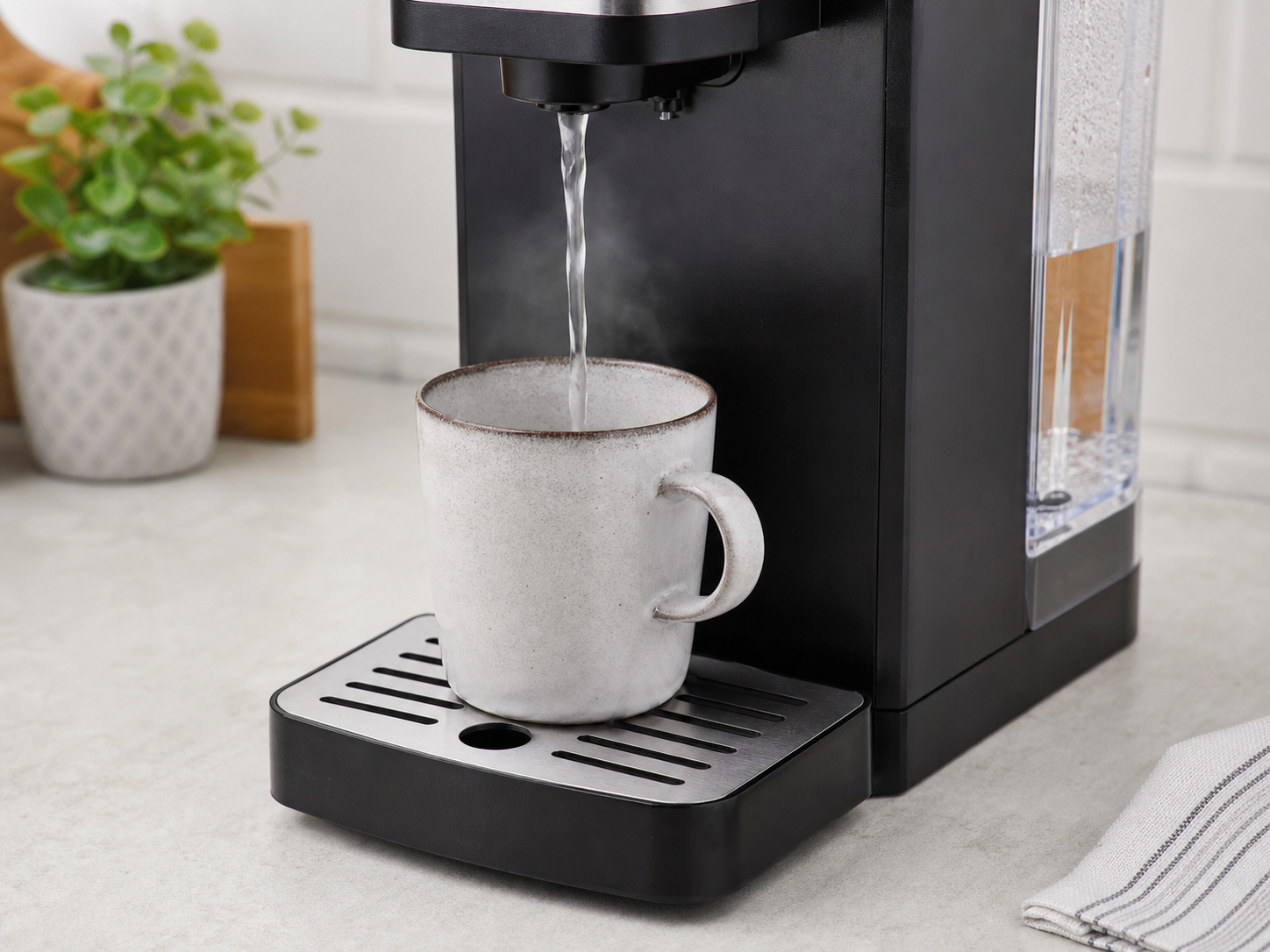
A useful dispenser should fit the mugs you actually use and leave enough room to avoid awkward splashback.
Filters are useful only when replacements are realistic
Some hot water dispensers have a removable limescale filter; others use replacement filter cartridges. Both can be useful, particularly in hard-water areas, but they are not a reason to ignore descaling.
A removable filter is usually a low-fuss feature: you rinse it, clean it and put it back. Cartridge systems can be more expensive over time and are only worth paying for if replacements are easy to find for that exact machine.
Before paying extra for filtration, check the replacement cost and availability. A dispenser with a discontinued or obscure cartridge can become more annoying than a simpler model that is easy to descale.
Child locks and dispense locks are not just family extras
Any appliance that dispenses near-boiling water needs careful placement and sensible controls. A child lock or dispense lock is most important in family kitchens, shared flats and busy worktops where someone might knock or press a button by mistake.
Look for controls that are deliberate without being frustrating. If the lock is so awkward that adults bypass it, it is not doing much. If it is clear and quick, it can be a worthwhile upgrade even in a household without young children.
Also check stability. A wide base, sensible mug position and cable route matter because the hot water comes out away from your hand rather than from a kettle spout you control directly.
Descaling is where long-term convenience is won or lost
Scale is the chalky build-up that appears when heated hard water leaves minerals behind. It can affect kettles, coffee machines and hot water dispensers, and it is one reason a dispenser should be easy to clean rather than just fast on day one.
Look for a clear descaling routine in the manual, a tank you can access properly, and removable parts that do not trap residue. If you live in a hard-water area, make descaling convenience a higher priority than cosmetic styling.
If you are buying maintenance supplies separately, a suitable kettle and hot-water-dispenser descaler* can be useful, but always check that it suits the appliance material and the manufacturer's instructions.
Speed claims matter less than repeat convenience
Fast first-cup claims are appealing, and speed is part of the reason people buy hot water dispensers. The mistake is treating speed as the main buying test.
A dispenser that gives one fast cup but needs constant refilling, splashes onto the worktop or takes effort to descale may feel slower in real life than a slightly less impressive model with better controls. For family mornings, the time between several cups can matter more than the first cup alone.
Use speed as a tie-breaker after volume, tank, safety and cleaning checks. Those features decide whether the dispenser stays convenient after the novelty wears off.
When a kettle or coffee machine is still the better spend
A kettle is still the better buy if you mostly make tea for several people, use pans, fill hot-water bottles or want the cheapest flexible option. Kettles are simple, portable and easier to replace if your needs change.
A coffee machine is the better spend if the hot-water dispenser is really a workaround for better coffee. If you want espresso, pod drinks, milk drinks or fresher coffee, paying more for dispenser temperature settings will not solve that.
A hot water dispenser earns its keep when measured hot water is the repeated job: solo drinks, one-mug refills, instant breakfast drinks, soups, and kitchens where lifting a full kettle is inconvenient.
The features worth paying for first
Pay first for variable cup volume, a tank that suits your busiest round, clear controls, stable mug placement and an easy cleaning routine. Add temperature options if your drinks genuinely need them. Add filtration only when replacement filters or simple cleaning parts are practical for the model you are buying.
Be more sceptical about speed claims, long feature lists and styling upgrades. A hot water dispenser should make repeated cups easier, not just look quicker in a product description.
The best model is the one that fits your mugs, your water, your cleaning routine and the number of cups you make most often.
Sources and checks
These links are useful when checking the practical claims behind water volume, scald risk and limescale before buying.
Energy Saving Trust home appliances guidance: explains why boiling only the water you need is a sensible everyday appliance habit.
NHS burns and scalds prevention guidance: useful for checking why hot-liquid handling, stable placement and lockable controls matter.
Anglian Water hard-water guidance: shows why limescale varies by water area and why descaling can matter more in some homes.