In this article
Glass and stainless steel kettles can both make good tea. The better choice is usually less about boiling performance and more about what you want to see, clean, lift and live with every day.
The short version: choose glass if you want to see the water level clearly, like a lighter-looking worktop appliance and do not mind visible limescale reminding you to descale. Choose stainless steel if you want a tougher-looking finish, fewer visible water marks and a kettle that can hide day-to-day wear better. In hard-water homes, the filter, opening and cleaning routine matter more than the body material.
The quick answer
| What matters most | Glass kettle | Stainless steel kettle |
|---|---|---|
| Seeing water and limescale | Easy to inspect, but scale looks obvious. | Less visually distracting, but easier to ignore until the filter clogs. |
| Cleaning routine | Rewards frequent light descaling and wiping. | Usually looks cleaner between descales, but still needs the same internal care. |
| Durability feel | Glass can look delicate and may show knocks or chips more obviously. | Steel generally feels tougher and more workaday. |
| Weight and handling | Varies by design; glass bodies can feel surprisingly solid when full. | Often feels robust, but check handle balance and filled weight. |
| Kitchen style | Best for a lighter, visible-water look. | Best for classic, brushed-metal or matching-appliance kitchens. |
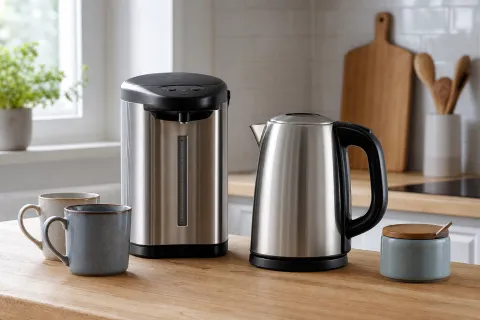
If you already know you want a normal electric kettle, start with Product Inspector's kettle guide. If the real issue is lifting, measuring one mug or avoiding repeated boiling, a hot water dispenser may be the better comparison.
What changes when the body is glass?
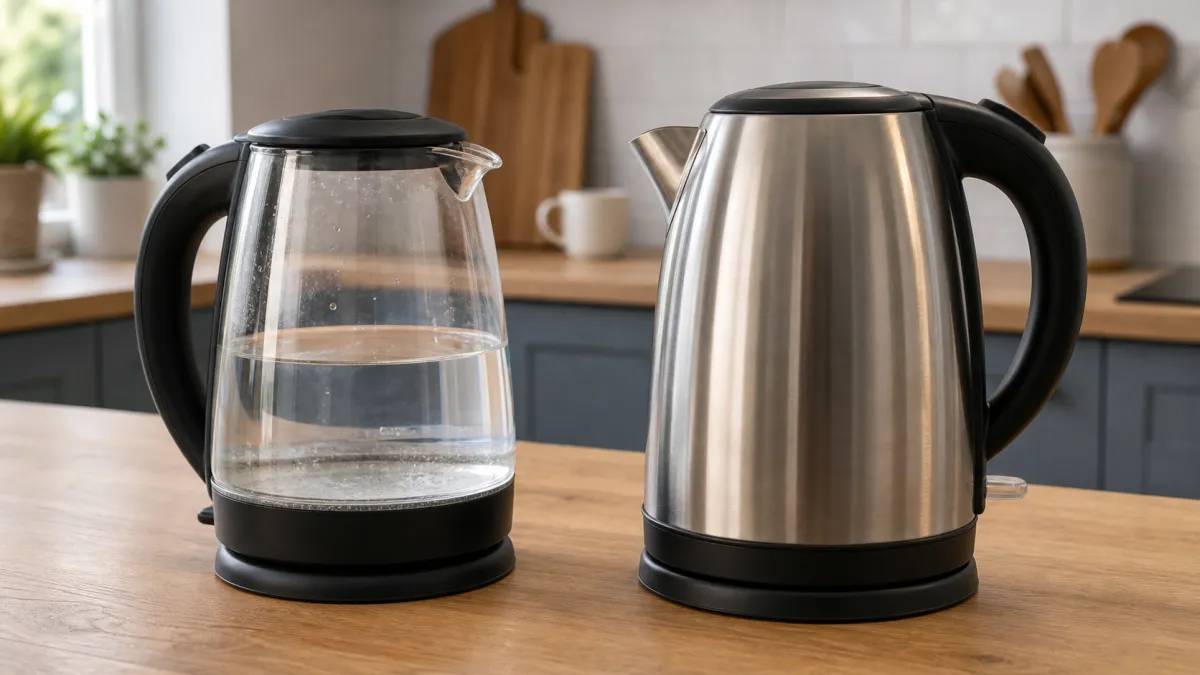
A glass kettle makes the water visible. That is useful when you want to avoid overfilling, check whether the water is moving, or spot when scale is building up around the base. It also gives the appliance a lighter, more modern look than a solid metal jug.
The trade-off is honesty. In a hard-water area, a glass kettle can look tired sooner because white deposits are easy to see. That does not mean the kettle is unsafe or worse at boiling; it means the cleaning routine is harder to ignore.
Glass is best if visible water and visible maintenance feel helpful rather than irritating.
What changes when the body is stainless steel?
A stainless steel kettle feels more traditional and usually hides the inside of the jug. That can make the worktop look cleaner between descales, especially if the outside is brushed rather than mirror-polished.
Stainless steel is not a free pass on limescale. Scale can still collect around the element area, spout and removable filter. The difference is that you may not notice it until pouring slows, flakes appear in the mug or the kettle sounds rougher than usual.
Steel also tends to suit matching appliance sets, mixed black-and-metal finishes and kitchens where a clear glass jug would look visually busy. If you want a kettle that recedes into the breakfast zone, stainless steel is often easier to live with.
Limescale is the biggest practical difference
Hard water contains natural minerals that can form scale on taps and in kettles. In practice, that makes the glass-vs-steel decision very local: a glass kettle in a soft-water area may stay clear with minimal effort, while the same kettle in a hard-water area can need regular descaling to keep it looking good.
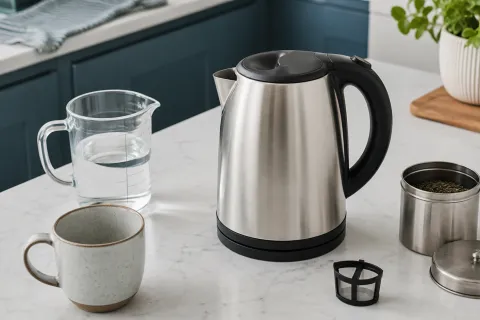
A glass kettle turns limescale into a visible reminder. A stainless steel kettle hides more of it, which can feel tidier but may delay cleaning. Either way, check the removable limescale filter, the width of the lid opening and whether you can comfortably reach inside for wiping and rinsing.
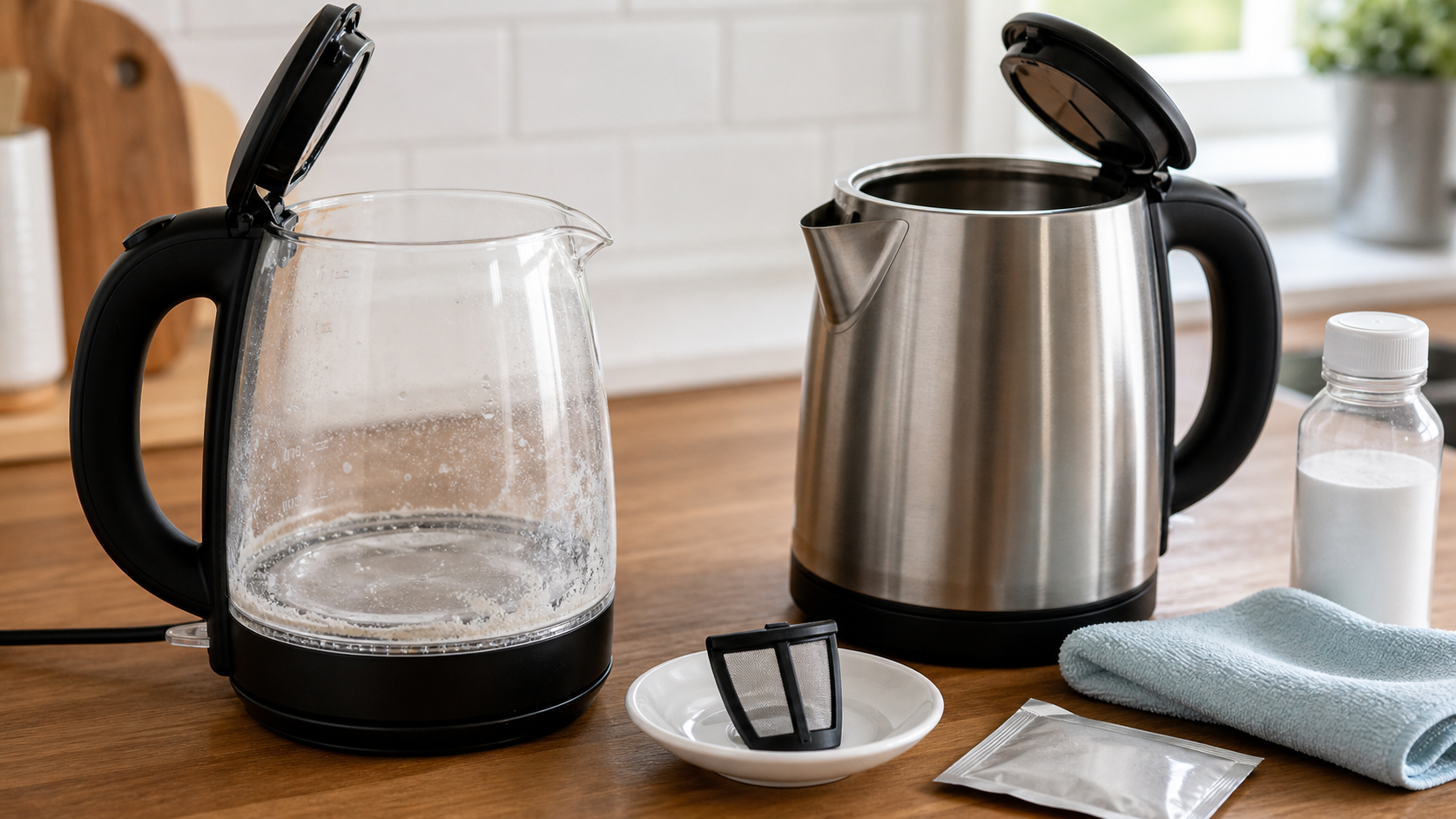
If your kettle manual allows it, a suitable kettle descaler* can be simpler than improvised cleaning. Use it as directed, rinse thoroughly and do not assume every finish or filter should be treated the same way.
Taste concerns: what to worry about and what to ignore
Most taste complaints come from new-appliance smells, stale water, limescale, filters that need rinsing, or water that has been reboiled too often. Body material can affect perception, but it is rarely the whole story.
Do not buy glass purely because it sounds healthier, or stainless steel purely because it sounds more professional. For mainstream UK electric kettles from reputable retailers, the more useful checks are food-contact materials, BPA-free claims where plastic touches water, a removable filter, clear care instructions and a returns route if a new kettle has a persistent taste after the recommended first boils.
If taste is your main worry, use fresh water, avoid leaving water sitting for long periods, descale before flakes appear in drinks, and follow the first-use instructions. Those habits matter whichever body you choose.
Cleaning, weight and durability
Glass needs more visible care. Fingerprints, water marks and scale rings show quickly, especially around the lower body. Stainless steel can hide marks better, although mirror finishes can show fingerprints and brushed finishes can still mark around the spout and lid.
- Check the lid opening: a wide opening makes rinsing and wiping easier than a narrow flip lid.
- Check the filter: removable and washable is better than a fiddly mesh you avoid cleaning.
- Check the filled weight: a 1.7-litre kettle is heavy when full, whatever it is made from.
- Check the base and handle: a balanced handle matters more than a stylish body when you pour several mugs.
Durability is partly material and partly design. Glass can look more vulnerable to knocks, while stainless steel can dent or scratch. Plastic trim, lid hinges, switches and bases are often the parts that decide how long a kettle feels good, so do not judge durability from the body alone.
Which type suits your kitchen?
Choose glass if you like seeing the water, want a brighter worktop look, and are happy for the kettle to advertise when it needs cleaning. It can work well in smaller kitchens because it looks less visually solid than a metal jug, though the base and handle still take up the same real space.
Choose stainless steel if you want a more classic appliance, a matching kettle-and-toaster look, or a finish that hides water marks better from a distance. Brushed steel is usually more forgiving than shiny chrome-style finishes.
For open-plan kitchens, think about what the kettle looks like between uses, not just when new. Glass looks best when kept clear. Stainless steel looks best when wiped around the spout, lid and handle where fingerprints and dried drips gather.
When a hot water dispenser is the better answer
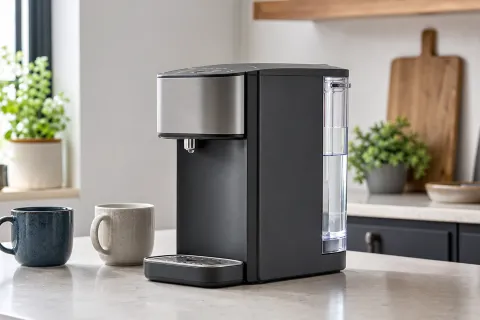
If the material question is really about mess, lifting or boiling too much water, another kettle may not solve the problem. A hot water dispenser can suit one-cup routines, home offices, measured mugs and people who dislike lifting a full jug.
It is not automatically cleaner. Dispensers still have tanks, spouts and drip trays to maintain, and they take a more fixed worktop position. But if your daily routine is one mug at a time, the dispenser route may matter more than whether a kettle body is glass or steel.
The better material is the one you will maintain
Stainless steel is the more practical default if you want a robust-looking kettle that hides everyday marks. Glass is the better choice if you value visibility, like the look and will descale before the scale ring becomes annoying.
The material should not distract from the basics: low minimum fill, clear water level, comfortable handle, clean pouring spout, removable filter and a lid opening you can actually clean. Get those right and either material can work well.
Sources and checks
These links help verify the practical material and limescale points before you choose a kettle.
- Anglian Water hard-water guidance explains why scale forms in kettles and why the effect varies by water area.
- Dualit Classic Kettle details show how a stainless steel kettle can combine a removable washable limescale filter, stated capacity, weight and repairability claims.