In this article
A hot water dispenser can feel like a clever kettle upgrade: press a button, fill one mug, avoid lifting a heavy jug. For some households, especially regular tea drinkers making one cup at a time, that convenience is real. For others, it adds another appliance to the worktop while doing less than a normal kettle.
The short version: buy a hot water dispenser for frequent measured mugs, mobility-friendly pouring or large all-day hot-water tanks. Buy a kettle if you need flexible quantities, faster pan-filling, a simpler appliance or the lowest faff. If your main frustration is bland instant coffee, a coffee machine may be the better upgrade than either.
Start with the job, not the appliance
The easiest way to choose is to picture the last five times you boiled water. Were they single mugs, a round of teas, pasta water, a hot-water bottle, baby-bottle prep, loose-leaf tea, cafetiere coffee, or something else?
| Routine | Better fit | Why it matters |
|---|---|---|
| One mug several times a day | Hot water dispenser | Measured dispensing can reduce lifting and overfilling, especially if you usually make one drink at a time. |
| Tea rounds for two or more people | Kettle | A 1.5-1.7 litre kettle is usually quicker and more flexible than dispensing several mugs one after another. |
| Cooking and hot-water bottles | Kettle | You can pour larger amounts into pans, bowls and bottles without waiting for repeated dispense cycles. |
| Green tea, speciality tea or manual coffee | Variable-temperature kettle or dispenser | Temperature control can matter more than the product type if you regularly avoid boiling water. |
| Coffee-first household | Coffee machine | If you want espresso, milk drinks or pod convenience, plain hot water is only part of the problem. |
If that table already points clearly in one direction, Product Inspector has buying guides for hot water dispensers, kettles and coffee machines. The rest of this article is for the awkward middle ground where more than one route looks plausible.
Speed is not just boil time
A fast kettle can boil a mug's worth of water quickly, especially if it has a low minimum fill and a powerful element. A hot water dispenser may feel quicker because it is push-button and cup-by-cup, but the real difference is the whole routine: filling, waiting, lifting, pouring and topping up the tank.
For single cups, convenience usually beats raw speed. A dispenser can be easier when the mug sits under the spout and the machine stops at a set volume. For several drinks, a kettle normally wins because one boil can fill multiple mugs in one go.
Do not buy a dispenser just because it sounds faster. Buy it because the measured, no-lift routine matches the way you actually make drinks.
Capacity: tank size versus useful water
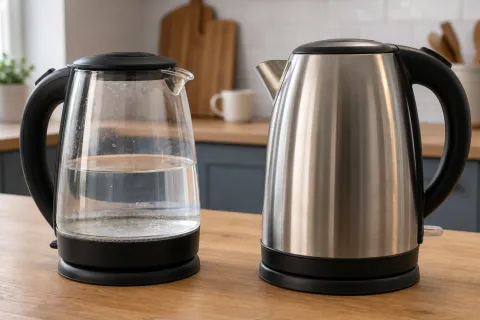
Most full-size kettles hold around 1.5-1.7 litres, but you rarely need to fill them. A good low minimum fill matters because it lets you boil one mug without wasting time and energy on water you will not use.
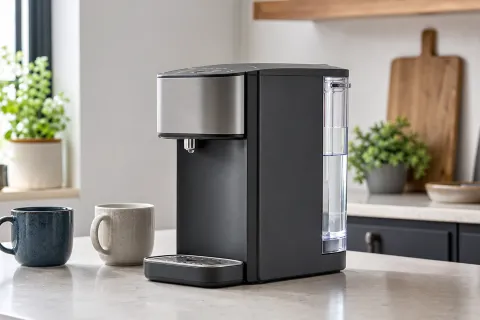
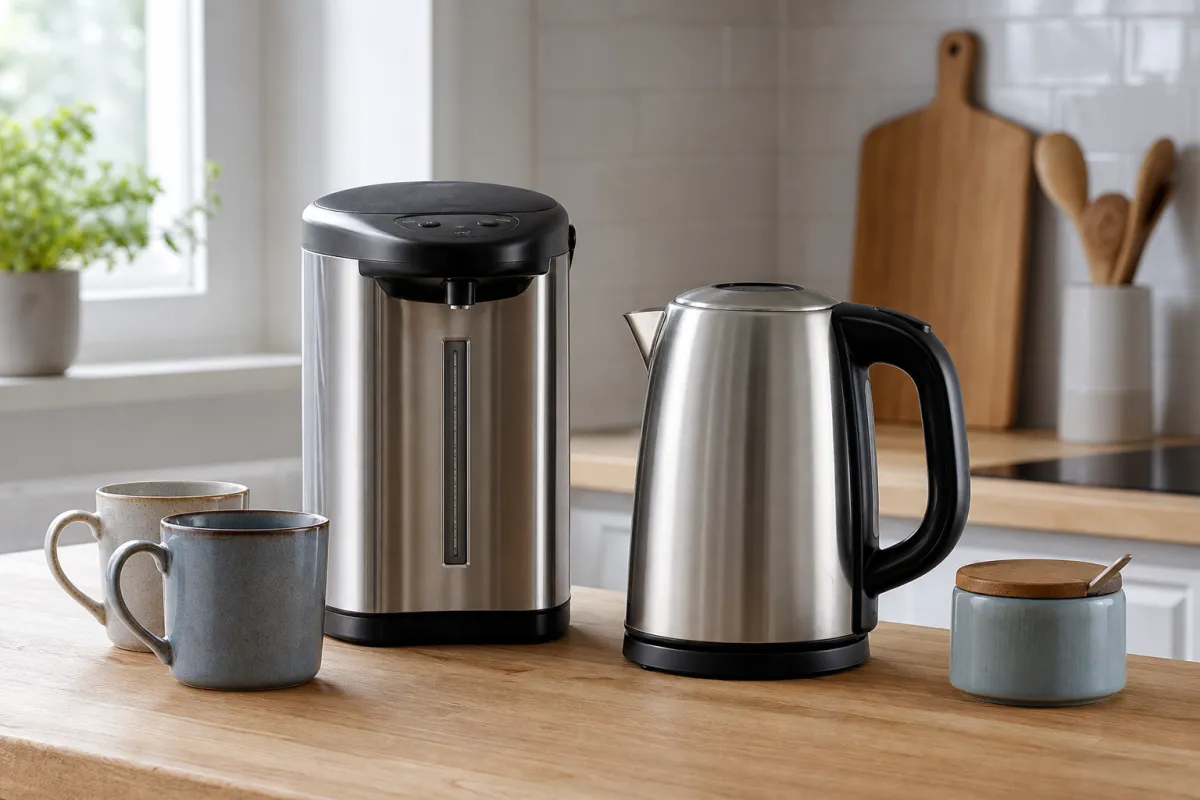
Hot water dispensers split into two broad habits. One-cup models are about convenience and measured mugs. Larger tank or thermal boiler-style machines are about repeated hot water through the day. The bigger designs can suit busy households, offices, shared kitchens or anyone who refills a kettle constantly, but they also take more space and can feel excessive in a small kitchen.
- Choose a kettle if you often need irregular amounts: half a mug, a full teapot, a saucepan, a bowl or a hot-water bottle.
- Choose a dispenser if most uses are predictable mugs and you dislike lifting, aiming or overfilling a kettle.
- Be cautious with very large tanks if you will not refresh the water often or if the appliance will dominate a small worktop.
Counter space and plug position matter more than they seem
A kettle earns its place because it is compact, familiar and easy to move. A dispenser usually needs a more fixed position: enough height for a mug, access to the removable tank, a drip tray that can be cleaned, and a safe route for the cable.
If your kitchen already has a toaster, air fryer, coffee machine or microwave fighting for sockets, a dispenser may solve one annoyance while creating another. Check the footprint, tank removal direction and mug clearance before you buy, not just the litre capacity.
A coffee machine changes the calculation again. If you already keep one on the worktop, a separate hot water dispenser may be redundant unless it serves tea drinkers, instant drinks or accessibility needs that the coffee machine does not handle well.
Temperature control is useful only when you use it
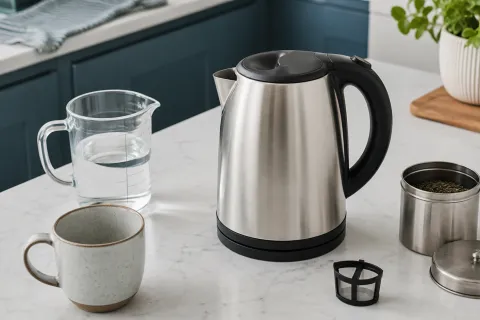
Some hot water dispensers and variable-temperature kettles let you choose lower temperatures, often for green tea, herbal tea, instant coffee, baby-related routines or manual coffee brewing. This is genuinely useful when you already care about drink temperature. It is not worth much if you press 100C every time.
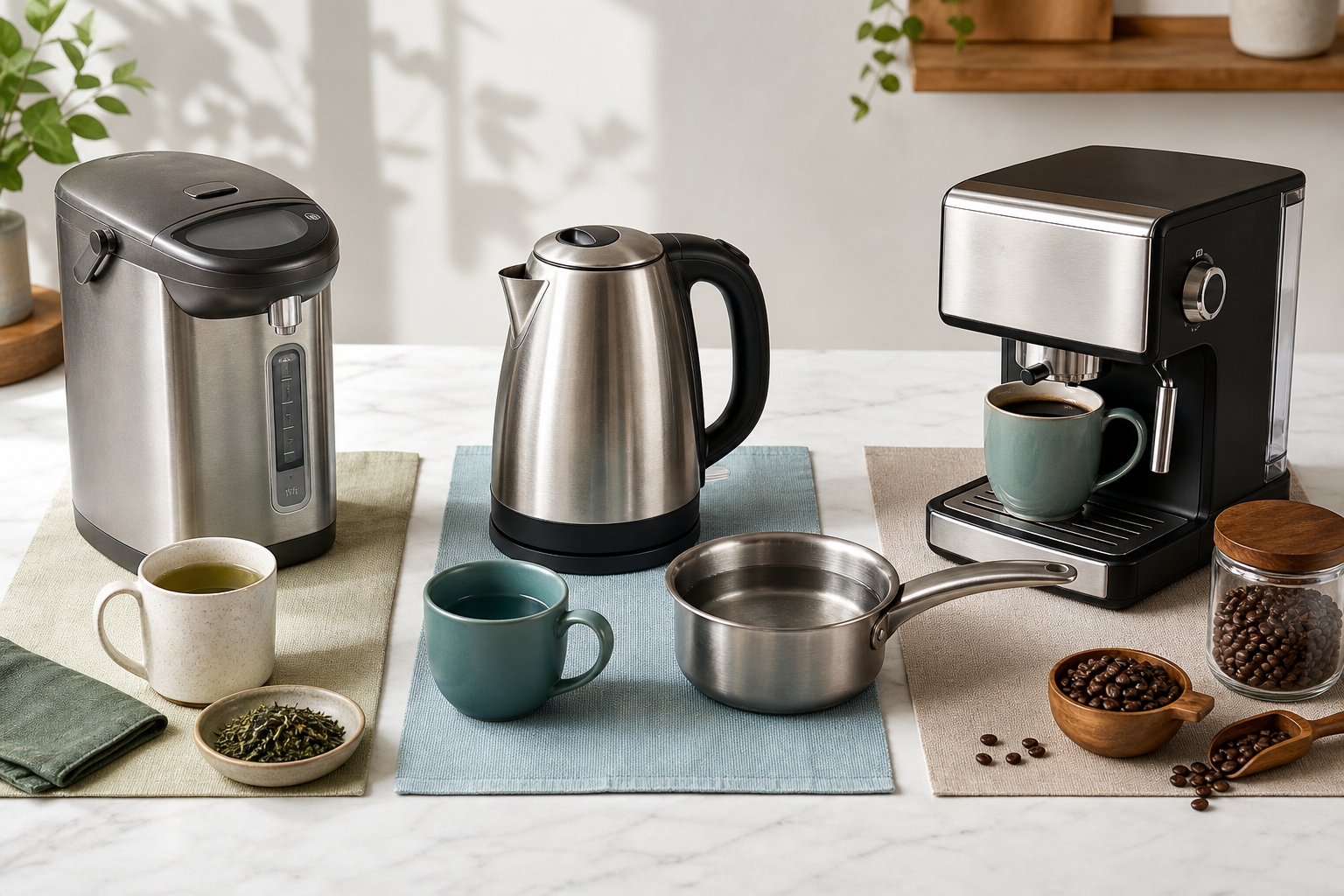
Tea and coffee drinkers should separate temperature control from appliance type. You can buy a variable-temperature kettle, a variable-temperature dispenser, or a coffee machine that handles coffee differently altogether. The right choice depends on the drink, not the gadget category.
Cleaning and limescale: neither option is maintenance-free
Hard-water areas make both appliances less forgiving. Kettles can show scale around the element, filter and water window. Dispensers add more parts: tanks, spouts, drip trays, internal channels and, on filtered models, cartridges that need replacing.
A kettle is usually easier to inspect and descale because you can open it, see inside and pour it out. A dispenser may keep the worktop tidier day to day, but the tank and spout still need regular attention. If the manual allows it, a suitable kettle descaler* can be useful for either type of appliance; always follow the appliance instructions rather than guessing.
Child safety and hot-water handling
Both appliances handle water hot enough to scald. A child-safety lock on a dispenser can be valuable, but it is not a substitute for sensible placement. A kettle without a lock can still be a safer choice than a dispenser if it is pushed back, unplugged when not in use and kept away from edges and trailing cables.
For family kitchens, check three things before buying:
- How water is released: one-touch dispensing is convenient for adults but needs a good lock or deliberate control layout around children.
- Where the appliance will live: keep hot-water appliances away from edges and avoid cable routes that can be pulled.
- How stable the mug position is: drip trays and cup stands should hold the mug securely without splashing.
Accessibility matters too. For someone who finds lifting a filled kettle difficult, a dispenser may reduce strain. For someone who needs to carry hot water across the kitchen after dispensing, it may not solve the real risk.
When a normal kettle is enough
A normal kettle is enough for most homes if it has a low minimum fill, clear water window, comfortable handle, stable base and a spout that pours cleanly. Add variable temperature if you drink green tea, speciality tea or manual coffee often enough to care.
Do not upgrade just because a dispenser looks more modern. If you make mixed quantities, fill pans, move the appliance often or want the cheapest reliable answer, a kettle is still the stronger everyday tool.
When a hot water dispenser earns its place
A dispenser makes sense when the routine is repetitive and cup-based: several mugs through the day, a home office, limited lifting strength, instant drinks, or a household where people keep boiling too much water for one cup.
The best models justify themselves with useful volume settings, a removable tank, sensible drip tray, good cup clearance, clear controls and, where relevant, temperature choice. The weakest models are less convincing: fixed cup size, awkward refilling, small tank, slow dispensing and no real advantage over a low-minimum-fill kettle.
Where coffee machines fit into the decision
If the real goal is better coffee, a dispenser is a side-step. It gives you hot water, not espresso, milk texture, pod convenience or bean-to-cup grinding. A kettle can support cafetiere, pour-over and instant coffee well, especially with temperature control. A coffee machine is the better route when you want the drink itself to change.
That matters commercially as well as practically. Spending dispenser money on a coffee machine can be smarter if tea is occasional and coffee is daily. Spending coffee-machine money on a dispenser is only sensible if plain hot water is the repeated household bottleneck.
Verdict: buy around your real hot-water habit
Choose a hot water dispenser if you mostly make single mugs, want measured dispensing, need less lifting or want a larger tank for repeated use. Choose a kettle if you need flexible amounts, better pan-filling, lower cost, easier cleaning and a compact appliance that suits almost every kitchen.
The middle option is a variable-temperature kettle. It keeps the flexibility of a kettle while adding the drink-control feature that tempts many people towards pricier dispensers. For many homes, that is the most sensible upgrade.
Sources and checks
These links are useful if you want to check hot-water safety guidance before choosing where a kettle or dispenser will sit in your kitchen.
- NHS burns and scalds prevention guidance explains practical ways to reduce scald risks at home.
- Child Accident Prevention Trust burns and scalds guidance gives child-safety advice around hot drinks, kettle cords and kitchen placement.