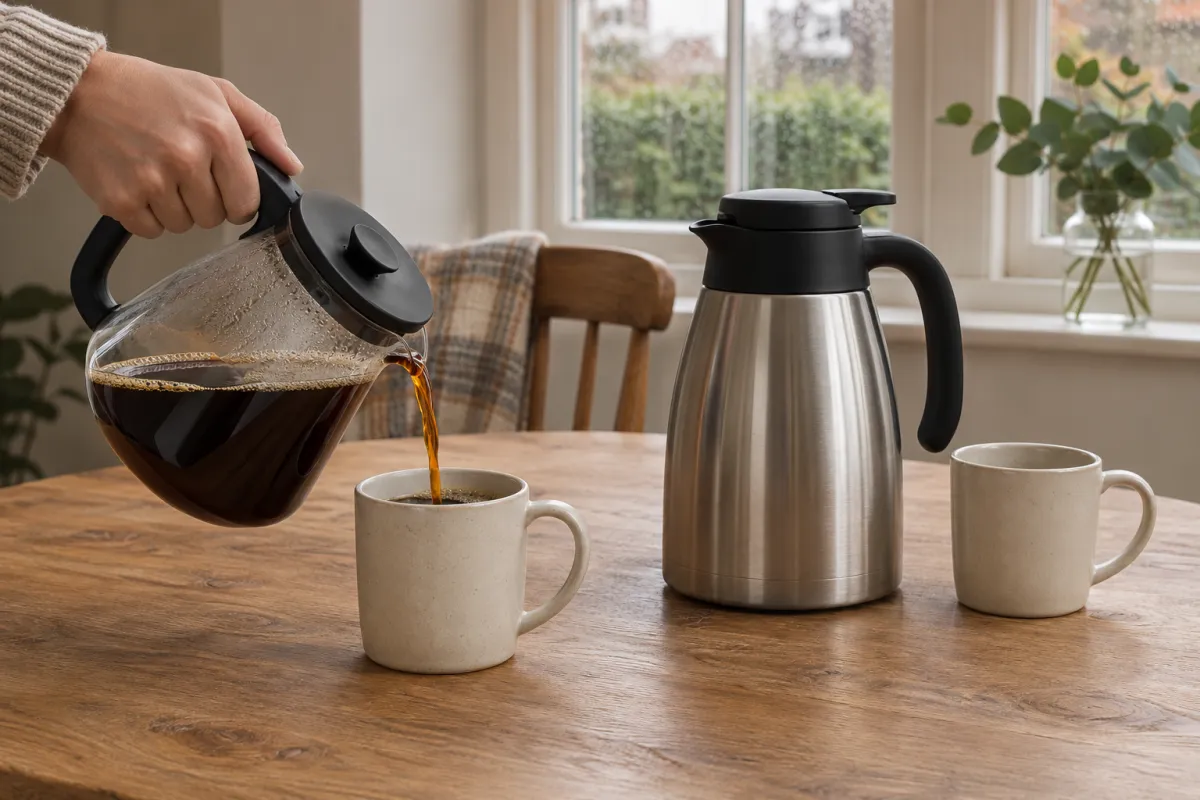
Choose a glass carafe if you usually pour the batch together. Choose a thermal carafe if people pour at different times or you want the jug to stay warm at the table. The carafe is the jug that catches the coffee as it brews. The choice comes down to where the jug will stand after brewing and how much coffee will be left when someone comes back.
If you mostly make one mug, check the smallest brew the machine can make before spending extra on an insulated jug. A good single-cup option can matter more than how long a full pot stays warm.
Glass and thermal carafes compared
| Glass carafe | Thermal carafe |
|---|---|
| Before brewing Seat the jug and lid as the machine requires. | Before brewing Some makers suggest warming the jug with hot water. Empty it before brewing. |
| First pour See how much is left as you share the batch. | First pour The opaque jug hides the fill. Check how the lid pours. |
| Back for a refill Take the jug to the table to pour, then return it to the hotplate. | Back for a refill Leave the jug at the table with the lid fitted as the maker directs. |
| After the last cup See what needs a rinse. Check how the lid comes off. | After the last cup Check how far you can reach inside and how to clean the lid. |
Our best filter coffee machines guide compares both types of jug alongside batch sizes and brewing controls.
When glass makes sense
At a shared breakfast, a glass jug makes it easy to divide the pot into roughly equal servings. You can see whether there’s enough for another mug without opening the lid or guessing from the weight. You can take the jug to the table for the first pour. If you want the hotplate to keep the rest warm, it needs to go back on the brewer.
A glass jug also suits a kitchen where people come back to the machine for top-ups during the same meal. Check when the hotplate switches off if you expect it to bridge a gap. The Moccamaster KBG Select switches its plate off automatically after 40 minutes. In one test of the KBG Select, half a jug of coffee measured 78°C after 30 minutes and 60°C after an hour. The plate had been off for the final 20 minutes. Treat the shut-off time as a guide to when the jug stops receiving heat. Your serving temperature will also depend on how much coffee is left and how long the jug spends off the plate.
Glass can chip or break, so check that you can buy a matching replacement if the machine is otherwise a long-term purchase. The exact model number is more useful than the jug’s capacity. Two jugs that hold the same amount can sit differently under the filter basket.
When thermal is worth having
An insulated jug earns its place when the coffee will be served away from the machine or spread across the morning. Think of one person pouring before work and another having breakfast later, or a pot left on the dining table while everyone helps themselves. You can leave the jug where people will use it. Between pours, leave the lid in the position the maker recommends to help keep the heat in.
Think about what will be left for the later drinker. A full jug at breakfast and a single mug’s worth sitting in the same large jug are different situations. A small amount in a big carafe can cool sooner. Insulation slows cooling, and the jug’s size, how warm it was when filled and how often you pour all affect the result. If you regularly finish the batch with one small serving left, try a fresh smaller brew for that person before assuming you need a larger or more expensive insulated jug.
If your glass-jug machine already makes the coffee you like and you only occasionally serve it away from the kitchen, an insulated serving jug you already own can do the holding. Brew into the machine’s own jug and transfer the coffee afterwards. If you do that most mornings, a machine that brews directly into its insulated jug saves the extra pour and another thing to wash.
What happens to the taste?
A second cup can stay warm and still taste different. If you’re choosing a jug for later refills, try the coffee you usually drink at the time you’d normally pour again. In a filter coffee study, trained panels tasted samples held for 15 minutes to three hours. For the light and dark roasts they used a jug with an insulating outer jacket and another with vacuum insulation. For medium roast, they also tried glass on a hotplate. Light and medium roasts tasted more sour over time. The dark roast became more acidic by measurement, but the tasters did not find it increasingly sour. The two insulated designs also differed on some characteristics for light and dark roasts. For the medium roast, the tasters found few differences between holding methods, including the glass jug on a hotplate.
In a separate blind tasting under the study conditions, 93 coffee-industry professionals showed no overall preference between the samples held for 30 minutes and three hours. Those timings describe a taste test. If the temperature of your second cup matters, look for a keep-warm test of the exact brewer with a batch close to yours.
Compare the first and later pours at a comfortable drinking temperature. If you enjoy the later cup but wish it were warmer, focus on the jug and where it sits between pours. If you miss the aroma of the first cup, brew a smaller batch and make the next cup fresh.
What to check before you buy
- Count your mugs and check the smallest brew. Measure a typical serving in your own mug. Two 250 ml servings mean you want about 500 ml of brewed coffee in the jug. A brewer’s cup marks can count smaller servings, and the water you add can exceed what makes it into the jug because some stays with the grounds. Match your ordinary batch to the machine’s supported amounts. The Moccamaster KBG Select has a half-pot setting. If you usually brew a single mug, check whether the machine has a setting for that amount or can fill the mug directly.
- Check the lid before you rely on it. Find out what you need to do with the lid to pour and whether you can do it comfortably with a full jug. Check the brewing position too. Lock the lid on the Sage the Luxe Brewer Thermal before pouring. Its manual recommends warming the carafe with hot water for about 30 seconds and emptying it before brewing. If you set up a timed brew the night before, look for a test that starts with a room-temperature jug. That reflects the brew you’ll wake up to.
- Picture the last rinse. Check whether you can see inside and reach the sides if the jug needs a clean. Sage calls for warm running water for the jug and lid after use. The Melitta Look V Therm Timer manual calls for a rinse with warm water and a little washing-up liquid. Follow the instructions for the exact jug and lid separately before putting either in the dishwasher. Some insulated jugs have a glass liner that needs gentler handling. Check what’s inside the jug as well as how easily you can reach it. If the lid comes apart, check whether you can clean its pouring channel easily. A lid that takes several steps to rinse matters more when you use the brewer every morning.
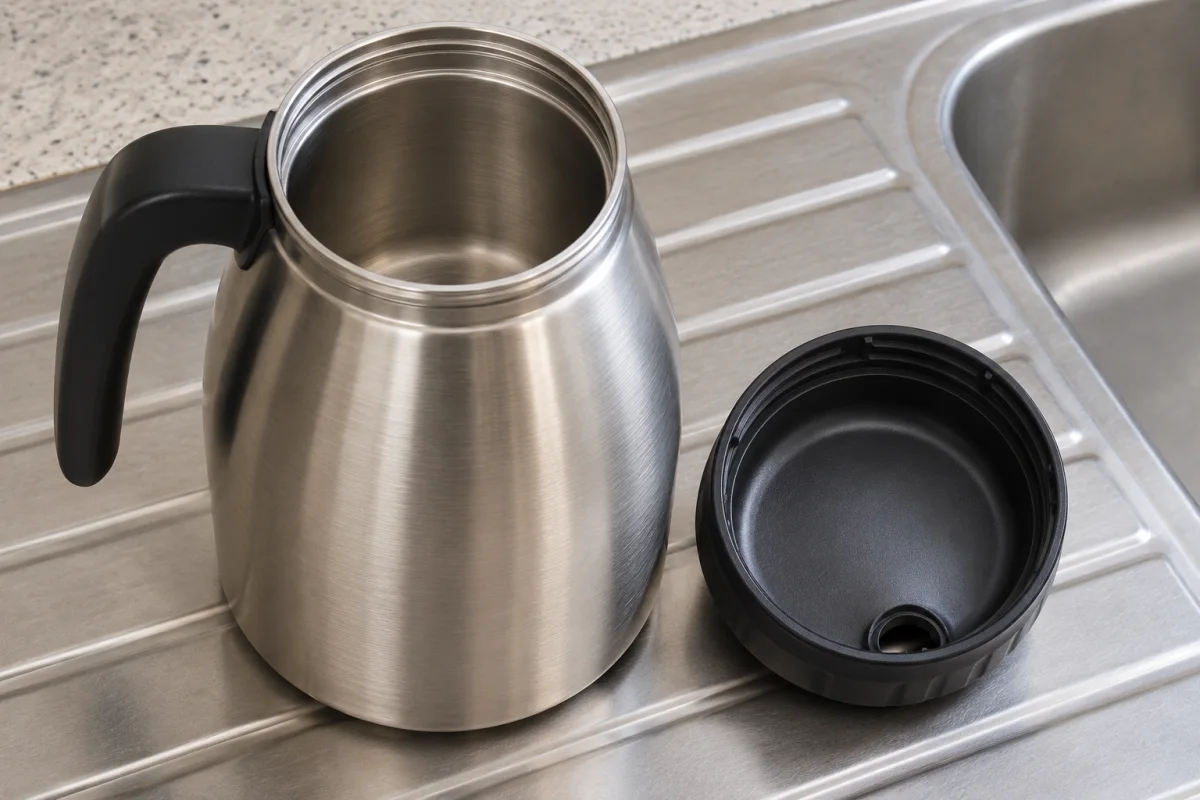
Check how easily you can reach inside the jug and rinse the underside of the lid. Follow the cleaning instructions for your model. Credit: Product Inspector.
Which would we choose?
For two or more people who usually pour together, we’d choose glass. The visible fill is useful every day, and a hotplate gives you time for a top-up near the brewer. For a household that starts the morning at different times or leaves a pot on the table for refills, we’d choose thermal and look for a lid that pours easily and is straightforward to clean. If the typical batch is one mug, start with how well the machine brews that amount. You may get more use from making a fresh cup when you want it.
Sources and checks
- Batali and colleagues’ drip coffee tasting study covers the roast, carafe and holding-time comparisons.
- The Moccamaster KBG Select UK model specifications explain the half-pot setting and hotplate shut-off.
- Ideal Home’s test of the Moccamaster KBG Select measured half a jug left on the hotplate and checked its temperature after the plate switched off.
- The Sage Luxe Brewer manual (PDF) covers pre-warming, locking the lid and cleaning.
- Find the Look V Therm Timer’s jug cleaning instructions in Melitta’s UK manual directory under the Look section.