In this article
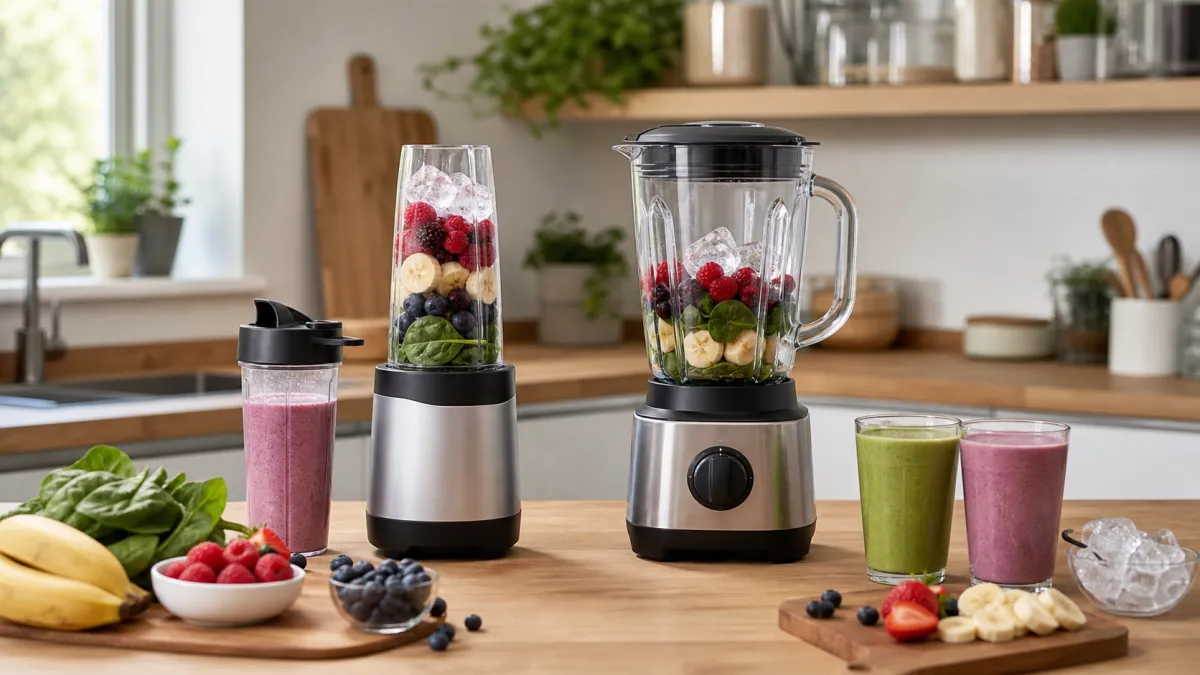
A smoothie maker is usually the better buy if you want one drink at a time, made straight in a bottle you can take with you. A full-size blender is the better buy if you care more about a smoother finish, larger batches, crushed ice, thick mixtures and sharing drinks at home. For most daily solo smoothies, choose the bottle machine; for better texture and flexibility, choose the blender.
The two appliances look similar because both spin blades through fruit and liquid. The difference is how they make you live with the drink afterwards: a smoothie maker prioritises the bottle, small footprint and fast rinse; a blender prioritises the bigger jug, stronger circulation and more room for ingredients to move.
Start with the drink you actually make
| What you want | Better first buy | Why it fits |
|---|---|---|
| One breakfast smoothie to take out | Smoothie maker | The blending cup becomes the drinking bottle, so there is less washing up and no need to decant. |
| Two or more drinks at once | Full-size blender | A larger jug gives ingredients more space and usually handles family or batch portions more comfortably. |
| Very smooth, thick drinks | Full-size blender | The wider jug and stronger circulation are usually better for frozen fruit, greens, oats and thicker mixtures. |
| Protein shakes or simple fruit smoothies | Smoothie maker | A smaller cup is quick, tidy and sized around single servings. |
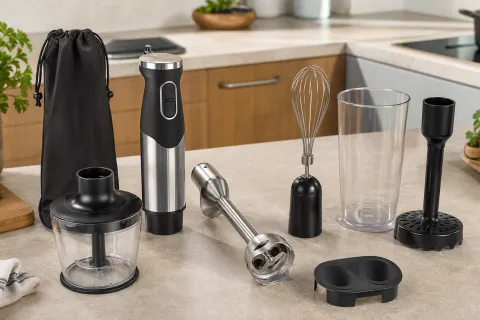
| Soup, sauces and small pan jobs | Hand blender | A stick blender works directly in a pan or beaker, but it is not as convenient as a bottle machine for travel drinks. |
| Crushed ice or frozen drinks | Full-size blender | Check the manual either way, but bigger blenders are usually the safer bet for regular ice-heavy drinks. |
Compare the right shortlist
If the table already settles it, use the relevant buying guide rather than trying to make one appliance do the other one's job. Start with smoothie makers for bottle-first daily drinks, or blenders if texture and bigger batches matter more. A hand blender is worth comparing when soups, sauces and occasional small blending jobs matter as much as smoothies.
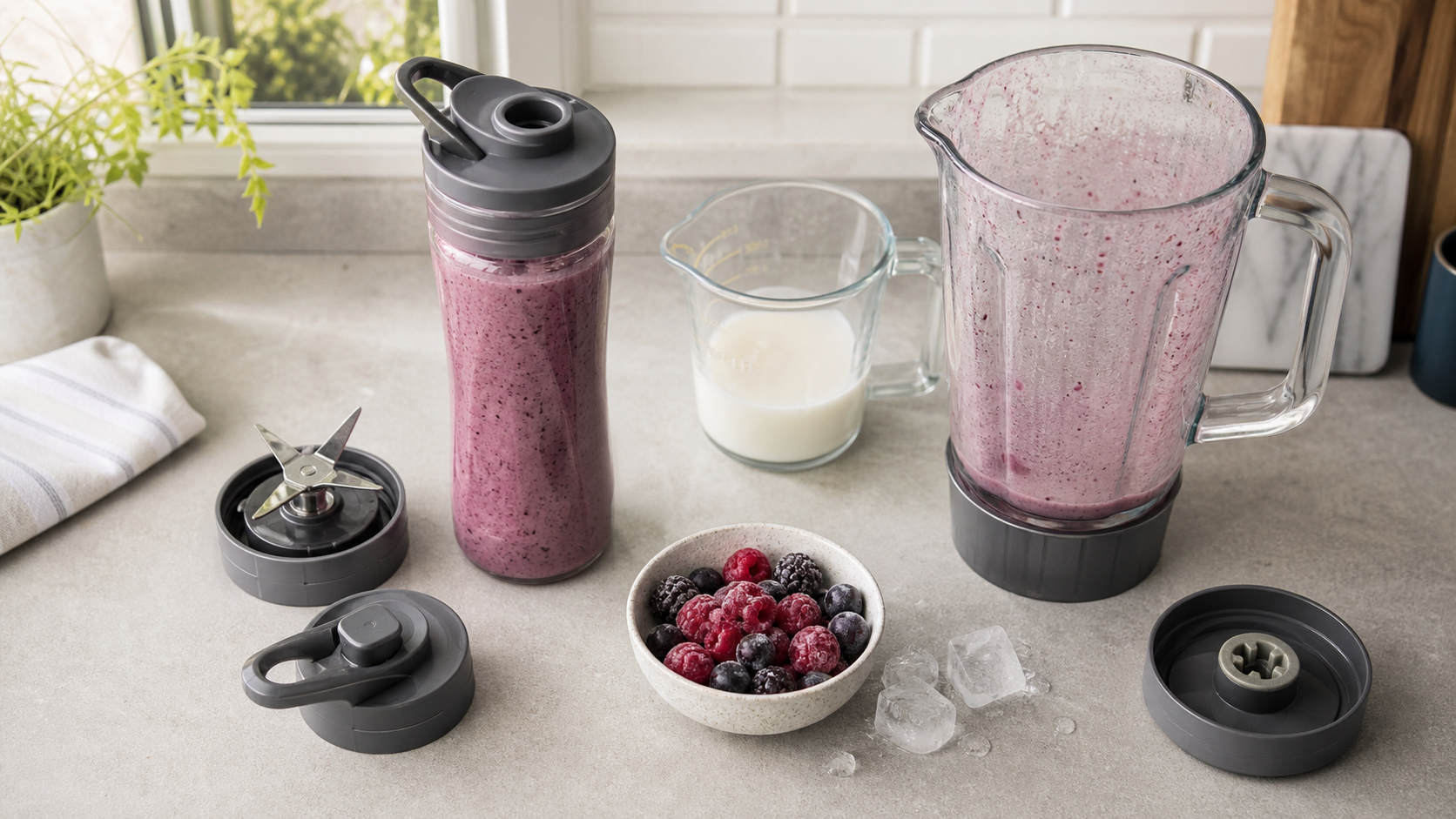
Bottle convenience, frozen ingredients, batch size and cleaning are the trade-offs that usually decide this choice.
Texture is where a blender earns its space
A smoothie maker can make good everyday smoothies, especially when you use enough liquid and do not overload the cup. The narrower bottle is less forgiving, though. Frozen berries, leafy greens, oats, seeds and ice need enough liquid around them to move through the blades; pack the bottle too tightly and you can end up stopping, shaking and restarting.
A full-size blender gives the mixture more room to fold back into the blades. That can matter if you want a smoother drink rather than a quick blended shake. If texture is the thing that annoys you most, buy the appliance with the better blending headroom, not the one with the neatest bottle.
The simplest test is this: if you usually drink it on the way out, the bottle matters. If you notice bits, seeds, ice or leafy texture, the blender matters.
The bottle is the smoothie maker's real advantage
A smoothie maker is not just a smaller blender. Its main promise is that the cup you blend in becomes the bottle you drink from. That makes it useful for work bags, school runs, gym routines and small kitchens where you do not want a large jug on the draining board every morning.
That convenience comes with limits. Bottles are usually narrower than jugs, so ingredients need cutting smaller and loading sensibly. Put liquid in early, leave space for the blades to move the drink, and check whether the bottle, cap and blade assembly are dishwasher-safe on the model you are considering. Replacement bottles are also worth checking before you buy, because a smoothie maker is much less useful if the only bottle cracks or disappears.
Ice and frozen fruit need a manual check
Do not assume every smoothie maker is happy with hard ice cubes or large frozen chunks. Some personal blenders are sold with ice and frozen-fruit claims, but others ask for smaller pieces, more liquid or softer ingredients. A jug blender may be the stronger choice for regular frozen drinks, but even then the manual matters: some models have an ice programme, while others restrict how much ice can be added at once.
If frozen fruit is part of your normal drink, check three things before buying: whether the model allows frozen ingredients, whether it needs added liquid first, and whether ice-crushing is a stated feature rather than a hopeful assumption.
Batch size changes the right answer
Single-serve bottles are brilliant when one person makes one drink and leaves. They are less brilliant when two people want different smoothies, or when a household wants a jug on the table. Making three drinks in a smoothie maker can mean three separate blends, three bottles, and more repeated rinsing than you expected.
A blender is better for shared portions, thicker smoothie bowls, milkshakes, sauces, pancake batter and other jobs where the extra capacity is useful. The trade-off is storage and washing. A large jug takes more cupboard space and is more awkward in a small sink, even when the removable parts are technically easy to rinse.
Cleaning: fewer parts beats clever promises
The easiest appliance to clean is the one you can rinse before the smoothie dries. Smoothie makers score well here because there is no separate jug to decant from, but the blade cap, bottle threads and drinking lid still need attention. Seeds and oats can sit around seals, and a travel lid can become unpleasant if it is only given a quick splash under the tap.
Blenders usually have a larger jug and lid to wash, but the wider shape can be easier to reach. Some people prefer adding warm water and a drop of washing-up liquid, pulsing briefly, then rinsing. That is useful, but it does not replace checking seals, lids and blade areas when the drink contains dairy, protein powder or sticky fruit.
Where a hand blender fits
A hand blender is the quiet alternative in this decision. It is not as neat as a smoothie maker for taking drinks out, and it may not give the same finish as a strong jug blender. It can still make sense if you mainly blend soup in a pan, make small sauces, or want one compact tool for occasional smoothies in a beaker.
For drink-first buying, put it third. Choose a hand blender when cooking jobs matter as much as smoothies; choose a smoothie maker or blender when the drink itself is the reason you are buying.
So, which should you buy?
Buy a smoothie maker if your normal drink is a single smoothie or shake, you like the bottle format, and you want the smallest, quickest appliance you will actually use on a weekday. It is the most convenient choice, not always the most powerful one.
Buy a full-size blender if you want smoother texture, larger batches, frozen drinks, thicker mixtures or an appliance that can do more than one portable smoothie. It takes more space, but it gives you more headroom.
Buy a hand blender if smoothies are only part of the story and you also want soups, sauces and small blending jobs with minimal storage. It is the practical compromise, not the most polished drink maker.
One final note: bigger smoothies are not automatically better. UK NHS guidance treats fruit juice, vegetable juice and smoothies as a combined daily portion of 150ml for 5 A Day purposes, so choose the appliance around convenience and texture rather than assuming a larger bottle is always the healthier route.
Sources and checks
These links help you check details that can affect the buying decision before choosing a model.
- NHS 5 A Day guidance: useful for checking how smoothies and fruit juice are treated in UK portion advice.
- Nutribullet 600 Series details: a manufacturer example of the personal-blender format, including single-serve smoothie positioning and ice/frozen-ingredient claims.