In this article
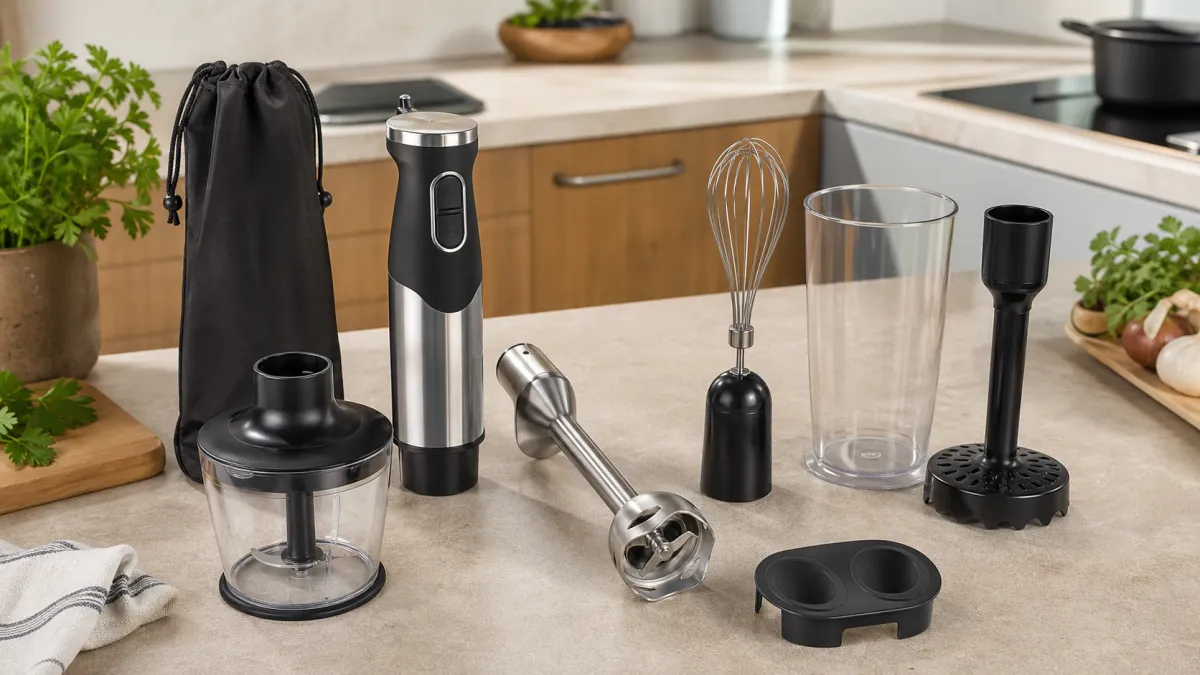
A hand blender looks simple until you start comparing the kits. One model might arrive with only a blending foot and beaker. Another might include a chopper bowl, balloon whisk, masher, pan guard, storage case and several lids. The useful question is not whether more attachments look better in the box. It is whether they solve jobs you already do often enough to earn cupboard space.
For most UK kitchens, the blending foot and a good beaker matter first. A small chopper can be genuinely useful if you often prep herbs, onions, nuts or breadcrumbs. A whisk is handy for light work. A masher is more specialist. Guards, dishwasher-safe claims and storage pieces are worth checking carefully because they decide whether the kit is pleasant to use after the first week.
Start with the jobs you repeat
Before paying for a large kit, think about the food you actually make. If your hand blender is mainly for soup, sauces and baby food, the motor, blending foot, beaker and splash control matter more than a pile of extras. If you cook from scratch in small quantities, a chopper bowl may save you getting out a food processor. If you bake only occasionally, a whisk attachment may be convenient but not essential.
A fuller kit makes most sense when it replaces something else. A chopper that handles small prep jobs can reduce the need for a mini processor. A tall beaker can make sauces easier than using a wide bowl. A masher can save time if you make mash every week. The same attachment is much less convincing if it duplicates a tool you already own and like using.
The attachment-by-attachment guide
Blending foot
The blending foot is the reason to buy the appliance. It should feel sturdy, attach securely and be shaped so it pulls food into the blades without splashing everything up the sides of the pan. A metal foot is usually the more durable choice for hot soup and regular use, although you should still check the manual for temperature and pan-surface limits.
If you are choosing between two kits, prioritise a comfortable motor handle and a reliable blending shaft over novelty accessories. A hand blender that is awkward to grip or hard to detach will not become more useful because it has extra pieces in the box.
Chopper bowl
A chopper bowl is often the most useful paid extra. It is best for small, dry or semi-dry prep: herbs, onions, garlic, nuts, breadcrumbs, pesto bases and small batches of chopped vegetables. It can make a hand blender kit feel more like a compact prep set rather than a single-purpose soup tool.
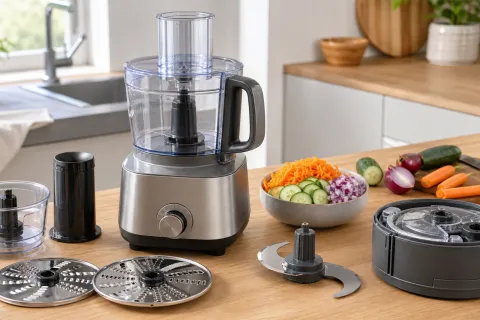
The limit is capacity and control. A chopper bowl is not the same as a full food processor. It will not usually slice, grate or knead, and it can struggle when you want even results across a larger batch. If you regularly prep family-size quantities, compare food processors instead of expecting a small chopper attachment to do everything.
Balloon whisk
A whisk attachment is useful for cream, eggs, light batters, pancake mix and quick dressings. It is usually easier to wash and store than a hand mixer, and it can be a neat bonus if you bake occasionally.
It is not a stand mixer replacement. Thick doughs, heavy cake mixtures and long whisking jobs still need a tool designed for sustained mixing. Treat the whisk as a convenience attachment, not the reason to buy a much more expensive hand blender kit.
Potato masher
A masher attachment can be worthwhile if you make mash often and want a smoother result with less wrist effort. It is also one of the easiest extras to overbuy. The attachment is bulky, has holes and edges that need cleaning, and may not be useful for much beyond potatoes, root vegetables and similar soft foods.
If mash is a weekly staple, it can earn its place. If it is an occasional side dish, a normal manual masher is cheaper, easier to store and less fussy to clean.
Beaker or blending jug
The beaker is easy to dismiss, but it can be one of the most practical pieces in the kit. A tall, narrow beaker keeps small batches close to the blades, reduces splatter and makes sauces, dressings and smoothies easier than using a wide mixing bowl. A lid is useful if you blend a sauce and chill it briefly, but it should fit firmly and be easy to clean.
Check the useful capacity, not just the headline size. A beaker filled too high can splash or overflow when the blender starts moving food around.
Pan guard and splash guard
A pan guard is there to reduce scratching when you blend in a saucepan, especially with non-stick or enamelled cookware. It can be useful, but it needs to fit the blending foot properly and should not make the blender clumsy in the pan. A splash guard matters if you blend soups and sauces directly in cookware rather than decanting into a jug.
Do not assume every guard suits every pan. If protecting cookware is a priority, check the model manual and the shape of the blending foot before you buy.
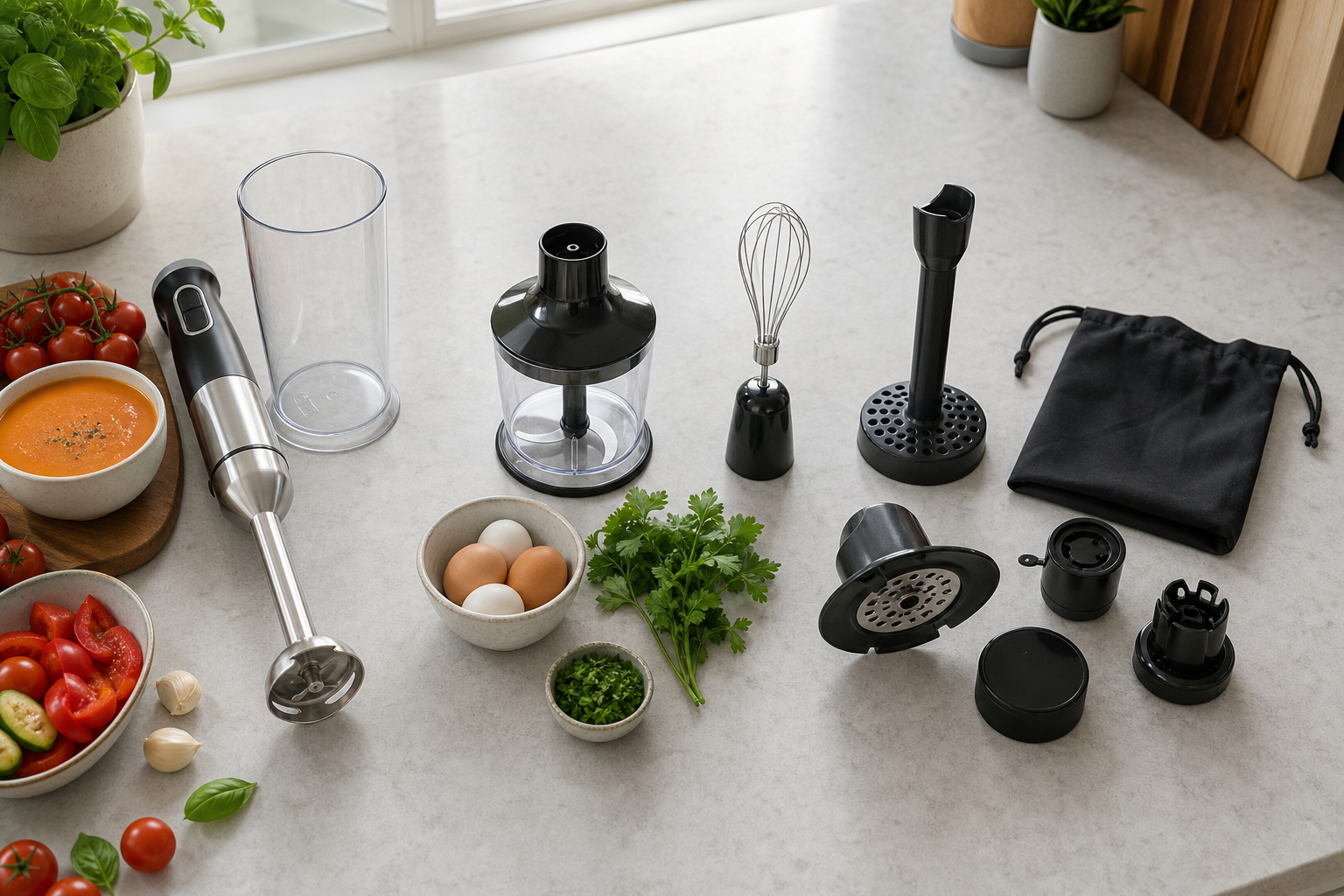
Which attachments are worth paying for?
| Attachment | Worth paying for when... | Skip or downgrade when... |
|---|---|---|
| Chopper bowl | You regularly chop herbs, onions, nuts, breadcrumbs or small sauce bases. | You need slicing, grating, dough or larger batch prep; a food processor is the better fit. |
| Whisk | You want quick cream, eggs, light batters or dressings without a separate hand mixer. | You bake heavy mixtures or need long mixing sessions. |
| Masher | You make mash often and want less manual effort. | You only make mash occasionally or dislike cleaning awkward perforated parts. |
| Beaker | You make small sauces, dressings, smoothies or baby-food portions. | You already have a tall jug that fits the blender safely and cleanly. |
| Pan guard | You blend in non-stick or enamel pans and want extra surface protection. | You mostly blend in a beaker or stainless pan, or the guard makes the foot harder to use. |
| Storage case | The kit has sharp blades, loose gearboxes and several small pieces. | The case is bulky, awkward or only stores half the accessories. |
Ready to compare kits? Start with our hand blender guide once you know which attachments you will actually use. If the chopper bowl is doing the most work in your head, it is also worth checking whether a food processor would suit your prep better.
Dishwasher-safe parts still need checking
Dishwasher-safe wording can be useful, but it is rarely as simple as putting the whole kit in the machine. The motor handle should not be submerged. Gearbox lids and whisk adapters often need wiping or hand-washing. Chopper bowls, beakers and detachable shafts may be dishwasher-safe on some models, but blades, seals and lids can have separate rules.
Check exactly which parts are dishwasher-safe before you buy. If the parts you use most need careful hand-washing, the kit may not save as much time as it looks. This matters most for chopper bowls and mashers, where food can sit around blades, holes and joins.
Storage can decide whether the kit gets used
Hand blender kits often fail at storage rather than blending. A motor handle, blending shaft, whisk head, chopper bowl, blade, lid, masher and beaker can become an awkward pile of parts. Sharp blades need safe storage, and small adapters are easy to lose if they do not have a fixed place.
A bag, stand or lidded chopper bowl is useful only if it keeps the pieces you use together. Be wary of large moulded cases that take up more space than the attachments themselves. For a small kitchen, a simpler hand blender with a beaker and chopper may be easier to live with than a deluxe set that needs a whole shelf.
When a separate blender or food processor is better
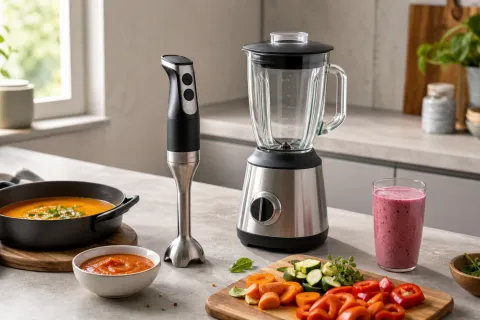
A hand blender is strongest for direct-in-pan blending, small sauces, quick soups and compact storage. A jug blender is usually better for larger drinks, smoother frozen fruit blends and recipes where you want a stable sealed jug. A food processor is better for slicing, grating, pastry, dough and large chopping jobs.
If your shopping basket is full of hand blender attachments because you want to make smoothies every morning, compare blenders as well. If you want to chop, slice and grate vegetables for meals, compare food processors. The best hand blender kit is not the one with the most possible jobs; it is the one that handles your regular small jobs without making cleaning and storage worse.
The useful kit is the one you will leave assembled
Most shoppers should prioritise a comfortable hand blender, a sturdy blending foot, a tall beaker and, if they prep small ingredients often, a chopper bowl. Add the whisk if you will use it for light mixing. Add the masher only if mash is a regular part of your cooking. Treat guards, dishwasher-safe claims and storage as practical checks, not small print.
A bigger kit can be good value when several attachments replace tools you would otherwise buy separately. It is poor value when the extra pieces make the appliance harder to store, harder to clean and less likely to be used. Choose the attachments around meals you already make, and the hand blender is much more likely to stay on the worktop rather than disappear into the back of a cupboard.