In this article
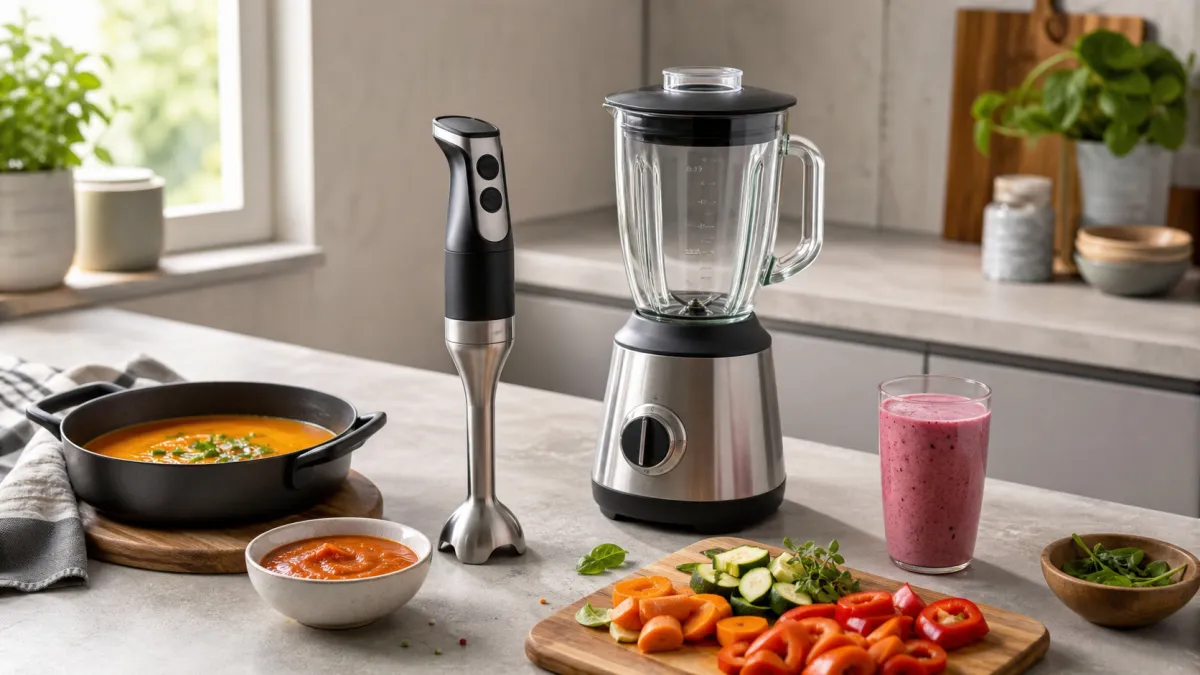
A hand blender is usually the better buy if you mainly make soup in a pan, small sauces, mayonnaise, baby food, dips or quick weekday blends. A jug blender is the better buy if you want the smoothest texture, larger batches, frozen fruit smoothies, crushed ice or repeat drinks for more than one person.
The mistake is treating them as two sizes of the same appliance. A hand blender is a compact tool you move through the food. A jug blender is a countertop machine that pulls ingredients down into a lidded jug. That difference changes texture, batch size, cleaning and where the appliance lives in your kitchen.
Most small kitchens should start with the job, not the motor size. If the food is already in a pan or bowl, a hand blender often wins. If the result needs to be extremely smooth or made in larger batches, a jug blender earns its space.
Use the three-job test first
Before comparing wattage, blade claims or accessory kits, ask what you will actually make most weeks.
Hot soup, sauces and small batches: choose a hand blender unless you specifically need a very polished texture.
Smoothies, frozen fruit and bigger drinks: choose a jug blender, or a smoothie maker if you want single-serve bottles.
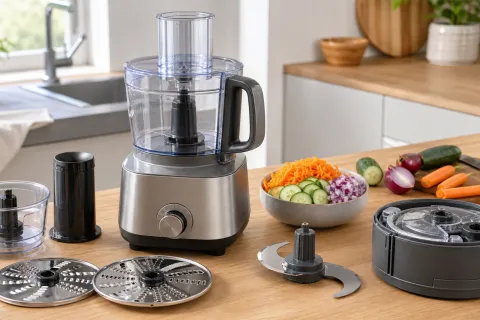
Chopping, slicing, grating or dough prep: neither is the neat answer; look at a food processor instead.
That test matters because the neatest appliance on paper can become the one you avoid using. A hand blender that lives in a drawer is easy to reach for on a Tuesday night. A jug blender can produce a smoother result, but it asks for more cupboard space, more washing-up and a safer routine when hot food is involved.
Hand blenders are best when the food is already in the pan
A hand blender is at its strongest when it saves a transfer step. You can blend soup in the saucepan, smooth a tomato sauce, blitz cooked vegetables into a puree, or make a small dressing in a tall beaker. For many home cooks, that is the whole point: fewer parts, less lifting and less counter space.
The trade-off is control. You have to move the blender head around the pan or beaker, keep it submerged enough to reduce splashing, and accept that some mixtures will stay a little more rustic than they would in a powerful jug blender. That is fine for many soups and sauces. It is less convincing if you want ultra-smooth nut butters, icy drinks or several breakfast smoothies in one go.
Jug blenders win when texture and batch size matter
A jug blender suits food that needs to circulate around fixed blades. Smoothies, milkshakes, frozen fruit drinks, pancake batter, larger batches of soup and very smooth sauces are the obvious examples. The lidded jug helps ingredients move consistently, and better models can pull fibrous fruit, leaves and ice into a smoother blend than a basic hand blender.
The cost is space and friction. A jug blender needs a base, a jug, a lid and room to store them. If it is too tall for your cupboard or too heavy to lift down easily, it will not feel convenient for a quick sauce. It also creates a separate washing-up job every time you use it.
Hot soup changes the decision
Soup is the area where the decision is closest. A hand blender lets you blend directly in the pan, so there is no ladling hot liquid into another vessel. That is simpler and often safer for weekday cooking, provided you use a deep enough pan, keep the blade head below the surface and start slowly.
A jug blender can give a smoother restaurant-style soup, but not every jug blender is designed for hot ingredients. Some need the soup to cool first, some have a maximum hot-fill level, and some personal blenders should not be used with hot liquids at all. Check the manual before assuming a lidded jug is suitable for boiling-hot soup.
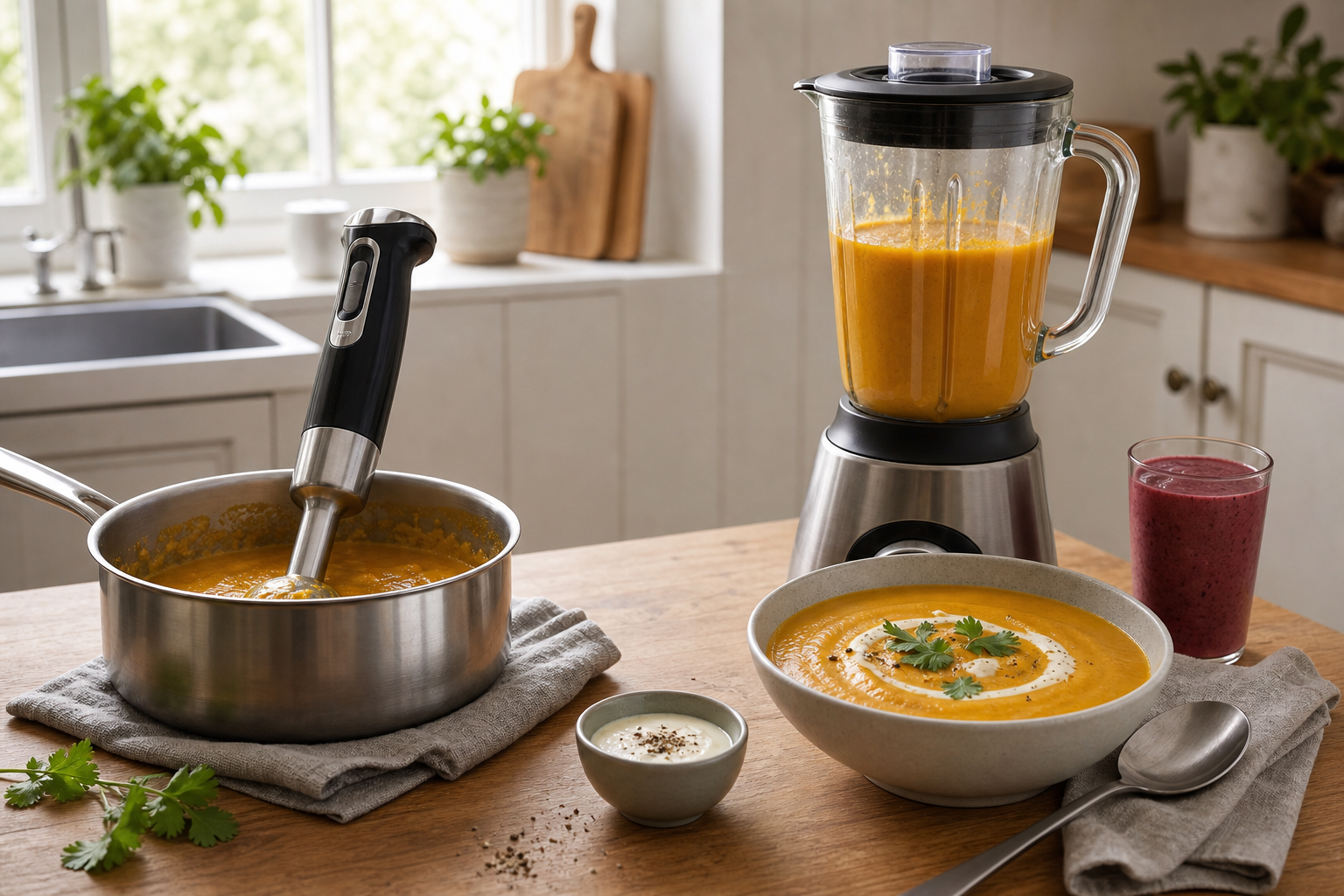 For hot soup, the practical choice is often between blending directly in the pan and transferring a larger batch to a suitable jug blender.
If soup is your main reason for buying, decide what annoys you more: a slightly less polished texture from a hand blender, or the transfer, cooling and washing-up routine of a jug blender.
Sauces, dips and small batches favour the hand blender
For mayonnaise, salad dressing, pesto-style sauces, hummus-style dips and small portions of baby food, a hand blender is often the more efficient tool. It works well in a tall, narrow container because the food sits close to the blades rather than spreading across a wide jug.
If your chosen hand blender does not include a beaker, a narrow blending beaker* can make small batches tidier and reduce splashes. It is not essential, but it is a useful accessory when you want the compact appliance without the mess of using a wide bowl.
A jug blender can still make dips and sauces, especially in larger quantities, but small amounts may sit below the blade path or need repeated scraping. If you mostly cook for one or two, the hand blender is usually less wasteful and faster to rinse.
Smoothies are where jug blenders pull ahead
A hand blender can make a soft-fruit smoothie in a beaker, but it is rarely the best tool for frozen fruit, leafy greens, seeds, ice or several drinks at once. You may get a drinkable result, but the texture can be grainier and the process messier.
A jug blender is the stronger choice if you care about a smoother drink or regularly make two or more portions. A smoothie maker is worth considering if you mainly want one drink at a time and like blending directly into a bottle. It is less flexible than a full jug blender, but it can be easier to store and clean.
Cleaning is not just dishwasher-safe parts
Hand blenders look easy to clean because there are fewer parts, and often they are. The blade end usually needs a quick rinse straight after use, while the motor handle stays dry. The problem comes when food dries under the guard or when an attachment kit includes a mini chopper, whisk, masher and beaker that all need storage and cleaning.
Jug blenders vary more. Some jugs can be rinsed by blending warm water with a little washing-up liquid, while others need the blade assembly removed. Glass jugs can feel more solid and resist staining, but they are heavier. Plastic jugs are lighter, but can mark or hold smells if they are not cleaned promptly.
Do not buy the bigger appliance because it claims to be easy to clean. Buy the one whose cleaning routine you will tolerate after the meal you actually make.
Storage and kitchen space can decide it for you
A hand blender normally fits in a drawer or slim cupboard, although bulky accessory kits can undo that advantage. A jug blender needs more vertical space and often ends up on the worktop if it is used daily. That can be fine if smoothies are part of your routine; it is annoying if the machine only appears for occasional soup.
Measure three things before buying a jug blender: the height under your wall cupboards, the footprint of the base, and the space needed to remove the lid and pour. If those measurements are tight, a hand blender or smoothie maker may suit the kitchen better even if a jug blender looks more capable.
When should you choose each appliance?
| Your main use | Better fit | Why |
|---|---|---|
| Pan soups and quick sauces | Hand blender | It blends in the pan and avoids transferring hot liquid. |
| Very smooth soup or larger batches | Jug blender | The lidded jug and fixed blades usually give a more even texture. |
| Daily smoothies for one | Smoothie maker or compact jug blender | A bottle-style machine can be quicker than washing a large jug. |
| Frozen fruit, ice and fibrous ingredients | Jug blender | More power and circulation usually matter more than compact storage. |
| Small dips, mayonnaise and dressings | Hand blender | A tall beaker keeps small quantities close to the blade. |
| Chopping, slicing or grating | Food processor | Those are prep jobs, not blending jobs. |
Attachments can blur the choice, but not erase it
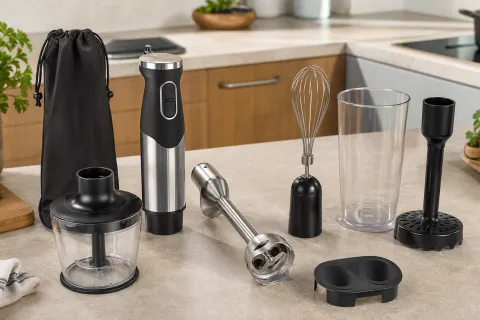
Many hand blenders come with mini choppers, whisks, mashers or beakers. Many jug blenders come with personal cups, food-processing bowls or preset programmes. These bundles can be good value, but they can also turn a simple purchase into a cupboard of parts.
Use a strict rule: buy attachments only when they replace something you already do often. A mini chopper might be useful if you regularly chop herbs, nuts or small onions. A whisk attachment might help if you do not own an electric whisk. But if you are trying to replace slicing, grating and bulk chopping, a proper food processor is still the cleaner choice.
Verdict: most homes need one, not both
Choose a hand blender if your real routine is soup in a saucepan, small sauces, quick dips, baby food, light smoothies and compact storage. It is the better first buy for many small kitchens because it is cheap to house, quick to rinse and useful for food that is already in a pan or bowl.
Choose a jug blender if you regularly want very smooth drinks, frozen fruit smoothies, larger batches, crushed ice or the most polished soup texture. It is worth the worktop space when blending is a repeated habit rather than an occasional shortcut.
If the decision still feels close, start with the appliance that solves your most annoying weekly task. The right blender is the one you will reach for when dinner is half made, not the one with the longest feature list.
Sources and checks
This check is useful before buying or registering any electrical food-prep appliance.
Electrical Safety First product recalls: check recall information and product-registration routes for electrical appliances.