In this article
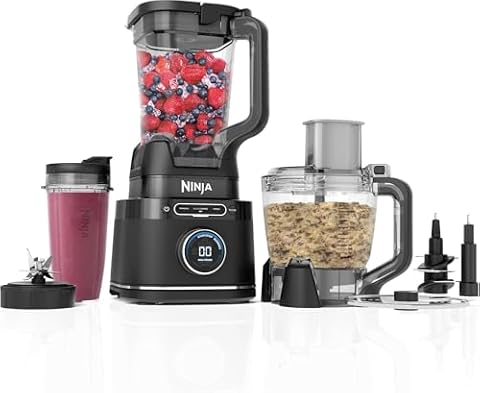
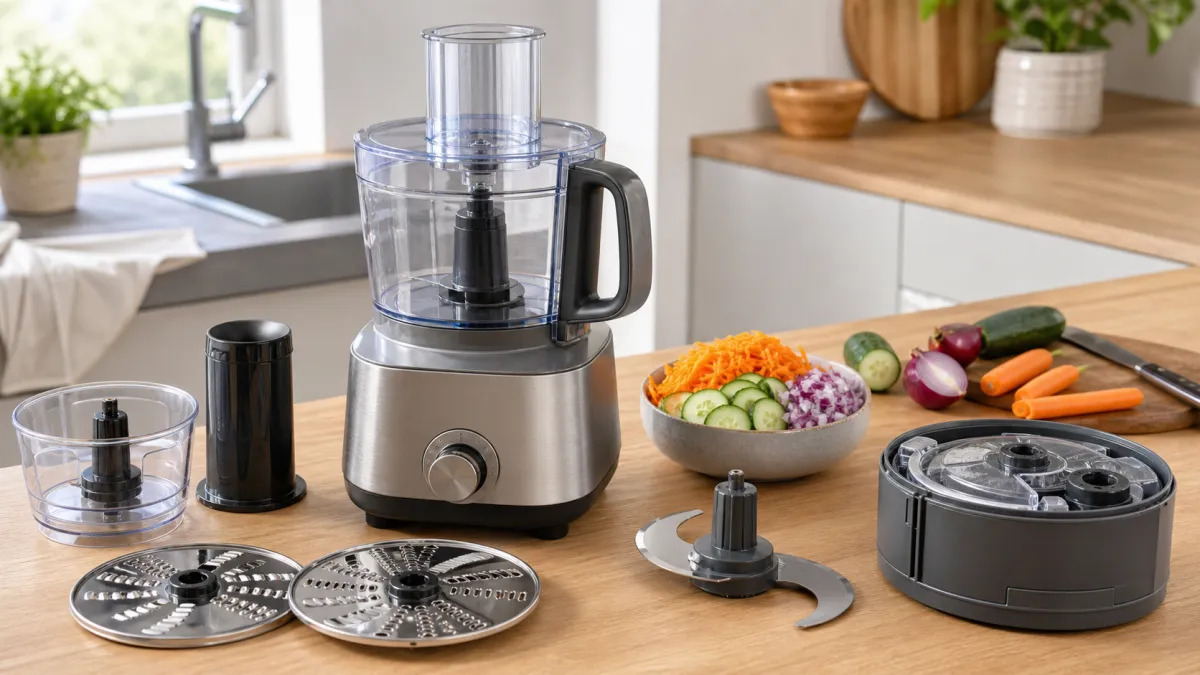
A food processor can look like a box of promise: slicing discs, grating discs, dough blades, mini bowls, whisks, citrus presses and storage cases all suggesting one appliance can replace half the kitchen. Some of those extras are genuinely useful. Others mostly make the box bigger.
The attachments worth having are the ones that remove a real prep job you already repeat. If you grate cheese every week, slice potatoes, shred carrots, make slaw or prep onions in batches, the right disc can earn its space quickly. If you mostly chop one onion or make the occasional dip, a simpler processor, hand blender or mini chopper may be easier to live with.
Sort attachments into keep, consider and skip
Start by separating the parts that change everyday prep from the ones that sound impressive on the box. A basic food processor should chop reliably first. After that, the useful extras depend on whether you cook in batches, bake dough, make small sauces or need fast salad and vegetable prep.
| Attachment | How useful is it? | Best for | Think twice if... |
|---|---|---|---|
| Main chopping blade | Essential | Onions, breadcrumbs, pastry, dips, nuts and general chopping. | The blade is awkward to remove or leaves uneven chunks unless you over-process. |
| Slicing disc | Very useful for cooks who prep veg often | Potatoes, cucumber, carrots, onions, courgettes and salad prep. | You only slice small amounts that are quicker by hand. |
| Grating or shredding disc | Often worth having | Cheese, carrot, cabbage, courgette and slaw-style prep. | The feed tube is too narrow or the disc leaves too much unprocessed food. |
| Dough blade | Useful only for regular dough makers | Pizza dough, short kneads and some pastry jobs. | You make large loaves, wet doughs or already own a stand mixer or breadmaker. |
| Mini bowl | Useful for small jobs | Herbs, pesto, curry pastes, dressings and baby-food-style portions. | It creates almost as much washing-up as using the main bowl. |
| Whisk or emulsifying disc | Occasional bonus | Cream, egg whites or light sauces on processors designed for it. | You already own a hand mixer or stand mixer. |
| Citrus press, dicing kit or specialist cutter | Niche | Specific repeated jobs, not general value. | You are buying it because it looks clever rather than because you will use it weekly. |
| Storage box | More important than it looks | Keeping sharp discs together and stopping parts disappearing. | The box is bulky enough to make the whole kit harder to store. |
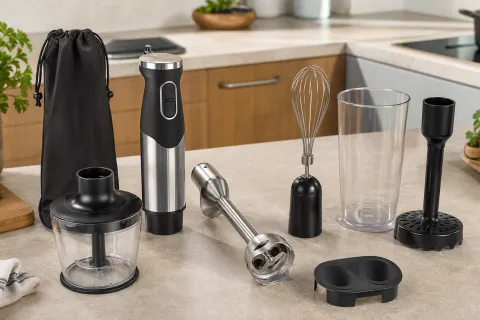
If the useful parts in that table sound like your normal cooking, start with Product Inspector's food processor guide. If your main jobs are soup, sauces or occasional small blending, compare hand blenders before paying for a bigger processor kit. For smoothies, ice and smooth liquids, a dedicated blender is usually the clearer buy.
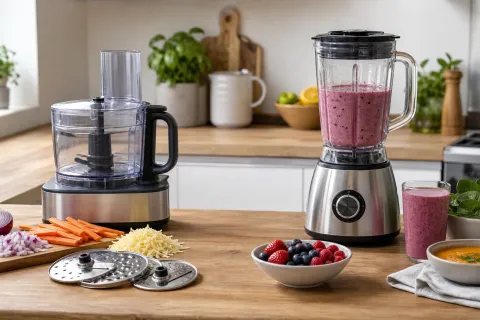
Slicing and grating discs are the real time savers
The most useful food processor attachments are usually the flat metal discs that slice or grate. They are not glamorous, but they can turn a slow pile of vegetables into a fast, repeatable job. That matters for coleslaw, traybakes, gratins, salads, batch cooking and family meals where knife work is what slows you down.
A slicing disc is worth paying for when you want repeated, even slices more than tiny precision. It is good for potatoes, cucumber, carrots and onions, but it will not replace careful knife work for every recipe. Very soft tomatoes, small garlic cloves and awkward scraps can still be better handled by hand.
A grating or shredding disc is often even more useful because grating by hand is tiring and messy. It earns its space if you often use grated cheese, carrot, cabbage, courgette or firm vegetables. Check whether the processor includes both fine and coarse options, or one reversible disc with a slice side and a grate side.
The feed tube can matter as much as the disc
A good disc still depends on how food reaches it. A narrow feed tube means more cutting before you start. A very wide tube can be faster for larger vegetables, but only if the pusher holds food steadily enough to avoid wonky slices.
Look for a pusher that feels controlled, not flimsy. If you want neat cucumber rounds, potato slices or onion half-moons, the feed tube shape and pusher can make the difference between useful prep and uneven scraps. Do not judge a processor by disc count alone; judge the whole slicing setup.
If you would not leave the slicing disc and pusher somewhere easy to reach, you probably will not use them often enough to justify a bigger kit.
Dough blades sound useful, but the limits matter
A dough blade can be handy for pizza dough, flatbread dough, some pastry and small kneading jobs. It is not the same as turning a food processor into a stand mixer. Food processors work quickly and can heat or overwork dough if you push them beyond what the manual allows.
Before paying extra for a dough blade, check the stated dough capacity, recommended running time and recipe type. A processor that can handle a small pizza dough may still be the wrong appliance for regular bread loaves. If dough is your main reason for buying, a stand mixer or breadmaker may be a better long-term tool than a processor with a token dough blade.
Mini bowls are useful when they stop you dirtying the big bowl
A mini bowl can be one of the best food processor extras when it is genuinely quick to use. It suits herbs, pesto, curry pastes, small dressings, nuts, breadcrumbs and tiny prep jobs where the main bowl feels too large.
The catch is washing-up. Some mini bowls sit inside the main bowl, so you may still have several parts to clean. Others have a separate blade that needs careful storage. A mini bowl is worth having when it saves effort, not when it turns a small job into a dismantling routine.
Storage decides whether attachments become clutter
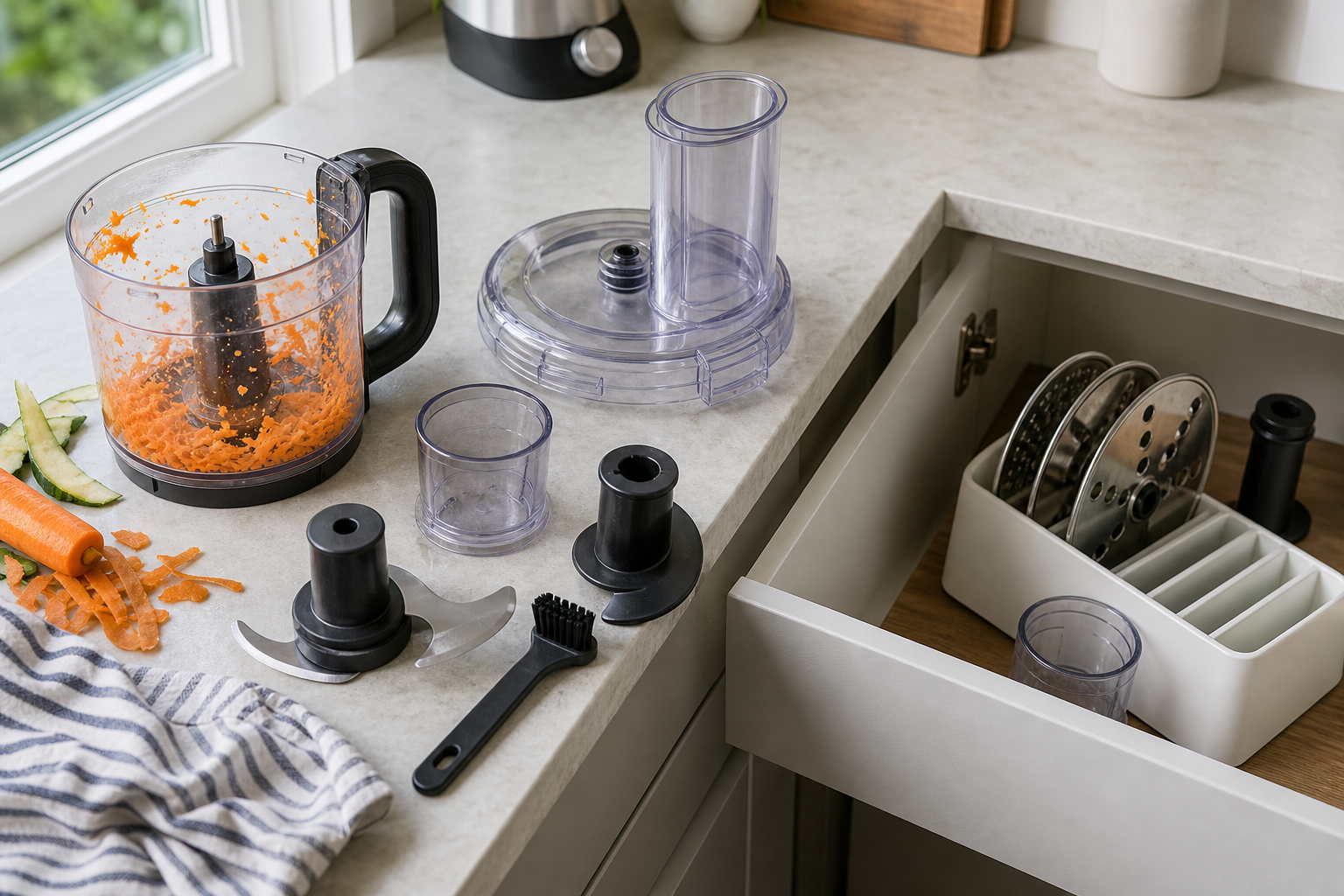
Food processor attachments are awkward shapes: sharp discs, tall pushers, lids, spindle parts, blades and sometimes nested bowls. A storage box can look boring compared with an extra cutter, but it may be the reason the attachments stay usable.
If a processor includes several discs, check whether they store safely together. Loose discs in a drawer are annoying and can be unsafe to rummage through. Also check the total height of the assembled processor and whether the lid, pusher and accessory box fit in the cupboard you actually use.
Cleaning claims need a practical check
Dishwasher-safe parts sound reassuring, but they do not remove the everyday cleaning decision. Sharp blades, cheese stuck around grater holes, carrot caught in the lid and dough around a spindle can still need a brush or careful rinse before anything goes in the dishwasher.
Look at the number of parts created by the job. Slicing into the main bowl may mean cleaning the lid, pusher, bowl, spindle and disc. Using an extra chute or serving attachment may save emptying the bowl, but it can add another plastic part. The easier processor is not always the one with the longest attachment list; it is the one you will clean without avoiding it next time.
Can attachments replace separate gadgets?
Sometimes, but not always. A food processor can replace a mini chopper for bigger batches, a box grater for regular shredding, and some knife prep for repeated vegetables. It can also reduce the need for a mandoline if you are happy with the processor's slice thickness and shape.
It is less convincing as a replacement for a blender, hand blender, stand mixer or breadmaker. A blender is usually better for smooth liquids, smoothies and ice-heavy drinks. A hand blender is easier for soup in a pan and small sauces. A stand mixer is better for regular cakes, bread dough and whisking. Choose the food processor for chopping, slicing and grating first; treat everything else as a bonus.
What I would pay for first
For most homes, the best value food processor bundle is simple: strong main blade, useful bowl size, slicing disc, grating disc, sensible feed tube, safe storage and parts you can clean easily. Add a mini bowl if you often make small pastes, sauces or herb mixtures. Add a dough blade only if the stated dough limit matches the baking you actually do.
Be more cautious with specialist cutters, dicing kits, citrus presses and whisking discs. They can be excellent for the right cook, but they are poor value when bought as a fantasy version of how you might cook later. The attachment that earns its place is the one that fixes a chore you already resent.
Buy the kit that makes prep easier, not the one with the longest list
A good food processor attachment set should make repeated prep faster: slicing vegetables, grating cheese, shredding cabbage, chopping onions, making breadcrumbs or handling small sauces without fuss. Once the kit becomes difficult to store, slow to assemble or irritating to wash, the extra parts stop being a feature.
The practical rule is simple: start with the core processor and the discs you will use weekly, then be sceptical of the rest. If you cannot picture where an attachment will live, what job it will do next week, and how quickly you will clean it, it is probably not worth paying for.