In this article
A juicer and a blender can both turn fruit and vegetables into something drinkable, but they do it in very different ways. A juicer separates liquid from pulp. A blender chops and mixes the whole ingredient into a thicker drink, sauce or puree.
That sounds simple, but it changes almost everything you live with afterwards: texture, waste, prep, cleaning, storage and how often you will actually use the appliance.
The practical choice is this: buy a juicer for clear juice as a specific habit; buy a blender for thicker drinks and broader kitchen use.
Juicer, blender or smoothie maker at a glance
| What matters | Juicer | Jug blender | Smoothie maker |
|---|---|---|---|
| Best for | Clear juice with pulp separated out. | Thicker drinks, soups, sauces, dips and crushed mixtures. | Quick single-serve smoothies in a bottle-style cup. |
| Texture | Thin and drinkable, often with foam or fine sediment depending on the model. | Thick, pulpy and more filling in the glass. | Usually thick, but limited by cup size and blade strength. |
| Cleaning | Usually the most involved: filter, pulp container, chute and lid need attention. | Usually easier if the jug rinses well, but blade areas still matter. | Simple for daily drinks, though seals and travel lids can hold residue. |
| Food waste | Leaves pulp behind unless you use it separately. | Keeps the blended fruit and veg in the drink. | Keeps the blended fruit and veg in the drink. |
| Best buyer | Someone who wants juice often enough to justify the prep and washing-up. | Someone who wants one appliance for drinks and general blending jobs. | Someone who mostly makes one drink at a time. |
The real difference is what happens to the pulp
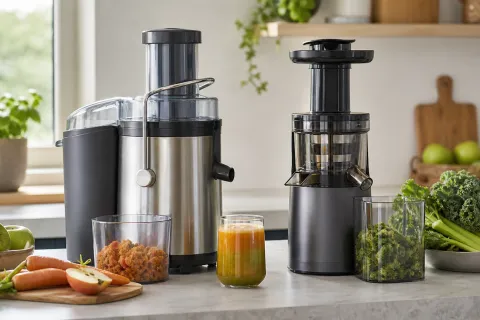
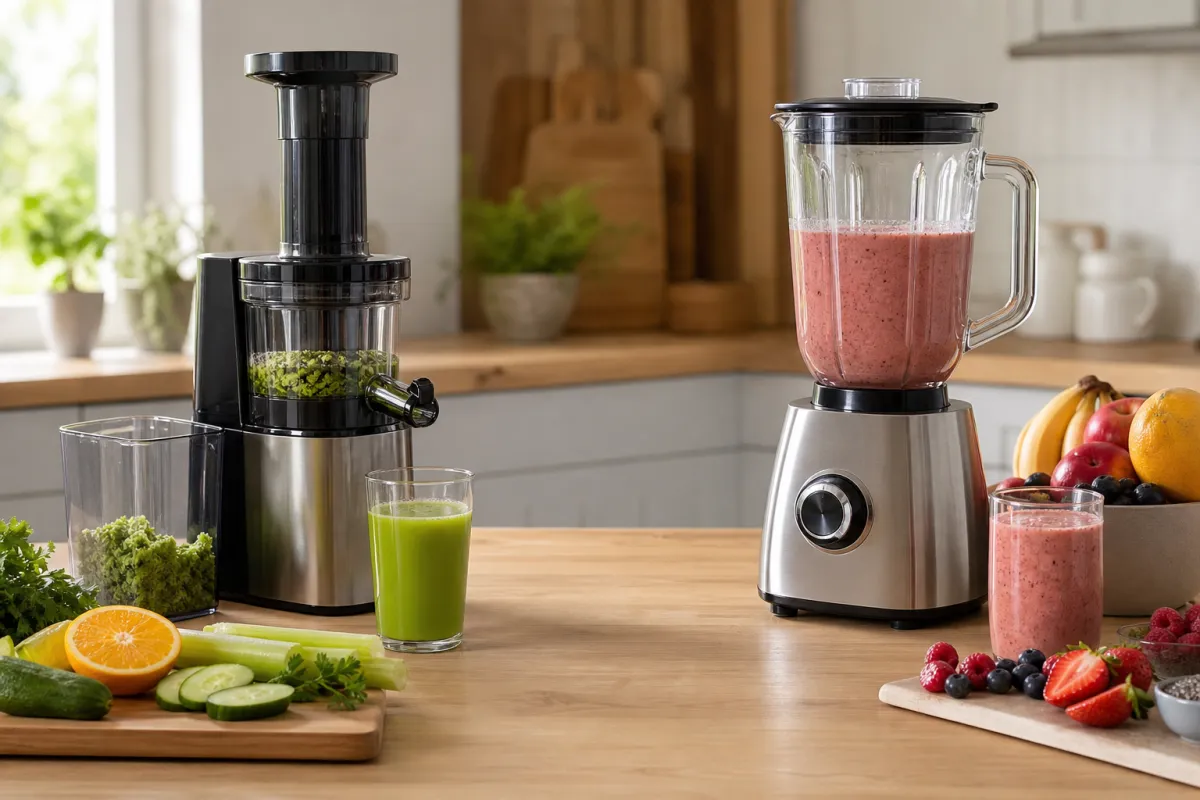
The biggest product difference is not power or price. It is where the pulp goes. A juicer strains the fruit or vegetable so the liquid comes out separately and the fibrous pulp is left in a container or filter. A blender keeps the ingredients together, so the drink is thicker and more like a smoothie.
That is why a juicer can feel more specialised. It is built around a particular result: clear apple, orange, carrot, beetroot or green juice. A blender is less precise if you want thin juice, but it is much more useful when you want breakfast smoothies, frozen fruit drinks, sauces, pancake batter, dips or blended soup.
If you are only imagining the occasional glass of juice, the pulp question matters. A juicer creates an extra by-product every time you use it. That may be fine if you compost it or cook with it, but it is still part of the habit.
Choose a juicer when clear juice is the point
A juicer makes most sense when you specifically want a thinner, cleaner drink and you expect to make it often. It is the better fit for people who enjoy fresh orange juice, carrot juice, apple juice or green juices and do not want a thick blended texture.
There are different juicer types, but the buying question at this stage is simpler: will you use it enough to justify the prep and cleaning? Juicers often ask more from you before and after the drink. You may need to chop produce smaller, feed ingredients through a chute, empty pulp, rinse several parts and scrub a filter.
- Choose a juicer if you care most about clear juice texture.
- Think twice if you mainly want smoothies, milk-based drinks or frozen fruit blends.
- Check the parts list before buying: pulp container, filter basket, feed chute, pusher, lid and juice jug all affect washing-up.
Choose a blender when texture and flexibility matter
A blender is the safer all-round buy for most kitchens because it can do more than drinks. It can blend smoothies, crush softer frozen fruit if the model is suitable, make sauces, puree soup after cooling enough for the jug instructions, and handle small prep jobs that a juicer cannot do.
The trade-off is texture. If you put apple, cucumber, celery or berries into a blender, you are not making clear juice. You are making a thicker blended drink. Some people prefer that; others find it too heavy or pulpy.
Blenders also vary heavily by jug size, blade design and motor strength, so do not assume every cheap blender will handle ice, frozen fruit or fibrous greens well. If frozen smoothies are the main job, compare the blender's instructions and the blades before judging by wattage alone.
Where a smoothie maker fits
A smoothie maker is best understood as a smaller, drink-first blender. It normally blends in a bottle-style cup so you can drink from the same container. That is convenient if you make one breakfast smoothie and want less washing-up than a full jug blender.
It is not the same as a juicer. A smoothie maker still blends the whole fruit or veg mixture, so the drink remains thicker and pulpy. It is also not as flexible as a good jug blender when you need bigger batches, hot ingredients, sauces, dips or tougher jobs.
If you are choosing between a juicer and a smoothie maker, ask what you actually want in the glass. Clear juice points to a juicer; a thick one-person drink points to a smoothie maker.
Cleaning is the habit test
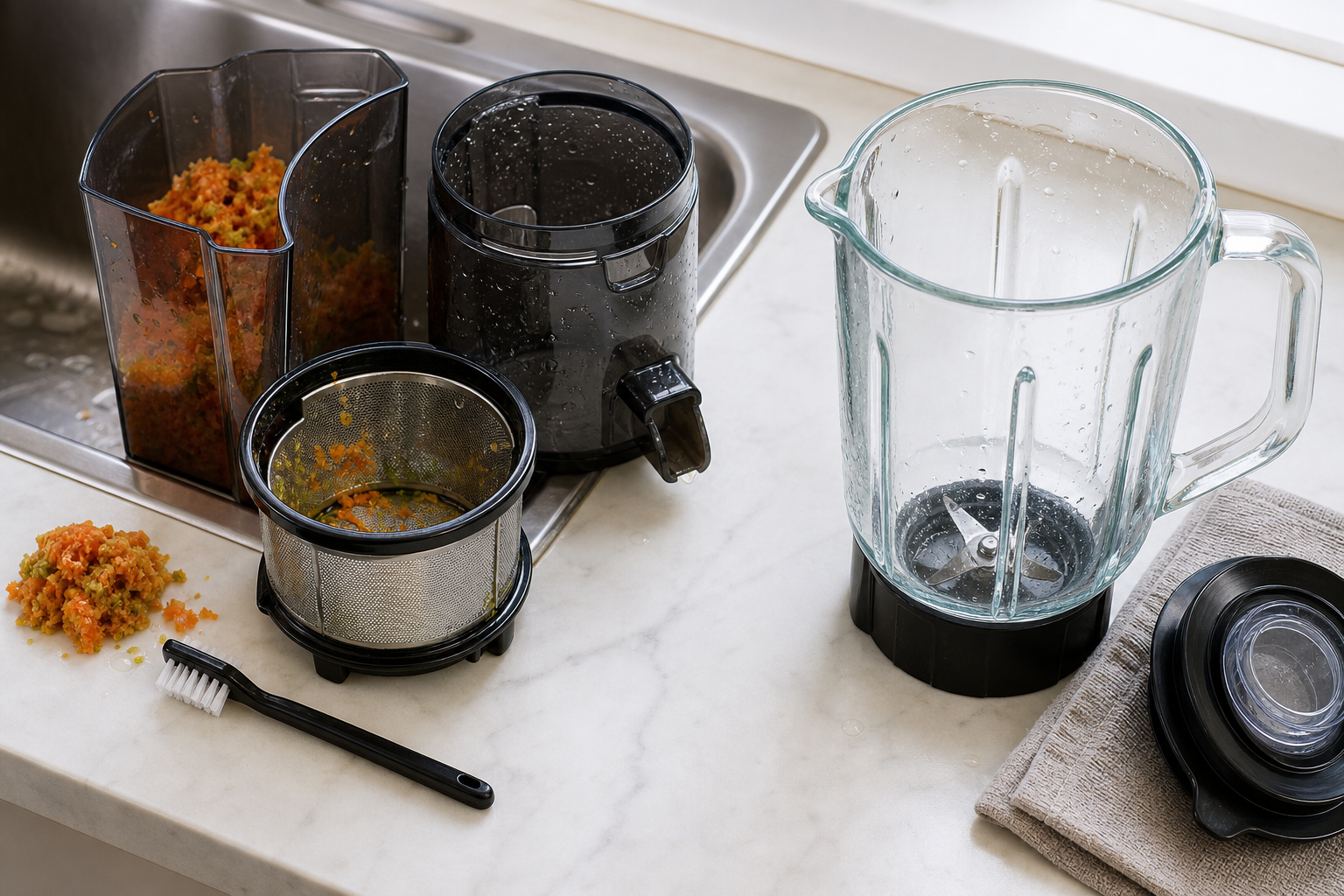 Cleaning is the habit test: juicers usually have pulp and filter parts to scrub, while blender jugs still need blade, lid and seal checks.
Cleaning is where many good intentions fail. Juicers can be satisfying to use, but the filter and pulp path need prompt cleaning. Leave pulp to dry and the appliance becomes much less pleasant. A blender usually has fewer separate parts, but you still need to check the blade area, seals, lid and whether the jug is dishwasher-safe.
Before buying a juicer, look for a clear parts photo and check whether the filter basket is easy to remove. A supplied brush is useful; if it looks flimsy or easy to lose, a small juicer cleaning brush* is a sensible accessory to check before you commit to the routine.
For blenders and smoothie makers, look beyond the word dishwasher-safe. Some lids, seals, blade bases or travel caps may need hand-washing. Narrow cups can also trap residue around threads and drinking spouts.
Ingredients, waste and prep change the weekly cost
Juicing can use a surprising amount of produce because much of the bulk is separated as pulp. That does not automatically make it a bad buy, but it does mean you should think about the weekly fruit and veg bill as well as the appliance price.
A blender usually stretches ingredients further because everything stays in the drink. It can also use yoghurt, milk, oats, nut butter or softer fruit in ways that do not make sense in a juicer. That makes it easier to turn leftovers into something useful, although the texture will be thicker.
On nutrition, keep the claim modest. UK NHS 5 A Day guidance treats fruit juice and smoothies as a limited category: if you drink them, they count as no more than one portion a day and the combined amount should be 150ml. That is a good reason not to buy either appliance on the promise that it will make unlimited fruit drinks a health shortcut.
Storage and noise can make the smaller appliance better
Juicers tend to be awkward shapes because they need a feed chute, pulp route and separate containers. Some are tall. Some have several loose parts that need drying before storage. If it cannot stay on the worktop and is annoying to assemble, it may become a cupboard appliance.
Jug blenders are usually simpler to store, but large glass jugs can be heavy and tall. Smoothie makers are easiest to leave out in a small kitchen, especially if the cup doubles as the bottle, but they are less useful for cooking jobs.
Noise is worth treating as a practical comfort issue rather than a spec-sheet contest. A powerful blender or fast juicer can be loud for a short burst. If you make drinks early in the morning, the quieter, smaller appliance you will use daily may beat the more capable model that annoys everyone else.
Which should most people buy?
Most people should buy a blender before a juicer. It is more flexible, easier to justify in a normal kitchen and better suited to the wider range of drinks and food prep jobs people imagine when they first start looking.
A juicer is the better buy when you already know you want clear juice, you are happy buying enough produce for it, and you accept filter and pulp cleaning as part of the routine. If that sounds like a chore before you have even bought one, a blender or smoothie maker is more likely to last.
The best choice is the appliance that matches the drink you actually want and the washing-up you will tolerate. Clear juice points to a juicer. Thick blended drinks and kitchen flexibility point to a blender. Single-serve breakfast drinks point to a smoothie maker.
Sources and checks
These checks are useful if you are deciding how often fruit juice or smoothies should fit into your routine before buying an appliance.
- NHS 5 A Day guidance explains how fruit juice and smoothies count towards 5 A Day, including the 150ml combined daily limit.