In this article
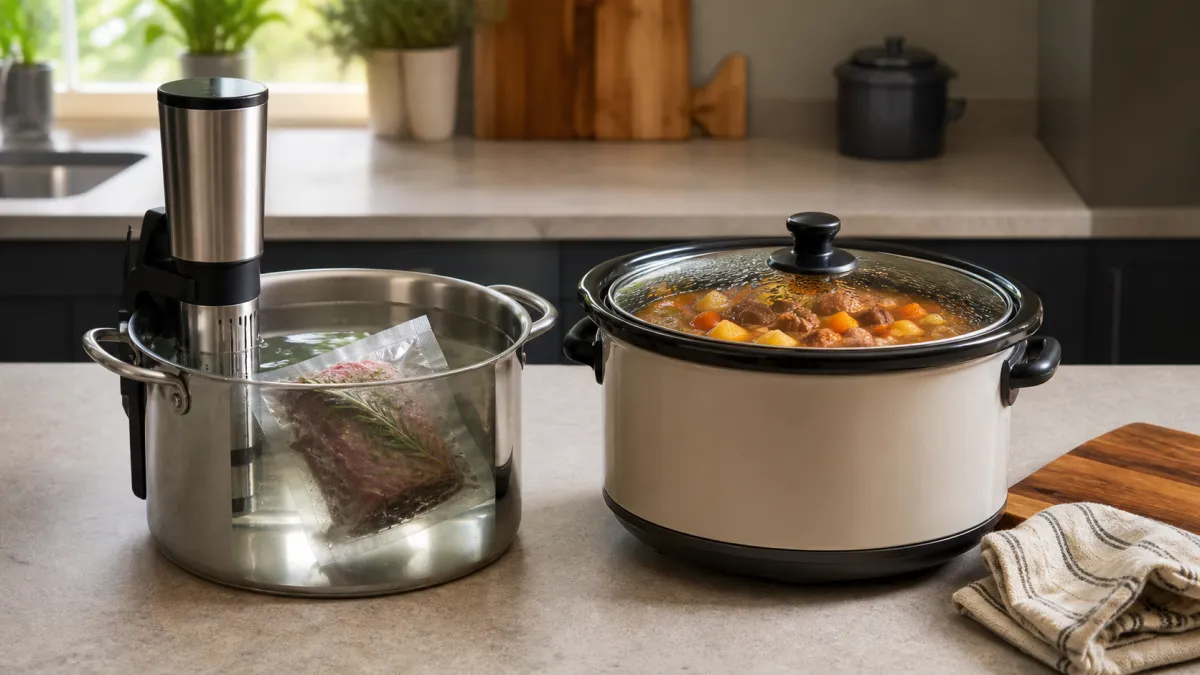
A sous vide machine and a slow cooker both use time and gentle heat, but they solve different problems. Sous vide is for controlling the final texture of individual foods. A slow cooker is for turning a pot of ingredients into a complete meal with as little attention as possible.
Choose sous vide when you care about repeatable doneness in steak, chicken, fish, eggs or vegetables and are happy to bag the food, set up a water bath and finish some ingredients in a hot pan. Choose a slow cooker when your priority is a stew, curry, chilli, casserole or pulled meat that can cook together while you get on with the day.
The useful distinction: sous vide controls the food's temperature; a slow cooker manages the whole meal.
The two methods do different jobs
| What changes | Sous vide machine | Slow cooker |
|---|---|---|
| Best at | Precise, repeatable cooking of separate portions or ingredients | Hands-off one-pot meals, batch cooking and tender braises |
| Typical result | Even doneness and moisture retention, with texture set by time and temperature | Soft, tender ingredients in a shared sauce, stock or cooking liquid |
| Preparation | Season, bag, remove excess air and set up a water bath | Prepare ingredients, add them to the crock and choose low or high |
| Finishing | Often benefits from fast browning in a pan or under a grill | Usually ready from the pot; browning before cooking can deepen flavour |
| Timing | A controlled window, but recipes still have minimum and maximum times | Long cooking suited to planned meals; delicate food can soften if left too long |
| Extra kit | Pot or container, suitable bags and clips; a vacuum sealer is optional | Usually only the appliance, removable crock and serving utensils |
| Best reason to skip it | You dislike bagging food or adding a finishing step | You rarely plan ahead or dislike uniformly soft one-pot textures |
Ready to choose the format?
Use our sous vide machine guide if controlled texture is the goal, or compare the best slow cookers if you want straightforward batch meals and low-effort dinners.
Sous vide wins on precision, not complete meals
An immersion circulator heats and moves water around a pot or container, holding the bath at a chosen temperature. Food sits in a sealed bag in that water. Because the cooking environment is tightly controlled, the surface is not exposed to the much higher heat of an oven or frying pan while the centre comes up to temperature.
That is useful for foods with a narrow texture target. A thick steak can reach even doneness from edge to edge. Chicken breast can remain moist instead of moving quickly from cooked to dry. Fish, eggs and vegetables can be cooked for a particular texture with less last-minute judgement.
Precision does not mean instant. The bath needs to heat, the centre of the food needs time to reach its target, and some textures change when food stays in the bath for much longer than the recipe intends. A circulator reduces temperature swings; it does not make every cooking duration interchangeable.
A slow cooker wins when dinner belongs in one pot
A slow cooker applies gentle heat through a removable crock. It is at its best when ingredients benefit from cooking together: tougher cuts in sauce, root vegetables, beans that have been prepared correctly, soups, stews, chilli and curries. The liquid becomes part of the meal rather than a heating medium kept outside the food.
The attraction is not fine control over the centre of one chicken breast. It is the ability to prepare a family-sized meal earlier, close the lid and return later. Low and high settings alter the schedule, while timers and keep-warm modes on some models make serving easier.
Slow cooking also changes texture more broadly. Meat can become shreddable, vegetables soften and flavours mingle in the cooking liquid. That is ideal for comfort food and batch cooking, but less useful when you want crisp vegetables, a browned surface or several ingredients held at distinct textures.
Compare the work before calling either method convenient
Sous vide is often described as hands-off because the machine controls the bath once cooking starts. That is true, but the full workflow has more stages: choose a reliable time and temperature, prepare and seal each portion, preheat the bath, keep the bag submerged, remove the food, dry it thoroughly and add a fast finish when browning matters.
A slow cooker moves more of the work to the beginning. You may need to chop vegetables and brown meat or onions before loading the crock, but the dish normally cooks and serves as one. Models with a hob-safe or saute-capable pot can reduce washing up; basic ceramic crocks may mean using a separate frying pan if you want that extra flavour.
Neither appliance creates browning at its gentle cooking temperature. With sous vide, the pan finish is often part of the intended result. With a slow cooker, pre-browning is an optional improvement for many recipes rather than the defining final step.
Bags are part of the sous vide decision
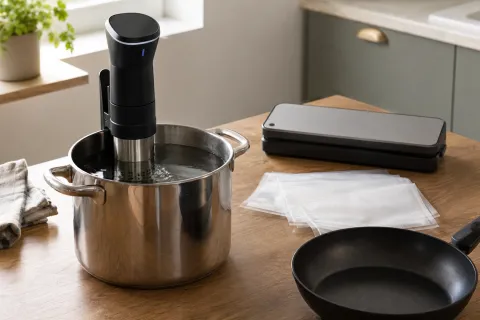
Most domestic water-bath cooking needs suitable sous-vide cooking bags*. Use material that its manufacturer states is suitable for the recipe's temperature and duration. A general storage bag or freezer bag is not automatically intended for heated cooking.
You do not always need a vacuum sealer. For many shorter cooks, a suitable resealable bag can have air displaced by lowering it carefully into water before closing the top. A sealer becomes more useful when you prepare portions regularly, freeze them in advance or need repeatable close-fitting packs. Our vacuum sealer guide explains the machine features and storage trade-offs.
The consumable cost and waste are real. Reusable silicone bags suit some foods and methods, while rolls can be cut to size for irregular portions. Whichever route you choose, inspect seals and keep the bag away from sharp bones or edges that could puncture it.
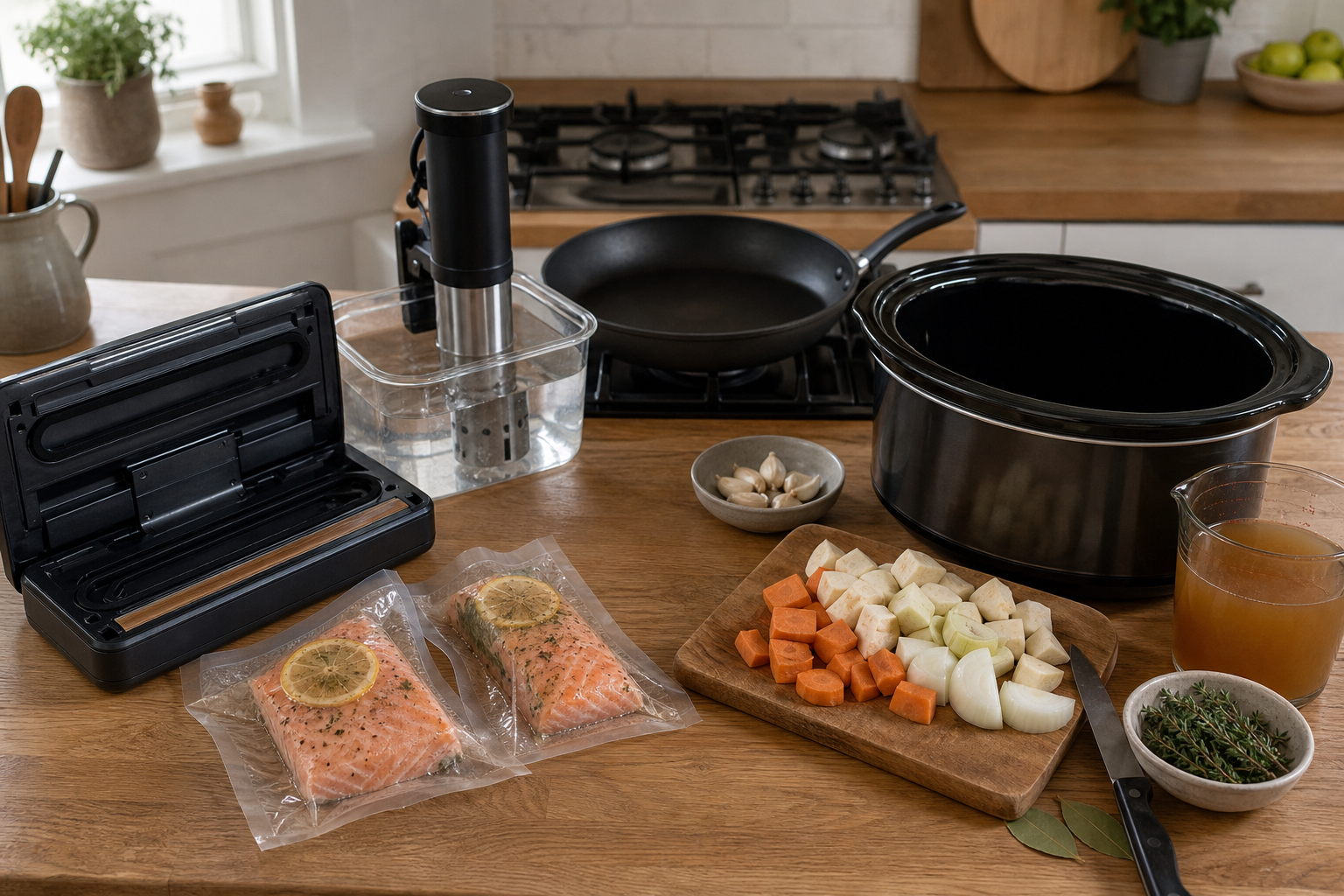 Sous vide separates portioning, bagging and finishing into stages; slow cooking concentrates most of the preparation before the ingredients go into one pot.
Timing flexibility is different from forgetting the clock
Sous vide can give you a wider serving window than a hot pan because the bath is not relentlessly pushing the surface past the chosen temperature. It is still wrong to assume food can sit there indefinitely. Minimum cooking time, maximum quality window, food thickness and starting temperature all matter. Follow a tested recipe and the appliance instructions rather than improvising from temperature alone.
A slow cooker is more forgiving about when you stand at the hob, but recipes are still written for a capacity, setting and duration. Lean meat can dry out, vegetables can collapse and sauces can become thin when the ingredients or timing do not suit the method. Opening the lid repeatedly also releases heat and can extend cooking.
For weekday planning, ask which kind of flexibility you need. Sous vide helps when the main ingredient must wait briefly at a controlled doneness before a fast finish. A slow cooker helps when the whole meal needs to cook over several hours before everyone is ready to eat.
Capacity is measured in different ways
Slow-cooker capacity describes the crock, although the useful fill level is lower than the brim. A larger model can suit family meals and batch portions, but a very large crock may perform poorly with a small shallow recipe. Match the size to the quantity you genuinely cook.
A sous vide setup depends on water circulation. An immersion circulator may clamp to a pot you already own, which keeps appliance storage small, but the vessel must hold enough water and leave space around every bag. Crowding several portions together can obstruct circulation. Long cooks may also need a lid or cover recommended by the manufacturer to limit evaporation.
Think about the full setup, not just the machine body. A slim circulator still needs a deep pot, a safe place for hot water and somewhere to dry and sear the food. A slow cooker occupies more worktop space while running but contains the meal in one stable crock.
Cleaning favours the method that matches your food
With sous vide, the circulator and water container may stay relatively clean because the food is sealed. The work appears around them: bag filling, leaked juices if a seal fails, a board or tray for drying, and a pan or grill for finishing. Fatty or strongly seasoned packs need careful handling so the sealing edge remains clean.
A slow cooker leaves one substantial crock and lid, plus any knife, board and browning pan used during preparation. Dishwasher-safe removable parts help, but a large ceramic insert can be heavy and awkward in a small sink. Dried sauce around the heating line is easier to avoid when the crock is soaked promptly.
If you mainly cook individual proteins, the clean water-bath stage can feel tidy. If you mainly make complete saucy meals, one removable slow-cooker pot is usually the simpler route.
Food safety depends on time, temperature and handling
Low-temperature cooking needs more care than setting a temperature that looks right. The Food Standards Agency publishes equivalent time-and-temperature combinations for thorough cooking because a lower temperature must be held for longer to achieve the same safety outcome. Food thickness, starting temperature and the time taken for the centre to heat are part of the method.
Use tested instructions. Follow a reliable recipe and the machine manufacturer's guidance for the exact food, thickness, temperature and duration.
Keep preparation hygienic. Separate raw and ready-to-eat food, keep bags and sealing areas clean, and avoid contaminating cooked food when it leaves the pouch or crock.
Cook or chill promptly. If food is not being eaten straight away, use a validated rapid-chilling method and refrigerate or freeze it safely rather than leaving sealed food warm.
Treat the bag as packaging, not preservation. Removing air does not make perishable food shelf-stable or extend a use-by date.
People who are pregnant, older, very young or immunocompromised should be especially cautious about undercooked food and follow current NHS and FSA advice. If you do not want to learn recipe-specific controls, a conventional thoroughly cooked slow-cooker meal is the more straightforward choice.
Which households will actually use each appliance?
Buy a sous vide machine when
You regularly cook steak, chicken, fish, eggs or vegetables to a specific texture.
You enjoy planning portions and do not mind bagging and finishing food.
Repeatability matters more than producing a complete one-pot meal.
You already own a suitable pot and a good frying pan, so the circulator fills a genuine gap.
Buy a slow cooker when
You want stews, casseroles, curries, chilli or pulled meat for several people.
You prefer preparing dinner earlier to handling several stages near serving time.
Batch portions and freezer meals matter more than edge-to-edge doneness.
You want familiar controls and minimal supporting equipment.
Skip both when
Skip sous vide if bag use, recipe-specific timings and pan finishing sound like friction rather than enjoyment. Skip a slow cooker if you rarely plan hours ahead, mostly cook for one, or prefer roasted, grilled and crisp textures. Skip both if a lidded casserole on the hob or in the oven already gives you the meals you want without another appliance to store.
Verdict: precision or one-pot ease?
Buy a sous vide machine for controlled doneness and repeatable texture. It rewards cooks who are willing to prepare separate portions, follow dependable time-and-temperature guidance and finish food properly. It is a specialist technique, not a faster slow cooker.
Buy a slow cooker for complete meals that benefit from long, gentle cooking. It gives up fine texture control in exchange for a simpler one-pot routine, larger shared portions and less work close to dinner time.
For most households choosing only one, the slow cooker is the broader everyday tool. Sous vide is the better buy when precision is the reason you are shopping in the first place.
Sources and checks
These references help you verify the safety principles and practical differences before choosing a method.
Food Standards Agency cooking guidance: check current UK advice on thorough cooking, clean thermometer use, equivalent time-and-temperature combinations, leftovers and reheating.
Food Standards Agency sous-vide method note: understand why controlled time and temperature matter and why browning is often a separate finishing stage. This detailed page is written for food businesses, so home cooks should still follow domestic consumer guidance and tested appliance instructions.
Anova sous-vide equipment explainer: see how immersion circulators, water containers, resealable bags and vacuum-sealed bags fit into the domestic workflow.
Crock-Pot UK slow-cooker example: compare current low, high and keep-warm controls, a hob-safe browning pot and removable dishwasher-safe parts.