In this article
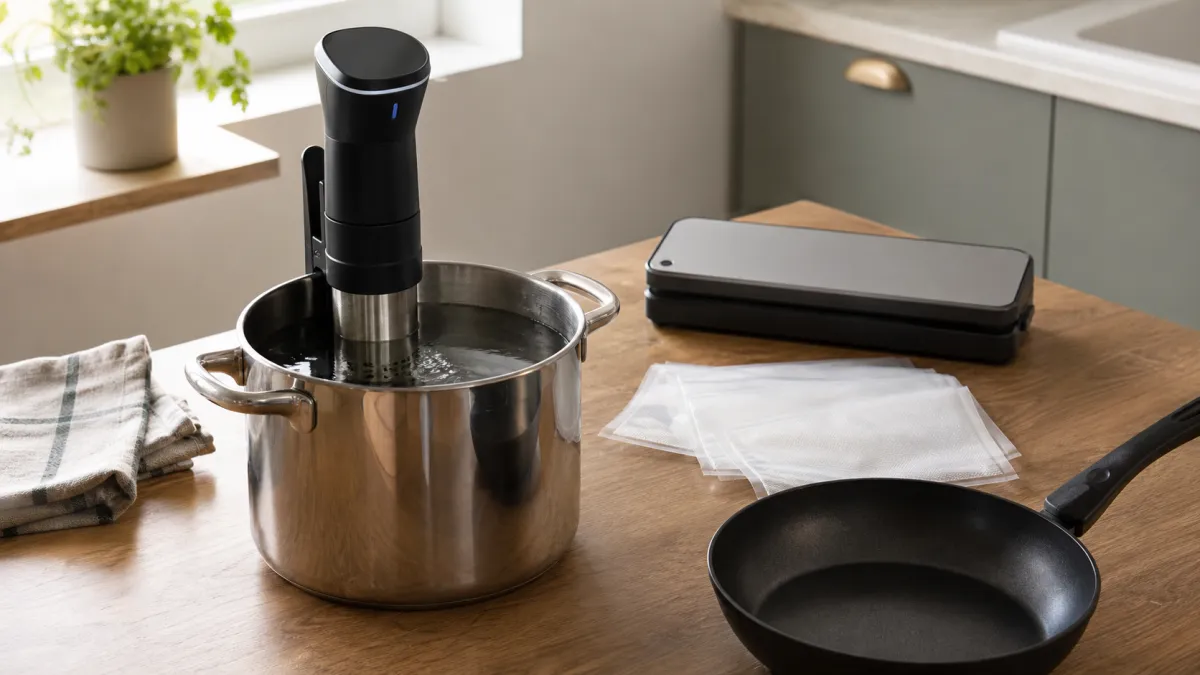
Sous vide cooking sounds accessory-heavy, but the starter kit is smaller than most shopping lists suggest. Sous vide means cooking food in a sealed bag in temperature-controlled water. To try it properly at home, you mainly need a reliable immersion circulator, a deep water vessel, suitable food-safe bags and a way to finish food well.
A vacuum sealer, lidded container, rack, weights and clips can all be useful later. They are not all first-day essentials. The better approach is to buy for the problem you actually meet: floating bags, awkward batch prep, heat loss, limited pan depth or food that needs a better sear after cooking.
Best starting point: buy the machine and suitable bags first. Add the rest only when your kitchen, portions and cooking habits prove you need them.
Start with what earns space straight away
For most first-time sous vide cooks, the accessory question is not which bundle looks complete. It is which items make the first few cooks reliable without filling a cupboard.
| Accessory | Buy now? | Why it matters |
|---|---|---|
| Suitable bags | Yes | You need food-safe bags that suit the temperature and cook length. This matters more than most optional gadgets. |
| Deep saucepan or stock pot | Usually yes, if you already own one | A pan can work well for small portions if the circulator clamps securely and the food stays covered. |
| Vacuum sealer | Useful, not compulsory | Worth considering for freezer prep, repeated portions and tidy batch cooking. Less urgent for occasional cooks. |
| Container and lid | Wait unless pan space is limiting | A dedicated container helps with larger cooks and longer sessions, but it is bulky and not always needed first. |
| Rack, weights or clips | Buy only for a real problem | They help keep bags separated or submerged. They are not worth buying before you know what floats or crowds in your setup. |
If you are still choosing the main appliance, start with our sous vide machine guide. If you already know you will batch prep or freeze portions, compare vacuum sealers before buying a pile of consumables.
Bags matter more than most add-ons
The bag is the one accessory you should not treat casually. It needs to be suitable for food contact and for the temperature and time you intend to use. A bag that is fine for freezer storage is not automatically the right choice for hot-water cooking, especially for longer sessions.
For occasional cooking, suitable resealable cooking bags can be enough if the seal is secure and the bag stays submerged. For regular cooking, textured vacuum sealer bags or rolls can make prep tidier and reduce trapped air. The key is compatibility: check the bag type, temperature claims and whether your machine needs textured material.
If you are buying bags separately, compare sous vide bags* only after checking they suit your cooking temperature, sealer type and portion sizes. A huge bargain pack is poor value if the bags are the wrong width or not suitable for the way you cook.
A vacuum sealer is helpful, but not mandatory
A vacuum sealer is useful when sous vide becomes part of your routine. It helps with repeat portions, freezer prep, batch cooking and firm foods that benefit from a tight, even pack. It can also make storage neater because sealed portions lie flatter and are easier to label.
It is less essential when you are still experimenting. You can learn the method with suitable resealable bags and careful air removal, then decide whether the extra appliance earns its space. That is especially true in small kitchens, where a sealer, rolls and spare bags can take up more room than expected.
Buy the vacuum sealer when you can name the repeat job. Good reasons include weekly steaks or fish fillets, freezer portions, meal prep for several people, or wanting one consistent bag format. Vague usefulness is not enough.
Your pan may be the right first container
A dedicated sous vide container is not automatically better than a pan you already own. A deep saucepan, stock pot or preserving pan can work well for small cooks if the circulator clamps securely, water can circulate around the bags, and the food stays fully covered.
The main limits are depth, width and heat loss. A shallow pan may leave bags too close to the surface. A narrow pan may crowd several portions together. A long cook can lose water through evaporation, especially if the vessel is uncovered. Those are real issues, but they do not mean every beginner needs a large clear container on day one.
If your current pans are too shallow or awkward for the circulator, a larger pan may do more for your kitchen than a single-purpose container. Our saucepan set guide is the better route if the same pan also needs to work for pasta, soups, stocks and everyday hob cooking.
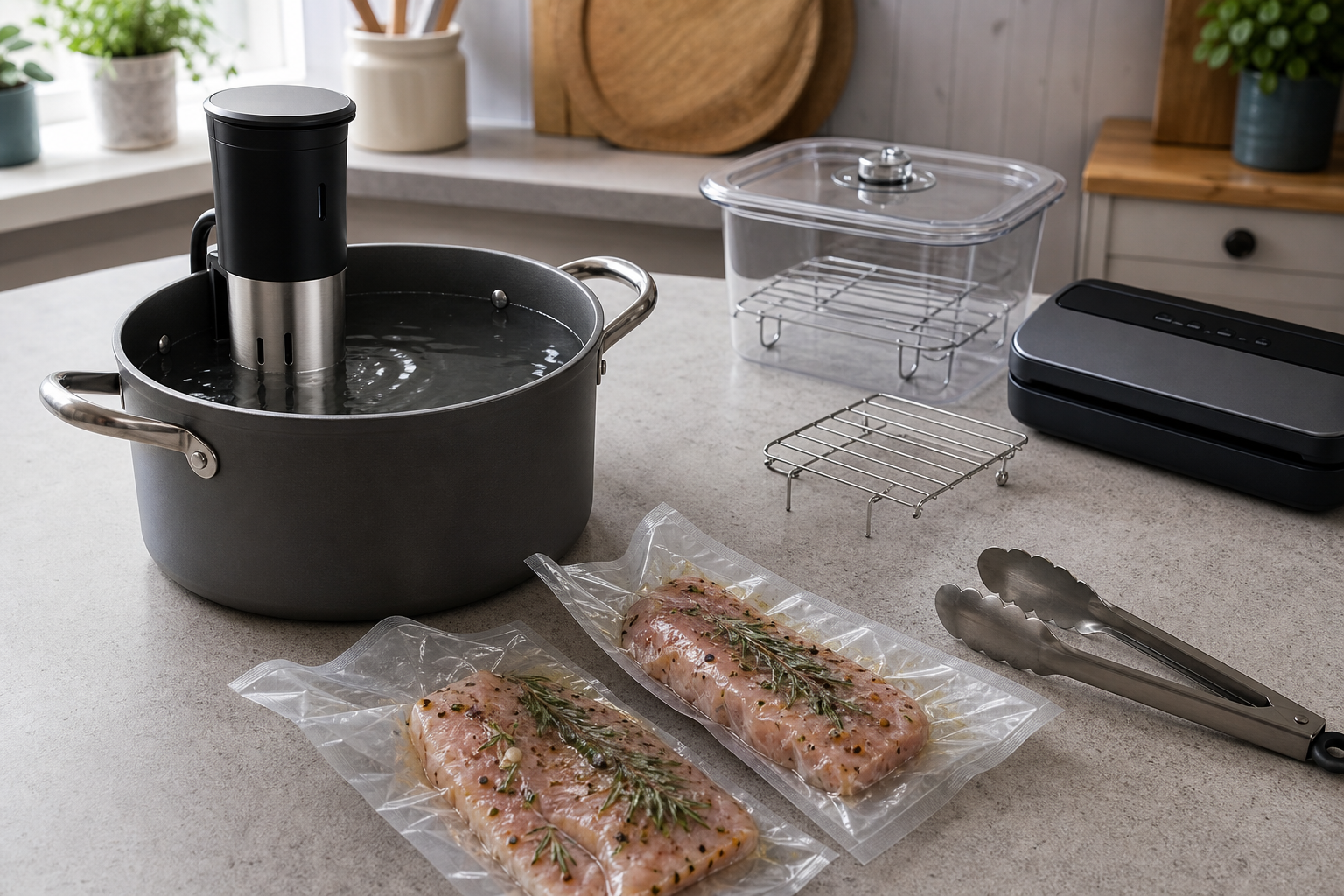
A pan and suitable bags can be enough for small cooks; add a lidded container, rack or vacuum sealer when your portions and storage make them useful.
Containers and lids are for larger or longer cooks
A clear plastic sous vide container can be useful once you cook bigger portions. It gives the circulator a stable clamp point, creates a squarer water bath and makes it easier to arrange several bags. A lid or cover can also reduce evaporation during longer cooks.
The trade-off is storage. A container that looks modest online can be awkward in a real cupboard, especially once you add a rack, lid or corner cut-out. It may also duplicate a large pot you already own. For one or two portions, that can be an unnecessary extra object.
Consider a container when you regularly cook several portions at once, run long sessions, struggle with evaporation, or find your pans too shallow. Until then, a deep pot and occasional water top-ups may be enough.
Clips, weights and racks solve specific annoyances
These small accessories are easiest to overbuy because each one sounds sensible. Clips stop bags drifting. Weights help stop floating. Racks separate several bags so water can move around them. None of that is wrong, but it only matters when you have the problem.
- Use clips when bags slide around or press against the circulator.
- Use weights when food traps air and keeps floating despite careful packing.
- Use a rack when several bags crowd together and block water movement.
- Skip the bundle if you usually cook one or two portions in a deep pot.
For first cooks, you can often improvise carefully with what you already own: a suitable clip above the water line, a plate to help keep a bag down, or a deeper vessel with more room. Buy dedicated accessories once you know which annoyance keeps repeating.
Finishing food is where a good pan earns its keep
Sous vide controls the internal cooking, but many foods still need finishing. Steak, chicken skin, pork chops, halloumi and some vegetables can look pale or soft when they come out of the bag. A hot pan, grill or blowtorch adds browning, texture and flavour at the end.
For most homes, a good frying pan or stainless steel saucepan can matter more than another sous vide gadget. You need enough heat, enough space for the food to contact the surface, and enough control to avoid overcooking the inside after the water bath has done its work.
Do not spend the whole budget on the water bath and forget the finish. If the food you want to cook needs browning, the pan you use afterwards is part of the sous vide setup.
What to skip at the start
Skip large accessory bundles until you know your pattern. They often include several sensible items, but not necessarily the ones that solve your kitchen's actual problems. A beginner who cooks one steak at a time does not need the same kit as someone batch-prepping ten portions for the freezer.
Also be cautious with specialist containers, branded bag bundles, racks and lid systems that lock you into one shape. They can be useful, but they reduce flexibility if you later change machine, portion size or storage setup. Start with the smallest kit that lets you cook safely and repeatably, then upgrade around friction.
The practical starter setup
The best first sous vide setup is simple: a reliable circulator, suitable bags, a deep vessel that holds temperature well enough, and a pan or grill for finishing foods that need browning. A vacuum sealer becomes worth it when you cook often, prep ahead or freeze portions. A dedicated container, lid, rack or weights should wait until your own cooking shows why they would help.
That restraint is not about doing sous vide cheaply at all costs. It is about keeping the method usable. Buy the accessories that remove real friction, not the ones that make the worktop look more professional for the first attempt.
Sources and checks
These checks are useful before buying bags or planning longer low-temperature cooks.
- Food Standards Agency cooking guidance explains why thorough cooking, clean handling and suitable time-and-temperature control still matter when using a controlled water bath.
- FoodSaver UK bags and rolls shows how a current UK vacuum-sealer brand separates rolls, bags and other accessories, which is useful when checking compatibility rather than buying a generic bundle.