In this article
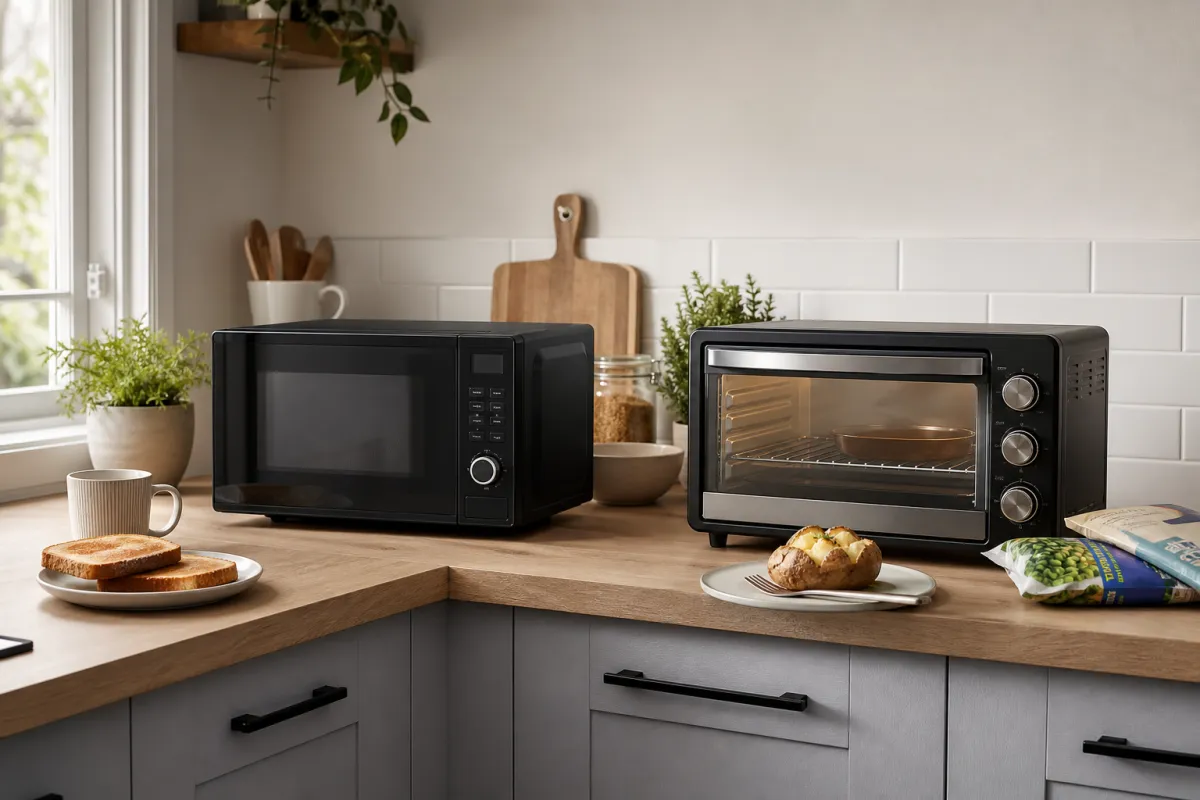
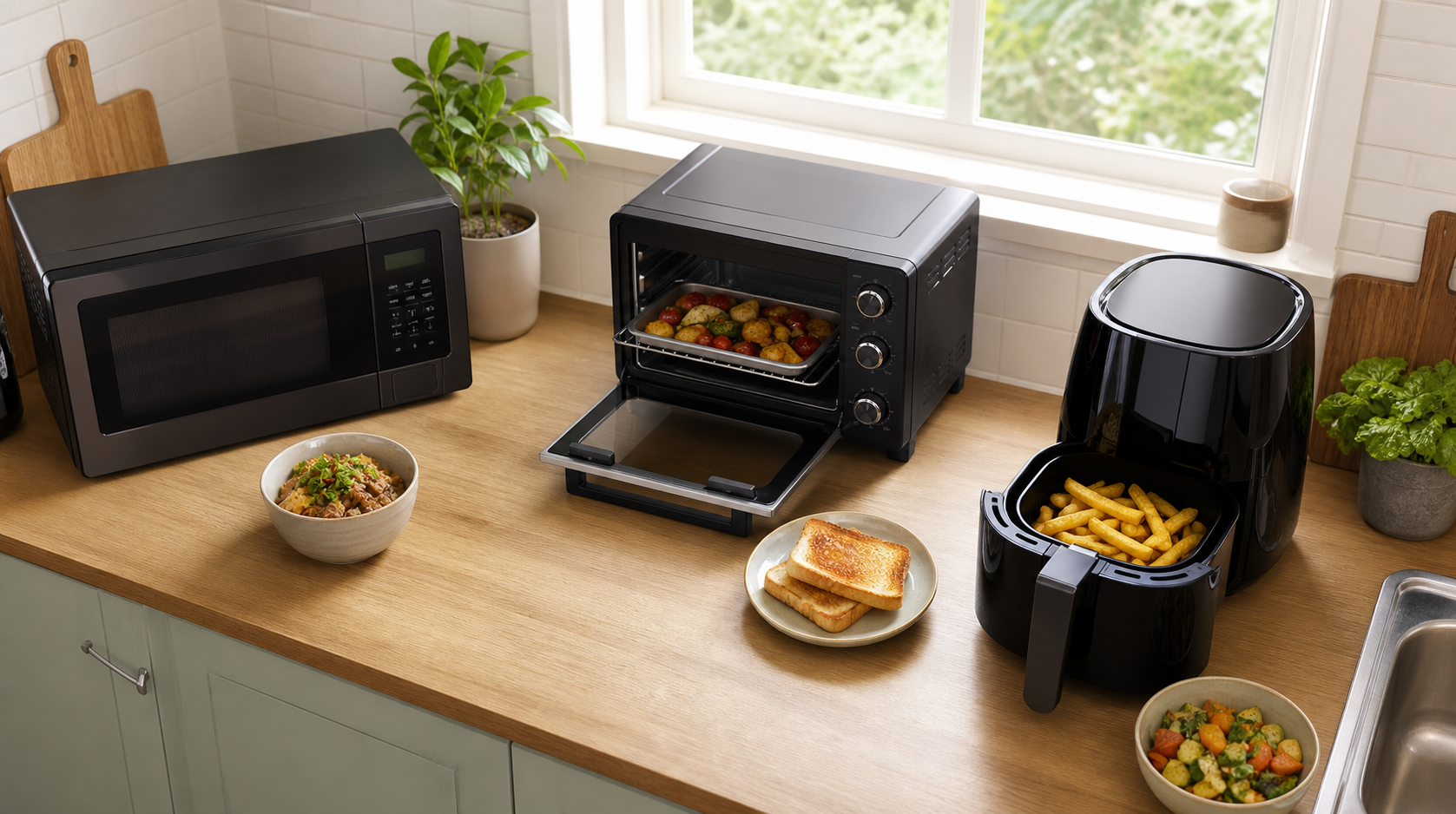
A mini oven and a microwave both look like small-kitchen problem solvers, but they solve different problems. If reheating, defrosting and fast solo meals matter most, a microwave is usually the more useful everyday appliance. If you want toast, crisp frozen food, small bakes or oven-style cooking without heating a full-size oven, a mini oven earns its space.
The awkward bit is that a small kitchen rarely has room for every useful appliance. The best choice is less about the label on the box and more about the food you actually make, the plates and trays you use, and whether the appliance can live on the counter without blocking prep space.
Start with the jobs you need it to do
Do not begin with litres, wattage or a deal price. Begin with your normal meals. A microwave is hard to beat for leftovers, porridge, soup, drinks, frozen veg, jacket potatoes and ready meals. It heats food quickly, it does not need preheating, and it is usually easier to clean after splatters than a small oven after crumbs and melted cheese.
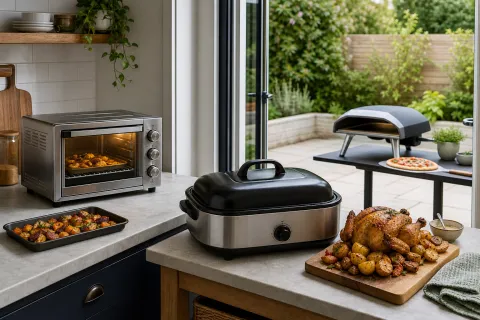
A mini oven is closer to a compact oven. It is better for food that needs dry heat, browning or a tray: toast, garlic bread, pastries, fish fingers, small pizzas, baked potatoes with crisp skins, traybake-style portions and reheating food that would go soft in a microwave.
| Small-kitchen job | Microwave | Mini oven |
|---|---|---|
| Reheating leftovers | Usually quickest and most convenient, especially for wet foods such as curry, pasta sauce and soup. | Better when texture matters, but slower and less useful for stirring through wet dishes. |
| Toast and crisp snacks | Poor unless it is a grill or combination model, and even then the result depends on the appliance. | Usually the better fit because it uses dry heat and a tray or rack. |
| Ready meals | Best for microwave-labelled meals and fast lunches. | Useful only when the meal instructions allow oven cooking and the tray fits safely. |
| Small bakes and oven-style meals | Only suitable if you buy a combination microwave and accept the extra size and cost. | Usually the clearer choice for baking, grilling and roasting small portions. |
| Defrosting | Normally the more practical appliance, especially with dedicated defrost settings. | Not the right tool for most defrosting jobs. |
| One appliance for the most meals | Best if your meals are reheated, steamed, boiled or sauce-based. | Best if your meals need crisp edges, dry heat, toast or a small tray. |
At this point many shoppers can choose. If your answer is mostly reheating and lunch, start with Product Inspector's microwave guide. If your answer is mostly toast, trays and browning, start with the mini oven guide. If you mainly want crisp chips, nuggets, vegetables or small portions with less tray space, an air fryer may be the more useful third option.
Where a microwave wins in a small kitchen
A microwave is often the better first appliance because it covers the jobs a hob or oven does badly when you are tired, short on time or cooking for one. It reheats leftovers without heating the room, softens butter, warms drinks, defrosts ingredients and handles microwave-ready food.
The main advantage is speed with low fuss. You can open the door, stir or turn the food, continue cooking and wipe the cavity afterwards. That matters in a small kitchen where a tray, oven glove and cooling rack can take over half the worktop.
The weakness is texture. A microwave heats water-rich food well, but it will not make pastry flaky, toast bread properly or crisp the underside of a pizza. Grill and combination microwaves narrow that gap, but they are usually bigger, costlier and less simple than a basic solo microwave.
Where a mini oven earns its counter space
A mini oven starts to make sense when the food you miss most is oven food. It gives you dry heat in a compact box, usually with a tray or shelf, so it can brown, toast and crisp in a way a standard microwave cannot.
That makes it useful in studio flats, annexes, student rooms where rules allow one, holiday lets, small homes with a poor main oven, or kitchens where the full-size oven feels wasteful for one portion. It can also be a practical second oven when the main oven is full.
Useful test: if the food you cook most often comes with oven instructions and needs a crisp or browned finish, a mini oven is more likely to feel worth the space.
The compromise is convenience. Mini ovens usually need preheating, hot trays need somewhere safe to land, crumbs collect, and the outside of the appliance can become a bigger space and heat consideration than the footprint suggests.
Measure usable space, not just the appliance width
Small-kitchen appliances often disappoint because the headline dimensions are only part of the fit. You need to measure the counter width, depth, height under wall cupboards, door swing, cable position and the gap the manual asks you to leave around the appliance.
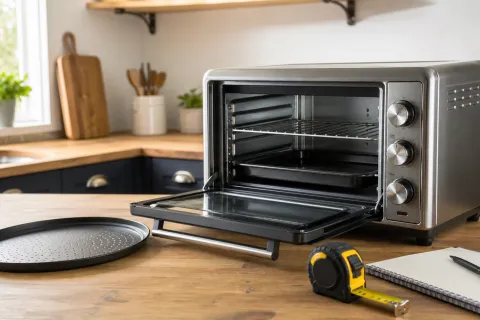
A microwave door normally opens sideways, so check whether it clashes with a wall, kettle, draining board or cupboard handle. A mini oven door usually drops down, so check whether you have space for the hot door, your hand, the tray and somewhere heat-safe to put food down.
Do the plate-and-tray check before you buy. For a microwave, make sure your dinner plate or usual container fits the turntable or flatbed cavity. For a mini oven, check the internal tray size, shelf positions and usable height, not just the quoted litres.
Think about heat, ventilation and cleaning
A microwave is usually the calmer appliance in a tight kitchen. It still needs correct placement and ventilation, but day-to-day heat around the appliance is normally less intrusive than a mini oven. It also contains most splashes inside a wipeable cavity, especially if you use a cover for suitable foods.
A mini oven behaves more like a small oven. It can throw heat into the room, it needs clear space around it, and it can be awkward under low cupboards. It also creates tray, rack and crumb cleaning. That is manageable if you use it often, but frustrating if it only comes out for the occasional pizza.
- Microwave cleaning: best for wipe-down mess, but sauces can still splatter and smells can linger.
- Mini oven cleaning: better for dry crumbs and trays, worse for cheese, fat and baked-on spills.
- Shared check: follow the appliance manual on placement, ventilation and safe cookware.
Where an air fryer fits into the decision
An air fryer is not a microwave replacement. It does not reheat soup, warm drinks or defrost food in the same practical way. But it can be a better small-kitchen answer than a mini oven if your main aim is crisping small portions quickly.
Choose the air fryer direction if chips, nuggets, roasted veg, chicken pieces or quick crisp sides are the meals you are really imagining. Choose the mini oven direction if you want flatter trays, toast, open sandwiches, pastries, small pizzas, or more oven-like flexibility.
A microwave plus air fryer can be a strong small-kitchen pair: one handles fast reheating and wet foods, the other handles crisp texture. A microwave plus mini oven is broader, but it usually costs more counter space.
Can one appliance replace the other?
Sometimes, but not cleanly. A solo microwave cannot replace a mini oven for browning, baking or toast. A mini oven cannot replace a microwave for fast reheating, defrosting and many ready-meal routines. A combination microwave can bridge the gap, but only if it is large enough for your food and simple enough that you will actually use the extra modes.
For many small kitchens, the most sensible order is:
- Buy a microwave first if you do not already have a fast reheating option.
- Add a mini oven only if your main missing meals need dry heat, toast or a tray.
- Consider an air fryer instead if crisp small portions matter more than toast or baking.
Small-kitchen buying checks before you decide
Before you click buy, run these checks with the exact model you are considering:
- Measure the real home for it: include door movement, wall-cupboard height, ventilation gaps and where the plug will go.
- Check your own plates, trays and containers: quoted capacity is less useful than whether your normal food fits.
- Read the manual for placement rules: especially for mini ovens under shelves or close to walls.
- Check cooking instructions on the food you buy: some ready meals are microwave-only, some are oven-only, and some use different trays for each method.
- Be honest about cleaning: a more flexible appliance is not more useful if it becomes the thing you avoid washing.
- Avoid buying by litres alone: internal shape, shelf height, turntable size and tray dimensions matter more in a cramped kitchen.
So, which is more useful?
For most small kitchens, a microwave is the more useful first buy. It handles the daily jobs that make a compact kitchen easier to live with: reheating, defrosting, quick lunches, hot drinks, leftovers and simple microwave-ready food. It is usually faster, easier to wipe clean and less demanding on prep space.
A mini oven is the better choice when the missing appliance is really a small oven: you want toast, crisp snacks, small pizzas, pastries, baked potatoes, grilled food or tray-based meals. It is more satisfying for browned food, but it asks more of your counter, your cleaning routine and your patience.
If you can only make room for one, choose the appliance that fixes your most common meal, not the one that sounds most versatile. In a small kitchen, an appliance used five times a week is worth more than one that theoretically does more but blocks the worktop.
Sources and checks
These links are useful when checking fit, microwave type and safe reheating before you buy.
- AO microwave buying guide explains microwave types, capacity ranges, fit options and why dimensions matter alongside litres.
- Food Standards Agency cooking guidance on GOV.UK is worth checking for safe reheating, including heating food until it is steaming hot throughout and stirring microwave-heated leftovers to avoid cold spots.