In this article
Start with the room, not the recipe. A mini oven and an electric roaster are usually bought for indoor use, while many pizza ovens are designed for a patio or garden even when electricity provides the heat. Once you know where the appliance can safely live, the food decision becomes much easier.
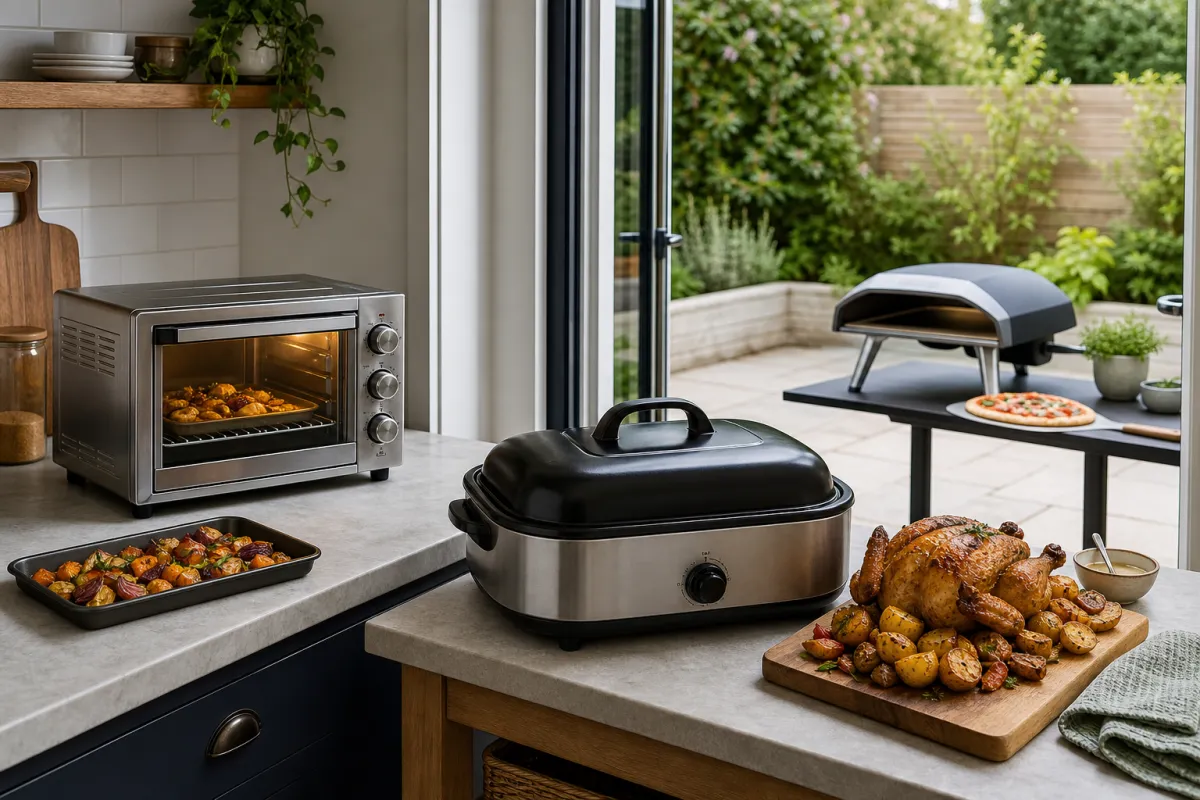
A mini oven is the best all-rounder for everyday indoor cooking. A pizza oven is the specialist choice for high-heat pizza and outdoor entertaining. An electric roaster oven makes most sense for large joints, poultry, casseroles and feeding a group. If your normal meal is chips, breaded food, roasted vegetables or a couple of portions, an air fryer may already cover the job without another oven-shaped appliance.
Use three questions to narrow the choice
Must it work indoors? If yes, rule out any model marked outdoor-only, regardless of whether it uses gas, wood, pellets or electricity.
What is the repeat meal? Mixed tray meals and baking favour a mini oven; pizza nights favour a pizza oven; large roasts and batch dishes favour a roaster oven.
What must fit inside? Check the actual tray, pizza, casserole or joint dimensions. Headline litres do not tell you whether your favourite dish will clear the door or lid.
| Format | Strongest use | Typical location | Main weak spot |
|---|---|---|---|
| Mini oven | Everyday baking, grilling, roasting, reheating and frozen food | Indoors, with the clearances and ventilation required by the manual | Limited tray width and height compared with a full oven |
| Pizza oven | Fast, high-heat pizza with a crisp base and strongly browned crust | Model-specific: many are outdoor-only; some electric models are indoor-rated | Specialist shape, high heat and storage demands |
| Electric roaster oven | Large poultry, joints, casseroles, batch cooking and serving groups | Usually indoors on a stable, heat-safe surface | Bulky footprint and less direct top heat than an oven with a grill element |
| Air fryer | Quick crisp food and smaller portions | Indoors, with clear airflow around the appliance | Basket or drawer shape restricts large dishes and conventional baking tins |
Go straight to the right shortlist
If your use case is already clear, compare our mini ovens for indoor versatility, pizza ovens for dedicated high-heat cooking, electric roaster ovens for large moist-cooking capacity, or air fryers when speed and crisp smaller batches matter most.
Mini ovens: the practical indoor all-rounder
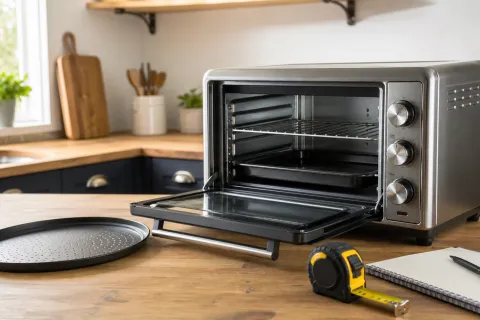
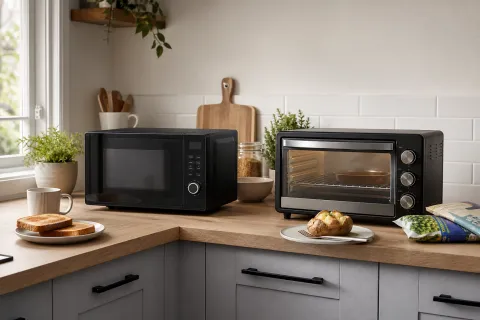
A mini oven is the closest of these formats to a conventional oven. The useful models can bake, roast, grill, toast and reheat, and some add convection fans, rotisserie fittings, hotplates, air-fry baskets or slow-cook programmes. That range makes a mini oven the sensible first choice for a bedsit, annexe, caravan kitchen, renovation period or household that wants a second oven without fitting one into the units.
The strength is not extreme heat. It is being able to cook recognisable everyday food in recognisable ovenware: a small tray of vegetables, a pie, fish and chips, baked potatoes, toast, a compact casserole or a cake tin that fits. A door and rack also make it easier to check browning than a deep lidded roaster.
Tray fit is the make-or-break check. A generous litre figure can still hide a narrow cavity, a low top element or a door shape that rejects your usual tin. Measure the widest and tallest cookware you expect to use, then compare it with the manufacturer's usable internal dimensions and rack positions. Included trays are helpful, but they do not prove that your own dishes will fit.
Mini ovens also vary widely in how well they control heat. Small cavities can brown quickly near the elements, and the outside surfaces may become hot. Look for clear temperature controls, useful rack positions, a crumb or drip tray you can remove, and enough space around the appliance to meet the manual's ventilation instructions.
Pizza ovens: buy one for pizza, not for the word "oven"
A pizza oven is built around intense heat and a hot stone or deck. That is what creates a fast-rising crust, browned toppings and a crisp base that is difficult to reproduce in a modest countertop oven. If homemade pizza is a weekly hobby, you enjoy working with dough, and you are happy to preheat and manage a specialist appliance, the difference can justify the space.
Location comes before fuel. Gas, wood and pellet pizza ovens are outdoor appliances. Some electric pizza ovens are safe for indoor use, but others remain explicitly outdoor-only. Never assume an electric lead turns an outdoor oven into an indoor appliance. Check the exact manual for operating location, weather exposure, overhead clearance, side and rear clearance, surface requirements and socket protection.
A pizza oven can cook more than pizza, particularly when the manufacturer supplies suitable pans or broader bake and roast modes. Even so, its opening, stone and heat pattern are still designed around pizza. Large casseroles, tall cakes and family traybakes may be awkward, while excess flour, cheese or grease can create smoke and cleaning work.
Buy the format for the result you care about. If the goal is occasional frozen pizza alongside toast, chips and traybakes, a mini oven or air-fryer oven is usually the more useful appliance. If the goal is repeated fresh pizza with high-heat crust development, the specialist earns its name.
Electric roaster ovens: capacity without a conventional oven cavity
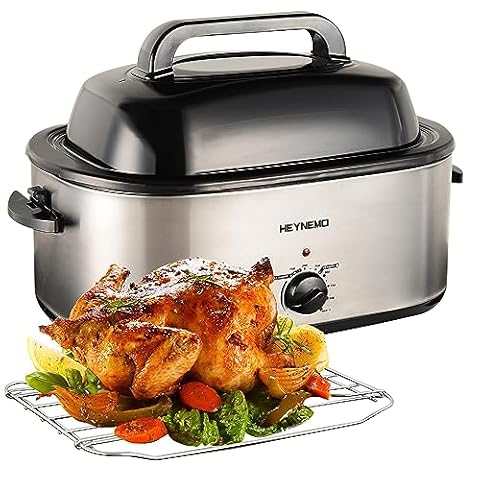
An electric roaster oven looks more like a deep lidded pan than a small front-opening oven. Heating surrounds or sits beneath a removable cookwell, while the lid traps moisture. This makes the format well suited to turkey, chicken, joints, ham, casseroles, chilli, batch-cooked dishes and keeping food hot when several people are eating.
The useful distinction is volume. A large roaster can free the main oven for potatoes, stuffing or pudding, or provide a cooking route where no full-size oven is available. The removable inner pan can also make serving and washing up simpler than manoeuvring a deep roasting tin in and out of a small mini oven.
The trade-off is dry, direct heat. A lidded roaster is designed to hold moisture, which is excellent for tender meat and large one-pot dishes but may not give you the same top browning as a mini oven with an exposed upper element or grill mode. Some recipes benefit from finishing elsewhere, removing the lid near the end where the manual allows it, or accepting that tenderness matters more than a deeply crisp surface.
Roaster capacity can be deceptive in the opposite direction to a mini oven: the vessel may be deep and generous, but the whole appliance is broad and awkward to store. Check the outer dimensions, lid-lift space, weight of the filled insert and where the hot lid will go when serving.
The air-fryer test: do you need another countertop oven?
Before buying any of the three, list the meals you expect to cook in the first month. If most are chips, chicken pieces, roasted vegetables, fish fingers, pastries and reheated leftovers for one to four people, an air fryer may solve the problem with faster airflow and a smaller cooking chamber.
An air fryer is less convincing when you need rectangular baking tins, a wide pizza stone, a tall casserole, a whole large bird or food kept moist under a lid. Oven-style air fryers stretch the boundary, but they should still be judged by usable shelf and tray dimensions rather than the number of programmes on the control panel.
Do not buy a mini oven merely because the air fryer feels fashionable, and do not buy an air fryer merely because it is compact. Choose the cavity shape that fits the food. A drawer is excellent for tossing crisp food; a rack-and-door oven is better for tins and trays; a deep roaster is better for a large moist batch.
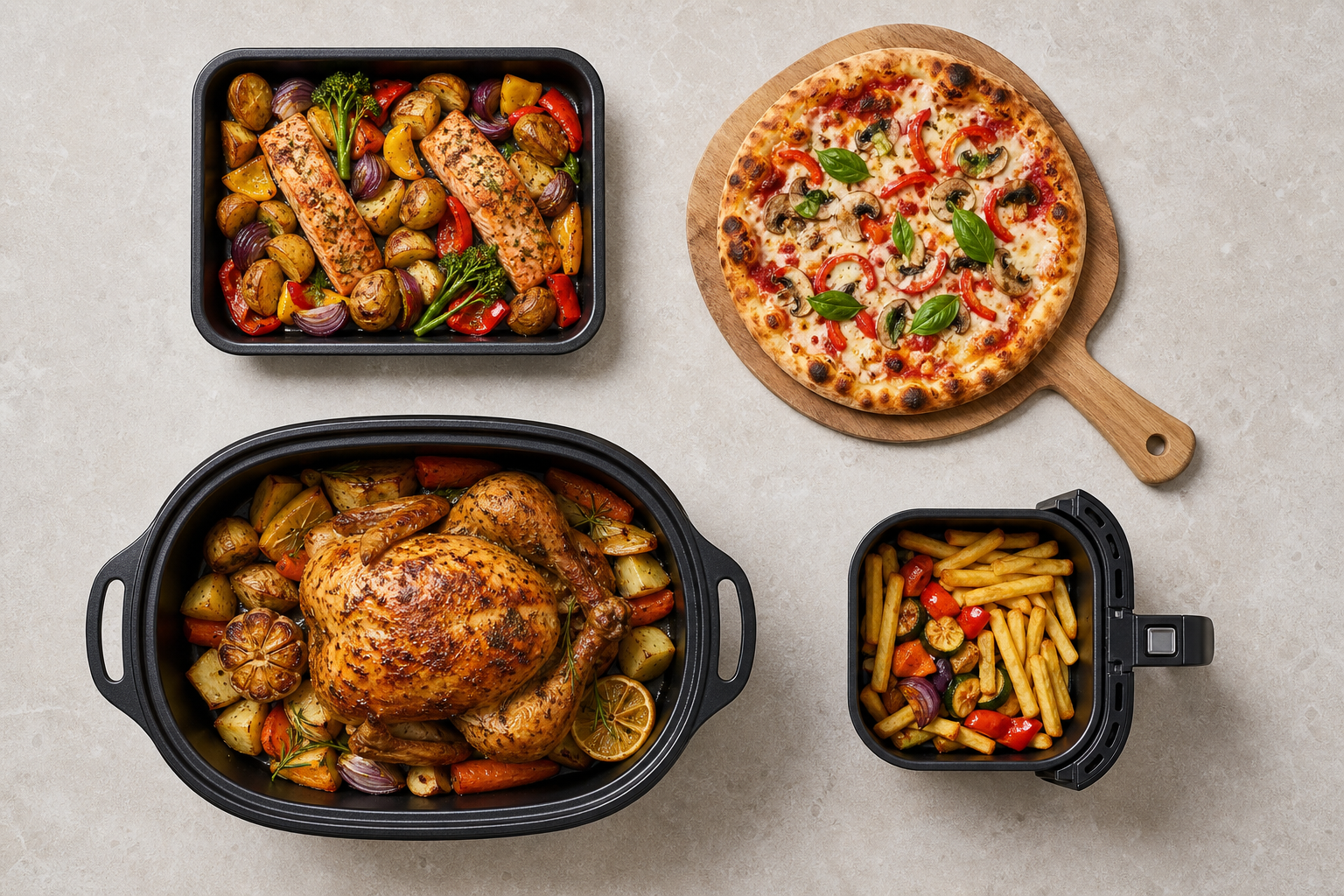 The right format is easier to see when you compare the vessel and batch you will actually cook.
Measure the meal, the appliance and the space around it
Countertop appliances need more room than their product dimensions suggest. Doors open forwards, roaster lids lift upwards, pizza peels need a clear approach, and every heated appliance needs the airflow and surface clearance stated in its instructions.
Measure with moving parts open. Include the mini-oven door, roaster lid and the hand movement needed to launch or turn a pizza.
Check ventilation. Do not use the top of a hot appliance as storage or push vents against a wall or cupboard.
Plan the socket. Avoid overloading sockets, inspect the lead and follow the manufacturer's rules for extension leads and outdoor electrical use.
Think about hot accessories. Pizza stones, roaster inserts, racks, trays and lids need a heat-safe landing place.
Check the cleaning route. Grease trays, crumb trays, stones, baskets and removable cookwells all demand different care.
Which one fits your household?
For a flat, bedsit or kitchen without a usable main oven
Start with a mini oven. It gives you the broadest indoor cooking range and accepts more conventional bakeware than an air-fryer drawer. Prioritise reliable temperature control and useful internal dimensions over a long preset list.
For weekly pizza nights and outdoor entertaining
Choose a pizza oven if the crust and high-heat result are the point of the purchase. An outdoor model makes sense when you have a suitable position and storage plan; an indoor-rated electric model is the route for year-round countertop use. Check the designation on the exact appliance.
For Christmas, Sunday roasts and feeding a crowd
An electric roaster oven is the strongest fit when the problem is fitting a large bird, joint or batch alongside everything else. It can act as overflow capacity and a serving vessel, but it is a specialist large-volume appliance rather than the best tool for toast, pizza and small crisp meals.
For quick dinners for one or two
Consider an air fryer before buying another oven. It will not take every tin or joint, but it may handle the repeated meal with less empty cavity to heat and less storage than a large roaster or pizza oven.
Verdict: choose the shape of cooking you repeat
Buy a mini oven when you need a flexible indoor oven for mixed everyday jobs. It is the safest default of the three because its rack-and-door shape works with familiar trays, tins and cooking methods.
Buy a pizza oven when pizza is a hobby or a regular social meal, and when you have a location that matches the exact model's indoor or outdoor rating. Its value comes from high heat and pizza-specific results, not from being a general substitute for every oven.
Buy an electric roaster oven when capacity is the problem: large joints, poultry, casseroles, batch food or serving a group. It trades some crisp, direct top heat for a deep, moist and generous cooking vessel.
The decisive test is simple: picture the first five meals, then buy the appliance that fits those dishes without an awkward workaround.
Sources and checks
These official pages help you check the format, operating location and safety details that vary between models.
Sage Smart Oven Pro: see how an indoor countertop oven combines familiar bake, roast, grill, pizza and reheat functions, and compare the published pan and appliance dimensions.
Ninja Artisan Electric Outdoor Pizza Oven: a useful reminder that an electric pizza oven can reach specialist temperatures while still being marked for outdoor use only.
Electrical Safety First kitchen safety: check UK advice on socket loading, ventilation, damaged leads, grease cleaning and electrical equipment used outdoors.