In this article
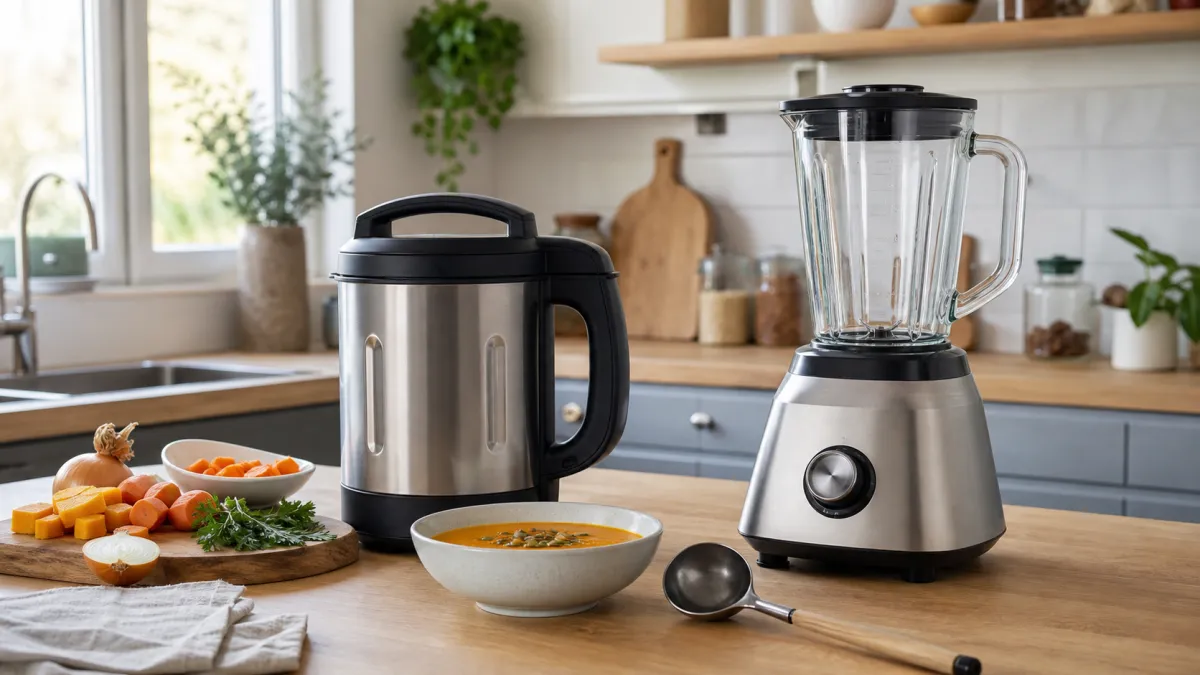
A soup maker is the better buy if homemade soup is a regular meal and you want one appliance to cook, blend and keep the routine contained. A blender is the better buy if you mainly make smoothies, sauces, dips, batters or cold drinks, and soup is only an occasional job after cooking ingredients separately.
The third option is often the most sensible: cook soup in a pan, then finish it with a hand blender. If you already own a good saucepan and only make soup now and again, a hand blender can be better value than either a dedicated soup maker or a full-size jug blender.
Decision rule: buy the soup maker for a repeat soup habit, buy the blender for broader cold blending, and choose a hand blender if you want cheap, flexible soup without another large appliance.
Match the appliance to the way you cook
| What you want most | Best fit | Why it makes sense |
|---|---|---|
| Hot soup with the least attention | Soup maker | It combines heating and blending in one lidded jug, so the routine is more contained. |
| Smoothies, sauces, dips and cold drinks | Jug blender | A blender earns its space across more prep jobs, especially if hot soup is occasional. |
| Cheap soup from cooked vegetables | Hand blender and pan | You cook normally, then blend in the pan without storing a large extra jug. |
| Chunky soup with visible pieces | Soup maker or pan | Some soup makers have chunky programmes, but a pan gives the most control over texture. |
| Very smooth restaurant-style texture | Strong jug blender | A capable jug blender can produce a silkier finish once the ingredients are cooked safely. |
| Small kitchen storage | Hand blender first | It takes far less cupboard space and uses pans you already own. |
Compare the right shortlist once you know the format
If the table has already settled the choice, start with our soup maker guide for all-in-one hot soup appliances, our blender guide for broader jug blending, or our hand blender guide if the pan method makes more sense for your kitchen.
Where a soup maker is genuinely useful
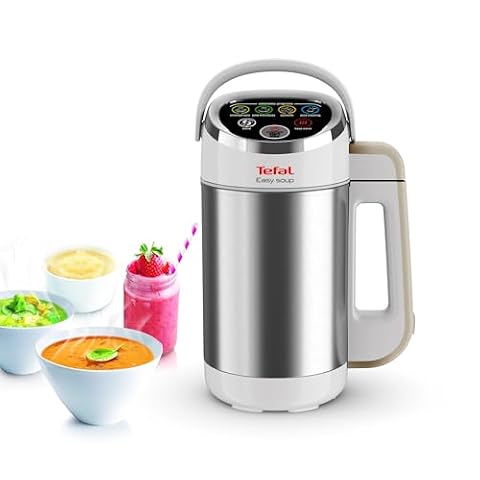
A soup maker is at its best when soup is part of your weekly rhythm. You chop ingredients, add liquid within the fill marks, choose a programme, and let the appliance heat and blend inside a lidded jug. That routine is the reason to buy one. It makes soup feel like a quick appliance meal rather than a saucepan job that later needs decanting into a blender.
The main advantage is convenience. Many soup makers offer smooth and chunky programmes, and some include blend-only, clean or keep-warm functions. On suitable recipes, that can turn prepared vegetables and stock into lunch with much less hovering than a hob pan. It also keeps the mess in one vessel, which matters if you are making soup before work, batch cooking for lunches, or trying to use up vegetables before they fade in the fridge.
The compromise is focus. A soup maker is not a general-purpose cooker and it is not automatically a better blender. Chunky programmes may heat without fully blending, while smooth programmes can be less flexible than choosing your own saucepan simmer time and blending stage. Some manuals also restrict raw meat, reheating and continuous cycles, so the useful habit is usually vegetable-led soup from fresh prepared ingredients rather than anything you might cook in a normal pan.
Where a blender is the better buy
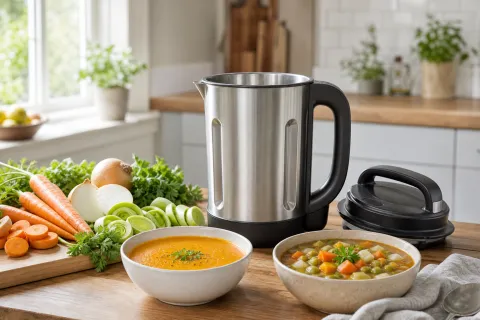
A jug blender is better when soup is only one of several jobs. It can make smoothies, milkshakes, sauces, curry pastes, dips, batters, crushed ice drinks on suitable models, and smooth soup after the ingredients have been cooked separately. If your kitchen already has a good hob routine, a blender may give you more value across the week.
For texture, a strong jug blender can also beat many soup makers. If you like very smooth tomato soup, squash soup, lentil soup or sauces, the motor and blade design matter. A dedicated blender often gives you more control over blending time and speed, and it can be easier to stop at exactly the texture you want.
The catch is heat. Most ordinary blenders do not cook. Some heated blender models blur the line by adding soup programmes, but a standard jug blender still expects you to cook ingredients first and follow the manual carefully for hot liquids. You may need to cool the soup slightly, work in smaller batches, avoid overfilling and keep a firm hold on the lid. That is fine for occasional soup, but less appealing if you wanted the appliance to remove steps.
The pan plus hand blender option is easy to underestimate
For many households, the sensible answer is neither a soup maker nor a full-size blender. Cook the soup in a saucepan, then use a hand blender in the pan. You keep full control over sauteing, simmering, seasoning and thickness, and you avoid pouring hot liquid between vessels.
This setup is especially strong for small kitchens. A hand blender stores in a drawer, costs less than most large appliances, and can also handle sauces, baby food, mayonnaise, dressings and small blending jobs depending on the attachments. It is not as powerful or as smooth as a good jug blender, and it will not cook for you, but it is often enough for everyday vegetable soup.
Choose this route if you are unsure whether soup will become a habit. If you later find yourself making soup every week and wanting a set-and-wait routine, you can still upgrade to a soup maker. If not, the hand blender remains useful without taking over a cupboard.
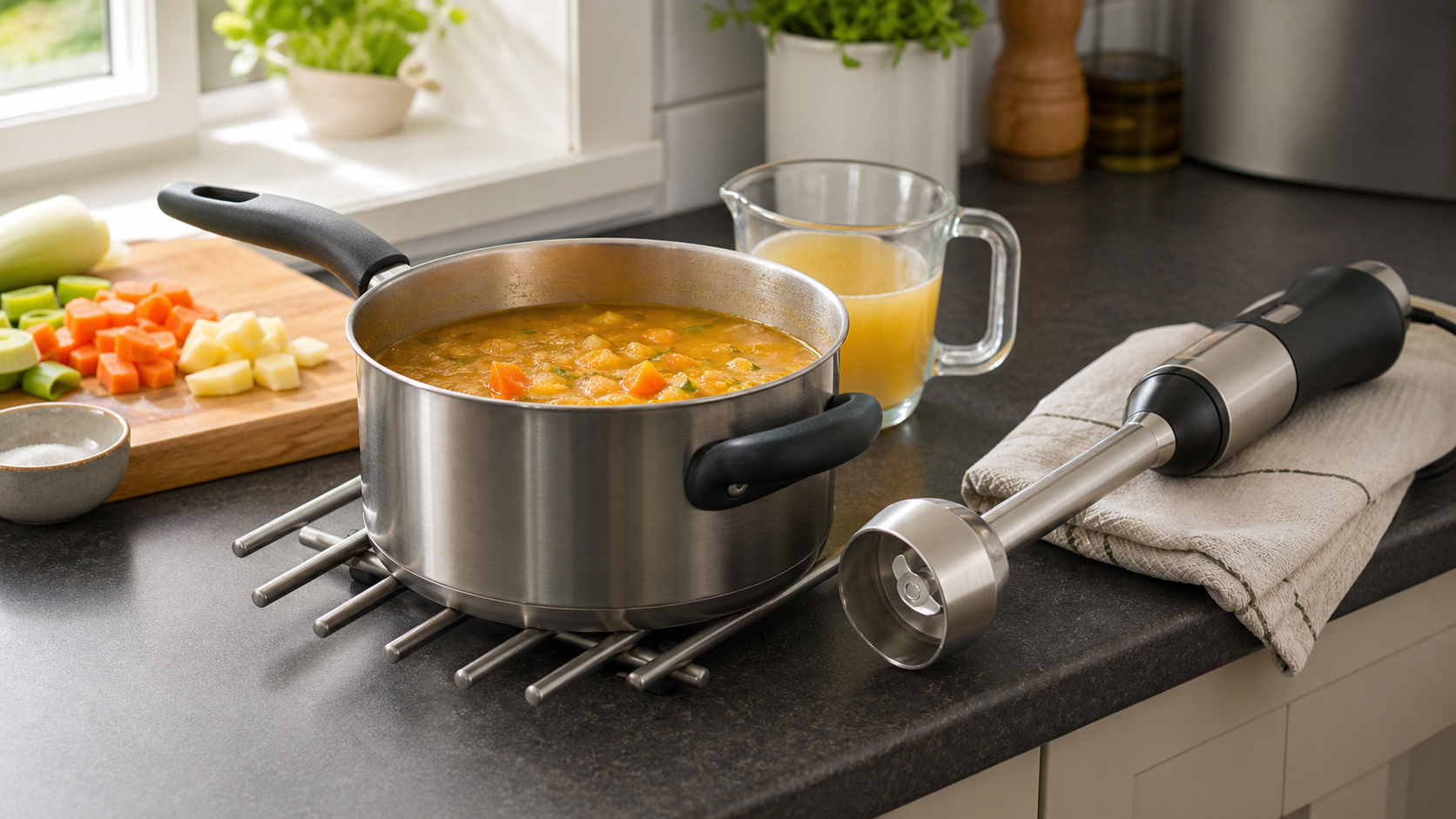 A pan and hand blender keeps the soup routine flexible when you only blend cooked ingredients occasionally.
Texture: smooth, chunky or somewhere between
Texture is where the formats feel different. A soup maker is designed around preset programmes. That is convenient, but it also means you accept the appliance's idea of smooth, chunky and ready. If you like rustic soups with vegetables that hold their shape, check whether the chunky programme blends at all or mainly heats the ingredients. If you like very smooth soup, check whether there is an extra blend function after cooking.
A blender gives more direct control once the soup is safe to blend. You can pulse, increase speed gradually, blend longer for a silkier finish, or stop while there is still texture. A hand blender gives the most relaxed control in the pan, although it may leave a coarser result unless you spend longer and use a deep enough pan.
For smooth soup with minimum effort: a soup maker is convenient if its programme suits your texture.
For the silkiest finish: a capable jug blender usually has the edge after separate cooking.
For rustic soup: a saucepan and hand blender give you the easiest stop-when-ready control.
Batch size and capacity: headline litres are not everything
Soup makers often sit around family-lunch territory rather than huge batch-cooking territory. A 1.6-litre soup maker can be useful for several portions, but you still have to respect minimum and maximum fill marks. Overfilling is not just messy; on some models it can stop the appliance working correctly.
Jug blenders can look larger or smaller on paper, but hot liquid is different from cold blending. You may not be able to fill the jug to its headline capacity with hot soup, and the safest working quantity depends on the manual. That makes a blender less convenient for large hot batches unless you are happy to blend in stages.
A saucepan plus hand blender wins for flexible quantities. You can cook a small lunch or a bigger batch in the pan you already own, then blend as much or as little as you want. The limitation is splash control: use a deep pan, keep the blade head submerged, and do not rush.
Cleaning and storage decide whether you keep using it
A soup maker sounds easy because it is one appliance, but cleaning still matters. Look for a non-stick base, a clean programme, clear instructions around the blade area, and a jug that is not awkward to rinse. If soup catches on the heating element or the lid is fiddly, the convenience advantage fades quickly.
A jug blender can be quicker to rinse after cold smoothies than after hot soup. Thick soup tends to cling around lids, seals and blade assemblies, and some parts may not be dishwasher-safe. Check whether the jug is heavy, whether the blade area comes apart, and whether replacement seals are available.
Hand blenders are usually the easiest to store, but not always the easiest to clean perfectly. The bell guard around the blade can trap fibres and herbs, and attachments vary. If you will use it for soup, choose one with a detachable blending leg and enough power for cooked root vegetables.
Safety and manual checks before you buy
Hot soup is not the same as a smoothie. Whichever format you choose, read the manual before assuming it can handle boiling liquids, raw ingredients, reheating or continuous blending. A soup maker may cook fresh prepared ingredients but still tell you not to cook raw meat in it. It may also warn against reheating tinned, carton or prepared foods because of burning or damage.
For blenders, the key checks are hot-liquid capacity, lid venting, speed control and maximum fill. For hand blenders, check splash guidance, whether the shaft is heat-safe for pan use, and how long the motor can run continuously. The safer buy is the one whose instructions match how you actually plan to cook.
Verdict: buy the appliance that removes the right step
Buy a soup maker if the step you want to remove is cooking and blending soup in separate stages. It is the most convenient choice for regular vegetable soups, simple lunches and households that want a repeatable set-and-wait routine.
Buy a blender if the step you want to improve is blending itself. It is the better all-rounder for smoothies, sauces and very smooth textures, provided you are happy to cook soup separately and follow hot-liquid limits.
Buy a hand blender if the step you want to remove is pouring hot soup into another jug. For occasional soup, small kitchens and tighter budgets, the pan-plus-hand-blender route is often the smartest starting point.
Sources and checks
These official references help you check appliance programmes, capacities and hot-soup restrictions before buying.
Morphy Richards Clarity 1.6L Soup Maker: compare how a dedicated soup maker presents capacity, smooth and chunky programmes, keep-warm and cleaning features.
Morphy Richards Clarity Soup Maker manual: check fill-line, hot-content, raw-meat and reheating cautions that show why model instructions matter.
Ninja Foodi Blender & Soup Maker HB150UK: see how a heated blender/soup-maker hybrid differs from a basic jug blender.