In this article
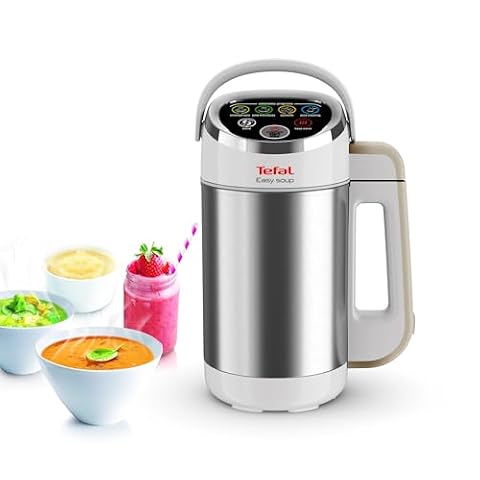
A soup maker looks simple from the outside: add vegetables, stock, press a button, pour soup. The buying decision is usually less about whether the appliance can make soup and more about whether it will suit the way you cook after the first week.
Focus on three things before you compare prices: usable capacity, cleaning effort and the texture you actually like. Those checks decide whether a soup maker becomes a helpful shortcut, a bulky blender with a heating element, or an appliance you avoid because the jug is awkward to wash.
Check these five things before comparing models
Use the product page for a quick shortlist, then read the manual or care instructions for the model you are seriously considering. That is where the most important ownership details usually appear.
| Check | Why it matters | What to look for |
|---|---|---|
| Usable capacity | The quoted litre number is not always the amount you should cook. Fill lines, thick ingredients and headroom can reduce the practical batch size. | Minimum and maximum fill marks, claimed portions, jug shape and whether your normal recipe fits without packing it tightly. |
| Smooth or chunky texture | Some machines blend smooth soup automatically, while chunky modes may mainly heat rather than chop. | Separate smooth and chunky programmes, pulse/manual blend control and whether you can adjust texture at the end. |
| Cleaning routine | Fixed blades, electrical lids and non-dishwasher-safe parts can turn a quick lunch into awkward washing-up. | A clean or pre-clean programme, accessible blade area, non-stick coating, removable seals and clear instructions on what cannot be immersed. |
| Ingredient prep | A soup maker still needs food chopped small enough to cook evenly and blend safely. | Manual guidance on dice size, liquid level, raw meat, starch-heavy ingredients and whether ingredients need frying first. |
| Storage and handling | A tall hot jug with a power base, lid and cable needs more thought than a saucepan. | Height under cupboards, weight when full, pour control, handle comfort and somewhere safe to put the hot lid. |
If those checks point towards a dedicated machine, start with our soup maker guide. If texture control or broader blending matters more, compare jug blenders or hand blenders before committing.
Capacity: think in bowls, not just litres
Many popular soup makers sit around the family-soup range, but the headline capacity only tells part of the story. The jug still needs enough liquid to run safely, enough headroom for hot contents, and enough space for the ingredients to circulate rather than jam against the blades.
A model that sounds large can feel tight if you like chunky vegetable soup, lentils, beans, pasta or potatoes. Thick ingredients take up space before they soften, and some recipes thicken as they cook. On the other hand, a large jug can be wasteful if you usually want one or two bowls and the machine has a meaningful minimum fill level.
Choose for the batch you will actually finish. A soup maker is convenient only if the amount it makes fits your fridge, freezer and appetite.
For one or two people, check that the minimum fill line is not forcing you into leftovers every time. For families or batch cooking, check the maximum fill mark and the claimed serving size rather than assuming every 1.6L jug produces four generous bowls.
Minimum and maximum fill lines are not small print
Soup makers are more restrictive than saucepans because the heating and blending happen in one jug. Too little liquid can stop ingredients moving properly. Too much can be unsafe or messy when hot soup heats, blends and expands.
Do not plan to fill the jug to the rim. Look for clear internal markings and check whether the manual gives different guidance for smooth soup, chunky soup, drinks or cleaning. If the marks are hard to see, or if the jug is heavy when full, everyday use will feel more fiddly than the product photos suggest.
Also think about the shape of the food. Large carrot pieces, potato chunks and leafy greens may sit above the liquid at first. Cutting ingredients smaller takes a little longer, but it can improve cooking, blending and cleaning.
Texture is the real reason to choose carefully
Soup texture is personal. Some buyers want a completely smooth carrot, squash or tomato soup. Others want visible vegetable pieces in broth. Some want a mostly smooth base with a little bite left at the end. A soup maker may do one of those very well and another only tolerably.
- Smooth programmes usually cook and blend automatically, which is useful if you want consistent, hands-off soup.
- Chunky programmes may heat without chopping on some models, so your knife work controls the final texture.
- Manual blend or pulse controls are worth having if you often want soup that sits between smooth and chunky.
If you are particular about texture, do not buy from the word chunky alone. Check whether the machine actually chops during that programme, whether you can pulse at the end, and whether the lid or controls make that easy while the contents are hot.
Cleaning decides whether the shortcut lasts
The best soup maker is not the one with the most programmes. It is the one you will wash without resentment after tomato soup, lentils or a starchy potato batch. Cleaning matters because the jug often contains blades, heating surfaces and electrical parts that cannot simply be treated like a saucepan.
A clean programme can help loosen residue, but it is not the same as making the appliance dishwasher-safe. You may still need warm soapy water, careful rinsing, a soft cloth and a gentle brush around the blade or lid. Check whether the jug, lid, seal and accessories can be immersed, and whether any part is dishwasher-safe.
Picture the worst soup you make, not the easiest one. Tomato, curry paste, lentils, cheese, potato and thick bean soups are more revealing cleaning tests than a thin vegetable broth.
What to inspect inside the jug
Before buying, look closely at the inside of the jug, not just the outside finish. The easiest machines to live with make the practical checks visible: clear fill marks, enough room around the blades, a lid that does not hide too many crevices, and a shape you can rinse without splashing half the sink.
On some models, the blade is built into the lid assembly; on others it sits in the jug. Either way, the cleaning instructions matter. A shiny stainless-steel interior still needs access to the corners where soup dries.
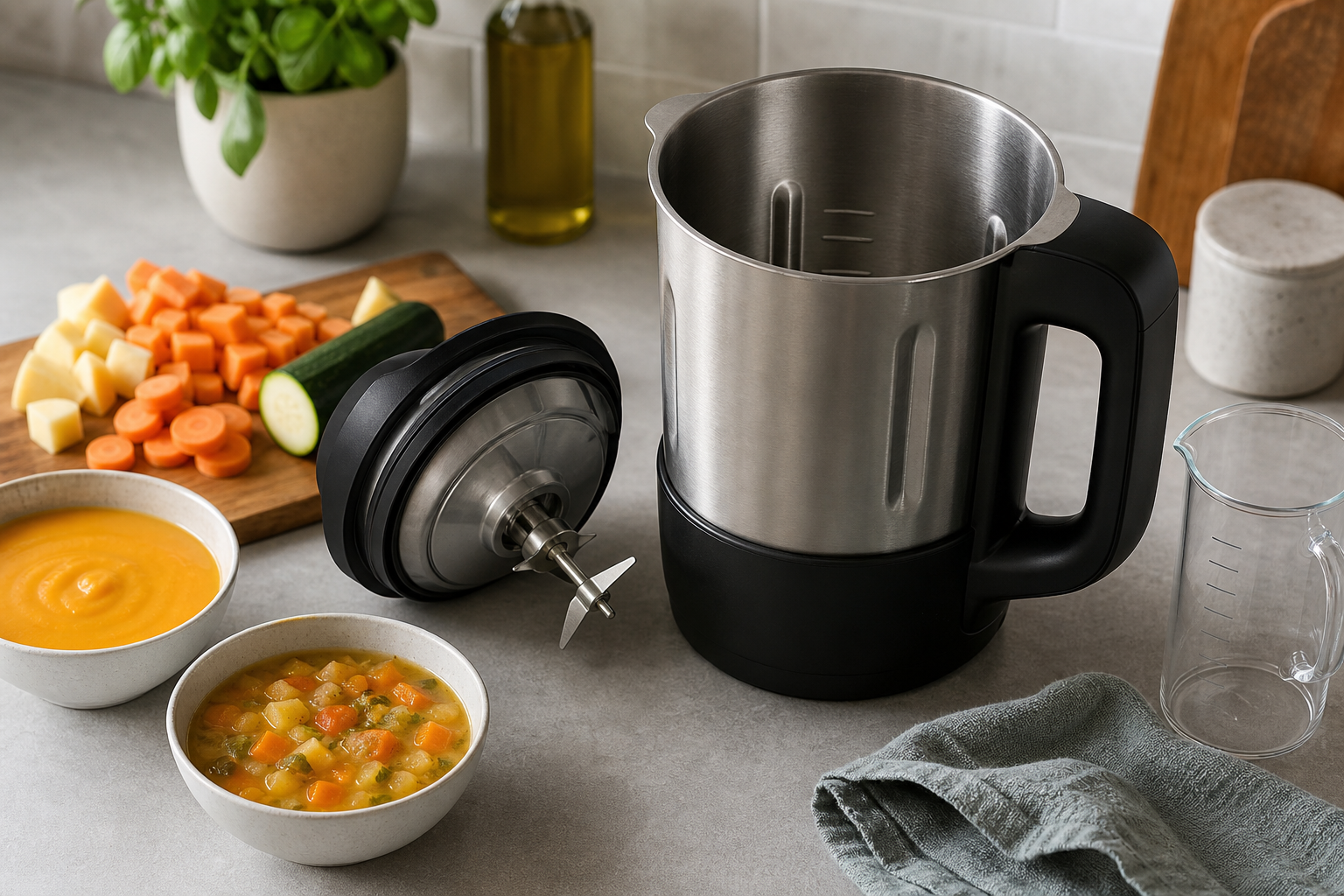 Look beyond the outside finish: fill marks, blade access and cleaning instructions decide whether the appliance stays convenient.
Ingredients can add hidden work
A soup maker does not remove all prep. You still need to chop hard vegetables, measure liquid and follow the model's rules for ingredients that foam, thicken, scorch or need cooking separately. Many manuals also give cautions around raw meat, reheating prepared food or using the appliance for foods outside the intended programmes.
This is not a reason to avoid soup makers. It is a reason to buy the right one. If your favourite soups start with fried onions, spices, roasted vegetables or browned meat, check whether you are happy doing that step in a separate pan. A soup maker with a saute function may help, but it adds another surface to clean and another feature to judge.
When a blender or hand blender is still better
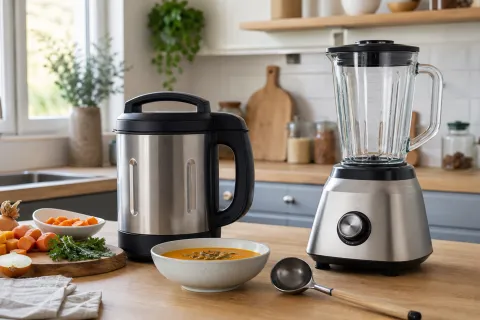
A dedicated soup maker earns its space when you want one-button hot soup and you like the batch size it produces. A jug blender is better when you also make smoothies, sauces, dips, frozen drinks or larger cold blending jobs. A hand blender is better when you already cook soup in a pan and mainly want to control the final texture.
For small kitchens, the pan-plus-hand-blender option is easy to underestimate. It uses cookware you already own, lets you cook any batch size your pan can handle, and often makes cleaning simpler. The trade-off is that you have to watch the pan and blend carefully.
Buy the soup maker for the cooking shortcut, not because it is the only way to blend soup. If you want an all-round blending tool, one of the blender routes may suit you better.
Noise, beeps and worktop space can break the habit
Soup makers are not silent. They heat, stir and blend, and many models beep at programme changes or completion. If you work from home, cook late, or have a small open-plan kitchen, noise may matter more than another preset.
Worktop space matters too. A tall jug can be awkward under wall cupboards, and a hot lid needs somewhere safe to sit. If the appliance will live in a cupboard, check the weight and shape before assuming it will come out often. Convenience disappears quickly when the machine is hard to lift, fill, pour or put away.
Manual checks worth doing before you buy
Once a model is on your shortlist, look for the manual. It can tell you more than the sales page about how the appliance behaves in daily use.
- Check the minimum and maximum fill marks, and whether they differ by programme.
- Check whether chunky soup is heated only or also chopped.
- Check whether a clean cycle is a light rinse aid or a proper cleaning programme.
- Check which parts must not be immersed or put in the dishwasher.
- Check guidance on raw meat, reheating, milk, rice, pasta, lentils or thick starchy ingredients if you cook those often.
- Check dimensions, cable length and whether the lid or jug is awkward to store separately.
These details are not glamorous, but they are the difference between an appliance that solves lunch and one that creates a new chore.
Buy around the friction you are trying to remove
A soup maker is worth considering if you want hot soup with less watching, less hob time and a repeatable routine. It is a weaker buy if the batch size is wrong, the texture control is too limited, or the cleaning rules make it less convenient than a pan and hand blender.
Start with capacity, cleaning and texture before you pay for extra programmes. If the machine gets those three things right for the soups you actually make, the shortcut is likely to last. If it does not, a blender or hand blender may be the more useful buy.
Sources and checks
These manufacturer links show the kind of practical details worth checking on any soup maker before you buy.
- Morphy Richards Clarity 1.6L Soup Maker: compare how a current UK soup maker presents capacity, smooth and chunky programmes, a clean function, keep-warm time and published dimensions.
- Morphy Richards Clarity Soup Maker manual: check the model-specific fill-line, cleaning, chunky-programme and hot-content cautions that are easy to miss on a sales page.