In this article
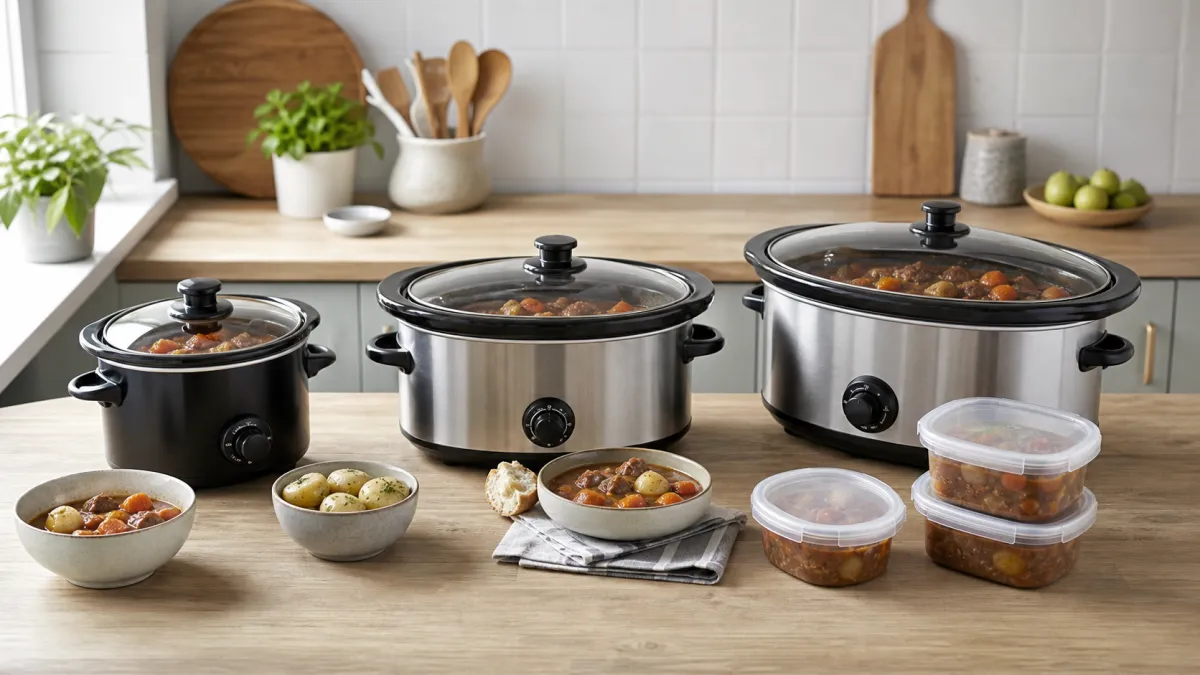
A slow cooker should be big enough for the meals you actually repeat, but not so big that it becomes awkward to wash, lift or store. For most households, the useful range is simple: around 3.5L for one or two people, 4.5-5.5L for everyday family meals, and 6L-plus when leftovers or batch cooking are part of the plan.
The litre number is only a starting point. A slow cooker works best when the pot is comfortably filled rather than packed to the rim, and the shape of the pot can matter as much as the headline capacity. A compact round pot can be perfect for stews and curries, while an oval pot is usually easier for joints, whole chickens and longer pieces of meat.
Start with the meal you cook most
Do not choose by household size alone. A couple who cook once and eat twice may need more capacity than a family that mainly uses a slow cooker for side dishes. The better question is: what will go into the pot on a normal weeknight?
Stews, chilli, curry, soup and pulled meat all behave differently. Liquid-heavy meals can use the pot space efficiently. Chunky meals with large vegetables or meat joints need more room around the food, even when the final number of portions is similar.
Practical rule: choose the smallest slow cooker that can handle your normal meal plus the leftovers you genuinely want.
Slow cooker capacity guide
| Quoted capacity | Best fit | Watch out for |
|---|---|---|
| 1.5-2.5L | Small portions, dips, side dishes and very compact kitchens. | Too small for most batch cooking and awkward for bulky ingredients. |
| 3-3.5L | One or two people, lighter meals and modest leftovers. | Can feel tight for joints, big vegetable chunks or cooking once for several days. |
| 4.5-5.5L | Couples who batch cook, small families and most everyday slow-cooker meals. | Check the footprint if it will live in a cupboard rather than on the worktop. |
| 6-7L | Family meals, leftovers, pulled pork, large stews and freezer portions. | Heavier ceramic pots can be awkward to wash in a small sink. |
| 8L or more | Big-batch cooking, entertaining and larger multi-cooker style appliances. | Overkill if you rarely fill it, and often too large for easy storage. |
If this table already points to the right range, compare current models in our slow cooker guide. If you want one appliance that can also pressure cook, steam, sear or cook rice, the electric multi-cooker guide is the better next stop.
Why useful capacity is lower than the bowl size
A slow cooker sold as 6L does not mean you should fill it to the very top with food. The quoted capacity describes the bowl, not the sensible cooking level. Food needs room for liquid, stirring, expansion and safe handling, and the lid must sit properly without food pressing against it.
That is why two slow cookers with similar litre numbers can feel different. A wide oval pot may take a joint and vegetables more comfortably than a deeper round pot with the same capacity. A shallow pot can make browning or serving easier on some models, while a tall pot may save worktop width but feel less flexible for larger food.
Do not buy the exact litre number you think the meal needs. Leave headroom for the real shape of the ingredients and for lifting the removable pot without spilling.
Household size is only half the answer
For one person, a 3-3.5L slow cooker is often enough if you want dinner plus one or two extra portions. It keeps the appliance manageable and avoids cooking a huge pot that you then have to cool, portion and store.
For two people, the same size can still work if you cook simple meals and do not want many leftovers. Move towards 4.5-5.5L if you like batch cooking, if you often cook for guests, or if you want enough room for larger cuts of meat and vegetables.
For three or four people, 4.5-6L is the practical middle ground. That gives enough room for a main meal without making the pot so large that weekday cooking becomes a storage problem. For five or more people, or for regular freezer portions, 6L-plus makes more sense.
Leftovers and batch cooking change the size
Batch cooking is where a larger slow cooker earns its space. If you want chilli for dinner, lunch portions and freezer meals, a 6L or larger pot can be more useful than a smaller model that needs two separate cooks. The extra capacity matters most when you already have a plan for cooling, portioning and storing the food.
Use smaller containers rather than one large tub so food cools more quickly and reheats in realistic portions. Cool cooked food at room temperature, put it in the fridge within one to two hours, and eat chilled leftovers within 48 hours or freeze them if that will not be possible. Freezer portions also need airtight packaging to help limit freezer burn.
If batch cooking is part of the reason you are buying, a set of freezer-safe food storage containers* is often more useful than buying the largest slow cooker your cupboard can take. The pot makes the food; the containers decide whether the leftovers are convenient.
Oval pots suit bulky food better
A round slow cooker is fine for stews, soups, curries, porridge, beans and smaller portions. It is usually compact, easy to position and often cheaper. If your meals are mostly spoonable, a round pot does the job well.
An oval pot is more flexible when food has a shape. Joints, whole chickens, racks of ribs, corn cobs and longer vegetables sit more naturally in an oval cooker. You may not need more litres; you may need a pot that uses its space in the right direction.
Choose oval when the food needs length. Choose round when storage space is tight and your meals are mostly casseroles, soups and sauces.
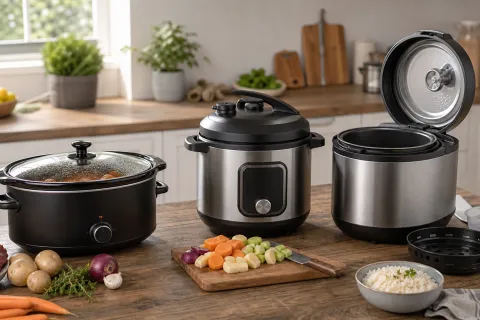
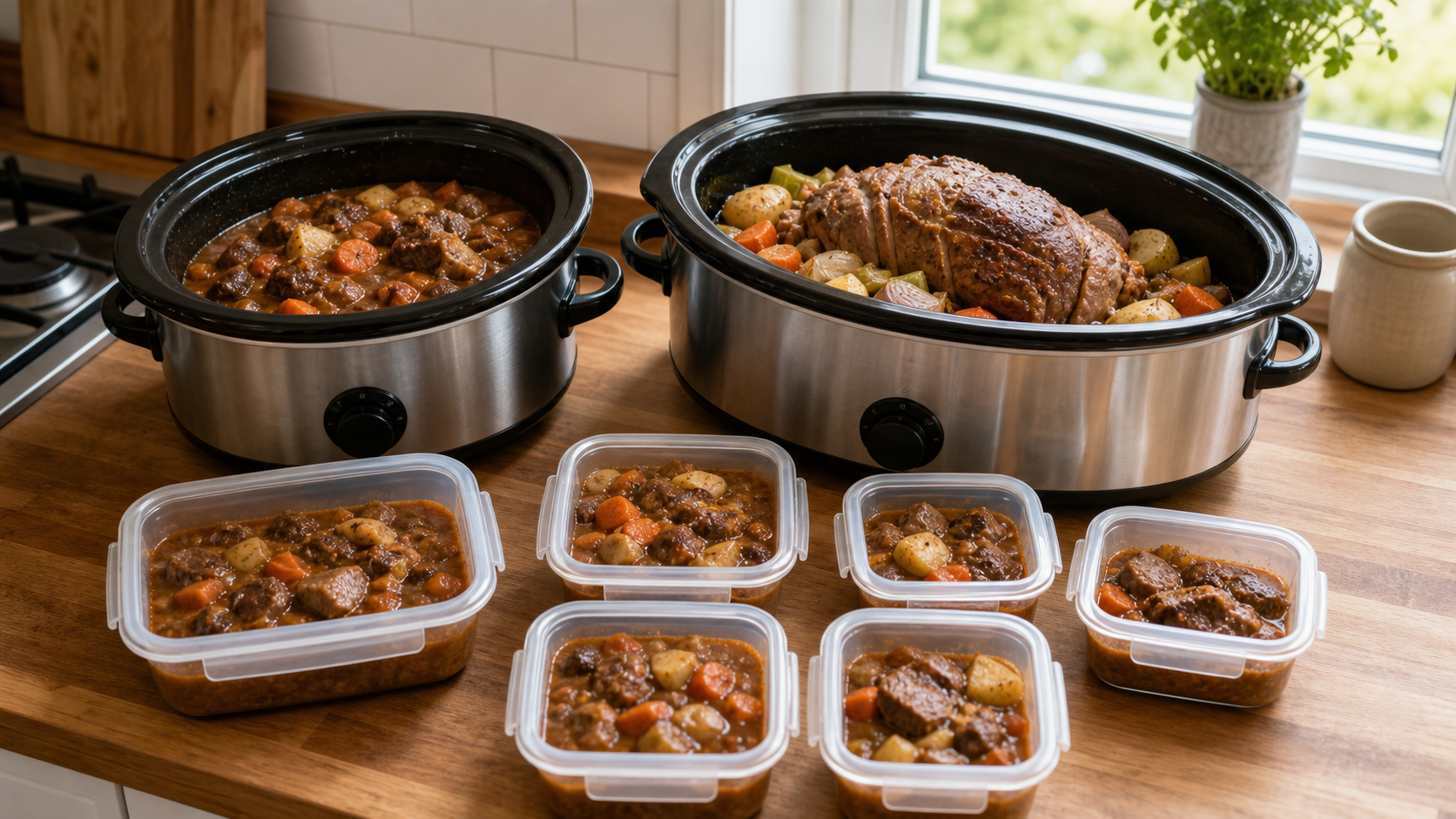 Round pots are compact for stews and sauces; oval pots make bulky food and planned leftovers easier to manage.
Counter and storage constraints are real capacity limits
A slow cooker that is too awkward to store will not feel like a convenient appliance. Measure the footprint, the height with the lid on, and the cupboard shelf or worktop corner where it will live. Also check the route to the socket, because a hot appliance should not rely on a trailing cable across the kitchen.
Weight matters too. Large ceramic bowls can be heavy before they are full of food. If you have a small sink, limited draining-board space or reduced grip strength, a big removable pot may be unpleasant to wash. A lighter metal insert, dishwasher-safe pot or sear-and-stew design can help, but only if the model's care instructions suit the way you clean up.
Before buying 6L-plus, picture the worst part of ownership: lifting the full pot, washing the bowl, storing the lid and finding room for leftover containers. If that sounds like friction you will avoid, a slightly smaller cooker may be the better buy.
When a multi-cooker is the better route
A slow cooker is best when low-effort, long cooking is the point. It suits stews, pulled meat, soups, sauces and food that improves with time. It is not the fastest appliance, and it does not automatically replace a hob pan for searing, reducing sauces or cooking small quick meals.
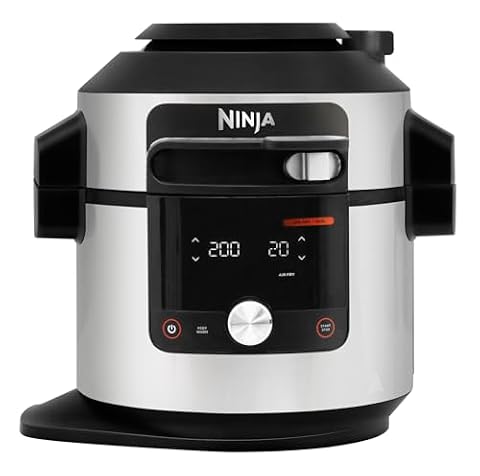
An electric multi-cooker can be the better buy if you want pressure cooking, rice, steaming, searing or keep-warm modes in the same appliance. The trade-off is bulk, more settings, a more involved lid system and sometimes a taller shape that is harder to store.
If you mainly want one-pot batch meals, choose the slow cooker size that fits those meals. If you want the appliance to cover several cooking jobs, compare slow cookers with electric multi-cookers before committing.
Where saucepan sets still fit
A slow cooker is not the right answer for every wet meal. Saucepans are still better for pasta sauces that need quick reduction, vegetables that need timing control, rice or grains you cook on the hob, and small portions that do not justify several hours of cooking.
This matters if kitchen space is tight. A good saucepan set may solve more daily cooking problems than an oversized slow cooker, especially if you only imagine using the slow cooker for occasional winter casseroles. Buy the countertop appliance when it solves a repeated job, not because the biggest pot looks better value.
Choose the size around the habit you will keep
For most shoppers, the safest choice is a 4.5-5.5L slow cooker: large enough for everyday family food and modest leftovers, but not so large that storage and cleaning dominate the decision. Go smaller if you cook for one or two and want compact convenience. Go larger if batch cooking is a real weekly habit and you have room to cool, portion and store the extra food.
The best capacity is not the biggest one you can afford. It is the size that lets you cook the meal you repeat, manage the leftovers properly and still find space for the appliance when dinner is done.
Sources and checks
This official guidance is useful if slow-cooker size is part of a batch-cooking or leftovers routine.
Food Standards Agency chilling and freezing guidance: check practical advice on cooling cooked food, using smaller portions, storing leftovers and packaging food for the freezer.