In this article
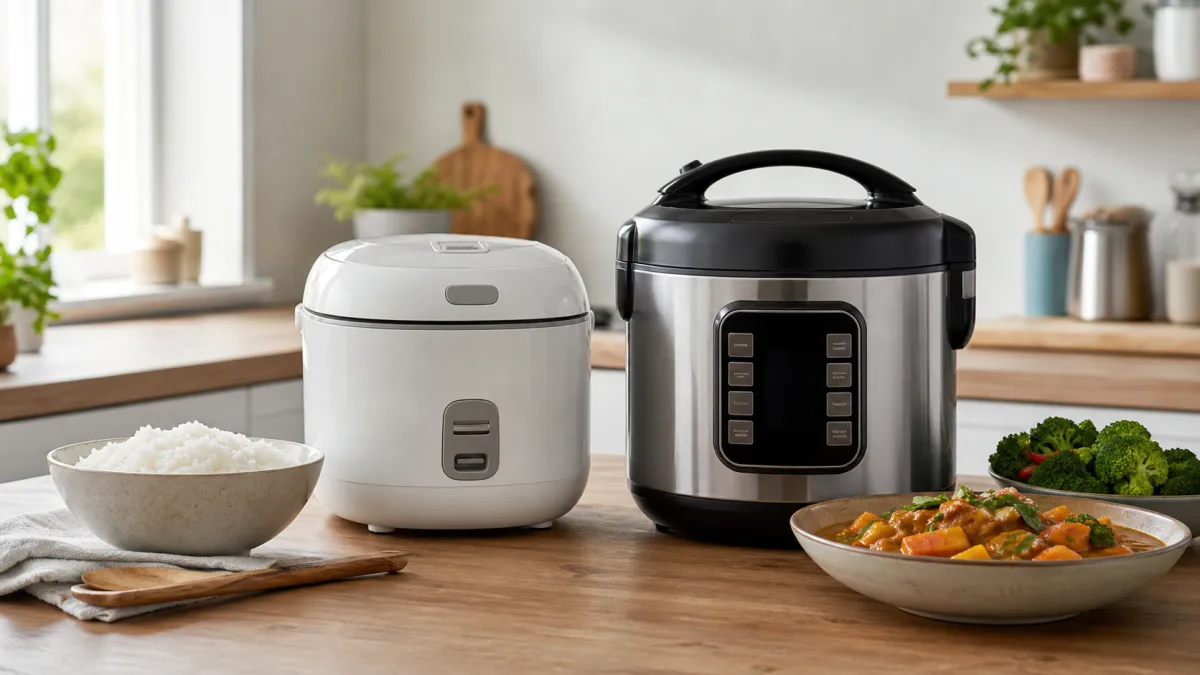
The better everyday buy depends on how often rice is the main side dish. Choose a rice cooker if you want rice to come out consistently with very little attention. Choose an electric multi-cooker if rice is only one job among many and you would rather give worktop space to one flexible pot.
A multi-cooker can be perfectly good enough for occasional rice, especially if you mostly cook curries, stews, pulses, soups or one-pot meals and only need plain rice now and again. But if rice appears several times a week, or you care about texture across jasmine, basmati, sushi rice, brown rice or porridge-style bowls, a dedicated rice cooker is usually the calmer choice.
Decision rule: buy the rice cooker for better rice habits; buy the multi-cooker for a broader meal routine.
Start with the meal you actually repeat
| Your normal routine | Better fit | Why it makes sense |
|---|---|---|
| Rice is a side dish several nights a week | Rice cooker | It is built around rice texture, water absorption and keep-warm serving. |
| Rice is occasional, but one-pot meals are common | Multi-cooker | The same appliance can pressure cook, slow cook, steam or saute depending on the model. |
| You want porridge, congee-style bowls or soft grains | Rice cooker | Many dedicated models handle gentler grain programmes without you managing a pressure lid. |
| You cook beans, stews, pulled meat or batch sauces | Multi-cooker | Pressure and slow-cook modes are more useful than a rice-only appliance. |
| You have a small kitchen and only room for one countertop cooker | Multi-cooker, if you will use several modes | It earns its space when it replaces more than one appliance or pan routine. |
| You mainly want a simple side dish while the hob is busy | Rice cooker | You can set rice going separately and leave hob burners for the main dish. |
Compare the right shortlist once the format is clear
If the table has already settled the decision, start with our rice cooker guide for dedicated models or our electric multi-cooker guide if you want one appliance for rice plus pressure cooking, slow cooking, steaming or sauteing.
Why a rice cooker is usually better for rice
A dedicated rice cooker has one main job: turn measured rice and water into an even batch without taking over the hob. That sounds narrow, but it is exactly why the appliance works for people who eat rice often. You are not choosing between a dozen modes every night; you are repeating a familiar routine until it becomes automatic.
The biggest advantage is consistency. A basic rice cooker can still make everyday white rice easier than a saucepan because it switches from cooking to warming once the water has been absorbed. More advanced models may add rice-specific programmes, fuzzy logic, brown-rice settings, porridge modes or steaming trays, but the useful point is not the menu length. It is that the machine is designed around rice behaviour.
A rice cooker also gives rice its own space. That matters when the main dish is using the hob, oven, air fryer or pressure cooker. For stir-fries, curries, chilli, teriyaki-style bowls, steamed fish or batch lunches, having rice quietly handled in a separate appliance can make the meal feel less crowded.
The compromise is scope. A rice cooker can steam vegetables or cook porridge on some models, and a few are surprisingly versatile, but it is still not the best buy if you want tender stews, pressure-cooked beans, large one-pot sauces or several cooking methods in one machine.
Where a multi-cooker wins
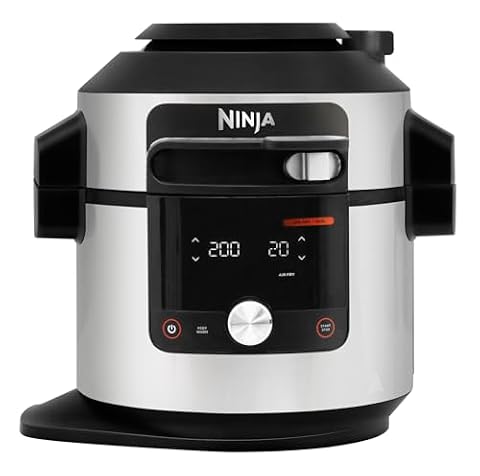
An electric multi-cooker is better when rice is only part of a wider meal routine. Depending on the model, it may combine pressure cooking, slow cooking, steaming, sauteing, warming and sometimes air-fry or grill-style functions. That makes it attractive if your kitchen is short on storage or you want one appliance to handle several weeknight jobs.
For everyday meals, the multi-cooker win is usually flexibility. You can saute onions, pressure cook a sauce, steam vegetables, slow cook a stew or keep food warm in the same general appliance family. Some models include a rice or grain programme, and plenty of households will find that good enough for occasional white rice.
The weakness is that rice becomes one mode among many. A multi-cooker pot is often larger and deeper than you need for a small rice batch, the lid and sealing parts may be more involved to clean, and the rice programme may not match the texture you would get from a specialist rice cooker. If you are buying mainly for rice, the extra modes can become clutter rather than value.
Rice quality: texture matters more than speed
For rice, faster is not automatically better. The buyer question is whether the appliance gives you the texture you like with the least fuss. If you want fluffy basmati, glossy short-grain rice, brown rice that is not chalky, or porridge-style bowls that do not catch on the pan, a rice cooker gives you more rice-first control.
A multi-cooker can still work well, particularly if its manual includes clear water ratios and a dedicated rice or grain setting. It is a practical choice for people who mostly cook sauces and only need a side dish occasionally. But if you find yourself adjusting water levels, scraping stuck rice or avoiding small batches because the pot feels too big, that is the multi-cooker telling you it is not the right rice tool.
Batch size, steaming and porridge checks
Capacity labels can be misleading because rice cookers often talk in uncooked rice cups, while multi-cookers often lead with total pot litres. Do not compare those numbers directly. Instead, ask how much cooked rice you actually serve, whether you want leftovers, and whether the smallest batch will still cook properly.
Small households: a compact rice cooker is often neater for one or two portions than a large multi-cooker pot.
Families and batch cooks: either format can work, but check usable capacity rather than headline litres.
Porridge and soft grains: look for a gentle programme and an easy-clean inner lid or bowl.
Steaming: a rice cooker steaming tray is useful for vegetables or fish above rice; a multi-cooker may give you more steam capacity but can involve more parts.
Keep-warm: helpful for serving, but not a licence to leave rice sitting around after the meal.
Cleaning and safety are part of the buying decision
Rice cookers are usually easier to clean because there are fewer pressure parts. You still need to wash the bowl, lid area, steam vent and condensation collector where fitted, but the routine is simple. That simplicity matters if you want the appliance to stay in daily use rather than become another awkward gadget.
Multi-cookers can be easy enough day to day, but pressure-capable models add gaskets, valves, lids and accessories. If you use rice mode after a curry or stew, lingering smells can also matter more than they would in a dedicated rice cooker. Check whether the inner pot, seal and lid parts are easy to remove and replace.
Food safety matters whichever appliance you buy. Cooked rice should be cooled quickly if you are keeping leftovers, chilled promptly, reheated until steaming hot all the way through and not reheated more than once. Do not leave rice cooling in a rice cooker, steamer or pan as a casual holding zone after the meal.
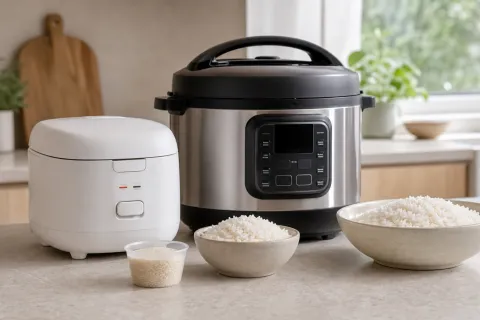
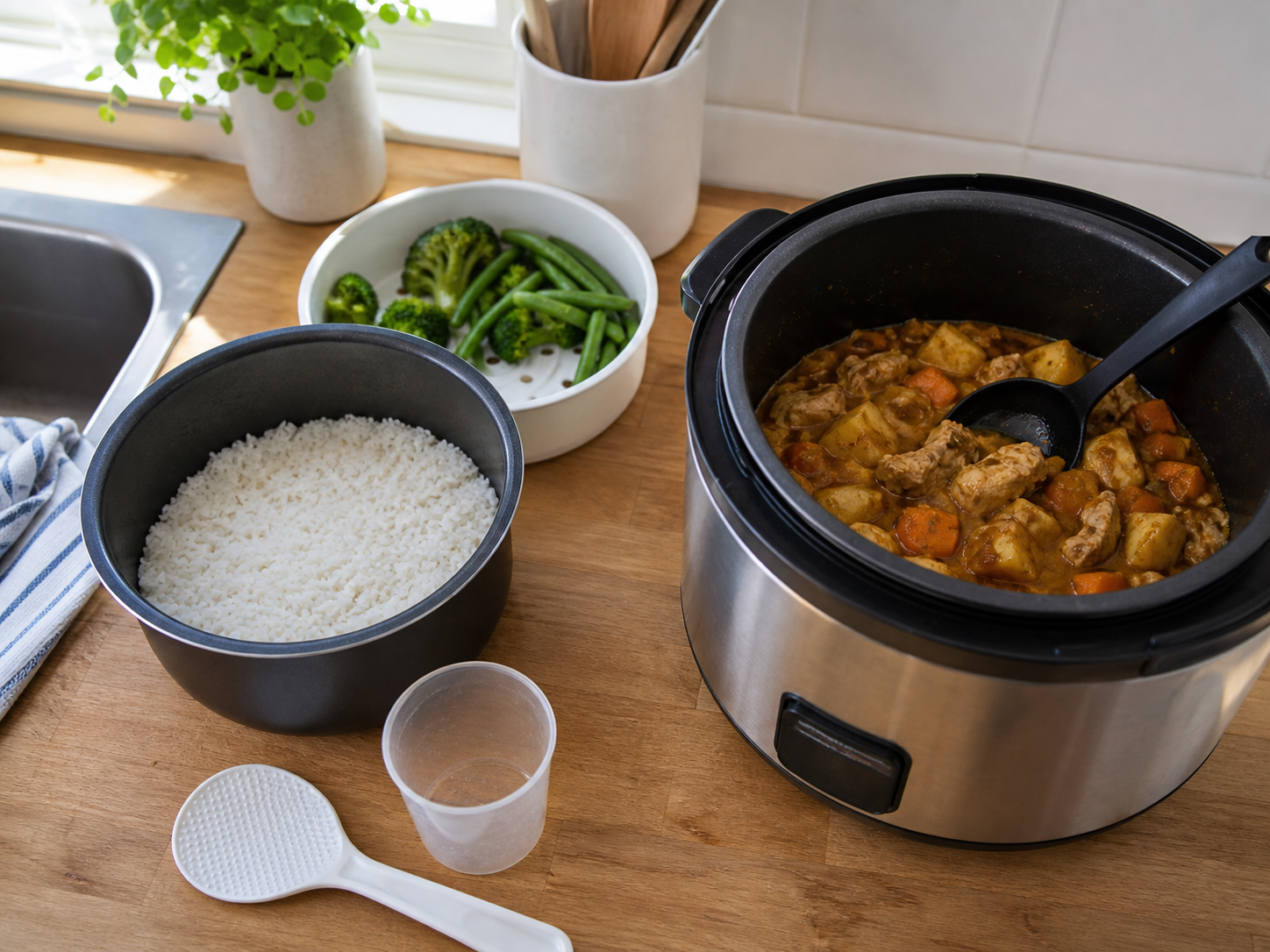 The appliance choice changes the rhythm of dinner: rice cookers separate the side dish, while multi-cookers try to handle more of the meal in one pot.
So, are multi-cooker rice modes enough?
They can be. A multi-cooker rice mode is enough if you cook rice occasionally, accept a little texture variation, and value the same appliance for pressure cooking, slow cooking, steaming or sauteing. It is also enough if your usual rice is a practical side dish rather than the centre of the meal.
It is probably not enough if rice is part of your weekly rhythm, you switch between rice types, you cook small batches, or you want rice ready while the multi-cooker is busy with the main dish. In that case, a dedicated rice cooker is not duplication. It is a smoother workflow.
Verdict: choose the appliance that protects your routine
For most rice-first households, the dedicated rice cooker is the better everyday buy. It is simpler, usually easier to clean, and more focused on the texture and serving routine that make rice reliable.
For one-appliance kitchens, the electric multi-cooker can be the better buy if you will genuinely use its broader cooking modes. It is the practical choice when the same pot needs to handle rice, stews, pressure-cooked meals, steaming and batch cooking.
The deciding question is not which appliance has the longer feature list. It is which one will still feel useful on a tired Tuesday evening. If rice is the habit, buy the rice cooker. If flexibility is the habit, buy the multi-cooker.
Sources and checks
These references help you check the safety and appliance-format details behind the comparison.
Food Standards Agency home food fact checker: check UK guidance on cooling, chilling and reheating cooked rice safely.
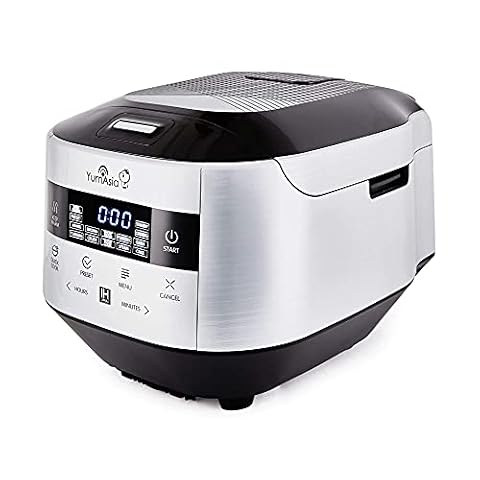
Yum Asia Sakura rice cooker information: compare how a specialist rice-cooker brand presents rice programmes, add-on functions and capacity.