In this article
Choose rice-cooker capacity from the amount of uncooked rice you actually cook, not from the biggest bowl you can fit in a cupboard. A small cooker can be perfect for one or two people who make rice as a side dish. A larger model makes sense when rice is the main part of the meal, you batch cook, or you regularly serve several people at once.
The key detail is that rice-cooker cup ratings usually mean cups of uncooked rice. Cooked rice takes up more room, and the final volume changes with rice type, water ratio and how soft you like it. Treat any cooked-rice estimate as planning guidance rather than a fixed serving promise.
First, decode rice-cooker cup ratings
Most domestic rice cookers are sold with a small measuring cup. It is not normally the same as a UK baking cup or a standard mug. When a rice cooker says it is a 3-cup, 5-cup or 8-cup model, that usually means the maximum number of the supplied cups of uncooked white rice the bowl is designed to cook.
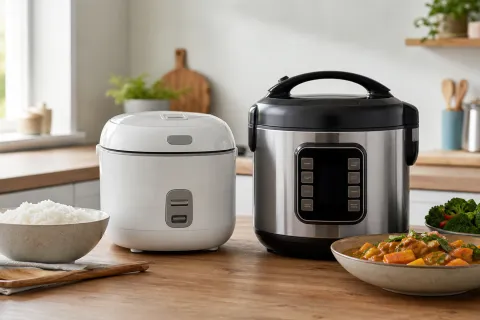
That wording matters because a buyer can easily read a 5-cup cooker as five bowls of cooked rice. In practice, five cups of uncooked rice can produce far more cooked rice than a small household wants for one meal. The reverse mistake is also common: choosing a tiny model because the cooked serving bowl in the product photo looks generous, then finding it cannot cope with guests or leftovers.
Buy from the dry rice you measure before cooking, then check whether the cooked amount suits your meals.
Rice cooker capacity guide
| Cooker size | Best fit | Watch out for |
|---|---|---|
| 1-3 cup mini cooker | Solo meals, couples, small kitchens and rice as a side dish. | Little spare room for guests, batch cooking or very fluffy rice styles. |
| 3-5 cup compact family cooker | Two to four people when rice appears often but not in huge quantities. | May still be too small for batch cooking or rice-led meals. |
| 5-8 cup larger cooker | Families, leftovers, meal prep and households where rice is central to dinner. | More cupboard space, a bigger inner bowl and possible minimum-cook limits. |
| 8 cup plus | Large households, entertaining or regular batch cooking. | Overkill if you usually cook one or two cups at a time. |
If that table already points you towards a rice cooker, compare our best rice cookers. If you want rice plus pressure cooking, slow cooking or one-pot meals in the same appliance, our best electric multi-cookers guide is the better next stop.
Small households should not overbuy automatically
For one person, a mini cooker is often enough if you mainly make rice for lunch bowls, stir-fries or a simple side. The benefit is not just price. A smaller bowl is easier to wash, easier to store and less likely to become a permanent worktop fixture.
For two people, the choice depends on leftovers. If you cook one fresh portion at a time, a 3-cup style model can feel neat and efficient. If you deliberately cook extra rice for another meal, or you often serve rice with curry, chilli, tofu, fish or several sides, a 5-cup model gives more breathing room.
Check the minimum quantity as well as the maximum. Some larger cookers are happiest when they are not used for tiny batches. If your normal meal starts with only one cup of uncooked rice, a very large cooker may be physically capable but less pleasant to use day to day.
Families need capacity for the meal, not just the headcount
Household size is a useful start, but it is not enough. A family of four eating rice as a side with a stir-fry needs a different cooker from a family of four eating rice-heavy bowls, leftovers and packed lunches.
Rice as a side: a mid-size cooker is often enough because the rice shares the plate with vegetables, fish, tofu or sauce.
Rice as the base: choose more headroom because each person is taking a larger share.
Leftovers by design: size up only if you have a safe cooling and storage routine, not because extra cooked rice sounds convenient.
Guests or weekend cooking: occasional entertaining can justify a larger model, provided it is not awkward for normal weekday portions.
The better question is: what is the biggest rice meal you cook often enough to matter? Buy for that repeat meal, not for the one annual dinner where borrowing a saucepan would be simpler.
Cooked volume is a guide, not a guarantee
Rice absorbs water and expands, but the result is not identical every time. Short-grain rice, basmati, jasmine, brown rice and mixed grains can behave differently. So can a softer or firmer water ratio. That is why a capacity claim based on uncooked cups is easier to compare than a promise about cooked bowls.
Think in bands. If you regularly cook close to the maximum, choose a larger cooker so the rice has room to steam evenly and the lid area is not constantly messy. If you are usually well below the maximum, choose the smaller, easier appliance unless you have a clear batch-cooking reason to size up.
A keep-warm function can make larger batches more convenient, but it is not a storage plan. Follow the manufacturer's time limits, and do not leave cooked rice sitting around because the machine happens to be warm.
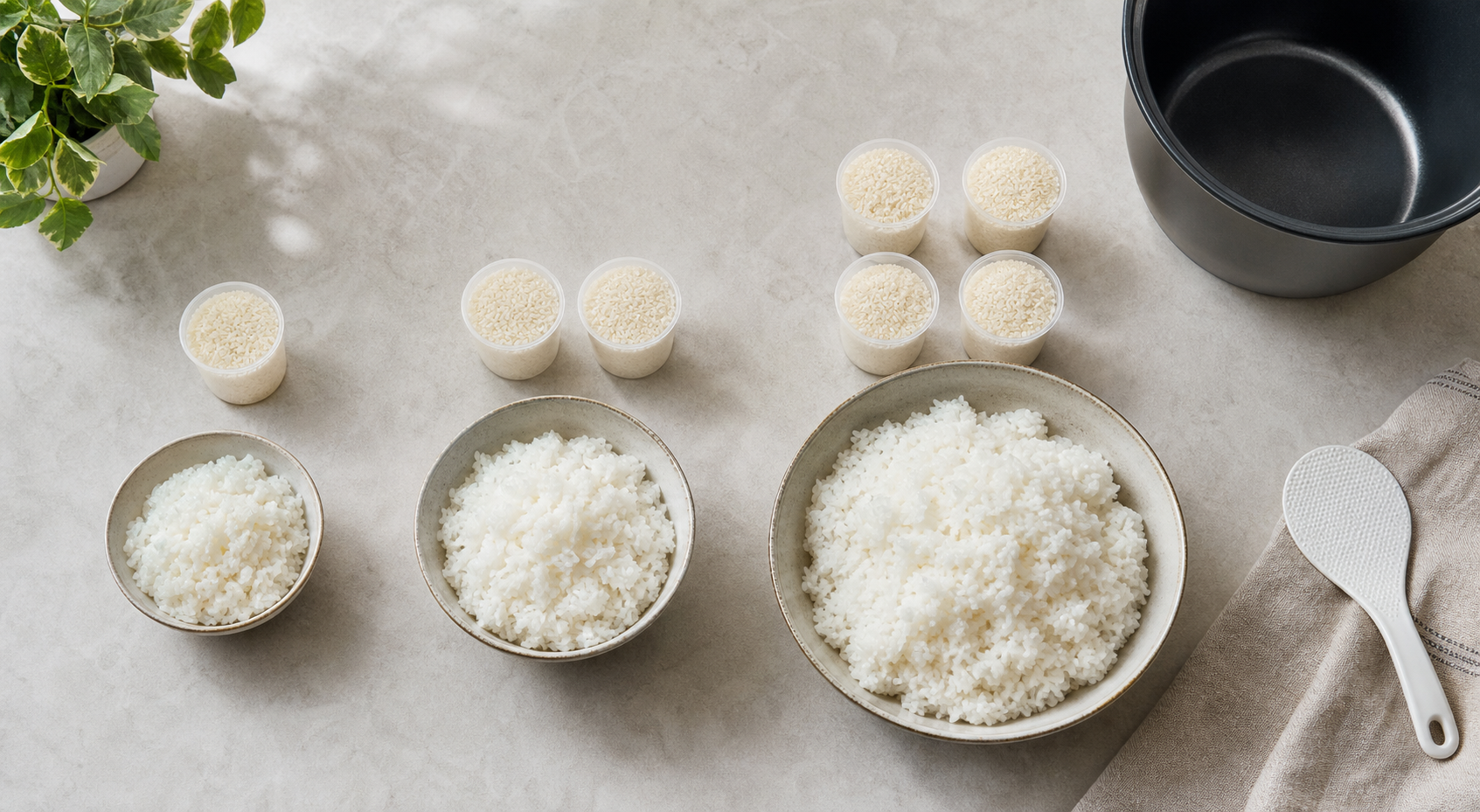 Cooked rice expands differently depending on the rice and water ratio, so compare capacity as a range rather than a fixed serving count.
Batch cooking and leftovers need care
A larger rice cooker can help if you deliberately cook several portions for later, but batch cooking adds two checks. First, the inner bowl must be large enough to cook the quantity without pushing the appliance to its limit. Second, your kitchen routine must handle the cooked rice promptly afterwards.
Cool cooked rice quickly, portion it into suitable containers and reheat it thoroughly when you use it. If that sounds like a routine you will skip on busy evenings, a smaller cooker used more often may be the safer and tidier choice.
Do not buy extra capacity for imagined leftovers. Buy it when you already have a repeat meal-prep habit and enough fridge or freezer space to handle the result.
Worktop and cupboard space are part of capacity
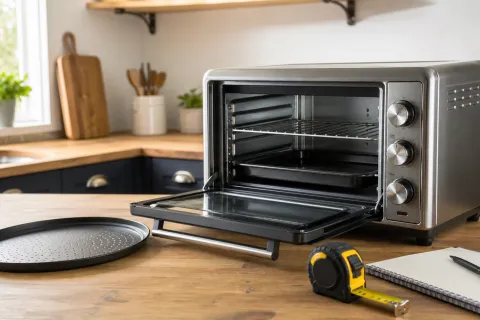
A rice cooker that is too large for your storage space can become annoying even if the cooking capacity is right. Measure the footprint, the height with the handle or steam vent, and the depth with the cable. Check whether the inner bowl fits comfortably in your sink, because that is the part you will handle after every meal.
Also think about where steam goes. A cooker used under low wall units or close to shelves may need to be pulled forward every time. A compact model that can stay accessible may get used more often than a larger machine that lives at the back of a cupboard.
For small kitchens, the best capacity is often the largest size you will happily keep within reach, not the largest size the product range offers.
When a multi-cooker is the better answer
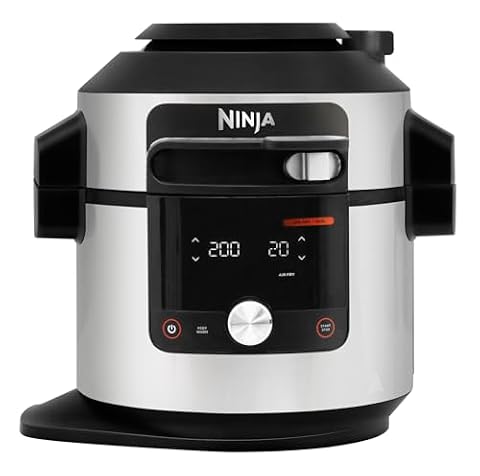
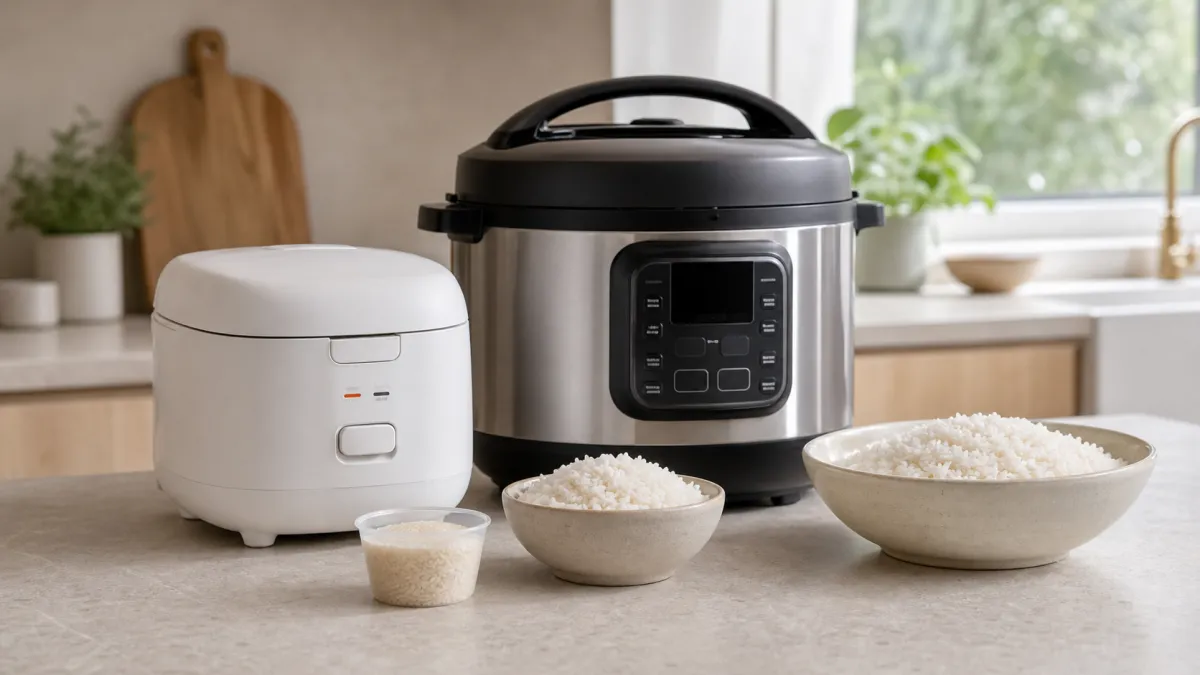
An electric multi-cooker can make sense if rice is only one job on a longer list. It may also suit households that want one larger countertop appliance instead of a separate rice cooker, pressure cooker and slow cooker.
The trade-off is simplicity. A dedicated rice cooker is usually easier to leave set up for rice and may have clearer rice markings inside the bowl. A multi-cooker can feel more versatile, but its size, lid system and cleaning routine may be heavier than you need for a quick side dish.
Choose a multi-cooker when you will use the other cooking modes often. Choose a dedicated rice cooker when the main job is consistent rice with minimal setup.
The size I would choose first
For most small UK households, a compact 3-5 cup rice cooker is the sensible starting point. It gives more flexibility than the smallest mini models without becoming a bulky appliance bought for rare occasions. Solo cooks and very tight kitchens can go smaller if rice is usually a side dish. Larger families and regular batch cooks should move up only when they can name the meals and storage routine that need the extra capacity.
The best size is not the one with the most impressive cup number. It is the cooker that handles your normal dry-rice measure comfortably, stores without friction, and does not make small everyday portions feel like a chore.
Sources and checks
These sources help you check the capacity language and storage cautions that matter before choosing a rice cooker.
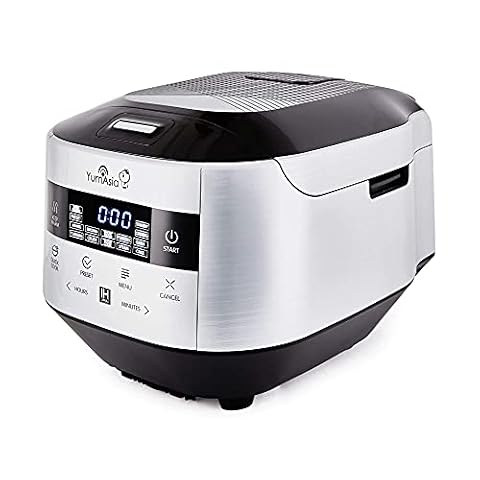
Yum Asia rice-cooker capacity guide: useful for checking how a UK rice-cooker specialist explains cup ratings, uncooked-rice capacity and bowl-size planning.
NHS guidance on reheating rice: check current advice on cooling cooked rice, storing it and reheating it safely if you plan to batch cook.