In this article
A multi-cooker feature list can make almost any model sound like a bargain. Pressure cook, slow cook, sear, steam, rice, yoghurt, air fry, keep warm, app control and a wall of presets all look useful when they sit in a neat row on a product page.
The better question is simpler: which features remove a real step from the way you cook? Pay for those first. Treat everything else as a bonus unless it is good enough, easy enough to clean and likely to be used every week.
The features most likely to earn their keep
If you are choosing between electric multi-cookers, electric pressure cookers and rice cookers, start with the jobs that change dinner most often. A pressure-cooking function can save time on stews, beans, joints and batch meals. A decent sear or saute mode can save using a separate pan. A good rice programme can be handy, but it is not automatically as consistent as a dedicated rice cooker.
Here is the practical way I would sort the feature list before paying more.
| Feature | Worth paying more when... | Check carefully before paying |
|---|---|---|
| Pressure cooking | You want faster stews, beans, pulses, tough cuts, batch meals or hands-off weeknight cooking. | Look for clear pressure release controls, a removable seal and enough capacity for your normal portions. |
| Sear or saute | You want to brown onions, meat or spices in the pot before pressure cooking or slow cooking. | Some pots sear gently. If browning matters, check reviews and product details rather than trusting the button name. |
| Slow cooking | You do not already own a slow cooker, or you want one pot that can start with searing and then cook slowly. | Check whether the shape and heat pattern suit the meals you usually slow cook. |
| Rice cooking | You cook rice regularly but also want pressure-cooker or stew functions in the same appliance. | A rice mode is not the same promise as a specialist rice cooker. Bowl shape, cup markings and keep-warm behaviour matter. |
| Dishwasher-safe removable parts | The inner pot, rack and useful accessories can actually fit in your dishwasher and the lid parts are easy to clean by hand. | Do not stop at the words dishwasher-safe. Valves, seals, rims and splatter points are often the awkward bits. |
| App features | You will genuinely use remote progress checks, recipe guidance or reminders. | Do not pay extra for an app if you mainly need a timer, clear controls and reliable cooking modes. |
If that table already narrows the choice, start with our electric multi-cooker guide. If speed is the main reason you are buying, compare electric pressure cookers. If rice is the job that matters most, our rice cooker guide is the safer place to start.
Pressure cooking is the feature to take most seriously
Pressure cooking is the main reason many multi-cookers are worth paying for. The appliance seals steam inside the pot so food cooks under pressure. In everyday terms, that means it can cook some stews, pulses, tougher cuts and batch meals faster than ordinary simmering.
For a busy household, that can be the difference between cooking from scratch and giving up. It also lets you cook wetter, tougher or longer-cooking foods without watching a hob for ages. If the pressure-cooking mode is weak, fiddly or too small for your portions, the rest of the feature list has to work much harder to justify the price.
Pay first for the cooking mode that changes your weeknight meals, not for the longest list of buttons.
The buying checks are practical. Look for a clear pressure-release control, a lid that locks and unlocks without guesswork, a removable sealing ring and instructions that make sense. The sealing ring is the flexible ring inside many pressure lids that helps the lid hold pressure. It needs cleaning, inspection and eventual replacement, so check how easy that will be before you buy.
Searing is useful only if it saves a real pan
A sear or saute function heats the pot so you can soften onions, brown meat, toast spices or reduce sauce before switching to another mode. That can be genuinely useful because flavour often starts before the pressure or slow-cooking stage.
The catch is that not every multi-cooker sears like a good frying pan. Some have less space, lower heat or a pot shape that makes browning crowded. If you only need to soften onions, that may be fine. If you want proper browning on meat, read carefully and do not assume the button name tells the whole story.
A good sear mode is worth paying for when it keeps dinner in one pot. It is less important if you are happy using a hob pan first, or if most meals you make are rice, steamed food, soup or hands-off stews where deep browning is not the point.
Slow cooking and rice modes should not make you pay twice
Slow cooking is useful in a multi-cooker when it means one appliance can handle searing, cooking and keeping food warm. It is less convincing when you already own a slow cooker that does the job well. In that case, the multi-cooker needs to win on pressure cooking, space saving or easier cleaning rather than simply duplicating what you have.
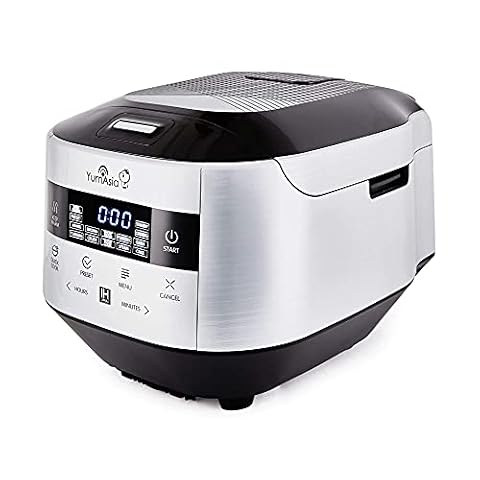
Rice modes need the same scepticism. A multi-cooker can be convenient for white rice, grains and one-pot meals, but a dedicated rice cooker may still be better if rice texture is the main reason you are shopping. Dedicated models often have bowl shapes, markings and keep-warm routines designed around rice first.
- Choose a multi-cooker rice mode if rice is one regular job among several.
- Choose a dedicated rice cooker if rice quality, keep-warm behaviour and easy repeat portions matter more than pressure cooking.
- Do not overpay for overlap if you already own a slow cooker or rice cooker you like.
Presets are shortcuts, not cooking judgement
Presets are named programmes such as stew, rice, soup, yoghurt, steam or cake. They can be helpful because they give you a starting point without setting everything manually. They are especially useful when the controls are clear and the manual explains what each programme actually changes.
But presets are not magic. They do not know the size of your carrots, how cold the food was, whether your rice has been rinsed or how much liquid is in the pot. A smaller list of clear, useful programmes can be better than a long list of vague ones.
Pay for presets only when they match food you already cook. If a model has many programmes you cannot imagine using, those buttons are not value. They are noise.
Lid design can matter more than another mode
Lids are easy to overlook because the feature list is usually more exciting. In daily use, lid design can decide whether the appliance feels clever or annoying.
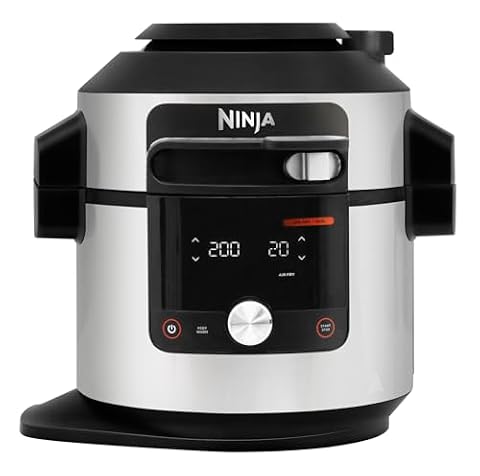
Some multi-cookers use one main lid for pressure cooking and other wet cooking modes. Others have separate lids for pressure cooking and crisping or air-frying. Some lids hinge; some lift off completely. There is no single best answer, but each design changes storage, cleaning and worktop handling.
- One attached lid can be convenient, but check whether it gets in the way when serving or cleaning.
- Separate lids may make each cooking mode better, but they need cupboard space and somewhere safe to sit when hot.
- Removable pressure lids can be easier to inspect, especially around the sealing ring and valve area.
If you cook in a small kitchen, lid storage is not a tiny detail. A bulky extra lid can be the part that stops you using the appliance as often as planned.
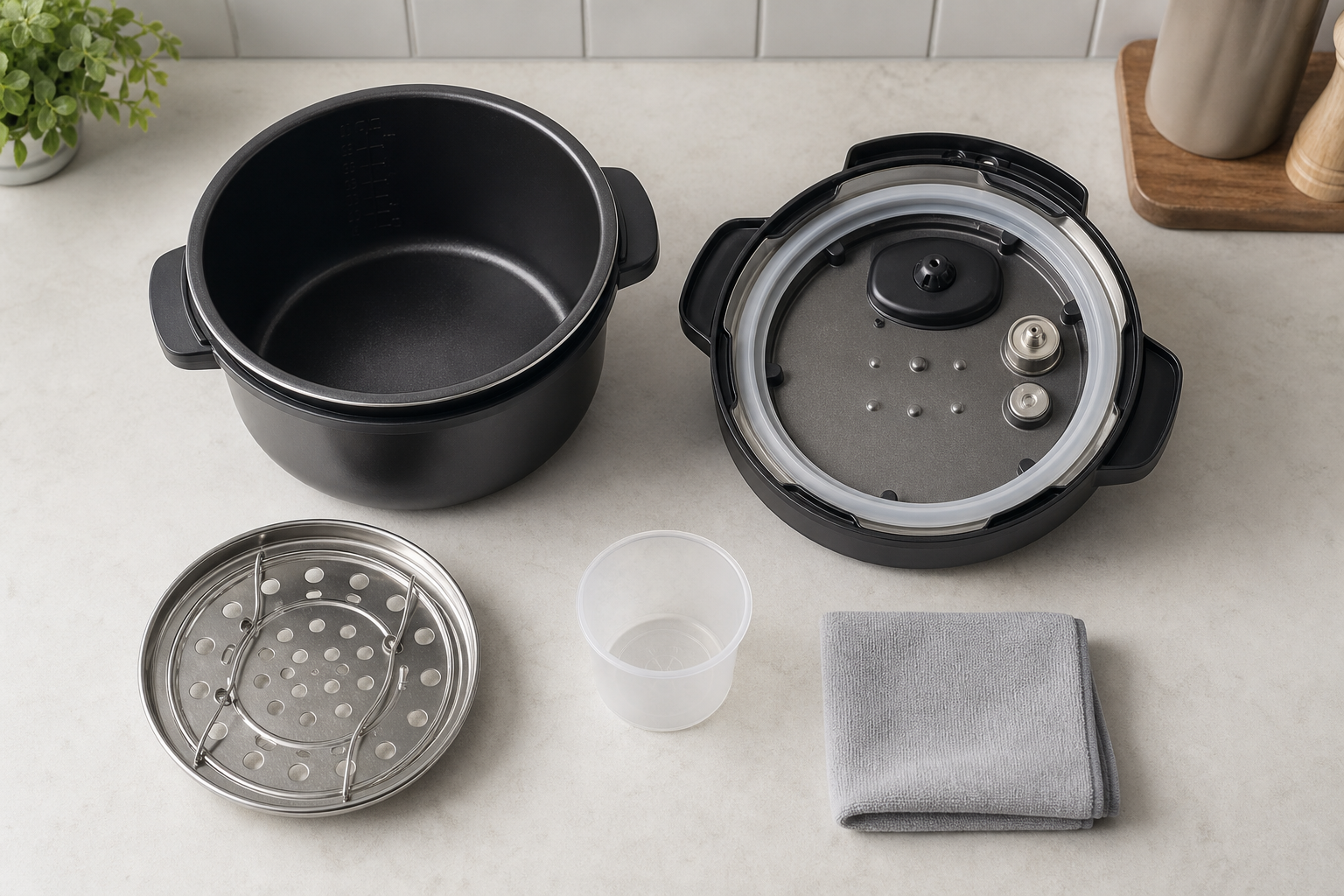 Lid design, removable seals and washable parts can affect everyday use more than an extra preset.
Cleaning claims need a closer look
Dishwasher-safe parts are worth having, but the claim needs reading carefully. The inner pot may be dishwasher-safe while the lid, sealing ring, valve area or crisping lid still need careful hand cleaning. Large pots can also take up a lot of dishwasher space.
The best cleaning features are not always the flashiest ones. A smooth inner pot, removable seal, accessible valve area, simple rack and clear manual can matter more than a self-clean programme you rarely use.
Before paying more, picture the dirtiest meal you will cook. Tomato sauce, curry paste, meat juices, rice starch and melted cheese all find different corners. If you cannot see how the awkward parts come clean, the feature list is hiding a daily chore.
App features are rarely the first reason to upgrade
Connected features can be handy. An app may offer recipes, reminders, progress checks or guided settings. For some people, that makes the appliance easier to learn.
Most buyers should treat app control as a bonus, not the main reason to pay more. A multi-cooker still needs food loaded safely, liquid measured properly, the lid set correctly and the right parts fitted. An app cannot fix a poor lid, awkward cleaning or a cooking mode you do not use.
There is also a simple ownership question: will you still use the app in six months? If you mostly want repeatable rice, stews and pressure-cooked meals, clear buttons on the appliance may matter more than phone control.
The feature mix I would prioritise
For most buyers, the strongest multi-cooker feature set is not the longest one. It is a reliable pressure-cooking mode, a sear or saute function that is good enough to start meals in the pot, a sensible slow-cook mode, easy-to-clean removable parts and a lid design that fits your kitchen.
Rice programmes, extra presets, app control and specialist modes can all be useful, but they should come after those basics. If rice is the main job, buy around rice quality. If speed is the main job, buy around pressure cooking. If one-pot stews are the main job, buy around searing, capacity and cleaning.
The best feature is the one that removes a step you already dislike. Pay for that, and let the rest of the buttons prove themselves later.
Sources and checks
This link helps you check how a current UK multi-cooker presents functions, lid design and cleaning claims before buying.
- Ninja Foodi MAX 15-in-1 SmartLid Multi-Cooker OL750UK: compare the published functions, SmartLid design, pressure-cooking and air-frying modes, removable parts and dishwasher-safe claims. The page is useful as a feature example even when stock status changes.