In this article
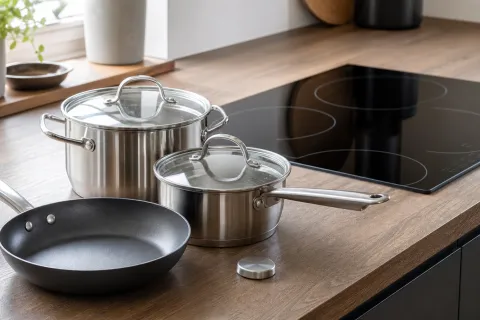
For most kitchens, stainless steel is the better default for saucepans. It is tougher, happier with higher heat, better for boiling and simmering, and less fussy about utensils. Non-stick saucepans still have a place, especially for porridge, milk, sauces and sticky foods, but they need gentler care and are usually the first pan in a set to wear out.
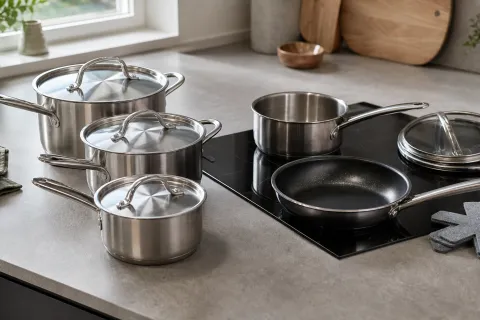
The best answer is often a mixed setup: stainless steel saucepans for everyday boiling and simmering, plus one non-stick pan for the jobs that regularly catch or glue themselves to the base.
What each material is best at
| What you cook | Better choice | Why it matters |
|---|---|---|
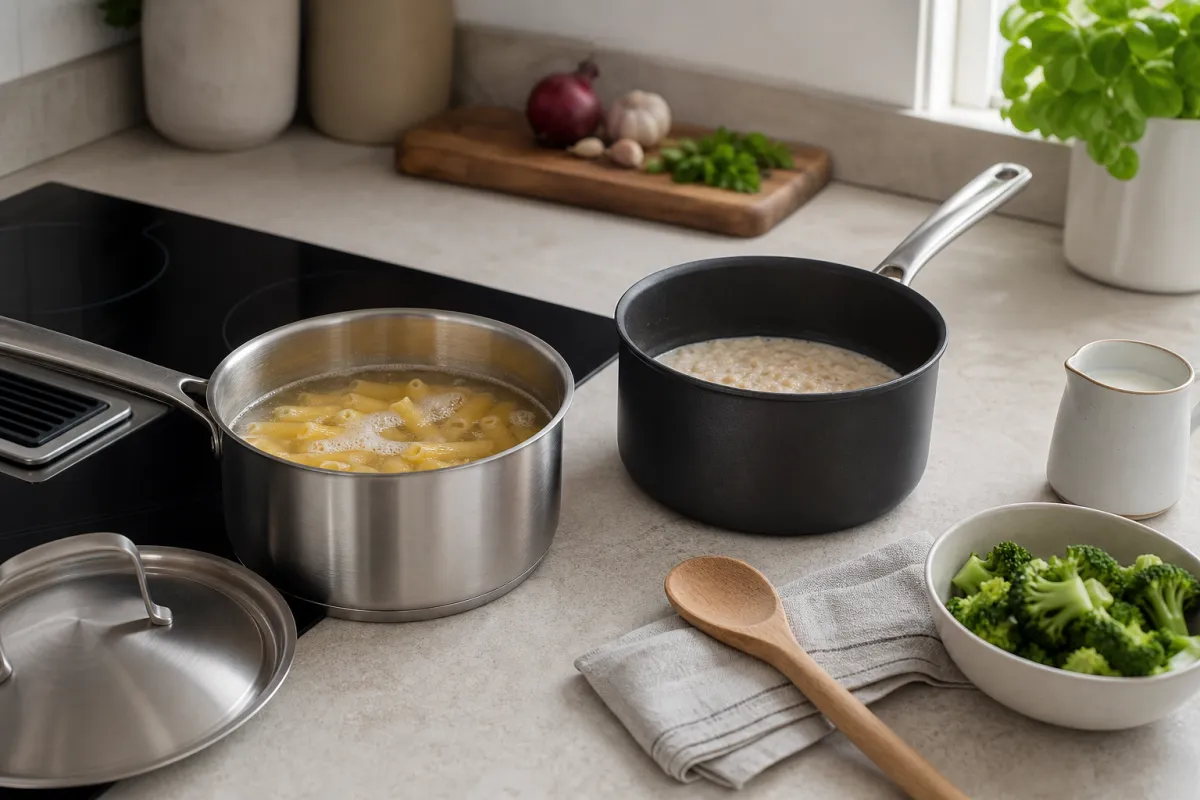
| Pasta, potatoes and vegetables | Stainless steel | Boiling water and drained vegetables do not need a slick coating, so durability matters more. |
| Rice, porridge and milk | Non-stick can help | Starchy or milky food can catch easily if heat is too high or stirring is patchy. |
| Sauces and reheating | Depends on the sauce | Stainless works well for loose sauces; non-stick is easier for thick, sweet or cheese-heavy mixtures. |
| High-heat reduction or browning | Stainless steel | It tolerates more robust cooking, provided the handle and lid are suitable. |
| Low-effort washing-up | Non-stick, with care | A good coating can make sticky food easier to release, but only if you avoid overheating and harsh tools. |
If you are replacing several pans, start with our saucepan sets guide and look for a useful mix of sizes, lids and hob compatibility. If the real problem is eggs, fish, pancakes or frying rather than saucepan cooking, compare our non-stick frying pans instead.
Stainless steel suits everyday boiling and tougher cooking
Stainless steel saucepans are the sensible workhorses. They are a good fit for pasta, potatoes, vegetables, stock, soup bases and most jobs where the food is moving in liquid. You can use metal utensils more confidently, scrub a little harder when needed and worry less about gradual coating damage.
They are not automatically non-stick, though. Thick sauces, porridge and milk can still catch if the heat is too high or the pan is left alone. Stainless steel rewards a calmer routine: use enough liquid or fat, stir when the food needs it, and lower the heat once the pan is hot.
Choose stainless steel when the pan needs to last, boil, simmer and cope with normal kitchen roughness.
Non-stick helps with sticky, delicate jobs
A non-stick saucepan earns its place when the food is likely to cling. Porridge, custard, cheese sauce, scrambled eggs, milky puddings and reheated leftovers can all be easier in a slicker pan. It can also suit a household that cooks gently and values fast washing-up more than maximum durability.
The trade-off is care. Non-stick coatings vary, but they generally prefer moderate heat, soft utensils and non-abrasive cleaning. If a pan is repeatedly overheated empty, scraped with sharp tools or stacked without protection, the benefit can disappear quickly.
That does not mean shoppers need to panic about non-stick. It does mean broad claims are unhelpful. Treat non-stick as a lower-friction cooking surface that needs the maker's heat, utensil and cleaning guidance to be followed.
The jobs where material matters less
Some saucepan decisions have little to do with stainless versus non-stick. Lid fit, handle comfort, weight, pouring lips, hob compatibility and whether the sizes are genuinely useful often matter more than the coating.
For boiling vegetables: a comfortable stainless pan with a lid is usually enough.
For one-pan sauces: pick the material around how often food catches, not around the word "saucepan" on the box.
For induction hobs: check the base and hob symbol. Induction means the hob heats compatible pans magnetically, so not every pan material or base construction will work well.
For small kitchens: three useful pans beat a large boxed set where half the pieces stay in a cupboard.
Cleaning and care should decide close calls
If you cook mostly simple boiled food, stainless steel is easier to own for years. It can still mark, discolour or need soaking, but it is less dependent on a delicate surface staying perfect. For many households, that makes it the better long-term buy.
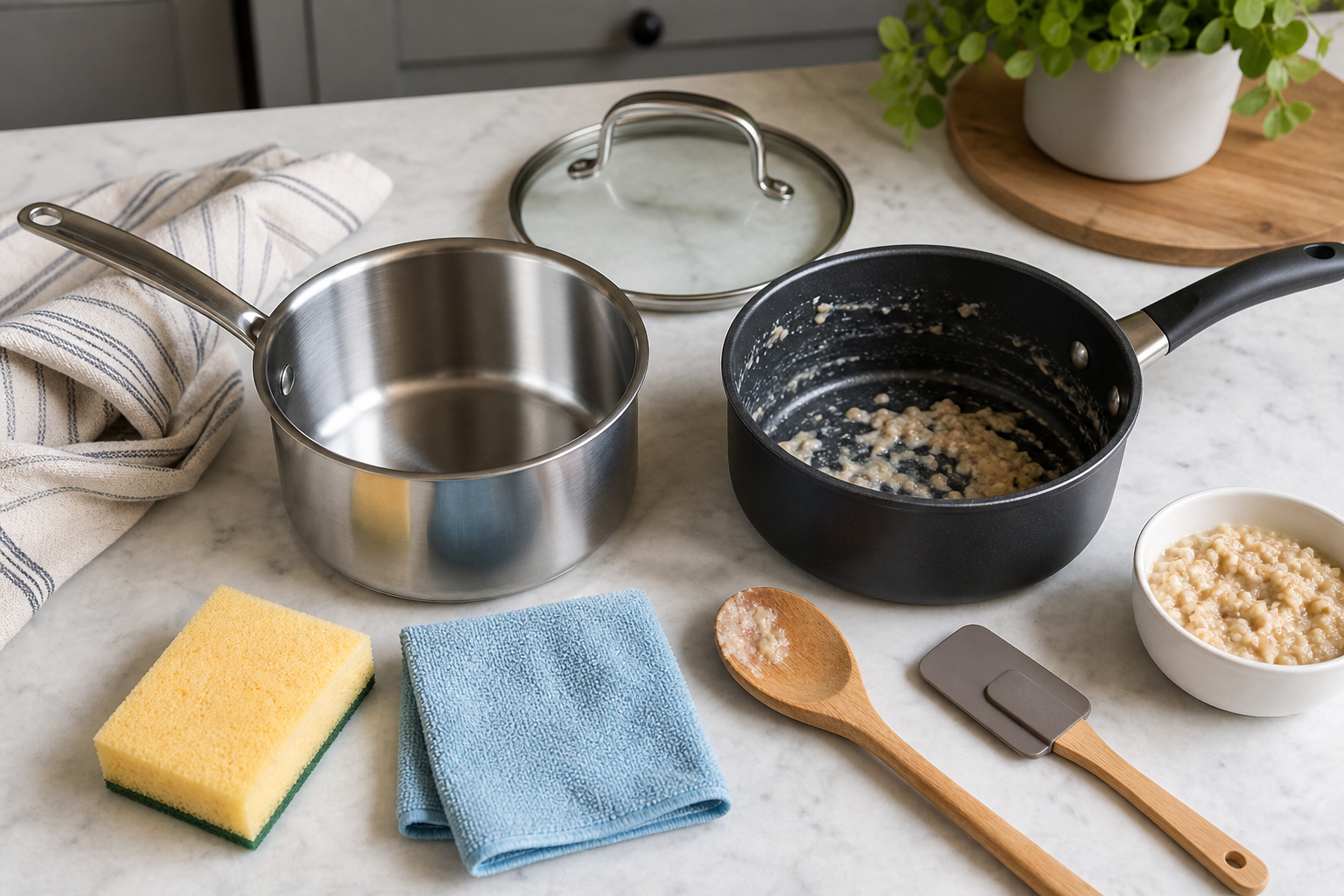
Non-stick is easier on day one and fussier over time. Let the pan cool before washing, avoid abrasive pads, and use silicone or wooden pan utensils* if the maker advises soft tools. Dishwasher-safe claims also need reading carefully: a pan may survive the dishwasher, but hand washing can still be kinder to the coating.
If you know your pans are stacked hard, washed aggressively or used by several people with different habits, stainless steel is usually the more forgiving ownership choice.
What to check in a mixed saucepan set
A mixed set can be the best of both worlds, but only if the mix matches your cooking. A stainless steel set with one non-stick milk pan can make sense. A mostly non-stick set may be less useful if you mainly boil vegetables, cook pasta and need pans that can take heavier use.
Check the pieces one by one. A box may count lids, steamer inserts or utensils as part of the set, but the value is in the pans you will actually use. Look for a small saucepan, a medium everyday pan and a larger pan for pasta or batch cooking before being swayed by extras.
Also check whether the bases match your hob zones. A pan that is too small for a large induction zone, or too lightweight for confident simmering, can disappoint even if the material sounds right.
When a non-stick frying pan is the better extra buy
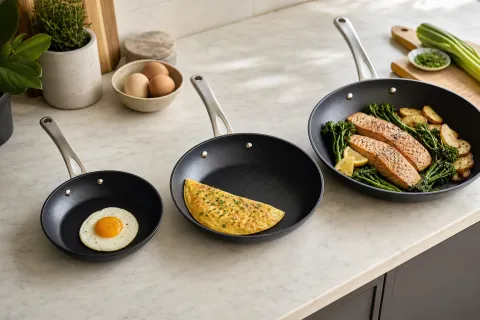
Some shoppers look for non-stick saucepans because one sticky cooking job is annoying them. But the better answer may be a separate non-stick frying pan. Eggs, pancakes, fish fillets, halloumi and shallow frying usually need a broad cooking surface, not a tall-sided saucepan.
If your saucepans are mainly for boiling and simmering, keep those tough and simple. Add one good non-stick frying pan for the food that genuinely benefits from release. That approach often costs less than replacing every saucepan with a coating you do not need for most meals.
Choose the pan material around the food that usually sticks
Buy stainless steel saucepans if you want durable everyday pans for pasta, vegetables, potatoes, soups and general simmering. Add non-stick only where it solves a repeated problem: porridge catching, milk-based sauces sticking, or delicate food that makes washing-up miserable.
The strongest setup for many UK kitchens is not all stainless or all non-stick. It is a dependable stainless steel saucepan set, chosen for useful sizes and hob fit, with one non-stick pan where the slick surface earns its keep.
Sources and checks
These checks help you compare material claims, hob suitability and care instructions before buying.
John Lewis cookware buying guide: compare UK retailer guidance on cookware materials, induction suitability, saucepan uses, lids, handles and coating care.
Le Creuset UK care and use guidance: check how one cookware manufacturer explains heat settings, induction matching, utensil choice, cleaning and non-stick care.