In this article
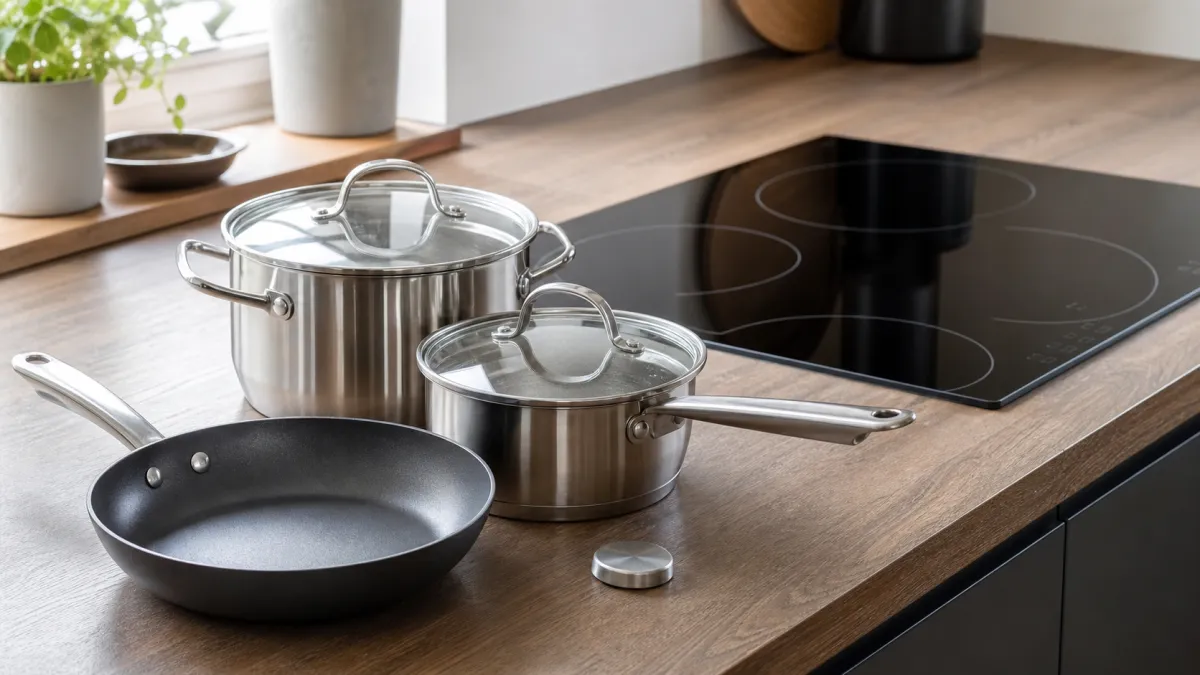
Induction hobs heat the pan itself by using a magnetic field under the glass. That makes them fast and responsive, but it also means the pan has to be part of the system. The best induction cookware is not just labelled induction-safe; it has a magnetic, flat base that matches the hob zone you use most.
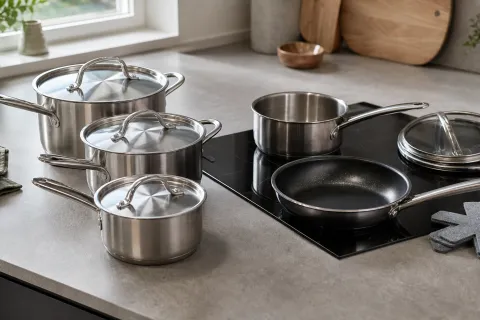
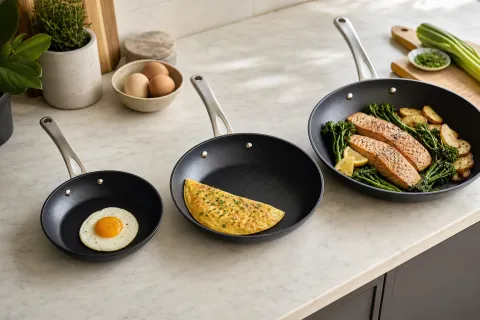
If you are replacing a whole set, start with the pans you cook with every week. Most households need two or three practical saucepans and one good frying pan more than they need a large bundle of near-duplicates. If you already know you need a full set, our saucepan-set guide is the better next step after these checks. If the weak point is your everyday frying pan, compare options in our non-stick frying-pan guide.
Start with the magnet test
The simplest check is still the most useful: hold a small magnet against the underside of the pan. If it sticks firmly to the base, the pan has enough magnetic metal to be a candidate for induction. If it does not stick at all, the pan will not work on a normal induction zone. If it only clings weakly or only catches on a small disc, treat the pan as uncertain and check the packaging or manufacturer details before buying.
Do the test on the base, not the side wall. A stainless-steel pan can have shiny steel sides but still rely on a different base construction. Aluminium and copper pans can work on induction only when they have a magnetic layer built into the bottom.
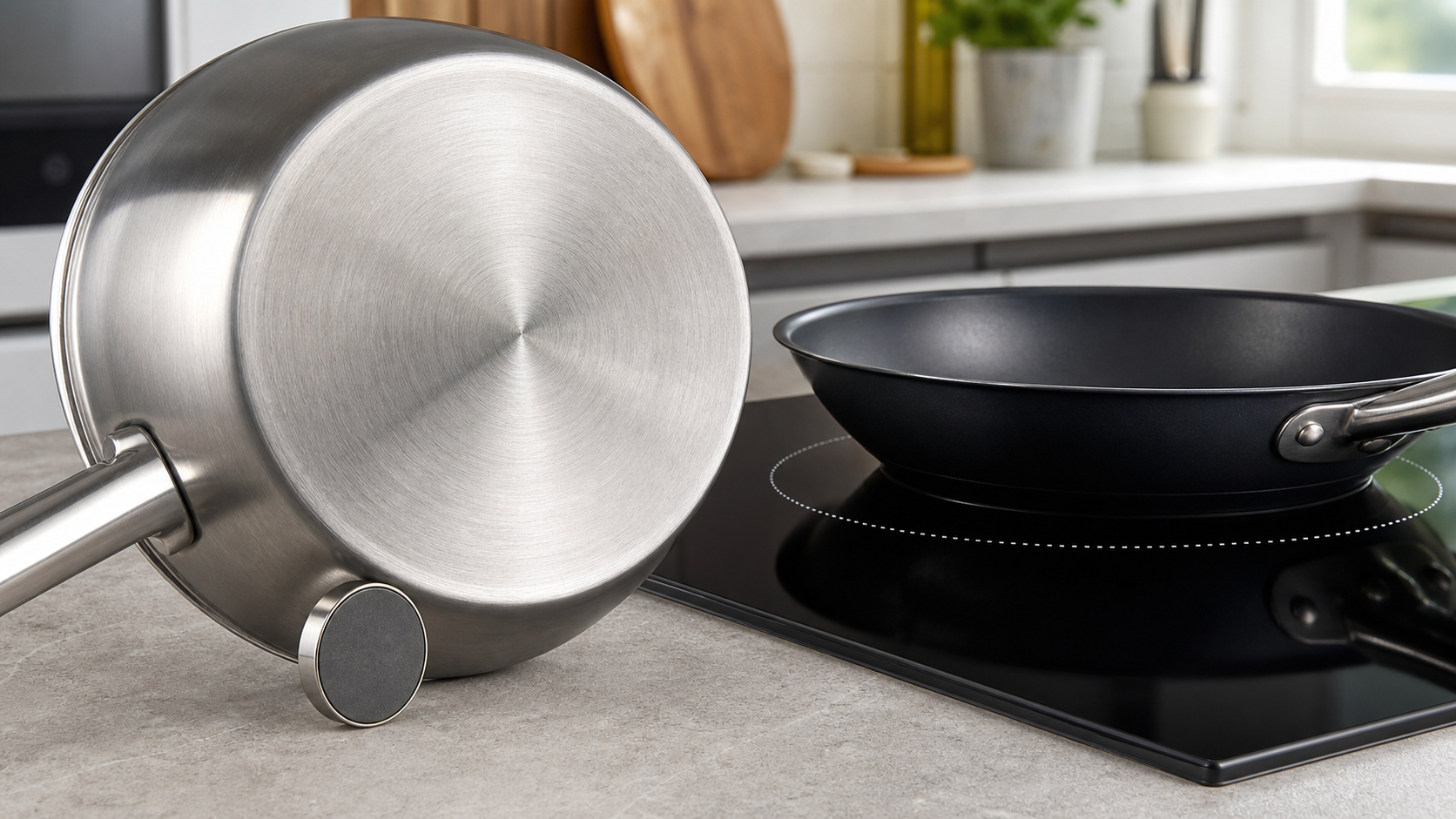 A firm magnet test and a flat base that suits the hob zone matter more than the headline pan diameter.
Look for the induction symbol, then read the detail
Most new cookware shows hob compatibility with small symbols on the base, packaging or product page. The induction mark is usually a coil-shaped icon. It is a useful shortcut, but it should not be the only check.
Read the small print for the exact pan or set. Some ranges are sold in several versions, some lids or handles change between sets, and some older pans in the same cupboard may not match the newer induction-ready model. If you are buying online, check the listing for induction compatibility, dishwasher advice, oven limits and handle material before you assume the whole set suits your hob.
Match the base to your hob zone
Induction hobs are fussy about contact. A pan can be magnetic and still perform badly if the base is too small for the zone, too curved, or only partly in contact with the glass.
| Check | What to look for | Why it matters |
|---|---|---|
| Magnetic base | A magnet sticks firmly across the base. | The hob needs magnetic metal in the pan base before it can heat properly. |
| Base diameter | The flat base, not the rim, suits one of your hob zones. | A small base on a large zone may heat weakly or fail to register. |
| Flatness | The pan sits level without rocking. | Better contact gives steadier heat and helps avoid noisy or uneven cooking. |
| Heat setting | The manufacturer allows the kind of cooking you do. | Induction can heat quickly, so boost and high heat can damage some pans. |
Be especially careful with frying pans. A 28cm pan may have a much smaller flat base than its rim suggests. If your main hob zone is compact, that can be fine. If you are buying a large pan for family portions, check that the useful base area is large enough for the food and suitable for the zone.
Flat bases matter more than thick claims
Thick bases can help with heat distribution, but thickness alone is not the buying decision. The base needs to stay flat. A pan that rocks on the glass can heat unevenly, make more noise and feel less responsive.
Warping often comes from heat shock or overheating: blasting an empty pan, using boost for longer than needed, or cooling a very hot pan under cold water. Induction makes this easier to do because the pan can heat so quickly. If a pan is non-stick, medium or low heat is usually the safer everyday setting. Save high heat for cookware and cooking tasks that the manufacturer actually allows.
Lids and handles change how useful the pan is
Hob compatibility gets the pan working; lids and handles decide whether you like using it. For saucepans, lids are not just extras. They help water come up to temperature faster, keep moisture in rice or vegetables, and make gentle simmering easier. Vented lids can reduce rattling and boil-over risk, but they also let more steam escape.
Handles deserve the same attention. Long stainless-steel handles can suit hob-to-oven cooking, but they may be less comfortable when a pan is full. Soft-touch or silicone-style handles can feel easier on the hob, but they may limit oven or grill use. If you cook with heavier pans, check whether larger saucepans have a helper handle and whether the lid knob is easy to grip with a cloth or oven glove.
Mixed-hob households should buy for the strictest hob
If your pans move between induction, gas, ceramic and electric hobs, buy for induction first. A good induction-compatible pan normally works on other common hob types, but the reverse is not always true. This matters in rented homes, shared households, caravans, holiday lets and family kitchens where pans are borrowed between homes.
Mixed-hob buyers should also think about the outside of the pan. Gas flames should not lick up the sides, ceramic and induction glass need pans to be lifted rather than dragged, and old residue on a base can scratch glass. A pan that is robust enough for gas but rough underneath may not be kind to a new induction hob.
Do not overbuy a set just because it is induction-ready
Induction compatibility is a pass-or-fail filter, not proof that a set is good value. Once the cookware passes the magnet, base-size and handle checks, go back to normal buying judgement.
- Will you use every pan size in the set?
- Are the lids included for the pans that need them?
- Is there one frying pan you will use often, or several shallow pans that duplicate each other?
- Can the pans stack without damaging non-stick surfaces?
- Do the handles fit your cupboards, dishwasher and oven habits?
A smaller set plus one carefully chosen frying pan is often better than a large induction-ready box where half the pans stay in the cupboard.
Buy pans around the hob you actually use
For most UK kitchens with induction, the safest choice is a magnetic stainless-steel or induction-ready non-stick pan with a flat base that matches your main hob zone. Cast iron can work well too, but it is heavier and needs careful lifting on glass.
The final decision should be practical rather than label-led. Choose cookware that passes the magnet test, fits the zone, stays flat, has usable lids and handles, and suits the hobs your household actually uses. If those checks are weak, the induction symbol on the box will not rescue the purchase.
Sources and checks
These UK cookware references are useful when checking induction compatibility, hob-zone fit and care instructions before buying.
John Lewis cookware buying guide: compare hob compatibility, induction-zone matching, pan shapes, lids, handles and care points before choosing a set.
Le Creuset UK care and use guidance: check how one cookware manufacturer explains induction-zone matching, heat settings, boost use, empty-pan heating and non-stick care.