In this article
The short answer
A saucepan set is usually better value when you are starting from scratch and the set gives you three genuinely useful pan sizes, matching lids and the right hob compatibility. Individual pans are better value when you already own usable cookware, need one specialist pan, or would be paying for duplicate pieces that will sit in a cupboard.
The mistake is judging value by the piece count on the box. A five-piece set may be three pans and two lids; a ten-piece set may include utensils, a milk pan you never use, or a frying pan that is not as good as the one you would buy separately. The better test is simple: count the pans you will cook with every week, then check whether each one suits your hob, storage and cleaning habits.
| Buying route | Best value when | Watch out for |
|---|---|---|
| Saucepan set | You need a full starter kit, want matching lids, and can use most of the sizes. | Inflated piece counts, poor frying pans, repeated small pans, bulky stacking, and extras you would not choose. |
| Individual pans | You are replacing one worn pan, upgrading a favourite size, or mixing stainless steel with a separate non-stick pan. | Higher price per pan, mismatched lids, slower upgrades if several old pans need replacing at once. |
If the table already points you towards a set, compare our best saucepan sets before you buy. The guide is the better next step once you know you need a coordinated set rather than one replacement pan.
Count usable pans, not box pieces
Retailer and manufacturer set counts are not always comparable. One brand may call three saucepans plus three lids a six-piece set, while another may include frying pans, utensils, steamer inserts or detachable handles. None of that is wrong, but it can make a set look better value than it is.
For most kitchens, the core useful sizes are a small saucepan for sauces, eggs or porridge; a medium saucepan for vegetables, rice or pasta; and a larger pan or stockpot for family portions. Lids matter because they help water come to the boil, control simmering and keep food warmer off the hob. Utensils, spare handles and decorative extras should not carry the value calculation unless you genuinely needed them anyway.
Value rule: if you would happily buy at least two-thirds of the pans separately, the set deserves serious consideration. If half the box feels like filler, buy individually.
Hob compatibility can make or break the deal
A cheap set is not good value if one pan wobbles on your hob, does not work on induction, or has a base too small for the cooking zone you use every day. Check compatibility before comparing finishes or colours. For induction, the base needs suitable magnetic material, and a flat, stable contact area is important.
Pan diameter matters too. A tiny saucepan on a large ring wastes heat and can cook unevenly; an oversized base on a small zone can be slow and frustrating. If you are buying a set for a new kitchen, measure the hob zones and think about the pans you actually use together. Three near-identical saucepans may look tidy, but they are less useful than a sensible spread of small, medium and large pans.
Stainless steel or non-stick is the real value question
Stainless steel usually makes sense for saucepans because it can handle boiling, simmering, sauces and everyday utensils without the same coating-care anxiety. A good stainless saucepan is often the pan you keep longest. It is not naturally non-stick, so food can catch if you use too much heat or too little liquid, but for most saucepan jobs durability matters more than a slippery coating.
Non-stick can be valuable for frying pans, milk pans and lower-fat cooking, but coatings need more careful treatment. Avoid overheating an empty non-stick pan, use suitable silicone, plastic or wooden utensils, and be realistic about replacement. A set where every pan is non-stick can be convenient at first, but it may not be the longest-value choice if the frying pan wears faster than the saucepans.
Ceramic non-stick and hard-anodised pans sit somewhere between those extremes. They can feel tougher or easier to clean, but they still have care instructions. Dishwasher-safe claims are useful, but hand washing often protects coatings and handles better over time. If your frying pan is the only weak point, compare a dedicated non-stick frying pan rather than replacing your whole saucepan set.
When a saucepan set is the better-value choice
You are setting up a kitchen from almost nothing. A coherent set can solve several basic cooking jobs at once and usually costs less than three or four equivalent individual pans.
The sizes match your weekly cooking. A small, medium and large saucepan, ideally with lids, is more useful than a crowded box of odd extras.
You want consistent hob behaviour. Matching bases and handles can make cooking easier, especially on induction or ceramic hobs where flat contact matters.
Your old pans are all wearing out together. If handles are loose, bases are warped and coatings are tired across the cupboard, a set can be cleaner and cheaper than piecemeal replacement.
When individual pans are smarter
You already own two good saucepans. Buying one missing size is usually better value than duplicating what you have.
You want different materials for different jobs. A durable stainless saucepan plus a separate non-stick frying pan often beats an all-non-stick set.
Storage is tight. A set only helps if it stacks neatly in your actual cupboard or drawer. Wide handles, domed lids and non-stackable shapes can make a neat box awkward at home.
The set hides weak extras. A poor frying pan, tiny milk pan or flimsy utensil should not persuade you to buy a bigger box.
Storage and care affect long-term value
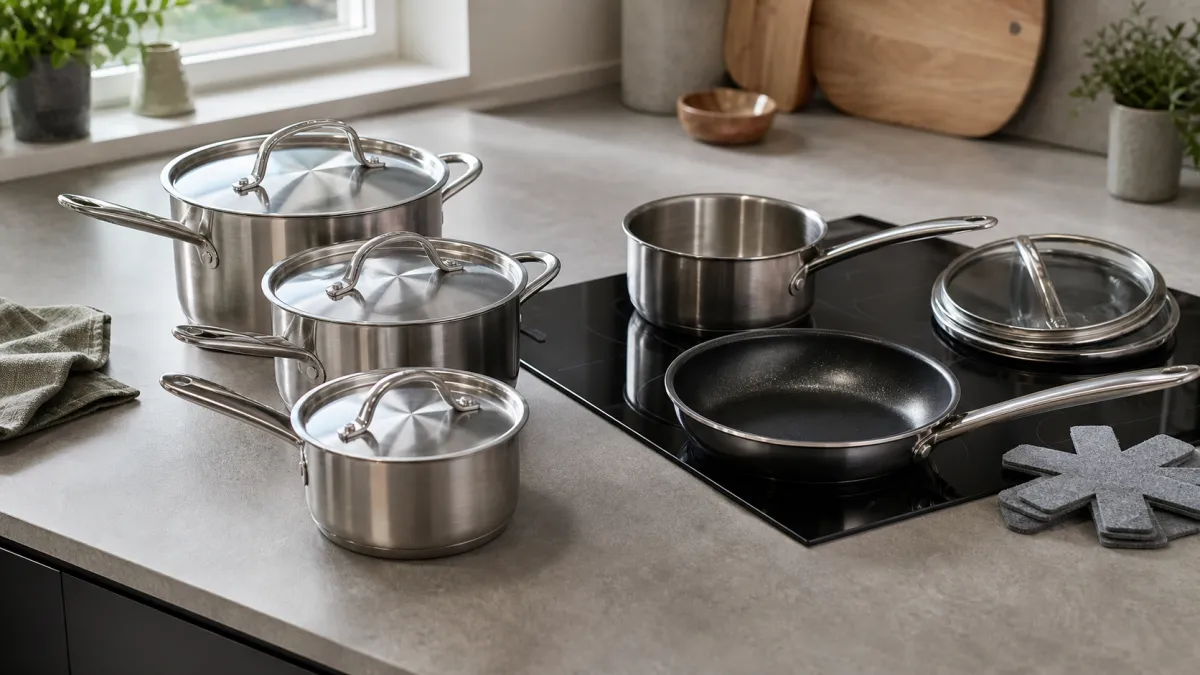
Stackable pans can be excellent in a small kitchen, but stacked non-stick or ceramic-coated pans need protection. Use the supplied separators if the set includes them, or add simple pan protectors* if pans will sit inside each other. That small accessory can do more for long-term value than paying extra for a larger set with pieces you do not need.
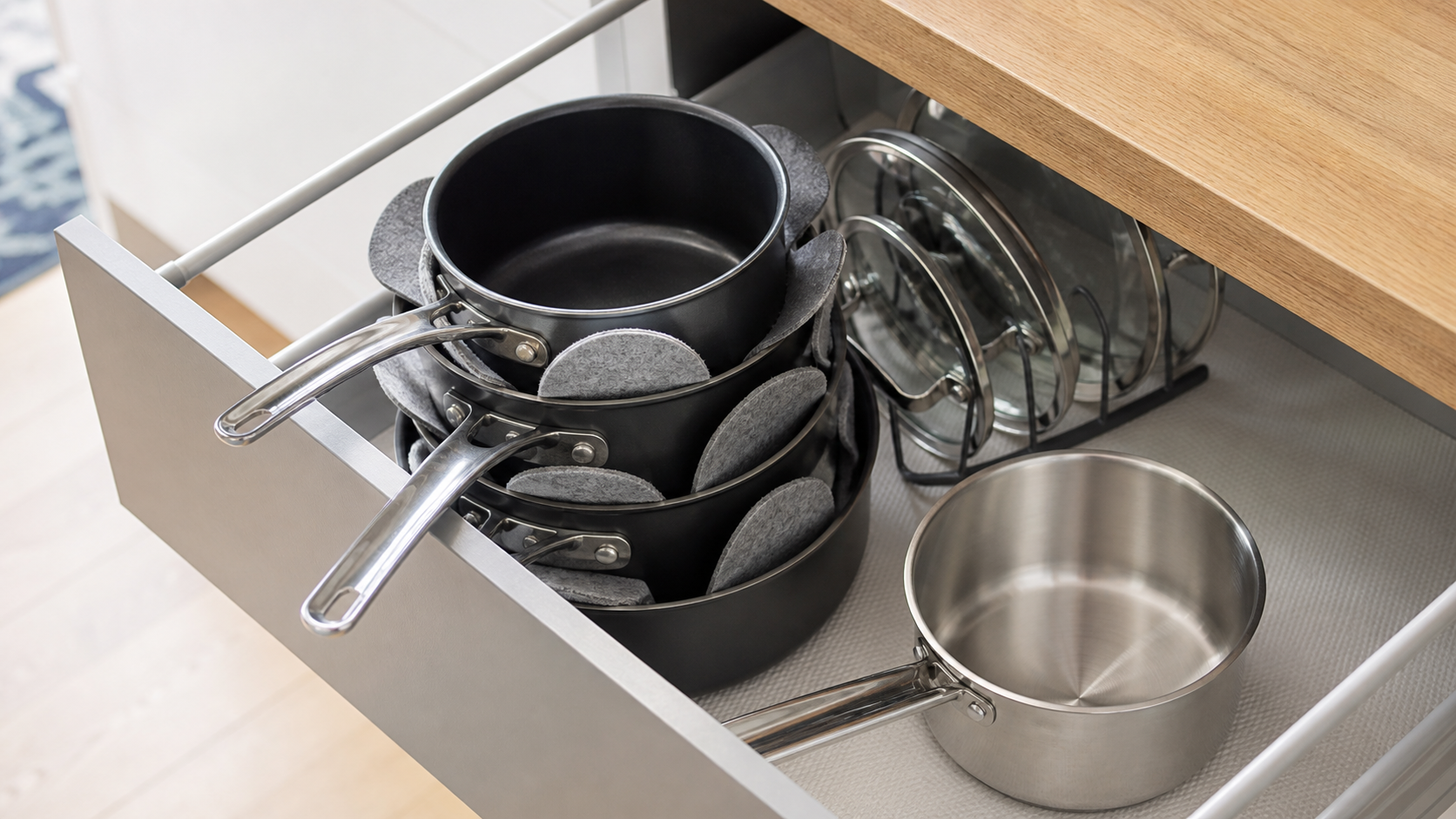 If stacked pans are part of the value case, protect the coatings and check where the lids will live before buying a larger set.
Lids need a plan as well. Glass lids are useful because you can see a simmer without lifting them, but they take up space and can chip if thrown loose into a drawer. Detachable handles save room, yet they add another part to store and keep clean. If a set looks compact online, check whether it is compact with the lids, handles and frying pans included.
Care instructions are part of the value calculation, not an afterthought. If you know you will use metal utensils, stack pans quickly and put everything in the dishwasher, a tougher stainless-steel-heavy setup may be better than a delicate non-stick set. If you cook gently and hand-wash, a non-stick or ceramic-coated set can still make sense.
Verdict: buy the set only when most of it earns its space
For a first kitchen or a full cupboard refresh, a saucepan set is often the better-value route. It gives you matching sizes, lids and hob behaviour in one purchase, and it can be cheaper than buying each pan separately. The best sets are not the ones with the biggest piece count; they are the ones where nearly every pan fits a real cooking job.
Individual pans win when you are upgrading selectively. They let you spend more on the pan you use most, keep a good saucepan that still has years left, and avoid bundled extras that make the price look generous without improving your cooking. Start with the cooking jobs you repeat every week, then buy the smallest set or individual mix that covers those jobs well.
Sources and checks
These links can help you verify practical cookware details before buying.
John Lewis cookware buying guide: check UK retailer guidance on pan materials, induction suitability, saucepan uses and care points for non-stick and ceramic coatings.