In this article
A wine fridge can look as though it will slide neatly into any spare kitchen gap. The important question is not whether the cabinet physically fits, but where that particular model releases heat and how you will use its door and shelves every day. A freestanding wine fridge, an under-counter model and a fully built-in appliance can have similar dimensions from the front, but they are designed to breathe in different ways.
Measure the whole installation before you choose: the space around the cabinet, the path of the door, the depth of an open shelf and the warmth of the room. Get those right and the wine fridge will be easier to live with; get them wrong and a smart-looking gap can become a hot, noisy and awkward corner.
Start with the way the cabinet loses heat
| Installation type | Best for | What the space must provide |
|---|---|---|
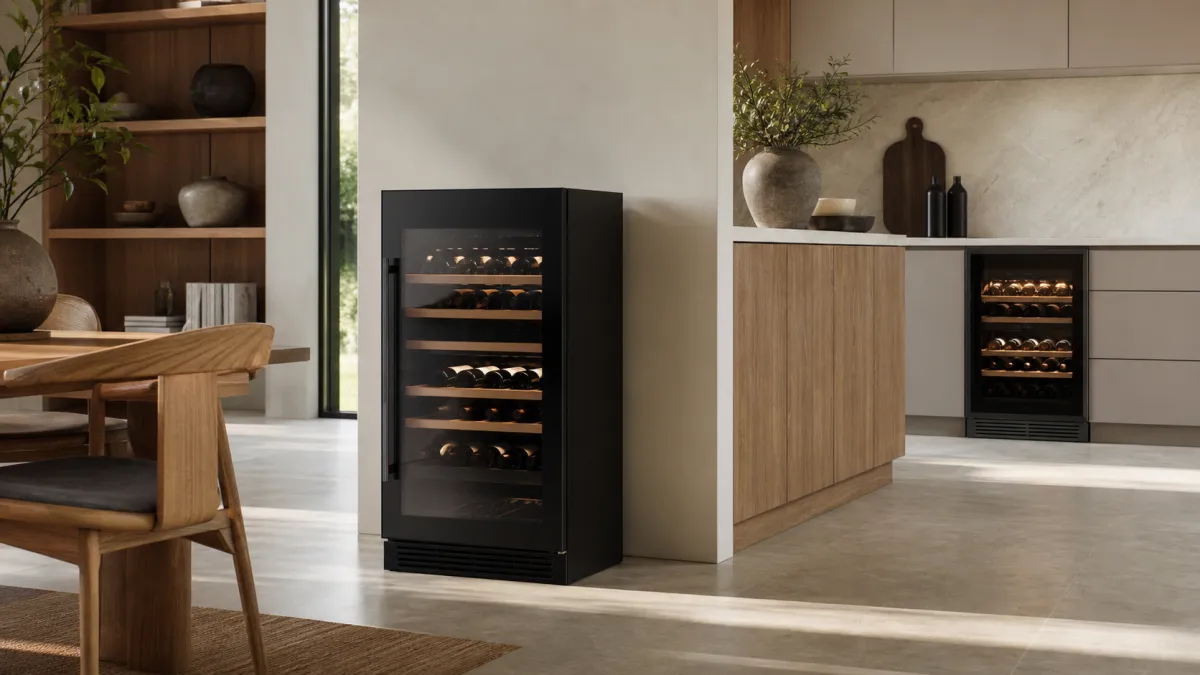
| Freestanding | A flexible position in a dining room, utility area or open stretch of worktop/floor. | Open clearance at the sides and rear, plus the manufacturer’s stated space above. Do not close those routes with cabinetry. |
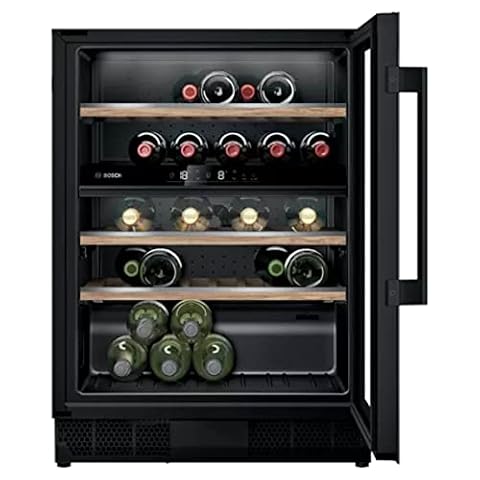
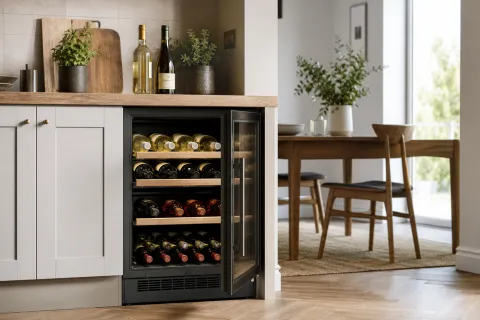
| Under-counter | A standard-height kitchen run with a planned appliance bay. | A model explicitly designed for under-counter use, with its required front ventilation, plinth detail and recess dimensions. |
| Built-in or integrated | A coordinated fitted kitchen, including tall housing where the model is designed for it. | The exact cabinet, ventilation and door-clearance specification in the installation guide; this is a kitchen-design decision, not a last-minute gap filler. |
The word to look for is not simply “slim” or “fits under a counter”, but the installation type in the manual. A freestanding cabinet commonly releases heat through its sides, top or rear. A front-venting model is built to take air in and release warm air through the front grille, so it can sit in the recess it was designed for.
Why a freestanding wine fridge should not be boxed in
Freestanding models are meant to have air around them. If side or rear gaps are closed off by cabinet panels, the warm air cannot escape as intended. The compressor may then work harder, the cabinet can run warmer and noisier, and temperature control may suffer when the room is hot.
Do not invent a cabinet installation from the outer measurements alone. Even a model with a shallow depth or a smart glass door may need open space around its case. Haier’s UK guidance gives 5–10 cm around the sides and back as a freestanding example, while Caple explains that a freestanding model relying on side and top heat dispersion must not be integrated. Your own manual is the authority for the required gaps.
If the only available space is an enclosed alcove or a kitchen unit, shop for a model expressly designed to vent from the front. A freestanding model is not made safe by leaving a token sliver of space around it.
Under-counter is a format, not a location
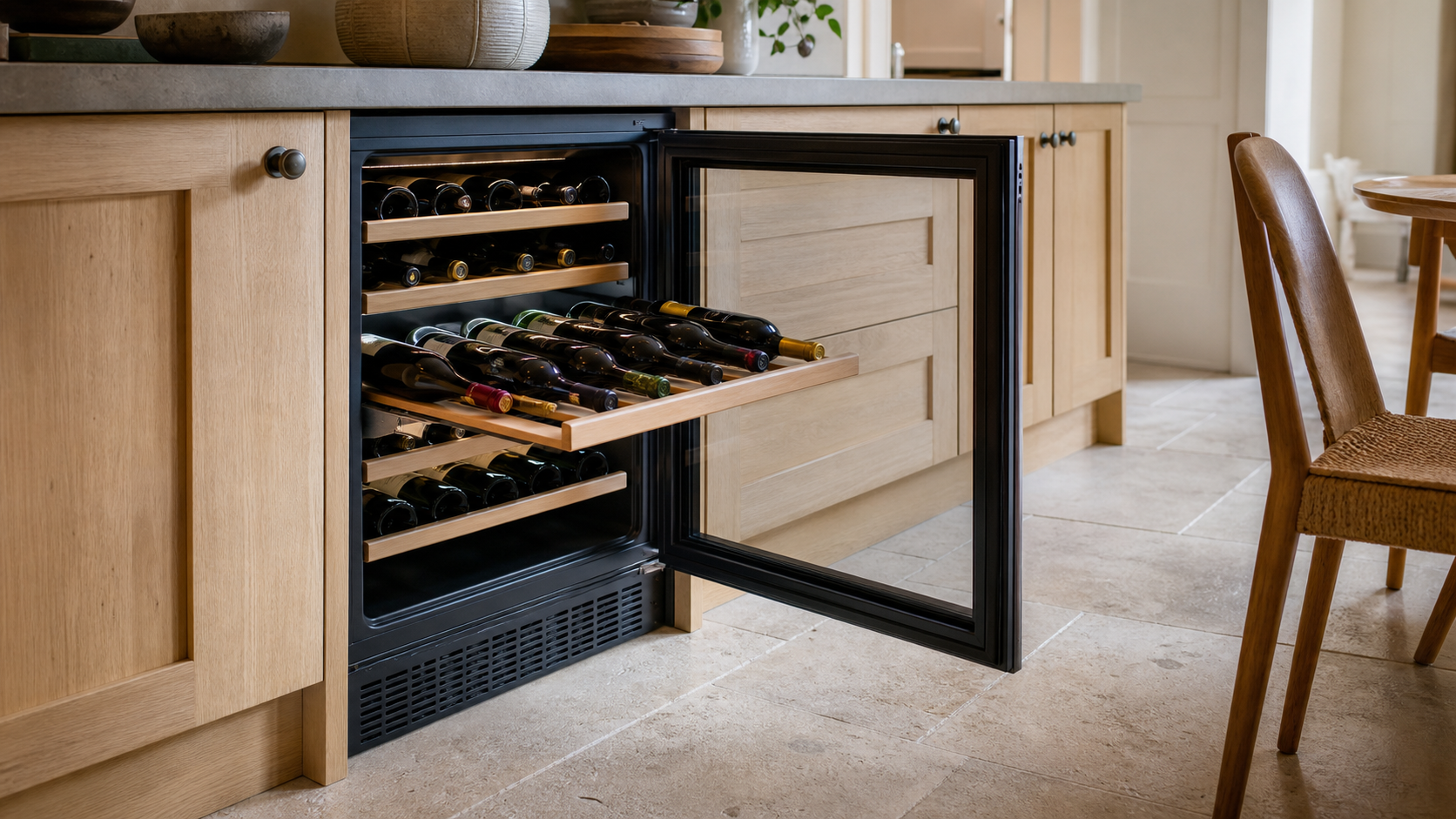
An under-counter wine fridge is designed to sit beneath a worktop, but it still needs the exact recess it specifies. Check the appliance height with its adjustable feet, the recess width, the depth behind the door and the ventilation arrangement at the plinth or front grille. A decorative plinth that blocks the airflow can undo the point of buying an under-counter model.
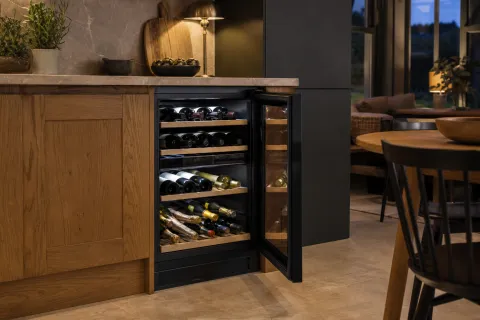
Under-counter can be the neatest option where you open bottles often and want them close to the kitchen or dining table. It also keeps the main floor space clear. The compromise is that you need a planned bay: you cannot assume a former cupboard, drawer unit or unused dishwasher gap has the right ventilation and service access.
Built-in works best when it is planned with the cabinetry
Built-in wine fridges are for a flush, furniture-like finish. They may fit under a counter or in tall housing, depending on the model, but the surrounding cabinet is part of the installation. The kitchen designer or installer needs the manufacturer’s ventilation drawing, appliance dimensions, door-opening requirement and any plinth or grille detail before the units are ordered.
Do not treat “built-in”, “integrated” and “under-counter” as interchangeable labels. Some built-in wine coolers use a front ventilation path; others need a grille or a specified route through the cabinet. Choose the appliance first, then build the recess around its installation plan.
Keep the wine fridge away from heat and hard-working kitchen zones
A wine fridge beside an oven, radiator, sunny patio door or south-facing window has a harder job to do. It can also be a poor place to stand while cooking. Choose a shaded, level part of the room with the ambient conditions in the manual, rather than the warmest empty space in the kitchen.
Think about the kitchen’s busy moments. A narrow space beside a hob may look convenient, but it can put the glass door in the path of hot pans, steam and people carrying food. A position at the end of a run, in a dining area or on a cool utility-room wall can be calmer for both the appliance and the household.
Plan for noise before the first dinner party
Wine fridges use a compressor and fan, so they are not silent. The quoted decibel figure helps compare models, but the room changes how noticeable it feels. A cabinet beside a sofa, home-working desk or bed can be more intrusive than the same model in a kitchen with everyday background noise.
Level the appliance carefully, because an uneven cabinet can add rattles and vibration. Leave enough space that the case, door and shelves cannot knock against neighbouring units. If quiet evenings matter, look beyond the headline bottle count and compare noise figures before committing to a prominent open-plan position.
Measure the door, not just the appliance
Start with the closed dimensions, then add the door swing. A wine fridge with a right-hinged door can block a walkway or collide with a drawer if it is placed on the wrong side of an island. Reversible doors are useful only if the model supports them and the hinge change still gives you a practical opening direction.
- Mark the open door on the floor with tape or a sheet of cardboard before ordering.
- Check nearby drawers and dishwasher doors, not only cupboard fronts.
- Allow room for a loaded shelf: some shelves need the door fully open before they can slide out without catching the seal.
- Consider who is reaching in: a low under-counter position is neat, but a tall cabinet can be easier for a larger collection.
Make bottle access part of the placement decision
Headline capacity is usually based on standard Bordeaux-shaped bottles. Champagne bottles, wide Burgundy bottles and mixed bottle sizes can take more room, and a tightly packed cabinet is less pleasant to browse. The best position gives you enough room to open the door fully, slide a shelf or reach a bottle without moving chairs, bins or another appliance.
If you expect to serve from the wine fridge during meals, put it where one person can choose a bottle without blocking the cook or a kitchen thoroughfare. If it is mainly for longer-term storage, a cooler, quieter spot with more generous ventilation can matter more than a showpiece position in the main room.
Choose the installation your room can support
Choose a freestanding wine fridge when you have a genuinely open spot and are happy to leave the clearance the manual asks for. Choose under-counter when your kitchen has a proper appliance recess and you want easy everyday access. Choose built-in when the cabinetry, ventilation and door details are being designed together.
Never make the appliance solve a cabinet problem. Start with the air path, heat, door swing and shelf access, then choose the wine fridge whose installation instructions fit the space.
Sources and checks
Before finalising a kitchen gap, check the installation instructions for the exact model rather than relying on its front dimensions.
- Caple’s integrated wine-cooler guidance explains why heat-dispersing freestanding models should not be enclosed and what built-in ventilation may require.
- Haier UK’s wine-cooler buying guide helps distinguish freestanding clearance from a front-venting built-in installation.