In this article
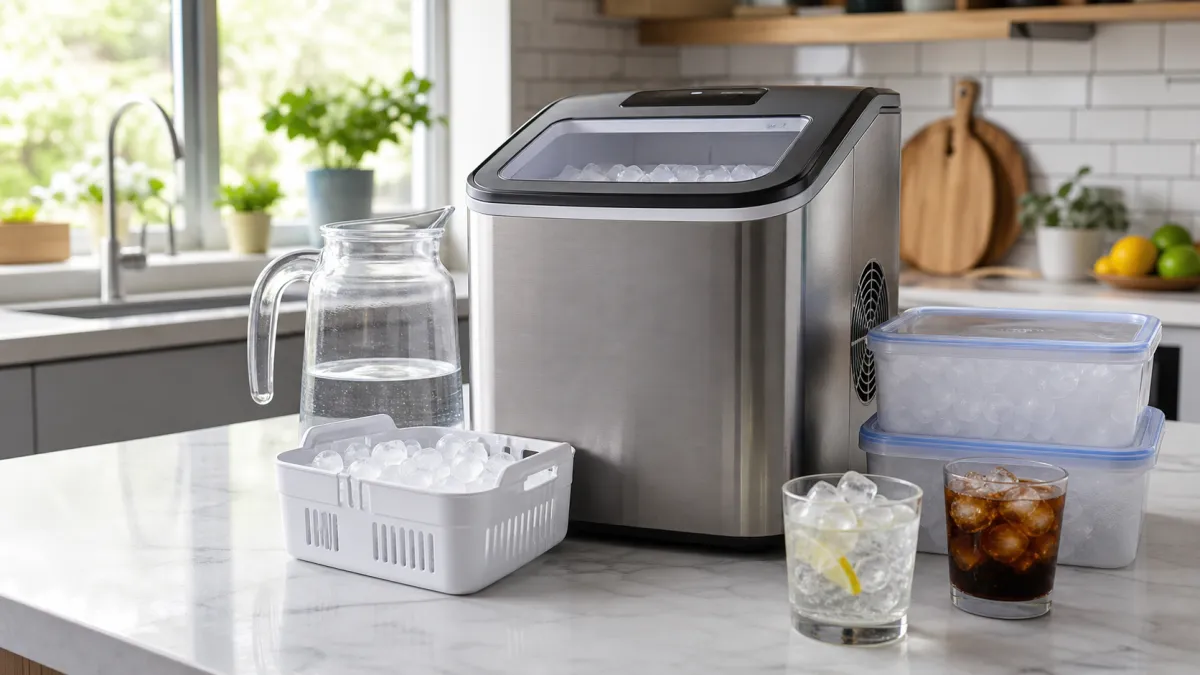
A countertop ice maker is only convenient if you have room to run it, somewhere to store the ice, and a routine for cleaning it. The headline output figure can make a small machine sound party-ready, but the day-to-day limits usually come from the water tank, ice basket, ventilation space and whether you can move finished ice into a freezer quickly enough.
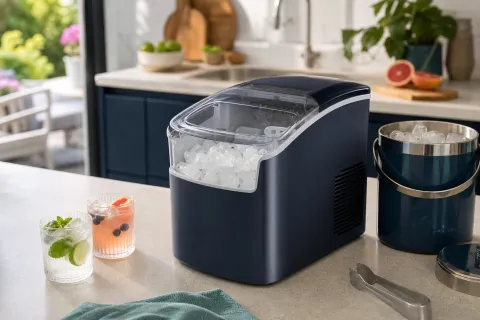
Most compact machines make bullet ice in repeated small batches. That is useful for topping up summer drinks, picnics, garden parties and busy family weekends. It is less useful if you expect the appliance to behave like a mini freezer or to hold a whole evening's supply without help.
Start with the size and storage check
Before comparing colours, cycle times or daily output claims, check the physical routine. A machine that technically fits on the worktop can still be the wrong buy if it blocks prep space, needs awkward draining, or leaves you with nowhere to put the ice.
| Check | Why it matters | What to look for |
|---|---|---|
| Worktop footprint | The machine needs space in use, not just a cupboard-sized gap. | Width, depth, lid opening, scoop access, drain position and the cable route to a sensible socket. |
| Ventilation clearance | Ice makers contain a compressor and need air around the casing. | The manual's clearance figure, especially at the side vents and rear. |
| Water tank | A small tank means more refilling during repeat batches. | Tank capacity, max-fill marking, visibility and whether you can fill it without moving the appliance. |
| Ice basket | The basket is usually much smaller than the daily output claim. | Basket capacity, full-basket alert and how easy it is to lift out without spilling meltwater. |
| Freezer backup | Finished ice normally needs moving if you want to build a supply. | A freezer-safe tub or bag ready before the first batch finishes. |
| Cleaning access | Water tanks, baskets and drains need regular attention. | Removable basket, drain plug, cleaning instructions and a dry-storage routine. |
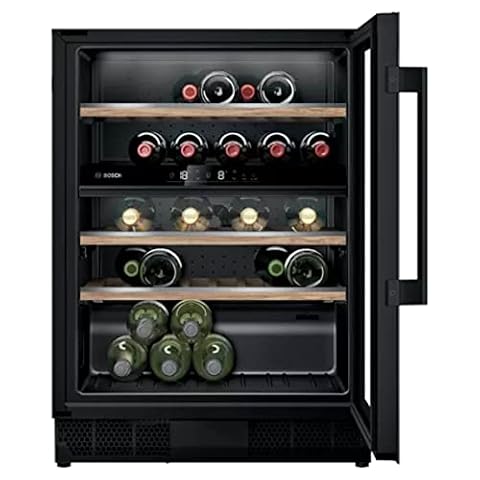
If those checks already sound manageable, compare current models in our ice cube maker guide. If your real bottleneck is chilled bottles and drinks storage rather than loose ice, the better route may be a wine fridge instead.
The daily output figure is not what sits in the basket
Ice maker listings often lead with a 24-hour output figure. That can be useful for comparing machine size, but it assumes the appliance keeps running through repeated cycles with enough water, enough empty basket space and someone moving the ice on. It does not mean the basket holds that amount at once.
The more practical number is the basket capacity. A small basket can be fine for topping up drinks as people arrive, but it can become irritating if you are trying to fill a cool box or make enough ice for a large table before guests arrive. For entertaining, plan around the basket and freezer space, not just the daily kilogram claim.
A simple test is to picture the first hour of use. If the basket fills, the machine pauses and the ice starts softening while you are busy elsewhere, the output claim has not solved the real problem. You need a storage tub ready, or you need to accept that the machine is for steady top-ups rather than one big reserve.
Check whether it keeps ice frozen
Many countertop ice makers are not freezers. They make ice, hold it in a basket, and let meltwater drain back so the machine can reuse it. That is efficient enough for ongoing use, but it means the ice in the basket is temporary. It will soften and melt if left there long enough.
This is the most common expectation gap. A basket full of fresh bullet ice is not the same as a freezer drawer. If you want ice for later in the day, move it into a freezer-safe container once the basket is ready. If you want the appliance to serve drinks continuously, leave it running nearby and treat each basket as a fresh top-up.
If you are buying storage separately, stackable ice storage tubs* are worth considering because they keep batches together in the freezer without taking over a whole drawer.
Bullet ice is quick, useful and a little softer
Most compact countertop machines make bullet ice: small rounded pieces with a hollow centre. The shape is quick to produce because the machine freezes water around metal prongs, then drops the pieces into the basket. It is practical for soft drinks, water jugs, iced coffee, picnic bottles and casual entertaining.
Bullet ice is not the same as large, hard cocktail cubes from a freezer mould or a dedicated clear-ice setup. It can be wetter on the surface and may melt faster in strong drinks, especially if it has just dropped into the basket. That does not make it bad; it just means the machine is built for convenience and repeat supply, not bar-style ice blocks.
Buy a compact ice maker for convenient repeat batches, not for perfect cocktail ice or long-term frozen storage.
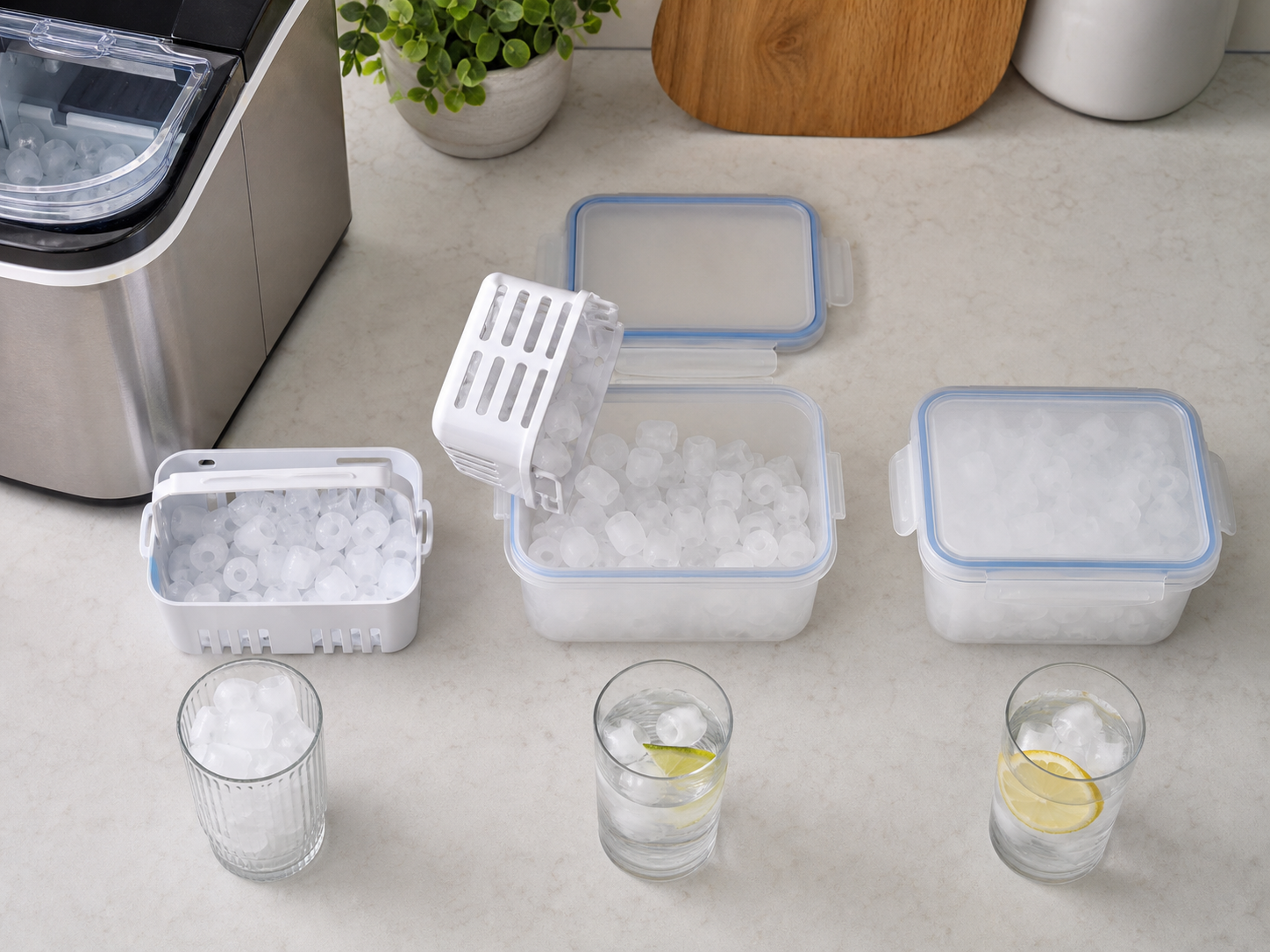 Move ice from the basket into a freezer-safe tub if you want a reserve for later drinks.
Water tank size decides how hands-on it feels
The tank is another small number that matters more than it first appears. A 1.5-2 litre tank can be enough for casual use, but it still needs refilling if the machine is running for a long afternoon. Check whether the tank is easy to see, whether the fill line is clear, and whether you can pour water in without pulling the machine out from under a wall cupboard.
Use cold drinking water unless the manual says otherwise, and keep the tank below its max-fill line. Overfilling can make the first batch messier and will not magically speed the machine up. If you live in a hard-water area, cleaning and draining will matter more because mineral deposits can build up around the water path and ice-making parts.
Do the jug test before buying: could you refill the machine from a normal water jug in the place where it will actually sit? If not, the appliance may become more awkward than freezer trays.
Noise and placement matter during parties
Countertop ice makers are small compressor appliances. They can make fan noise, pump noise, water movement and a noticeable clatter when a batch drops into the basket. That is usually acceptable in a kitchen, utility room or garden-room setup, but it can be intrusive on a quiet dining table or next to a sofa.
Noise figures are not always shown consistently, so treat placement as part of the buying decision. The best spot is often close enough that you can hear alerts and move finished ice, but not so central that the fan and dropping ice become the soundtrack to the evening.
Avoid tight corners: side vents need breathing room and tight spaces can make noise feel louder.
Keep it near water and the freezer: the easier the refill-and-store loop, the more useful the machine becomes.
Check the lid swing: a machine under wall cupboards may be awkward even when the footprint fits.
Think about night use: a machine running late in an open-plan kitchen may be more noticeable than expected.
Cleaning is part of the ownership cost
An ice maker handles standing water, wet plastic parts and ice that goes directly into drinks. It needs regular cleaning, draining and drying, not just the occasional wipe of the outside. The easiest models make that routine obvious: removable basket, clear drain plug, accessible water tank and instructions that do not require dismantling half the appliance.
Check how the manual tells you to clean before first use, what it says about the first batches, and how the machine should be stored when not in use. If the machine is seasonal, drying it properly before it goes back into a cupboard matters. A damp closed appliance is not something you want rediscovering at the next barbecue.
Look carefully at the drain position. A drain plug on the underside or rear can be fine, but only if you can move the machine safely when it contains water. If draining would mean carrying a wet, heavy appliance across the kitchen, you may put the job off.
Wine fridge, freezer trays or bagged ice may be the better fix
An ice maker solves one problem: repeat batches of loose ice. It does not chill bottles, expand fridge space or guarantee a reserve of hard ice unless you keep transferring batches into the freezer.
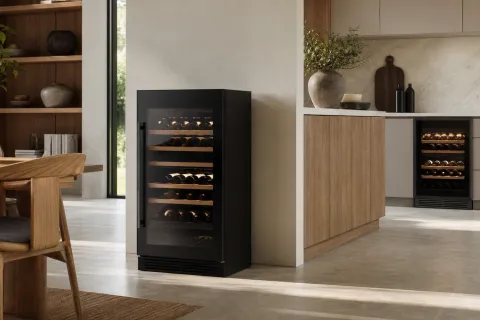
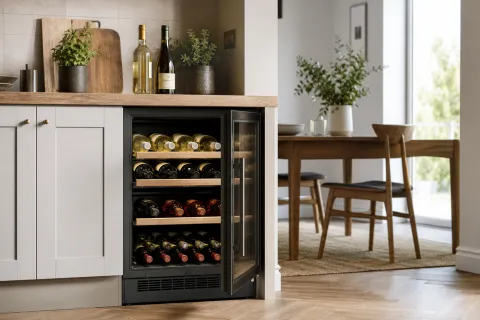
If the real issue is keeping wine, soft drinks and mixers cold, a wine fridge or drinks fridge can be more useful than an ice maker. If you only need occasional ice for a few glasses, freezer trays or supermarket bagged ice may be cheaper and quieter. If you want both chilled bottles and steady ice for summer entertaining, the two appliances can complement each other, but they solve different jobs.
Match the appliance to the shortage: buy an ice maker for repeat ice, a wine fridge for bottle space, and freezer trays for occasional low-effort ice.
The checks that prevent disappointment
Once you know you want a countertop ice maker, choose the model by the details you will live with every time it runs.
Measure the running position: include side vents, rear space, lid opening and room to lift the basket.
Check basket capacity: this tells you how much ice waits before you need to move it.
Check tank capacity: this tells you how often you will refill it during repeat use.
Check the ice shape: bullet ice is convenient, but not the same as hard freezer cubes.
Check the cleaning route: removable basket, drain plug, drying routine and first-use instructions.
Check the alert behaviour: full-basket and low-water alerts are useful only if you will hear or see them.
Check your freezer plan: have a lidded tub or bag ready if you want to build up ice before people arrive.
Choose by the bottleneck, not the biggest number
The best countertop ice maker for most homes is not automatically the one with the largest daily output claim. It is the one that fits where you will use it, refills without fuss, drains cleanly, and gives you enough basket capacity for your drinks routine.
For casual summer entertaining, a compact bullet-ice machine can be genuinely useful. It keeps fresh ice coming and saves the freezer from a tray-only routine. Just be honest about the storage step: if you need ice later, move it to the freezer; if you need ice now, keep the machine running and empty the basket as you go.
Sources and checks
These references are useful when checking the size, storage and cleaning details on a specific countertop ice maker before buying.
Klarstein UK IceVolcano ice maker: compare how a current UK product page presents tank capacity, basket capacity, bullet ice, cycle time, daily output and low-water or full-basket alerts.
Lakeland ice maker instruction manual: check the sort of manual details that matter after delivery, including ventilation clearance, max-fill markings, draining, cleaning, first batches and dry storage.