In this article
Manual espresso machines can make better coffee than a pod machine, but they also create a tempting accessory trap. You can spend almost as much on extras as you did on the machine, and not all of them will improve your morning coffee.
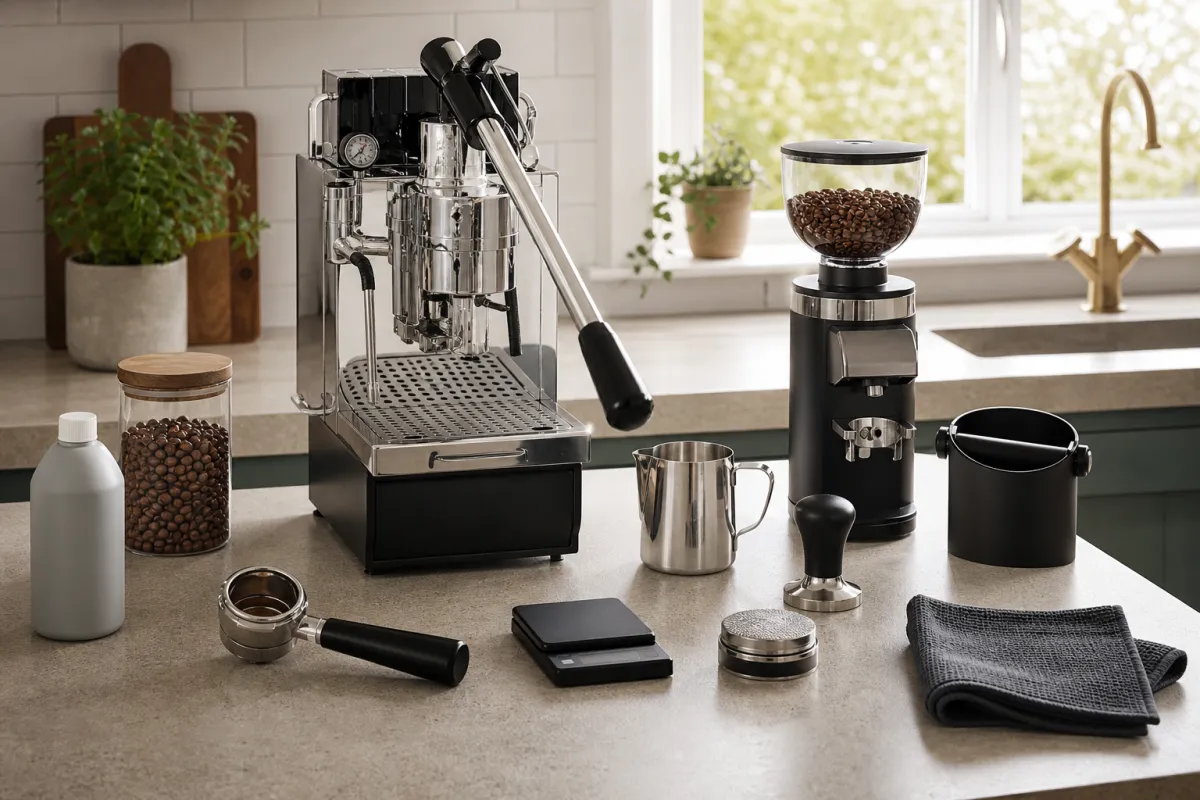
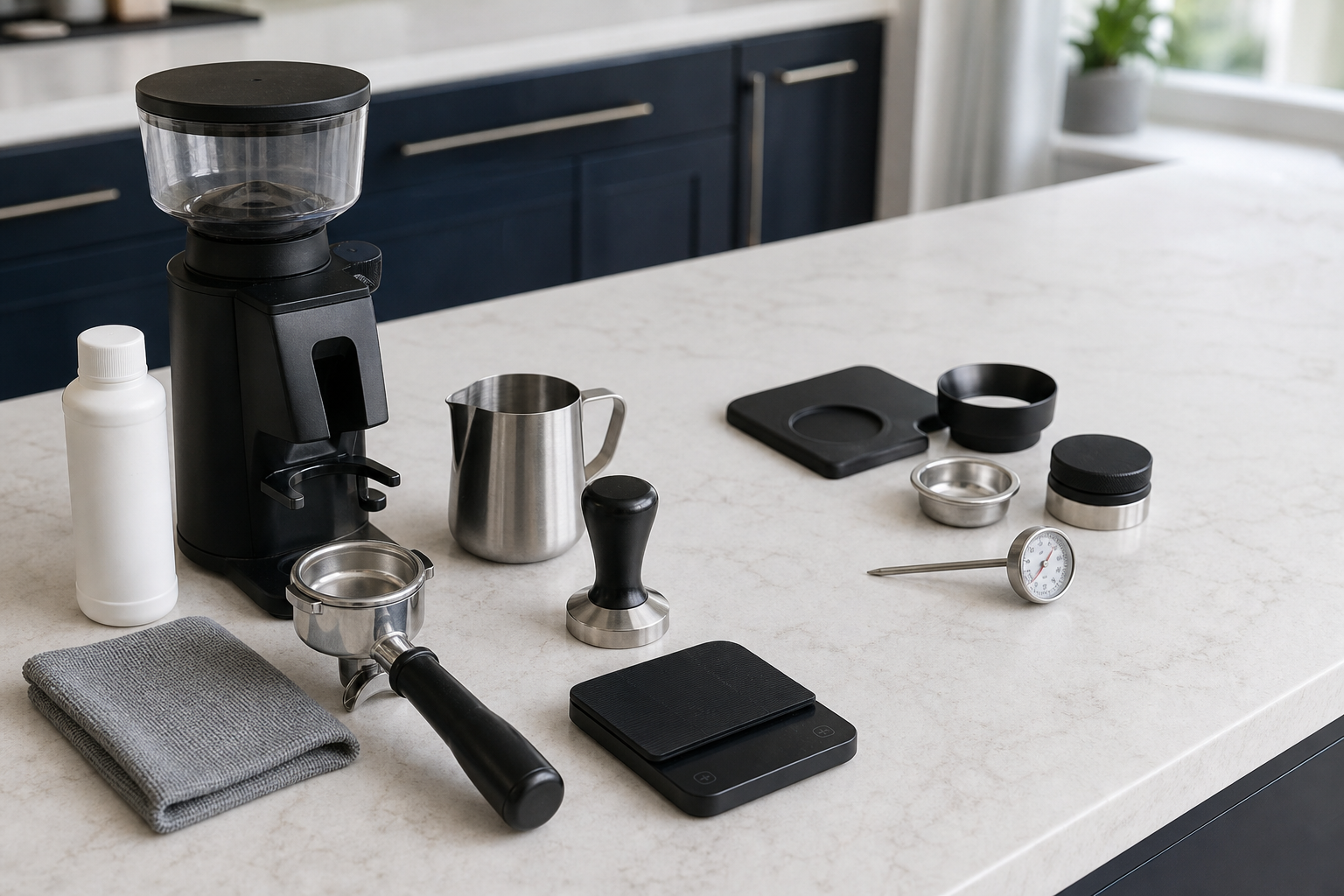
A sensible starter kit is simple: a suitable grinder if the machine does not have one, the right tamper, a small milk jug if you make milk drinks, basic scales if you want repeatable results, somewhere to empty used coffee grounds, and the cleaning products your machine requires. A tamper is the short press used to flatten coffee grounds in the machine's basket before brewing; the basket sits inside the handled metal part, usually called the portafilter.
Everything else should earn its place. Specialist distribution tools, tamping mats, dosing funnels and spare baskets can be useful later, but they are easy to buy too early. Start with the tools that remove daily friction, then add extras only when you know what is slowing you down.
What to buy first, check first or leave for later
| Accessory | Buy now? | Why it matters |
|---|---|---|
| Grinder | Usually yes, unless the machine has one built in | Freshly ground coffee and fine adjustment make the biggest difference to manual espresso. |
| Tamper | Check the box first | Many machines include one. Upgrade only if it fits poorly, feels flimsy or is the wrong size. |
| Scales | Useful, not always urgent | A small digital scale helps you repeat what worked, but ordinary compact kitchen scales can be enough at first. |
| Milk jug | Yes if you use the steam wand | It helps you steam and pour milk without guessing the volume. The steam wand is the small metal tube on the machine that heats and textures milk. |
| Knock box | Convenience buy | It keeps used coffee pucks, the compacted discs of wet coffee left after brewing, away from the sink and bin lid. It does not improve the espresso. |
| Cleaning kit | Yes | Descaler, the liquid or powder used to remove limescale, plus cleaning tablets or powder, cloths and steam-wand care protect the machine and taste. |
| Distribution tools and dosing funnels | Wait | They solve specific mess or consistency problems. A dosing funnel sits on the basket while you add ground coffee; a distribution tool helps level the grounds before tamping. Buy them after you know you have that problem. |
Compare the machine and grinder before filling the basket
If you are still choosing the machine itself, start with our espresso machine guide. If the machine has no built-in grinder, compare dedicated options in our coffee grinder guide before spending money on smaller accessories.
The grinder is the one accessory that can change the drink
A manual espresso machine needs coffee ground finely and consistently. A burr grinder, which crushes beans between two grinding surfaces rather than chopping them with a spinning blade, gives you more control over that texture. That matters because espresso is sensitive: too coarse and the water runs through too quickly; too fine and the shot can become slow, bitter or uneven.
You do not need a commercial cafe grinder. You do need one that can adjust finely enough for espresso and hold its setting once you find a good point. If you only buy pre-ground coffee, the grind size is fixed before it reaches your kitchen. That can be convenient, but it leaves you with less room to correct the taste.
Spend grinder money before buying decorative espresso tools. A better tamper will not rescue coffee that is ground badly for the machine.
Check the tamper size before upgrading it
The tamper is the flat-ended tool you press into the coffee basket before brewing. After brewing, that pressed coffee bed comes out as a puck: a compact disc of used coffee grounds. A tamper should fit the basket closely enough to press the coffee evenly, without scraping the sides or leaving a wide ring of loose grounds.
Do not assume every manual espresso machine uses the same size. Common baskets vary, and some home machines use smaller pressurised baskets, which are baskets designed to make pre-ground coffee more forgiving by controlling the flow of water. Check the machine manual, product page or basket diameter before buying a replacement tamper.
A heavier metal tamper can feel nicer than a lightweight plastic one, but it is not the first thing to upgrade if the included tamper fits and you are still learning the machine.
Scales help consistency, but do not overbuy
Scales are useful because they turn vague scoops into repeatable amounts. You can weigh the dry coffee going into the basket and, if your setup allows it, the espresso coming out into the cup. That makes it easier to work out whether a change in taste came from the coffee amount, grind setting or shot time.
For normal home use, a compact digital scale that fits near the machine is enough. Dedicated espresso scales can be smaller, faster and more water resistant, but they are not mandatory on day one. If your kitchen scales already measure in small increments and fit under the cup, try them before buying another gadget.
Keep the goal modest: scales are there to help you repeat a good cup, not to make every coffee feel like a science project.
Buy a milk jug only if milk drinks are part of the plan
A stainless steel milk jug is worth having if you use a steam wand for cappuccinos, flat whites or lattes. It gives the milk room to swirl, helps you feel the temperature through the metal, and pours more neatly than a mug or measuring jug.
Choose a size that matches the drinks you actually make. A very large jug can waste milk when you only make one small drink; a tiny jug can overflow or make the steam wand awkward to position. The spout does not need to be competition-grade, but it should pour cleanly enough for everyday drinks.
If you drink mainly espresso or long black-style coffee, a milk jug can wait. Do not buy a full milk-accessory bundle just because the machine has a steam wand.
A knock box is about mess, not flavour
A knock box is a small container with a padded bar for tapping out the used coffee puck after brewing. It keeps wet grounds away from the sink, reduces trips to the bin and makes multiple drinks less messy. For a household making several coffees in a row, that convenience is real.
It does not change the drink in the cup. If counter space is tight, you can start with a small container and empty it often. Buy a proper knock box when the bin routine becomes annoying, not because a setup looks incomplete without one.
Cleaning kit should not be the afterthought
Manual espresso machines need regular cleaning because coffee oils, fine grounds and milk residue build up quickly. Descaling removes limescale and other mineral deposits from the water path. Cleaning tablets or powder help remove coffee residue where the machine design supports that routine. A separate cloth for the steam wand matters because dried milk is harder to shift and can affect taste and hygiene.
Follow the machine manual rather than copying a generic routine from another machine. Some home machines use cleaning discs, some have automatic cycles, and some need different products for descaling and coffee-oil cleaning. If your area has hard water, filter and descaling advice becomes more important.
Budget for cleaning from the start. A neglected machine can make worse coffee, take longer to use and become less pleasant to own.
Accessories that can wait
Once you know the machine, you may find a few small extras helpful. A dosing funnel can reduce mess when transferring ground coffee into the basket. A tamping mat protects the worktop while you press down with the tamper. A distribution tool can help level the coffee before tamping. Spare baskets may suit different coffee amounts or styles. A thermometer can help if you struggle with milk temperature.
Those are problem-solving purchases, not starter requirements. If you are buying separately, a simple search for espresso accessories* can show the range, but check size, compatibility and what your machine already includes before adding a bundle to the basket.
- Wait on bottomless portafilters, which are open-bottom handles that show how the espresso flows, until you understand your machine and are happy diagnosing messy shots.
- Wait on puck screens, thin metal screens that sit on top of the coffee before brewing, unless you know why your basket or machine routine needs one.
- Wait on premium tampers until the included tamper is clearly holding you back.
- Wait on storage racks until you know which accessories have survived the first month.
The best setup is the one you will keep using
The right accessory list depends on the machine and the coffee habit. If the machine has no grinder, put grinder money near the top. If you make milk drinks, get a suitable jug and keep a steam-wand cloth beside the machine. If you hate mess, a knock box will feel worthwhile even though it does nothing for flavour. If you are still learning, scales can help you repeat the good cups and avoid chasing guesses.
What you do not need is a full barista trolley before the machine has earned its space. Manual espresso already asks for more attention than pod or bean-to-cup coffee. Keep the setup practical, clean and easy to repeat, then add the tools that solve the problems you actually notice.