In this article
For most home coffee, grind size is simply how fine or coarse the coffee is after it leaves the grinder. Fine grounds slow water down and suit espresso. Medium grounds suit most filter brewers. Coarse grounds suit cafetiere because they are easier to separate from the drink.
The awkward part is that grinder numbers are not universal. Setting 8 on one grinder can behave like setting 18 on another. Treat the number as a starting point, then adjust from the taste, brewing time and how easily the water moves through the coffee.
Start with the texture, not the number
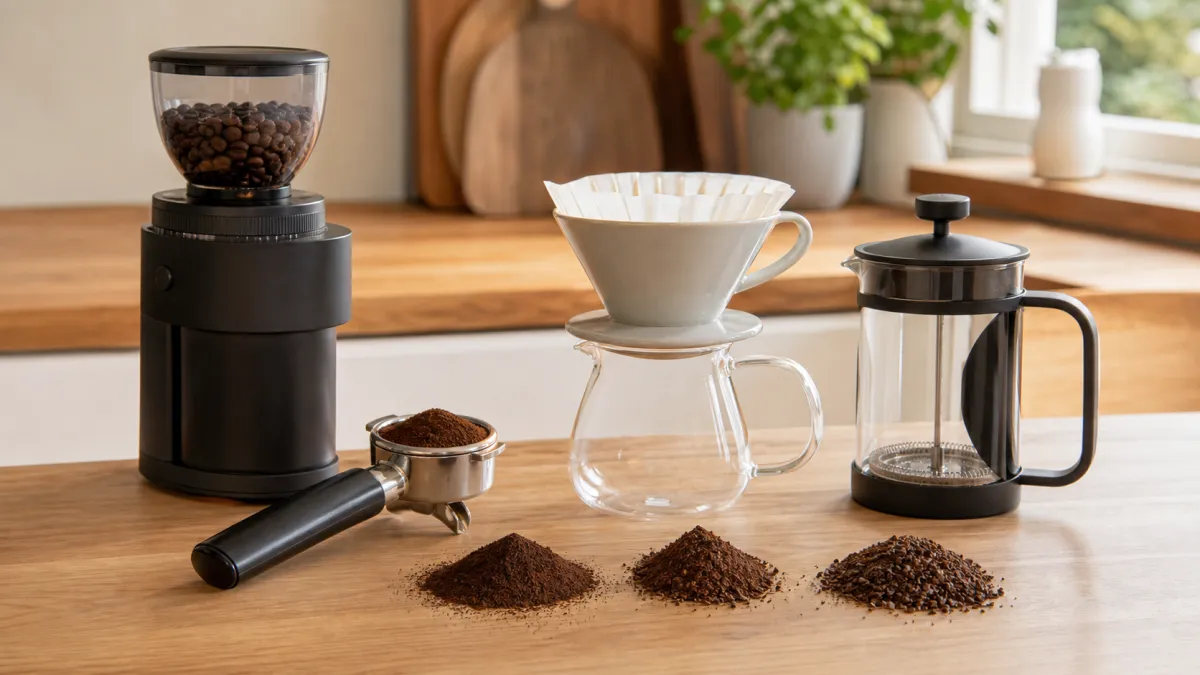
Think of grind size as a texture ladder. Espresso sits near flour or table salt. Filter coffee usually sits nearer granulated sugar. Cafetiere sits nearer coarse sea salt or breadcrumbs. Those comparisons are not exact measurements, but they are much more useful than copying someone else's dial number.
| Coffee method | Good starting texture | What goes wrong if it is too fine | What goes wrong if it is too coarse |
|---|---|---|---|
| Espresso | Fine, with small even particles that slow the water. | The machine struggles, the shot drips slowly, and the cup can taste harsh or bitter. | The shot runs quickly, looks thin, and can taste sharp or weak. |
| Filter coffee | Medium to medium-fine, depending on the brewer and paper. | The filter clogs or drains slowly, often giving a heavy, bitter cup. | The water rushes through and the coffee can taste thin, sour or unfinished. |
| Cafetiere | Coarse, with larger pieces that the mesh filter can hold back. | The plunger may feel gritty or stiff, with more sediment in the mug. | The drink can taste hollow unless you brew for longer or use more coffee. |
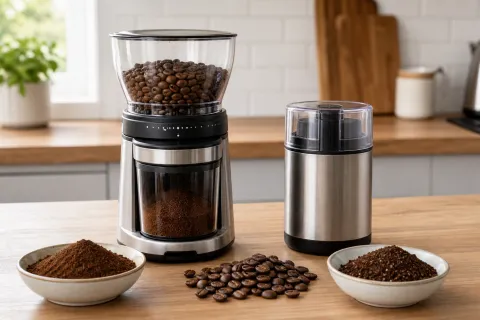
If this table makes you realise your current grinder does not offer enough control, start with our coffee grinder guide. If you are choosing the machine as well, compare the wider coffee machine guide before committing to a setup.
Espresso needs small adjustments
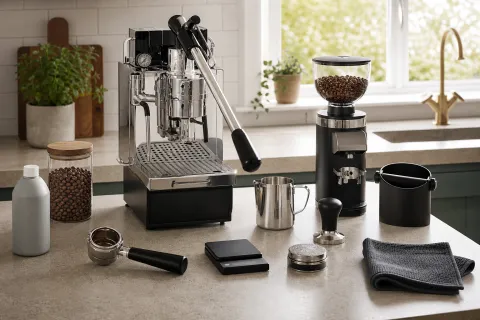
Espresso is the least forgiving method because the machine pushes hot water through a compact puck of coffee under pressure. A small grind change can make the shot run much faster or slower. That is why espresso-focused grinders need fine adjustment steps rather than a few broad settings.
If the coffee runs through in a rush, tastes sour or looks pale and watery, try grinding a little finer. If the machine labours, the shot barely drips, or the flavour becomes dry and bitter, go a little coarser. Change one step at a time and keep the dose and tamping as consistent as you can.
Espresso rule: adjust the grind in small steps before blaming the machine. A good espresso machine cannot rescue coffee that is much too coarse or too fine.
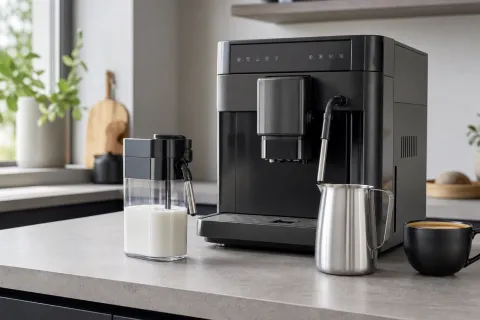
For manual espresso, the grinder is not an optional extra if you want repeatable results. Pre-ground coffee may work in a pressurised basket, but it gives you less control when beans age, the weather changes, or you switch coffee. If that sounds like too much daily effort, a bean-to-cup machine may be the easier fresh-bean route.
Filter coffee has more room for taste
Filter coffee covers several brewers: pour-over cones, drip machines and some compact filter setups. The starting point is usually medium to medium-fine, but the right answer depends on the brewer shape, paper, coffee dose and how quickly water drains.
If the brew finishes too quickly and tastes sharp, weak or grassy, grind finer. If the filter stalls, the cup tastes heavy, or the finish is drying and bitter, grind coarser. With filter coffee, taste matters more than hitting a textbook setting. A slightly different grind can suit a darker roast, a lighter roast, or the way you pour.
This is also where an ordinary burr grinder earns its keep. A burr grinder crushes beans between two abrasive surfaces, which usually gives a more even grind than a blade grinder. You do not need to become obsessive about it, but evenness helps water extract flavour more predictably.
Cafetiere should be coarse but not careless
A cafetiere, often called a French press, uses a metal mesh to separate the grounds from the drink. That mesh cannot hold back very fine particles as cleanly as paper, so a coarse grind is the sensible starting point.
Coarse does not mean random chunks. If the grinder produces a mix of boulders and dust, the large pieces under-brew while the fine dust slips through the mesh and turns muddy. That is why a decent burr grinder can improve cafetiere coffee too, even though cafetiere is more forgiving than espresso.
If your cafetiere tastes thin, try a slightly finer grind before adding a lot more coffee. If it tastes gritty or harsh, go coarser and avoid pressing the plunger hard through resistance. A smooth press is a good sign that the grind is in the right area.
Use taste clues to correct the setting
Do not expect the first cup from a new bag of beans to be perfect. Use the result as feedback and adjust one thing at a time.
| What you notice | Likely grind issue | Next adjustment |
|---|---|---|
| Sour, sharp or watery coffee | The water may be passing through too quickly. | Try a finer grind, especially for espresso or filter coffee. |
| Bitter, harsh or dry finish | The water may be spending too long with the grounds, or fine particles are clogging the brew. | Try a coarser grind, then check brew time and coffee amount. |
| Grit in cafetiere coffee | The grind may be too fine or too uneven for the mesh filter. | Go coarser and press gently; consider a grinder with more consistent coarse settings. |
| Espresso shot runs too fast | The coffee bed is probably too open. | Grind finer in small steps and keep the dose steady. |
| Espresso shot barely flows | The grind may be too fine, or the basket is overfilled. | Go slightly coarser before changing everything else. |
The useful habit is to write down the starting setting for each brew method. Once you know your espresso, filter and cafetiere areas, switching between them becomes much less mysterious.
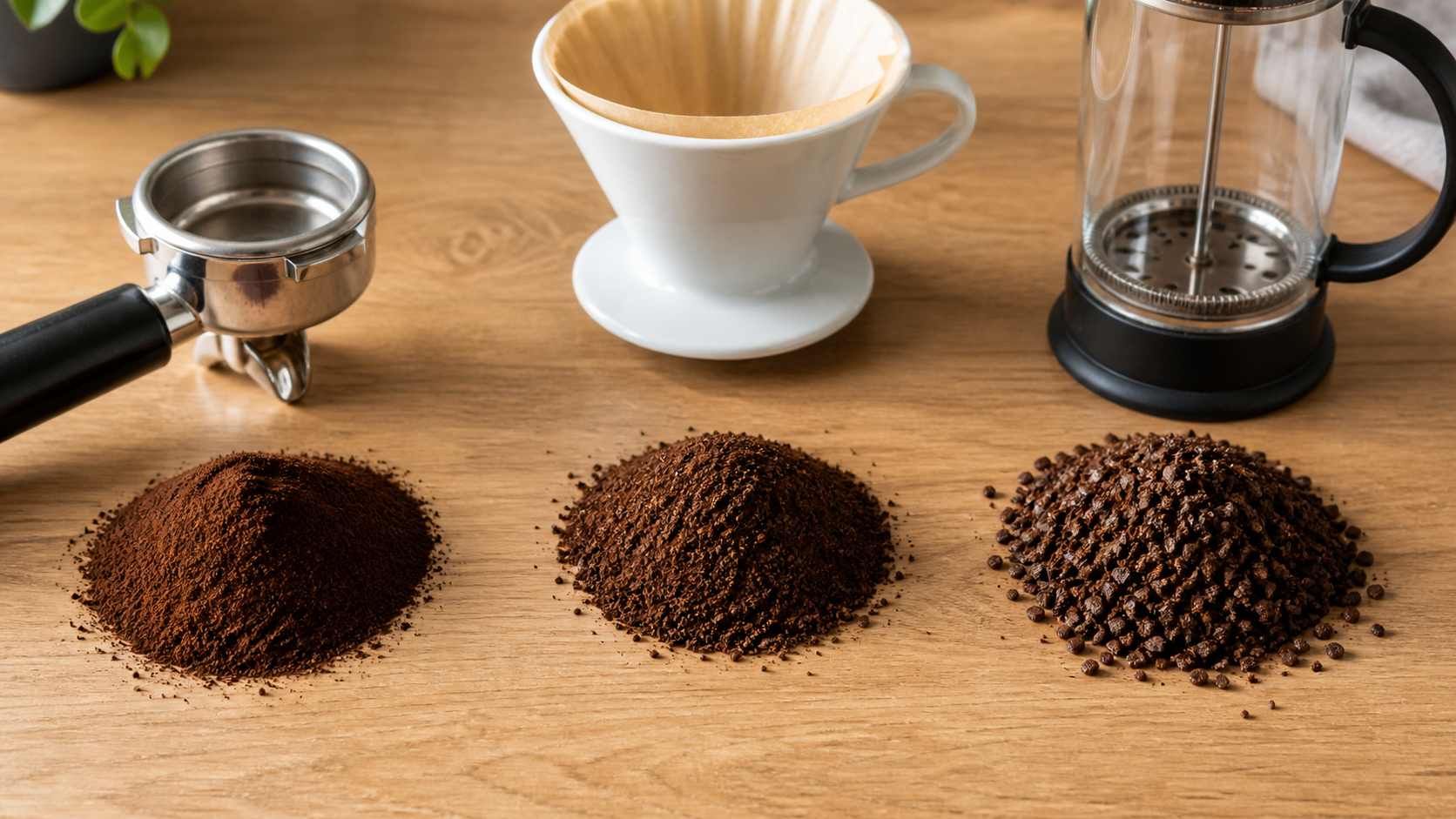 Fine espresso grind, medium filter grind and coarse cafetiere grind should look and feel different before water touches the coffee.
Pre-ground coffee is convenient, but it fixes the decision for you
Supermarket pre-ground coffee is usually sold for broad methods such as espresso, filter or cafetiere. That can be useful if you want no extra appliance, no mess and no morning adjustment. The trade-off is that the grind is locked before you know how it behaves in your machine.
Pre-ground espresso may be too coarse for a manual machine with a standard basket, yet too fine for another setup. Filter grind may work in one drip machine but drain too slowly in a paper cone. Cafetiere grind can sit anywhere from sensibly coarse to dusty, depending on the bag.
Buy pre-ground when convenience matters more than tuning the cup. Buy whole beans and grind at home when you want to adjust flavour, switch brew methods, or get more from an espresso machine.
What to look for in a grinder for different methods
If you only make cafetiere or simple filter coffee, you do not need the most expensive grinder in the shop. You do need settings that are easy to repeat, a grind container that is not too messy, and enough coarse-to-medium control for the coffee you drink.
If espresso is part of the plan, be stricter. Look for a grinder with small adjustment steps, a stable burr design, a clear way to return to previous settings, and practical dosing into a portafilter or container. A cheap grinder that works for cafetiere can still be frustrating for espresso.
- For espresso: prioritise fine adjustment, consistency and a tidy way to dose coffee.
- For filter: look for repeatable medium settings and simple cleaning.
- For cafetiere: check that coarse settings are genuinely coarse rather than a dusty mix.
- For mixed households: make sure the dial or display lets you move between methods without losing your place.
Do not turn every coffee into a project
There is no need to chase a perfect grind for every casual mug. The aim is to avoid the obvious mismatch: espresso grind in a cafetiere, cafetiere grind in an espresso machine, or one fixed pre-ground bag expected to suit every brewer.
Start with the brew method, make one sensible adjustment, then stop when the coffee tastes good enough for how you drink it. A better grinder is worth paying for when it removes frustration, not when it adds another ritual you do not want.
The setting should help the drink, not dominate it
Espresso needs fine, controlled grinding because tiny changes affect the shot. Filter coffee gives you more room to adjust by taste. Cafetiere wants a coarse, even grind so the drink stays full without becoming gritty.
Once you understand that simple scale, the grinder dial becomes less intimidating. Pick a starting point, adjust from the cup, and choose a grinder that matches the most demanding coffee you actually make. For many homes, that means buying enough control for espresso only if espresso is genuinely part of the routine.
Sources and checks
These links can help you check how grinder settings and brew-method ranges are presented before buying.
Sage Smart Grinder Pro: compare how one UK coffee-grinder range presents many grind settings across espresso, filter and cafetiere-style brewing.