In this article
Buy a burr grinder if you care about repeatable coffee, want to adjust grind size for different brewers, or plan to make espresso at home. Buy a blade grinder only if you need the cheapest, smallest way to grind beans for occasional, forgiving coffee.
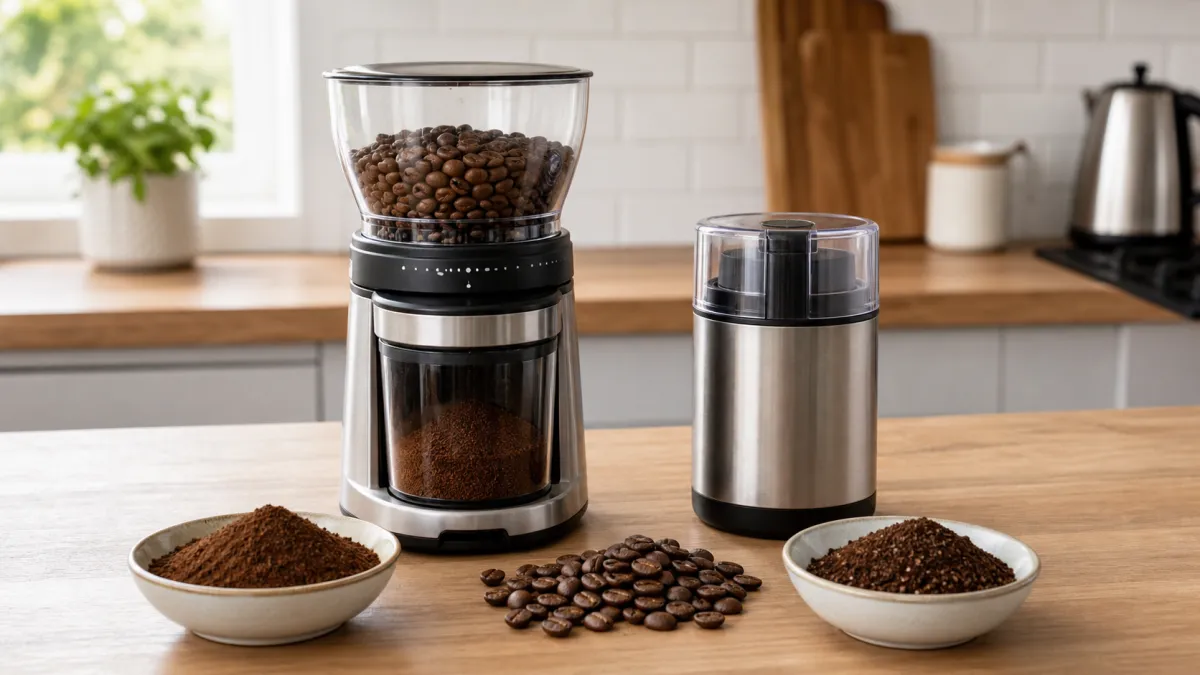
The reason is consistency. Burr grinders crush beans between two abrasive surfaces set to a chosen gap, so the grounds come out closer to the size you asked for. Blade grinders chop beans in a small chamber; the longer you run them, the more some pieces turn dusty while other pieces stay chunky.
Decision rule: if the grinder is for daily coffee, espresso, filter or cafetiere you want to improve, choose burr. If it is for rare use and the alternative is buying pre-ground supermarket coffee, a blade grinder can still be a cheap step towards fresher beans.
Start with what you brew
| Your coffee routine | Better buy | Why it fits |
|---|---|---|
| Espresso machine | Espresso-capable burr grinder | Espresso needs fine, repeatable adjustment. A blade grinder cannot give you the control needed to dial in shots. |
| Filter, pour-over or drip coffee | Burr grinder | Medium grinds taste cleaner when there are fewer dusty fines and oversized pieces in the same dose. |
| Cafetiere or cold brew | Burr grinder if budget allows | Coarser brewing is more forgiving than espresso, but mixed dust and boulders still make the cup muddier. |
| Moka pot or AeroPress-style short brews | Burr grinder | These methods reward small grind changes, especially when you are balancing strength and bitterness. |
| Occasional one-button coffee | Blade grinder, cautiously | It is cheap and compact, but you trade away precision and repeatability. |
| Best flavour on a tight budget | Manual burr grinder | A hand grinder can put more of the money into the burrs, although you pay with effort and time. |
Compare grinders after choosing the format
If the table has already settled the choice, start with our coffee grinder guide for burr and manual options. If you are still choosing the machine as well, our coffee machine guide can help you decide whether a separate grinder, built-in grinder or simpler pod setup makes more sense.
Why consistency changes the cup
Ground coffee extracts at different speeds. Fine particles give up flavour quickly; larger chunks extract more slowly. When a dose contains too much powder and too many large fragments, water pulls bitterness from the fines while the larger pieces can still taste thin or sour. That is why the same beans can taste sharp, muddy or hollow when the grind is uneven.
A burr grinder does not make every particle identical, and cheap burr grinders are not magic. The advantage is control. You can move the burrs closer for finer grounds, further apart for coarser grounds, and then repeat that setting tomorrow. That repeatability makes it much easier to fix a cup: go a little coarser if it tastes harsh and bitter, or a little finer if it tastes weak and sour.
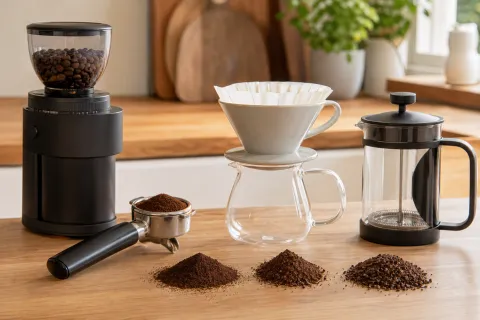
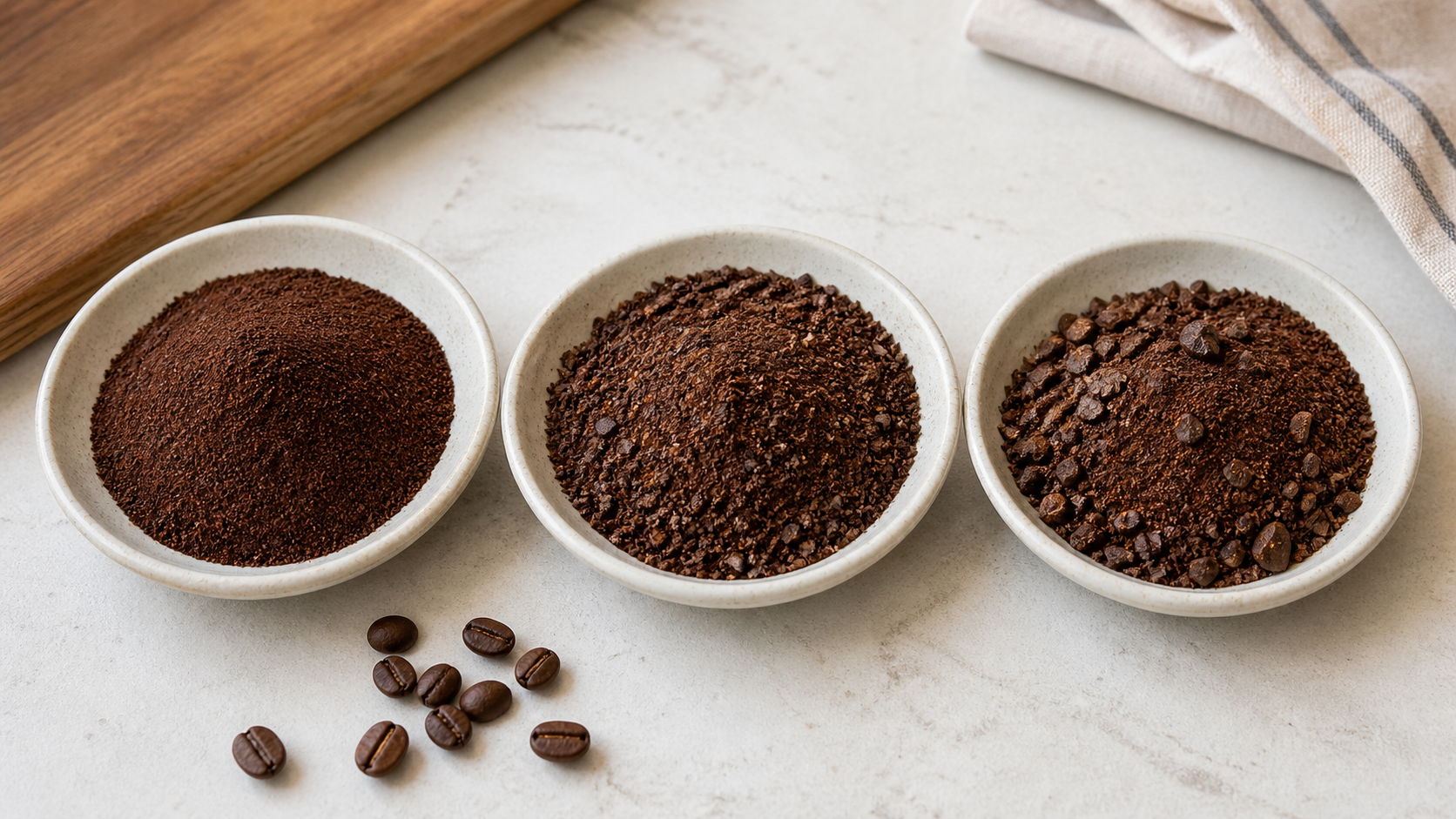 Fine, coarse and mixed grounds extract at different speeds, which is why grind consistency matters.
A blade grinder gives you time rather than a true grind setting. Ten seconds, twenty seconds and thirty seconds may look different, but the blade is still hitting some pieces more often than others. Shaking the grinder can help a little, but it does not turn a blade grinder into an adjustable burr grinder.
Espresso is where blade grinders fall apart
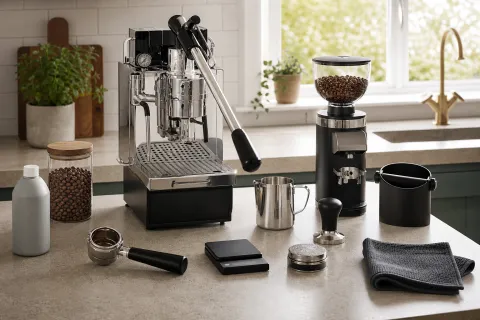
If you use a manual espresso machine, the grinder matters as much as the machine. Espresso pushes water through a compact bed of fine coffee under pressure, so tiny grind changes can alter flow, flavour and crema. Too coarse and the shot runs fast and thin; too fine and it can choke, turn harsh or drip slowly.
That does not mean any burr grinder is automatically an espresso grinder. Look for fine adjustment, stable settings, a dose system that suits your workflow, and whether the grinder can grind directly into a portafilter if that matters to you. Some general-purpose burr grinders are excellent for filter coffee but frustrating for espresso because the steps are too wide or the motor and burrs are not built for very fine, repeatable work.
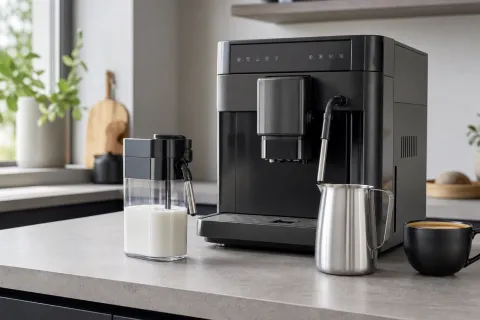
For espresso, skip blade grinders entirely. Put the budget towards an espresso-capable burr grinder, a good manual grinder, or a coffee machine with a built-in grinder if convenience matters more than separate control.
Filter and cafetiere drinkers still benefit from burrs
Filter coffee, batch brew and cafetiere are more forgiving than espresso, so the difference is less dramatic. You can make drinkable coffee with a blade grinder, especially if the beans are fresh and you are not chasing cafe-style precision. But a burr grinder still gives you cleaner comparisons between beans and recipes.
For cafetiere, aim for a coarse, even grind that leaves less sludge in the cup. Blade grinders tend to create powder alongside larger pieces, which can make the brew taste heavier and leave more sediment. For filter, a medium grind with fewer extremes helps the water move through the bed more predictably.
Moka pots sit somewhere in between. They usually want a grind finer than filter but not as fine as espresso. A burr grinder makes that middle ground easier to find, while a blade grinder leaves you guessing from one batch to the next.
Budget: cheap electric, manual burr or better electric burr?
The cheapest route is a blade grinder. It is small, fast and often costs far less than a good electric burr grinder. If your current routine is stale pre-ground coffee and you only brew now and again, it can be a reasonable compromise. Use short pulses, stop before the coffee turns dusty, and accept that the result will vary.
The best-value flavour route is often a manual burr grinder. You lose the one-button convenience, but a good hand grinder can produce a more consistent grind than many cheap electric options. It makes most sense if you brew one or two cups at a time and do not mind grinding by hand for a minute.
A better electric burr grinder is the easiest long-term choice for daily coffee. You pay more, but you gain speed, repeatable settings, easier dosing and less frustration when switching between brewers. If your household drinks several coffees a day, the convenience matters.
Under tight budgets: consider a manual burr grinder before defaulting to the cheapest electric burr model.
For shared households: electric burr is usually easier to live with than hand grinding every dose.
For occasional use: blade is acceptable only if you understand the compromise and keep expectations modest.
Noise, mess and cleaning matter more than they look
Blade grinders are usually compact, but they can be shrill and messy because grounds collect in the same chamber as the blade. You often have to tip or brush the coffee out, which spreads fines around the worktop. They are simple to store, but not always pleasant to use first thing in the morning.
Electric burr grinders can also be noisy, especially cheaper models, but they are usually cleaner to dose because grounds fall into a container or portafilter. Look for an easy-to-remove hopper, a grounds bin that does not scatter coffee, and a cleaning brush or accessible burr chamber. Static can still make fine grounds cling, so a tidy grinder is not guaranteed.
Manual burr grinders are quieter and compact, but they add effort. They also need cleaning, especially if you use darker oily beans. If you like the idea of hand grinding, check capacity and grip as well as grind quality; a grinder that is awkward to hold will not feel like a bargain for long.
Which should you buy?
Most people who buy whole beans should choose a burr grinder. It gives you the adjustment and repeatability that make fresh beans worth buying, and it suits the widest range of coffee routines. It is the right answer for espresso, the better answer for filter, and the cleaner answer for cafetiere.
A blade grinder is the fallback, not the upgrade path. It can be useful when space and budget are extremely tight, or when you only want a cheap way to grind beans occasionally. It is better than leaving good beans untouched, but it will not help you understand or control your coffee in the same way.
The most sensible compromise is often a manual burr grinder. If the price of a good electric burr grinder feels too high, hand grinding gives you the important part of the upgrade: a chosen grind size that you can repeat.
Sources and checks
This official product reference shows the kind of burr-grinder specification worth checking before you buy.
Sage Smart Grinder Pro: compare how a burr grinder presents adjustable settings, espresso-to-French-press range, dosing options, portafilter/container grinding and burr construction.