In this article
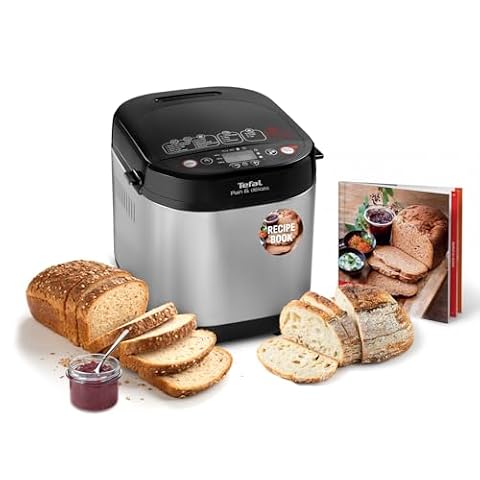
If you mainly want fresh loaves with the least effort, buy a breadmaker first. It mixes, kneads, proves and bakes in the same pan, so it suits people who want a reliable everyday loaf without turning breadmaking into a project.
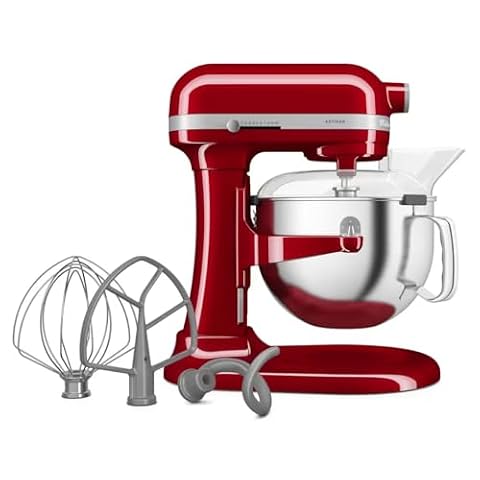
If you bake cakes, biscuits, enriched doughs, pizza, meringue or several styles of bread, buy a stand mixer first. It will not bake for you, but it gives you more control and earns its space across more baking jobs.
The wrong purchase usually happens when a buyer confuses convenience with versatility. A breadmaker is more self-contained. A stand mixer is more flexible. The better choice is the one that matches the job you will repeat, not the appliance with the longest list of settings.
Match the machine to the way you bake
| Your kitchen habit | Better first buy | Reason |
|---|---|---|
| You want sandwich loaves, seeded loaves or breakfast bread with little hands-on time | Breadmaker | It handles the main bread stages in one pan and can often run on a timer. |
| You bake cakes, cookies, buttercream, meringue and bread dough | Stand mixer | The open bowl and attachments suit more baking tasks than a breadmaker pan. |
| You want shaped rolls, focaccia, pizza bases or oven-baked artisan-style loaves | Stand mixer | It kneads the dough while you keep control over shaping, proving and baking. |
| You want one appliance that can make a loaf while you do something else | Breadmaker | The appeal is automation rather than hands-on technique. |
| You already own loaf tins, bake often and like adjusting recipes | Stand mixer | It supports experimentation instead of locking the bake into a breadmaker programme. |
| You have very limited worktop space | Depends on the habit | A breadmaker can replace several bread stages, but a stand mixer may cover more non-bread baking. |
Compare models once you know the format
If the table has already settled the question, start with the guide that matches your routine: breadmakers for automatic loaves, or stand mixers for wider baking and dough prep.
What each machine actually takes off your hands
A breadmaker is a closed, programmed appliance. You add ingredients to the pan, choose a programme and let the machine work through the stages. Modern breadmakers can cover more than plain white loaves, but the core appeal is still simple: load the pan, press start, come back to bread.
A stand mixer is an open prep machine. It can mix cake batter, cream butter and sugar, whisk egg whites, knead dough and handle attachments on some models. It saves effort, especially on heavy or repetitive mixing, but it does not remove the whole process. You still shape bread, manage proving, transfer dough to a tin or tray and bake in the oven.
That is why the decision is less about bread alone and more about your tolerance for the rest of baking. If you enjoy shaping dough and using the oven, a stand mixer gives you room to improve. If you want good-enough homemade bread without managing every stage, a breadmaker is the more honest machine.
Buy a breadmaker if you want the easiest route to regular loaves
A breadmaker is best when bread is the goal, not the hobby. It suits packed-lunch households, toast lovers, people who want to control ingredients, and anyone who likes the idea of waking up to a fresh loaf without kneading dough at night.
The strongest breadmaker benefit is repeatability. Once you find a recipe and programme that suit your flour and taste, the process becomes routine. Many machines offer loaf-size and crust controls, timers and dedicated programmes for wholemeal, rapid bread, gluten-free recipes, pizza dough or jam. You should still check the exact model because cheaper machines may have fewer settings, smaller pans or less flexible timing.
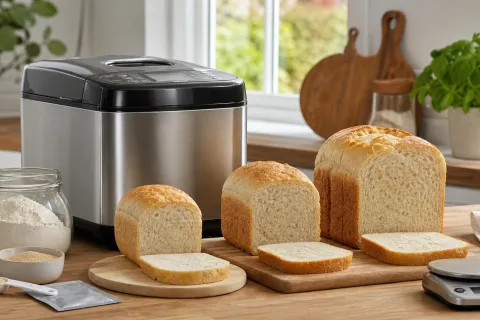
The trade-off is shape and texture control. Breadmaker loaves usually follow the pan shape, with a base paddle mark and less control over crust, scoring and oven spring than oven baking. They are brilliant for everyday sliced bread, but less satisfying if you dream of hand-shaped boules, baguettes, focaccia or rolls.
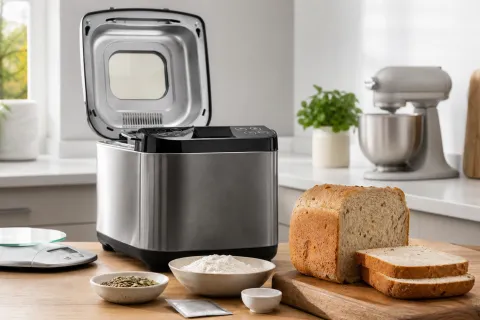
Cleaning is usually simple, but not zero-effort. You will need to remove the pan and paddle, avoid scratching non-stick coatings, and clean around any dispensers. Also check the appliance height with the lid open; a breadmaker that fits under a cupboard when closed may be awkward to load in place.
Buy a stand mixer if baking variety matters more than automation
A stand mixer earns its space when you bake across several categories. The dough hook helps with bread, pizza and enriched dough. The beater handles cake mixtures, cookie dough, frosting and mashed ingredients. The whisk is useful for cream, egg whites and meringue. Some mixer ranges also support optional attachments, although those extras can become expensive and need storage.
The biggest advantage is control. You can stop the mixer, scrape the bowl, adjust hydration, switch attachments, shape dough by hand and choose the tin, tray or oven temperature. That matters if you want soft rolls one week, pizza dough the next and cake batter at the weekend.
The trade-off is that a stand mixer does not finish the loaf. It reduces effort but leaves you responsible for proving, shaping and baking. If that sounds like the enjoyable part, it is the right choice. If that sounds like the barrier that stops you making bread, a mixer may sit unused while a breadmaker would have done the job.
Stand mixers also tend to be heavy by design. That helps stability, but it means the best home for one is usually a permanent worktop spot. If you have to lift it out of a low cupboard every time, the appliance may be too inconvenient for casual baking.
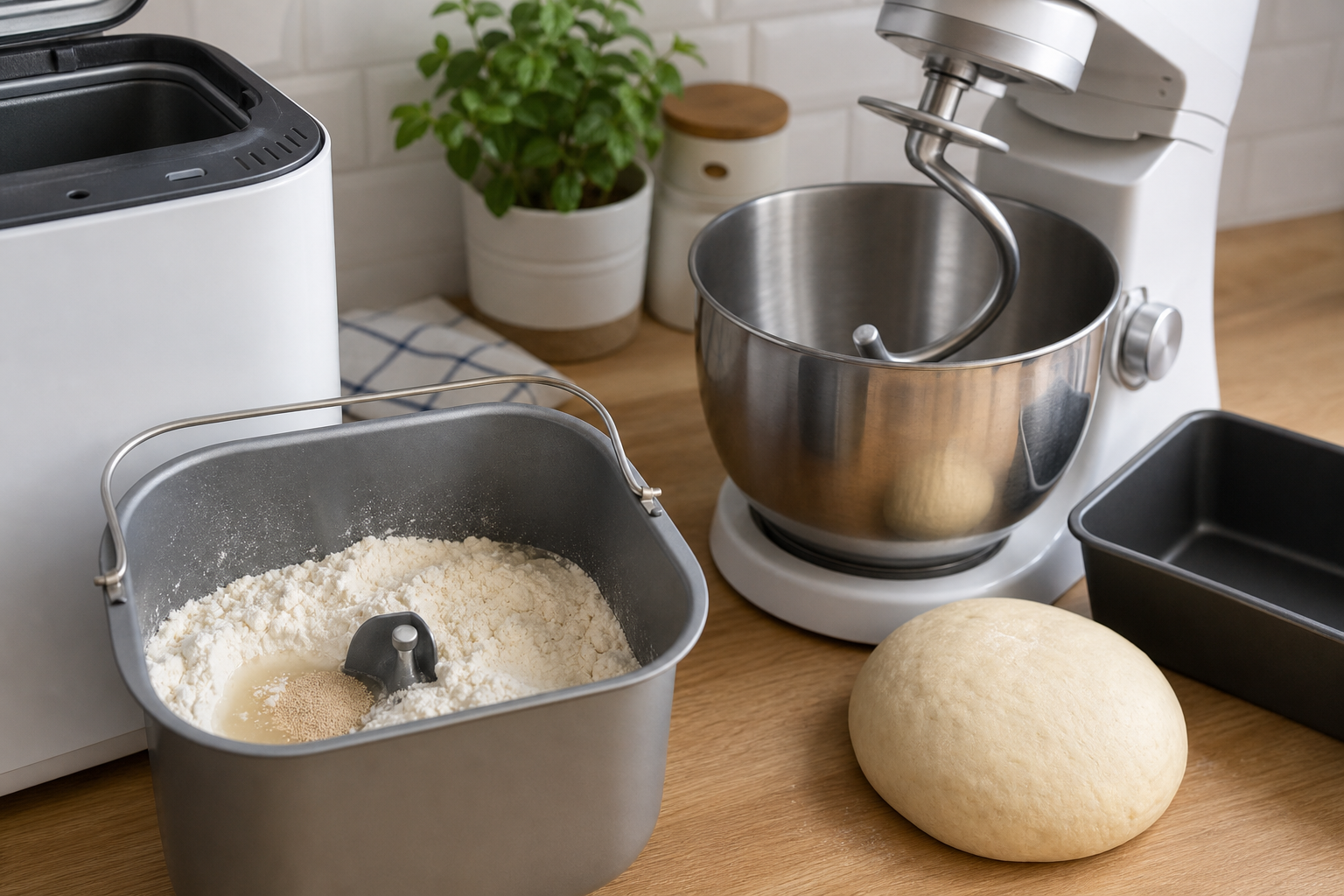 The breadmaker keeps ingredients in one pan; the stand mixer prepares dough for shaping, proving and baking separately.
The middle ground: dough programmes and oven baking
There is overlap. Many breadmakers have dough-only programmes, so they can knead and prove dough for pizza, rolls or oven-baked loaves. That can be a smart compromise if you want the breadmaker's automation most days but occasionally want to shape dough yourself.
The compromise is capacity and control. A breadmaker pan is smaller and more enclosed than a stand mixer bowl, and the programmes may not suit every dough. A stand mixer is better if you often make high-hydration doughs, enriched doughs, larger batches or recipes that need visual judgement while mixing.
A useful test is to picture your next ten bakes. If eight are everyday loaves, choose the breadmaker. If they include sponge cake, cookies, pizza, rolls, buttercream and the occasional loaf, choose the stand mixer.
Do not ignore space, noise and appliance safety
Both appliances deserve a real worktop check before you buy. Measure the footprint, the height with lids or tilt heads raised, and the route to the socket. A breadmaker needs clearance for opening the lid and removing a hot pan. A stand mixer needs room above the head and enough depth that the bowl can lock in place without being balanced near the edge.
Noise is different too. Breadmakers run in stages and may be noticeable when kneading. Stand mixers can be louder during heavy dough or high-speed whisking, but they usually run for shorter bursts. If you bake early in the morning or late at night, this matters more than the spec sheet suggests.
For either appliance, keep the purchase boring in the right ways: buy from a retailer you trust, check warranty terms, register the product if the manufacturer offers registration, and keep the model details. Before buying second-hand, check for recalls and make sure the bowl, pan, paddle, guard and attachments are complete.
Verdict: breadmaker for routine loaves, stand mixer for serious baking range
Choose a breadmaker if you want a low-friction way to make regular loaves. It is the better appliance for people who value convenience, timers and a self-contained process more than shaping dough by hand.
Choose a stand mixer if you bake broadly and want one machine to support bread dough, cakes, biscuits, meringue and frosting. It asks more of you, but it also gives you more room to bake well.
If you are still split, let the weekly habit decide. Daily toast and sandwich bread points to a breadmaker. Weekend baking projects point to a stand mixer.
Sources and checks
These references help you check the appliance features and safety details behind the buying decision.
Panasonic SD-YR2540 breadmaker information: useful for understanding the kind of automatic programmes, loaf sizes, timer settings and dough modes available on a modern breadmaker.
GOV.UK product safety alerts and recalls: an official place to search for UK product safety alerts, reports and recalls before buying or using an electrical appliance.