In this article
A stand mixer looks simple from the outside: bowl, motor, hook, beater and whisk. The awkward part is working out whether the model on your shortlist is comfortably big enough for your baking, or just big enough on paper.
Most occasional home bakers do not need the largest stand mixer. A mid-sized bowl is usually enough for cakes, biscuits, buttercream and an occasional loaf. The upgrade starts to make sense when you regularly knead bread dough, double cake recipes, make several batches for a party, or hate stopping to scrape and divide mixtures.
The two numbers to treat carefully are bowl litres and motor watts. Bowl size tells you the physical space, not the useful working limit. Wattage tells you how much electrical power the motor can draw, not how confidently the mixer handles stiff dough. Build, gearing, speed control and the manufacturer's own dough guidance matter just as much.
Start with what you actually bake
Use bowl capacity as a practical fit check, not a status symbol. A bigger bowl gives mixtures room to move, but it can be clumsy for small quantities. A compact bowl is easier to store and often better for one cake, but it may struggle when dough climbs the hook or when a large buttercream needs space.
| How you bake | What to look for | Watch out for |
|---|---|---|
| Occasional cakes, biscuits and cream | A compact or mid-sized tilt-head mixer is usually enough. | Very large bowls may not catch small mixtures cleanly. |
| Regular cakes and family batch baking | Choose a mid-sized bowl with good access, a splash guard if you use icing sugar, and a stable base. | Check whether the bowl handle, scraper beater or spare bowl costs extra. |
| Bread dough every week | Prioritise the maker's dough-load guidance, low-speed control and mixer stability. | Do not assume a high wattage figure means better kneading. |
| Large celebration cakes or repeated batches | A larger bowl-lift mixer can be worth the space and weight. | Measure cupboard clearance and check whether you can leave it out. |
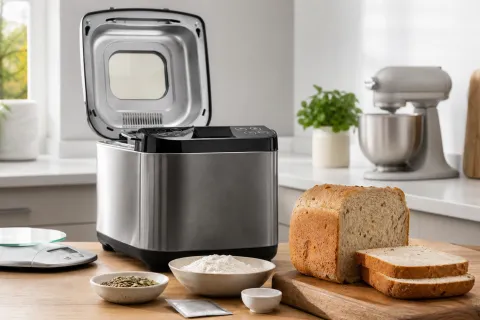
If that table already points you towards a stand mixer, compare shortlisted models in Product Inspector's stand mixer guide. If your main goal is one-button bread, a breadmaker may be the calmer choice; if chopping, slicing and grating matter more than whisking and kneading, start with a food processor instead.
Bowl litres are not the same as usable capacity
A 4.8-litre bowl does not mean you should fill it with 4.8 litres of cake batter or bread dough. Mixtures need room to expand, fold, whip and move around the tool. Flour also throws up dust if you start too quickly, and bread dough can climb the hook if the bowl is overloaded.
For cakes and batters, a mid-sized bowl is forgiving because the mixture stays soft. For dough, the useful limit is much lower. Look for the manufacturer's maximum flour or dough guidance for the exact model. If it only gives bowl litres and wattage, be cautious about buying it for regular bread.
As a simple rule: buy bowl size for the largest batch you genuinely make, then check the small-batch minimums so everyday bakes still mix properly.
Dough is the real stress test
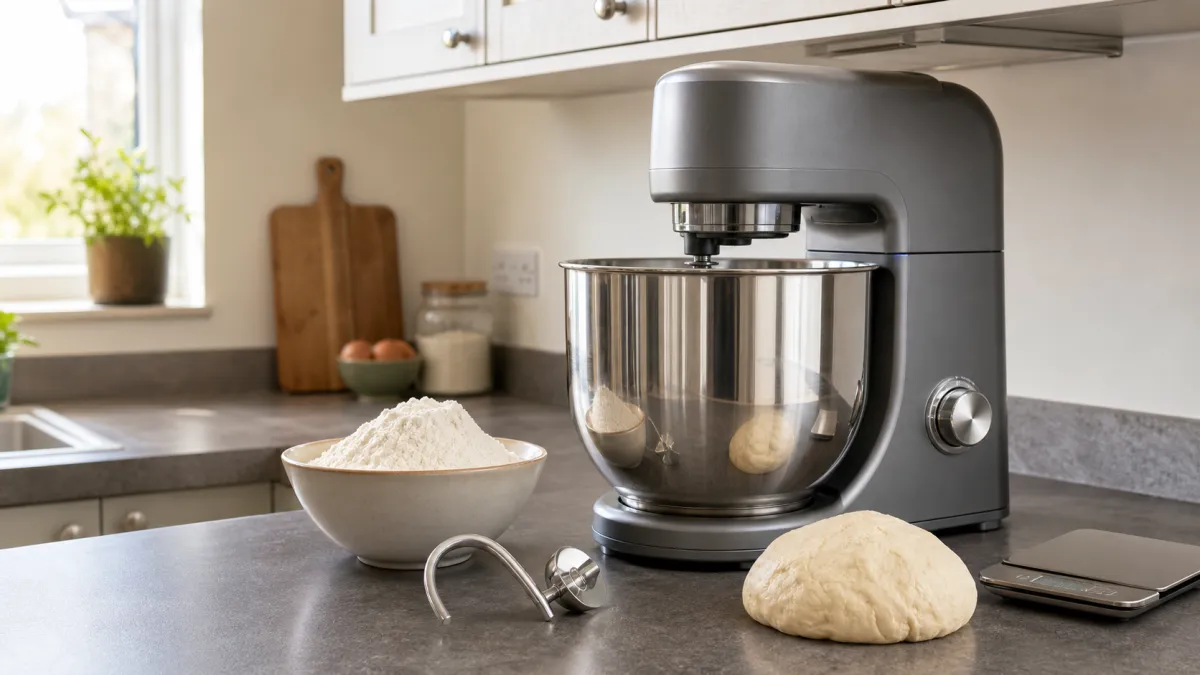
Stand mixers usually cope with creaming butter and sugar, whisking egg whites and mixing sponge batter long before they cope gracefully with stiff bread dough. Dough pulls against the hook, rocks the head or bowl, and tests whether the motor can keep a steady low speed without straining.
If bread is the reason you are buying, check three things before the colour or accessory bundle. First, does the manual give a clear dough or flour limit? Second, does the mixer have a low enough speed for kneading without thrashing the dough around? Third, does the body stay planted when the bowl is loaded?
A bread-heavy household should also be honest about what it wants from the machine. A stand mixer gives you more control over shaping, proving and baking. A breadmaker is less flexible, but it handles mixing, kneading, proving and baking in one appliance. For everyday loaves, convenience can matter more than mixer power.
Do not buy by wattage alone
Wattage is useful only up to a point. It tells you the electrical rating, but different mixers use different motors, gearing and drive designs. A lower-watt mixer with strong gearing can feel more confident than a high-watt budget mixer that gets noisy, warm or unstable under load.
Treat big wattage claims as a prompt to check build quality, not as proof of dough strength. Read the model's own limits, look at the weight and stability of the body, and check whether the speed range starts gently enough for flour and dough. A mixer that looks powerful but jumps around the worktop is not a good bread tool.
For soft cakes, whipping and light batters, smooth control often matters more than raw power. You want the mixer to start gently, reach the sides and base of the bowl, and avoid turning a small amount of cream or icing sugar into a kitchen clean-up job.
Tilt-head or bowl-lift?
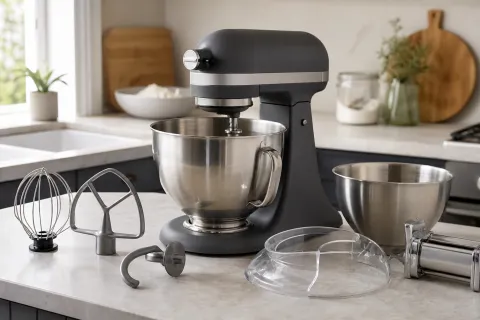
A tilt-head mixer has a hinged top that lifts back so you can remove the bowl and change tools. It is usually the friendlier design for most homes: easier to understand, easier to scrape, and often easier to tuck under a wall cupboard when closed.
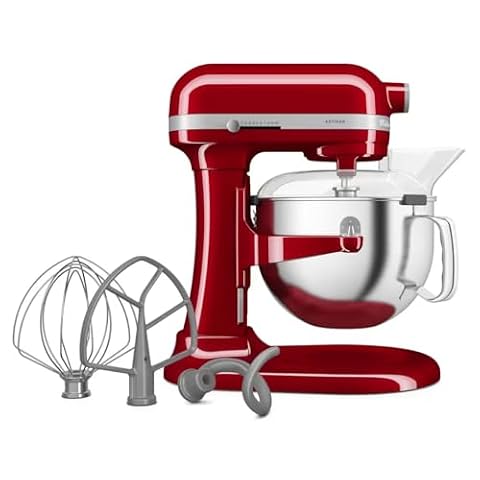
A bowl-lift mixer keeps the head fixed while the bowl moves up and down on arms. This design tends to appear on larger, heavier machines because it gives the mixer a more rigid stance for bigger bowls and tougher loads. It can be excellent for regular bread, large cakes and batch baking, but it is usually taller and heavier.
- Choose tilt-head if you mostly make cakes, biscuits, icing, cream and occasional dough, and you want easier bowl access.
- Choose bowl-lift if you regularly make heavy doughs, large batches or celebration cakes and have permanent worktop space.
- Measure before buying if the mixer will live under a wall cupboard. You need room to use it, not just store it.
Storage height matters more than showroom photos suggest
Stand mixers are awkward appliances to move. Many weigh enough that you will quickly stop lifting them out of a cupboard for a ten-minute bake. If you cannot leave one on the worktop, think hard before buying a full-size model.
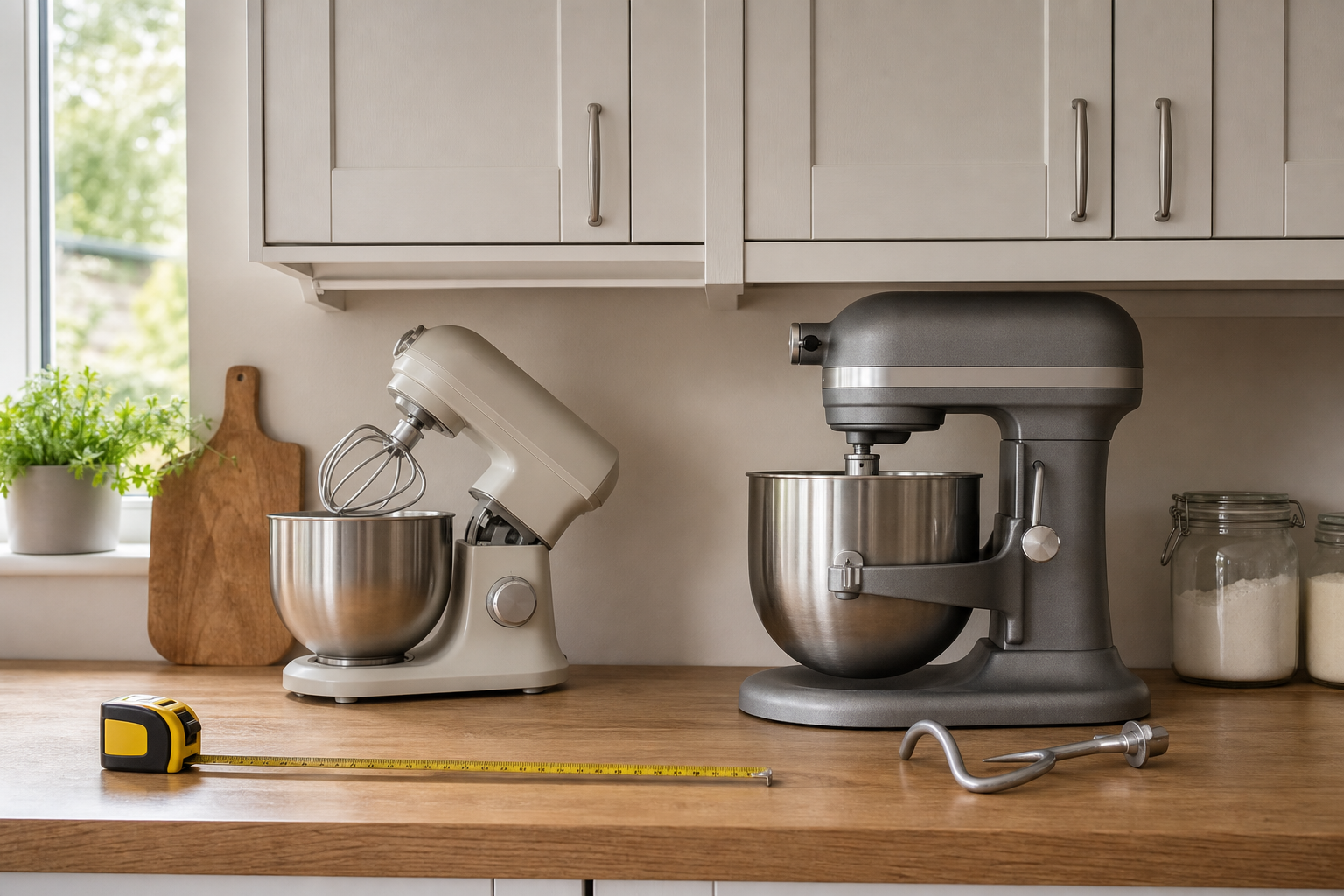
Measure three spaces: the worktop depth, the height under wall cupboards, and the cupboard or pantry shelf where accessories will live. Remember that a tilt-head mixer needs extra clearance when the head is raised, while a bowl-lift model may need to be pulled forward for comfortable access.
A spare bowl, splash guard and attachments also need a home. If those pieces end up scattered across the kitchen, the mixer becomes slower to use than a hand mixer and mixing bowl.
When a hand mixer is enough
A hand mixer is not a failed stand mixer. It is the better appliance for some kitchens. If you mostly whip cream, make simple cakes, beat eggs, mix buttercream or bake occasionally, a good hand mixer takes less space and costs far less.
The trade-off is effort and stability. You hold the motor, move the beaters yourself, and usually cannot knead bread dough properly. For stiff mixtures, a hand mixer can feel tiring and underpowered. For small, quick jobs, it can be faster because there is no heavy bowl and stand to wash.
If you are unsure, start with the jobs that annoy you now. Tired arms during buttercream, regular double batches or weekly dough point towards a stand mixer. One sponge cake a month and occasional whipped cream do not.
When a food processor or breadmaker is the smarter buy
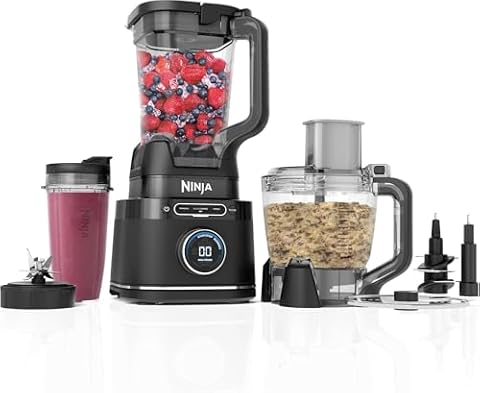
A stand mixer is best at mixing, whisking and kneading. It is not automatically the best tool for chopping vegetables, slicing potatoes, grating cheese or blending sauces. If those jobs matter most, a food processor is usually a more direct purchase.
Some stand mixers can take food-prep attachments, but that only makes sense if you are already happy with the mixer as a baking machine. Do not buy a stand mixer mainly as a roundabout food processor unless space is extremely tight and the attachment system clearly suits your cooking.
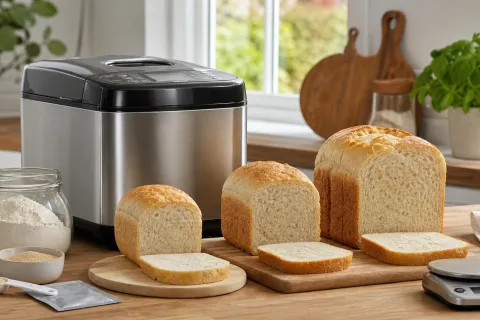
For bread, the choice is different. A stand mixer gives you a dough hook and leaves the proving and baking to you. A breadmaker is less glamorous, but it can be better if you want a loaf with minimal intervention. If you want sourdough-style control, shaped rolls or pizza dough, the stand mixer is more flexible. If you want repeatable weekday loaves, compare breadmakers before paying for a bigger mixer.
The sensible choice for most homes
For most UK kitchens, the sweet spot is a stable mid-sized stand mixer that can live on the worktop, handle cakes comfortably and cope with occasional dough without drama. Buy larger only when your baking genuinely needs it, not because the bigger bowl looks more professional.
If bread is the weekly job, read dough limits before bowl litres. If space is tight, measure the mixer in the position where you will use it. And if your baking is mostly light, occasional and small-batch, a hand mixer may leave you with more money and more cupboard space.