In this article
A sandwich toaster and an indoor grill can both make hot lunches from bread and fillings, but they solve different problems. One is built for sealed toasties; the other is a broader contact grill, meaning it cooks food between hot plates rather than only toasting bread in slots.
Buy a sandwich toaster if your repeat job is a neat, sealed toastie. Buy an indoor grill if you want bigger sandwiches, grilled vegetables, burgers, chicken pieces or a more flexible lunch tool. Keep using a normal toaster if you mainly want toast, crumpets, bagels or a quick toasted sandwich assembled afterwards.
Start with the lunch you actually make
The quickest way to choose is to ignore the appliance name for a moment and picture the food you make most often. If it is two slices of bread with cheese, ham, beans or tuna sealed into a hot parcel, a sandwich toaster is the most direct tool. If it is a ciabatta, panini, flatbread, chicken wrap or vegetable-heavy lunch, an indoor grill gives you more space and less squashing around the edges.
The winning appliance is the one that handles your normal filling without making you clean up a leak every time.
There is also a useful third answer: many households do not need either. If your lunches are mostly toast with toppings, a standard toaster plus a frying pan or grill pan may be the better use of money and cupboard space.
Sandwich toasters are best for sealed toasties
A sandwich toaster is most satisfying when you want a crisp outside, a hot centre and sealed edges. The classic plate shape presses the bread into pockets, so melted cheese and softer fillings are held in place better than they would be under a flat grill lid.
That shape is also its limitation. Deep-fill models give you more room than very shallow toastie makers, but they still work best with fillings that compress neatly. Overfill them and the latch may strain, the bread may split, or cheese and sauce can escape into the plate edges.
- Best for: cheese toasties, beans and cheese, ham and cheese, tuna melts and smaller lunch portions.
- Less good for: tall panini, chunky vegetables, thick chicken pieces or anything you want to turn or move during cooking.
- Check before buying: plate depth, whether the plates come out, how easy the hinge area is to wipe, and whether it stores upright.
If this is the format you already know you want, compare shortlist options in our sandwich toaster guide.
Indoor grills suit bigger, messier lunches
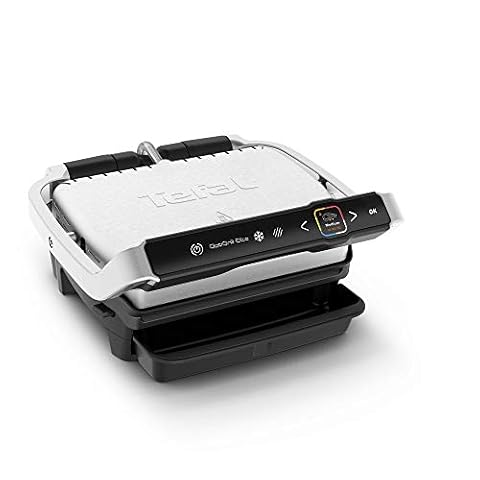
An indoor grill is the stronger choice when your lunch is not always a sealed triangle. Most contact grills use ridged or flat plates, a hinged lid and some kind of grease or juice catch. That makes them better suited to panini-style bread, vegetables, halloumi, bacon, burgers and some meat or fish portions.
The extra flexibility matters if you want one appliance to cover lunch and quick dinners. An indoor grill can usually take longer bread, open rolls and thicker fillings than a sandwich toaster, and many models let fat or cooking juices run away into a tray. Some have removable plates, while cheaper or faster-heating models may use fixed plates that need wiping in place.
The trade-off is mess and commitment. Grilled vegetables, cheese, marinades and meat juices can leave more residue than a plain toastie, so the grill is only worth it if you are willing to clean it properly after each use.
A normal toaster still has a role
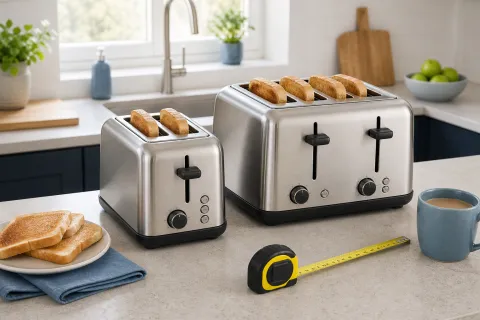
A slot toaster is not a substitute for a sandwich toaster or indoor grill, but it can still be the right answer. It is quicker for ordinary toast, easier to clean, and normally takes up less mental effort on a busy morning.
Choose a normal toaster route if your meals are mostly toast, crumpets, bagels, pitta, toasted sandwiches assembled after cooking, or breakfast rather than lunch. A toaster also pairs well with a simple frying pan when you only occasionally want a hot filled sandwich and do not want another single-purpose appliance.
If your old toaster is the real weak point, our toaster guide is the better place to start than buying a grill-style appliance you may rarely use.
Cleaning should decide close calls
Cleaning is where the two specialist appliances feel most different. A sandwich toaster looks simpler, but its plate seams can trap cheese, sauce and crumbs. A grill has a larger surface and may create more residue, but removable plates and a drip tray can make cleanup easier on the right model.
| Cleaning check | Sandwich toaster | Indoor grill |
|---|---|---|
| Typical mess | Melted cheese, sauce and crumbs around sealed plate edges. | Oil, juices, marinades, crumbs and residue across larger plates. |
| Plate shape | Pocketed plates can be awkward around seams and corners. | Ridged plates need brushing or wiping between grooves. |
| Useful feature | Removable plates, good non-stick coating and accessible hinge area. | Removable plates, drip tray and clear instructions for plate cleaning. |
| Best buyer rule | Choose it if you want small, repeatable toasties and can avoid overfilling. | Choose it if you will use the extra cooking surface enough to justify the wash-up. |
What this means: dishwasher-safe plates can help, but only if the rest of the appliance is still easy to wipe. Check the hinge, plate edges and drip path before assuming one appliance will be effortless.
Storage, smoke and worktop space matter
Sandwich toasters usually win on storage. Many compact models can be locked shut and stored upright, which suits small kitchens and occasional use. Indoor grills tend to need more depth, more cooling time and more room around the lid, especially if you open the grill fully to load food.
Smoke is another practical difference. A sandwich toaster mostly deals with bread and melting fillings, so smoke is not usually the central issue unless food leaks onto the plates. An indoor grill can handle fattier or wetter ingredients, which means more steam, smell and residue. Use it under decent ventilation and avoid treating it like an outdoor barbecue squeezed onto a worktop.
When cooking burgers, sausages, chicken or similar foods on an indoor grill, follow normal thorough-cooking checks rather than relying on grill marks alone. Grill stripes can appear before the centre is safely cooked.
Quick comparison
| If you mostly want... | Best fit | Why |
|---|---|---|
| Classic cheese toasties | Sandwich toaster | It seals the edges and keeps soft fillings contained. |
| Panini, ciabatta or wraps | Indoor grill | The wider plates and hinged lid suit longer bread and thicker fillings. |
| Toast, bagels and crumpets | Normal toaster | It is quicker, cleaner and more focused for breakfast jobs. |
| Grilled vegetables or halloumi | Indoor grill | The open plate surface gives food more contact with the heat. |
| Small kitchens and occasional toasties | Sandwich toaster or normal toaster | Do not give an indoor grill permanent space unless you will use its extra roles. |
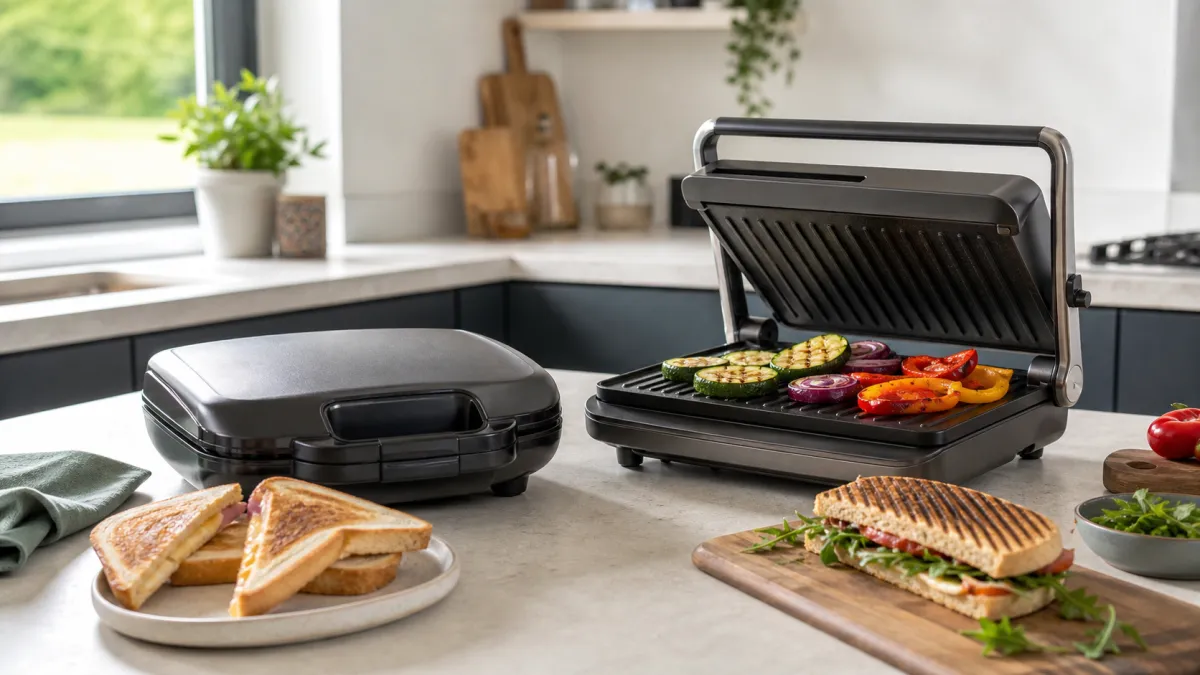
The visual split is simple: sealed toasties favour the sandwich toaster, bigger pressed sandwiches favour the grill, and plain toast still belongs to a toaster.
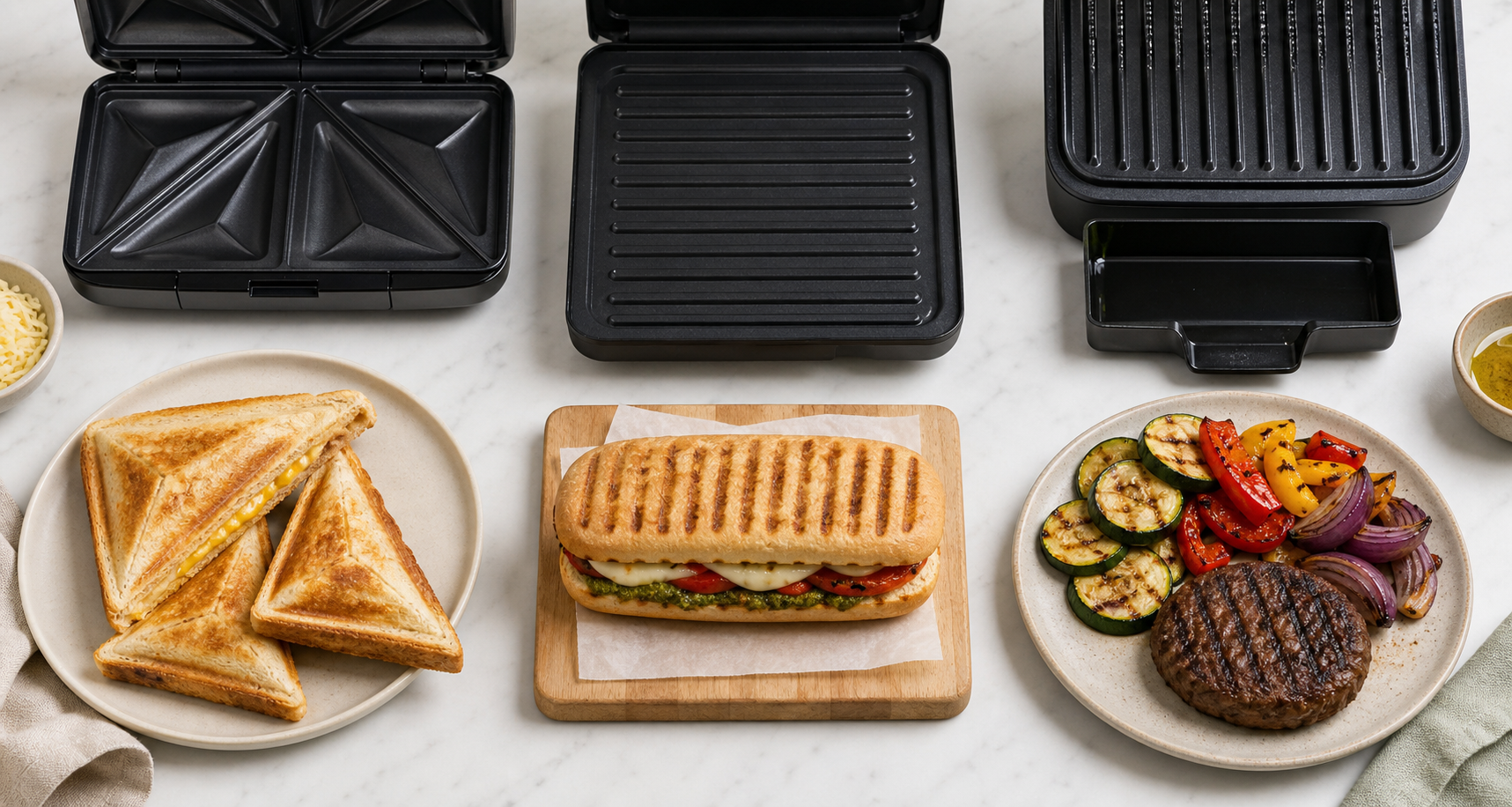 Sealed toasties, larger pressed sandwiches and grill cooking point to different appliance choices.
Which one fits your household?
For students, compact flats and occasional lunches
A sandwich toaster is usually the easier specialist buy. It is cheaper, smaller and more focused. Only choose an indoor grill if you genuinely want to cook vegetables, halloumi, bacon or burgers as well as bread-based lunches.
For families and shared lunches
An indoor grill can be more useful if several people want different fillings or larger bread. Check the cooking surface size carefully, because a compact grill may still cook only one large sandwich at a time.
For toastie loyalists
Choose the sandwich toaster and spend your attention on plate depth, latch strength, removable plates and storage. A grill may look more versatile, but it will not seal toasties in the same classic way.
For flexible weekday cooking
Choose an indoor grill if you want a small lunch-and-dinner tool, not just a toastie maker. The best fit is someone who will use it for vegetables, bread, protein and leftovers often enough that cleaning it feels worthwhile.
Buy the appliance that solves the repeat job
A sandwich toaster is the better buy for compact, sealed toasties and small kitchens. An indoor grill is the better buy when you want panini-style sandwiches, grilled vegetables and broader weekday cooking from one appliance. A normal toaster remains the smartest option when your real need is simple toast rather than another cooking gadget.
The main mistake is buying versatility you will not clean. If the appliance will live in a cupboard because the plates are awkward or the footprint is annoying, the cheaper and simpler option will probably serve you better.
Sources and checks
These references help shoppers check the appliance formats and food-safety points behind the buying advice.
- Breville UK Deep Fill Sandwich Toaster: see how a classic sealed sandwich toaster uses deep plates, cut-and-seal shaping, wipe-clean plates and upright storage.
- George Foreman UK grills: compare common indoor-grill features such as removable plates, drip trays, variable temperature and vertical storage.
- Food Standards Agency cooking guidance: check thorough-cooking advice if you plan to cook burgers, sausages, poultry or similar foods on an indoor grill.