In this article
A matching kettle and toaster set is worth considering when both appliances genuinely fit your day-to-day use and the shared style helps a small kitchen feel calmer. It is less convincing when the pair looks tidy but one half falls short on capacity, slot size, cleaning or controls.
The safest way to shop is simple: judge the kettle and toaster separately first, then treat the matching look as the bonus. If the toaster will not take your bread properly, or the kettle is awkward to fill and descale, the set is not good value however smart it looks on the worktop.
Best quick rule: buy a set only when you would still shortlist both appliances if they were sold separately.
Start with what you are really buying
A set is not a third type of appliance. It is usually a kettle and toaster from the same range, sold together or styled to match. That can be useful because these are the two appliances many people leave out all day, especially around breakfast and hot drinks.
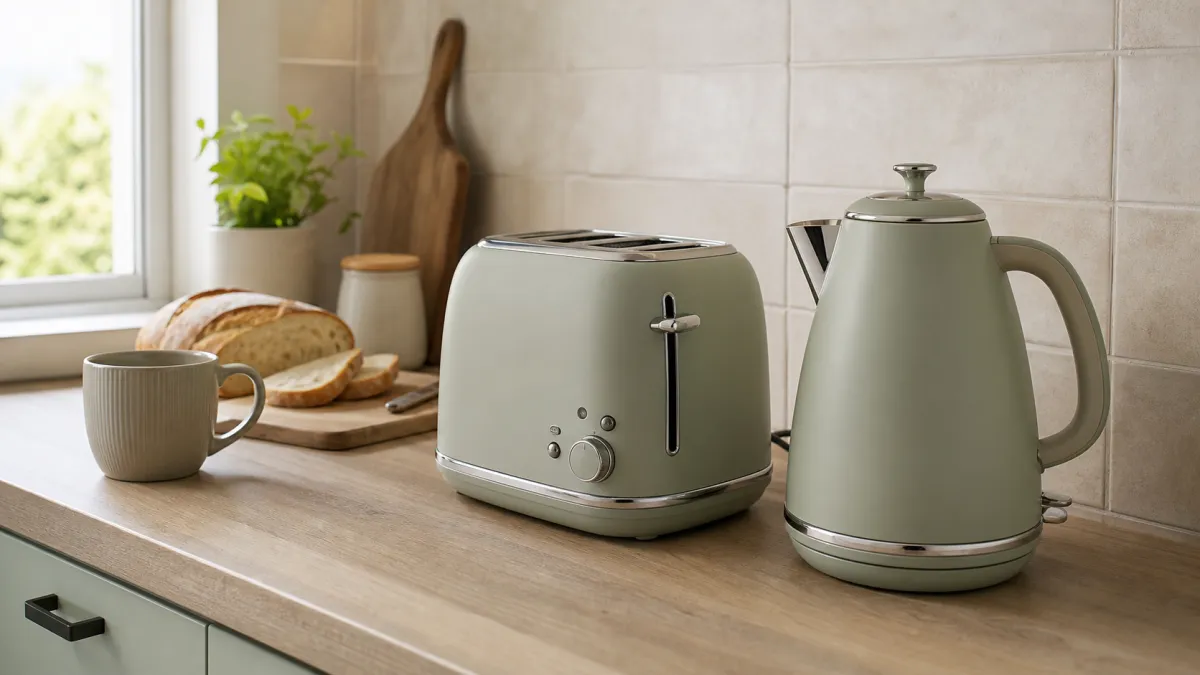
The risk is that the set makes you buy for style before usefulness. A brushed steel pair can look more expensive than it is. A cream, black or sage green pair can make a rental kitchen feel more pulled together. But the appliances still have to do ordinary jobs well: boil the amount of water you need, pour neatly, toast evenly and clean without becoming a nuisance.
If your current problem is mainly the pair looking mismatched or messy, start with our kettle and toaster sets shortlist. If only one appliance is underperforming, compare kettles or toasters separately before assuming a set is the better buy.
Where matching sets make sense
Matching sets are strongest when the kettle and toaster are both everyday appliances that stay out on the worktop. In a compact flat, open-plan room or shared kitchen, a pair that goes together can make the kitchen look less cluttered.
They also help when you are setting up a kitchen from scratch. Buying the pair together can be quicker than trying to match colours across different brands later, and it can make the breakfast corner look more considered without paying for a full kitchen refresh.
- First homes and rental kitchens: a tidy pair can make basic worktops feel more finished.
- Small kitchens: a matching pair can make the worktop feel less busy, especially if both stay out permanently.
- Gift or moving-home buys: a set is a cleaner choice than two unrelated appliances when you do not already own either item.
- Kitchens where looks matter: colour and shape matter more when the appliances are part of the room's look.
That does not make every set good value. It means the look has a real job. If the set makes a space you see every day feel tidier, the style can be part of the buying decision rather than just a nice extra.
Where separate appliances are better value
Separate buying is usually better when one appliance matters much more than the other. A household that makes lots of tea may care about kettle capacity, minimum fill, limescale filters and pouring comfort, while the toaster is used only at weekends. A family that makes toast every morning may need a four-slot toaster with wide slots, but be perfectly happy with a simple kettle.
Buying separately also helps you avoid awkward bundles. Some matching ranges look smart but give you a basic toaster with short slots, limited browning control or awkward crumb-tray access. Others pair an attractive kettle with a toaster that is too large for the worktop. If your needs are uneven, matching can cost more by making the weaker appliance harder to replace later.
Check the kettle before the colour
The kettle should be judged like a kettle first. Start with capacity, minimum fill, handle comfort, water-window visibility, lid opening and limescale control. Minimum fill means the smallest amount of water the kettle is designed to boil safely. It matters because a high minimum fill can make you boil more water than you need for one mug.
In hard-water areas, a removable limescale filter and an opening wide enough for cleaning can matter more than the colour. A beautiful kettle that is awkward to descale will look tired quickly. If you make tea rounds often, capacity and pouring comfort should outrank the set discount.
Check the toaster like it has to work alone
The toaster half deserves just as much attention. Slot length and width decide whether it fits the bread you actually buy, including taller slices, crumpets, bagels or sourdough. Browning controls should be easy to repeat, and the crumb tray should be simple to remove without dragging the toaster across the worktop.
A two-slot toaster can be enough for one or two people. A four-slot toaster makes more sense when several people eat together or you regularly toast different breads at once. Do not let a matching kettle push you into the wrong toaster size. If the toaster is the appliance you use most, the right slot design is more important than a perfect colour match.
The value question is not only the set price
A set can look cheaper because the pair price is lower than buying two premium appliances separately. But the real value depends on whether both parts earn their place over several years. If the kettle is excellent and the toaster is merely acceptable, you may be buying a future replacement problem.
| Choice | Best when | Watch out for |
|---|---|---|
| Matching set | You need both appliances, both sets of features suit you, and the pair will stay out on show. | The matching look can hide weak toaster slots, awkward kettle cleaning or limited controls. |
| Separate kettle and toaster | One appliance matters more, you need a specific size, or you want the best value in each category. | The worktop may look less coordinated unless you choose colours carefully. |
| Replace only one appliance | The other appliance still works well and suits your routine. | You may not be able to match the older colour or style later. |
Replacement risk is the set's hidden drawback
The biggest downside of a matching set appears after purchase. Kettles and toasters do not always age at the same speed. A kettle may scale, leak or feel too small before the toaster has any problem. A toaster may brown unevenly, jam with thicker slices or become too small for a growing household while the kettle is still fine.
Once one half needs replacing, the set can become awkward. The exact range or colour may no longer be available, or the newer version may have a different trim. That does not mean you should avoid sets, but it does mean you should buy one because both appliances work for you now, not because you assume the matching look will be easy to keep forever.
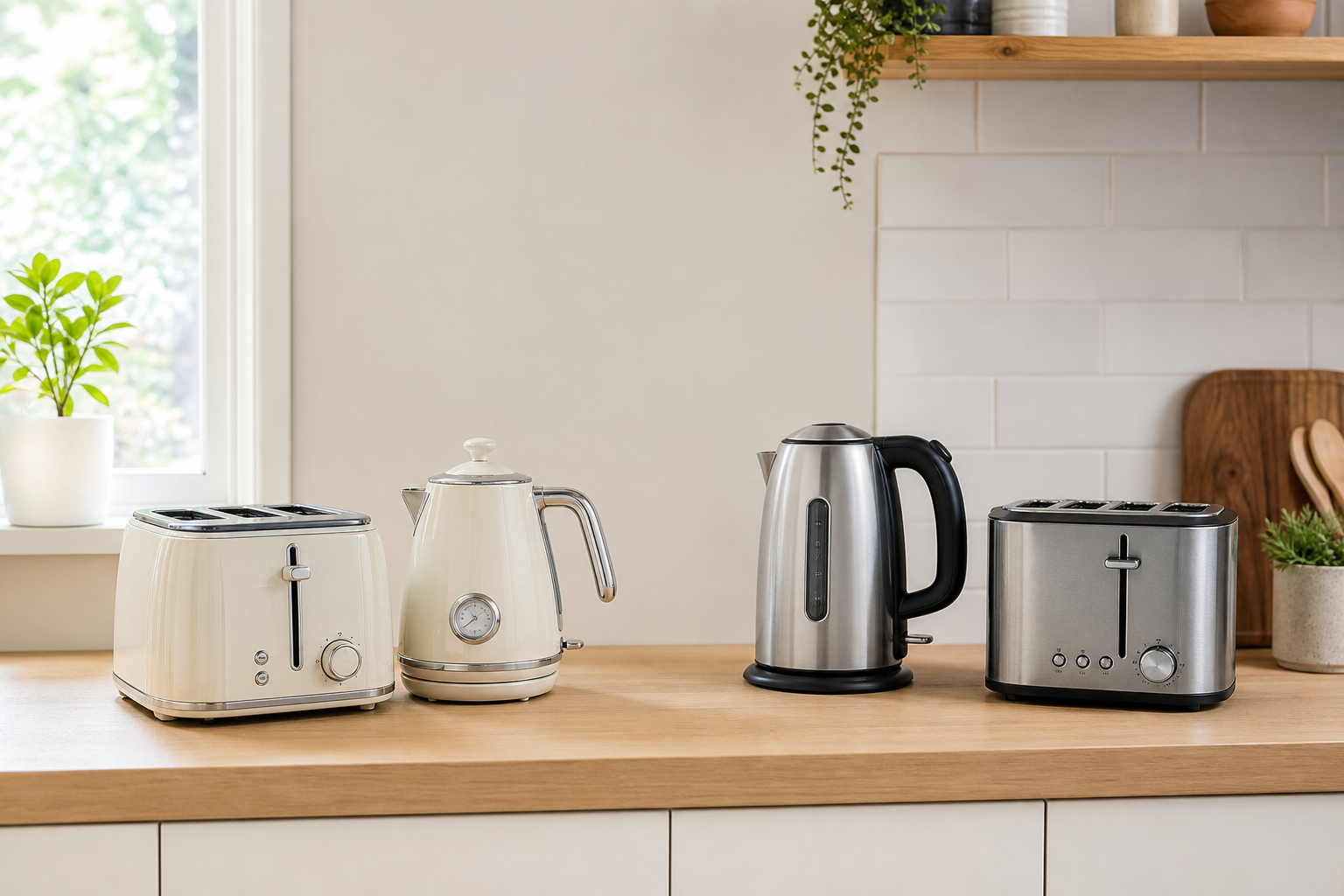
A matching pair can calm the worktop, but separate appliances may give you a better kettle or toaster for the way you actually use them.
Small kitchens need consistency, not clutter
In a small kitchen, a matching set can be useful because it gives the breakfast corner a clearer look. The appliances feel chosen rather than collected over time, and a shared colour can make open shelving or shallow worktops feel calmer.
Space still matters more than style. Check the toaster depth, the kettle handle position, lid clearance under wall cupboards and where the cords will run. If the pair forces you to use an extension lead or crowd several high-use appliances around one socket, rethink the layout. A tidy-looking set is not a win if it makes the worktop harder to use.
What will still look good after six months?
Colour is part of the appeal, but some styles are easier to live with than others. Gloss black and mirror chrome can show fingerprints quickly. Pale cream can soften a small kitchen but may show marks near the toaster slots. Brushed steel is usually easier to blend with other appliances, while bold colours are more likely to date if the rest of the room changes.
Look at the parts you touch, not only the side panels. Handles, levers, buttons, knobs and lids often show wear first. If the set has decorative trim, ask whether that trim will still look good once the toaster has crumbs around the slots and the kettle has water marks around the spout.
Feature trade-offs to avoid
Matching sets are most disappointing when the style is doing all the selling. Avoid any pair where the kettle or toaster fails a basic daily-use check.
- Short toaster slots: poor fit for taller bread can become annoying every morning.
- Weak browning controls: a pretty toaster still needs repeatable results.
- Awkward crumb tray: cleaning should not require lifting or shaking the toaster.
- High kettle minimum fill: this can waste water for single mugs.
- Poor water visibility: a stylish body is less useful if you cannot see how much water is inside.
- Hard-to-clean lid or filter: limescale care should be easy, not hidden behind the styling.
So, are matching kettle and toaster sets worth it?
Matching kettle and toaster sets are worth it when they solve two problems at once: both appliances suit your day-to-day use, and the shared style makes your worktop feel tidier. They are especially sensible for first homes, compact kitchens and anyone replacing both appliances at the same time.
They are not worth it when you are mainly paying for the look. If the kettle is awkward, the toaster slots are wrong, or one appliance matters far more than the other, buy separately. A coordinated kitchen is nice; a kettle and toaster that work properly every day is better.
Sources and checks
If the set will sit near other plug-in appliances, this check is worth doing before you choose where it goes.
- Electrical Safety First socket-overload guidance explains how to check plug, adaptor and extension-lead use before grouping several appliances around one socket.