In this article
A teppanyaki grill and a hot plate can look almost identical in a product photo: a flat heated surface, a plug, a temperature dial and enough space to cook small pieces of food in front of guests. The names are not always used consistently, though, so the better buy depends on what the appliance is actually built to do.
In plain English, a teppanyaki grill is usually a flat electric plate for tabletop cooking. A hot plate is a looser term. It can mean a similar flat griddle, but it can also mean a portable hob ring, a buffet warmer or a basic counter appliance that is not designed for shared cooking at the table.
For most UK kitchens, the safer way to shop is to ignore the name first and check the surface, controls, grease handling and cleaning parts. A good teppanyaki-style grill should make shared cooking feel easy. The wrong hot plate can take up the same space without doing the job you had in mind.
First, check what the seller means by hot plate
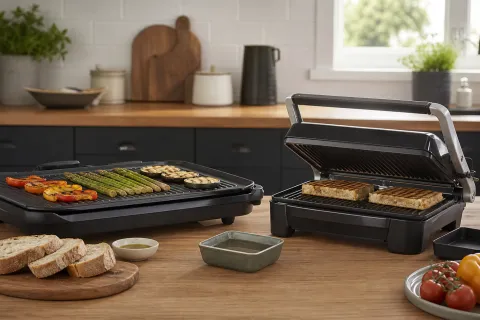
The word hot plate is useful only when the listing makes the design clear. If the appliance has one or two circular cooking rings, it is closer to a portable hob than a tabletop grill. If it has a broad flat non-stick plate, raised edge, drip tray and table-friendly controls, it may work much like a teppanyaki grill.
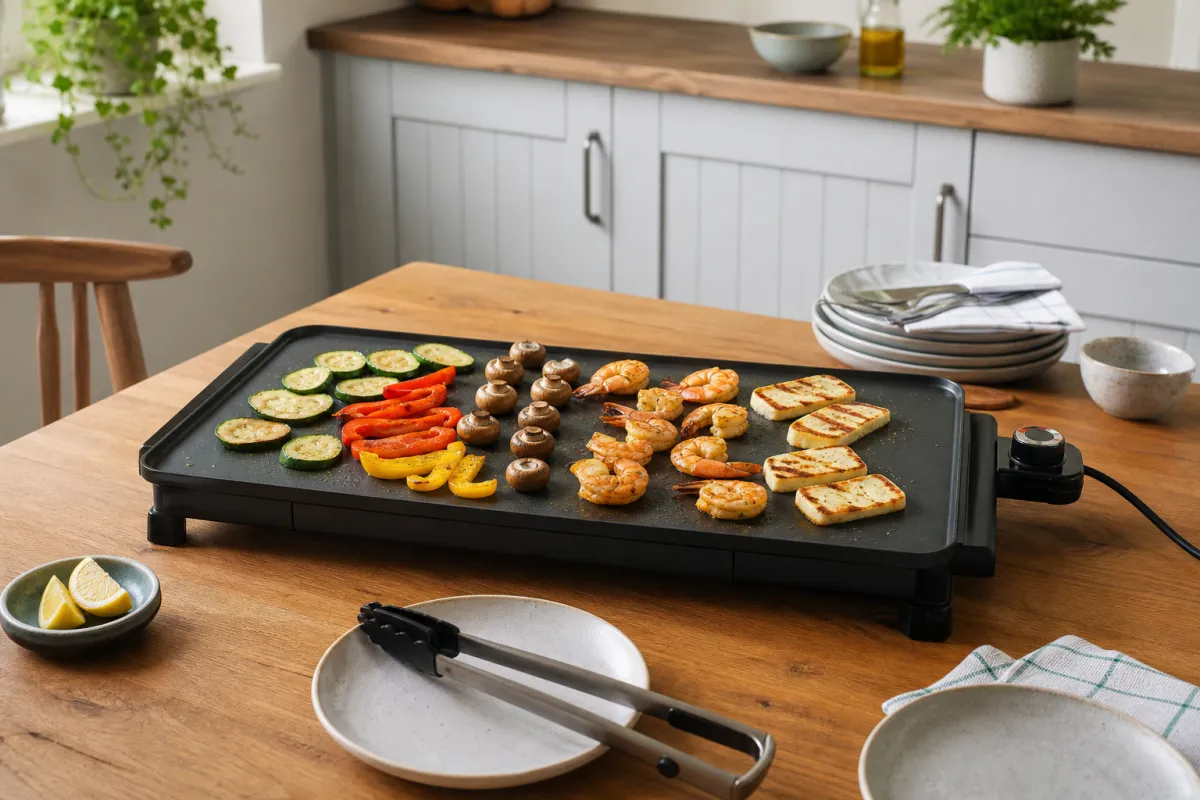
The key question is not the name on the box. It is whether the heated surface suits the meal you want to cook. Thin strips of vegetables, prawns, halloumi, sliced steak and pancakes suit a flat open plate. Thick burgers, chicken pieces and fatty meat need more careful heat control, drainage and food-safety checking.
| Buying check | Teppanyaki grill | Flat hot plate | When another grill is better |
|---|---|---|---|
| What it usually means | A wide flat electric cooking plate for open tabletop or counter cooking. | A broad term that may mean a flat griddle, portable hob or warming plate. | Choose an indoor grill if you want a lid, ridged plates or stronger grease control. |
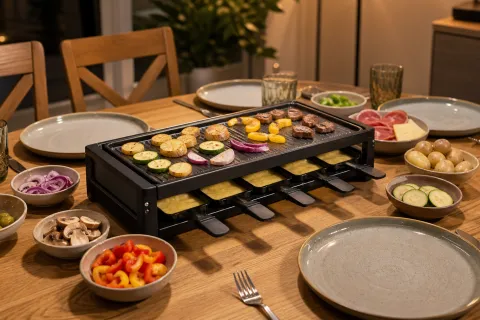
| Best for | Shared meals, sliced ingredients, vegetables, seafood, pancakes and quick table cooking. | Only similar jobs if it is genuinely a flat griddle-style plate. | Choose raclette for melted cheese, individual pans and slower social meals. |
| Table space | Needs room for the plate, ingredients, cooked food, individual plates and a safe power lead. | Can be awkward if the design is deeper, taller or not intended for the dining table. | A contact or lidded indoor grill may sit better on a worktop away from the table. |
| Temperature control | Look for a clear adjustable dial, stable heat and enough control to avoid burning delicate food. | Varies widely; some are basic on/off warmers rather than flexible cooking appliances. | A lidded grill can be better for thicker food that needs heat from above and below. |
| Oil and grease | A raised edge, slight slope or removable drip tray helps stop oil spreading across the table. | Check this carefully; flat plates without useful edges can be messy. | Indoor grills often give you a clearer grease path for fatty meat. |
| Cleaning | The easiest models have a simple flat surface, removable tray and few awkward seams. | Can be easy, but only if the plate, edges and controls are designed for wipe-down cleaning. | Removable grill plates may be better if you regularly cook sticky marinades or meat fat. |
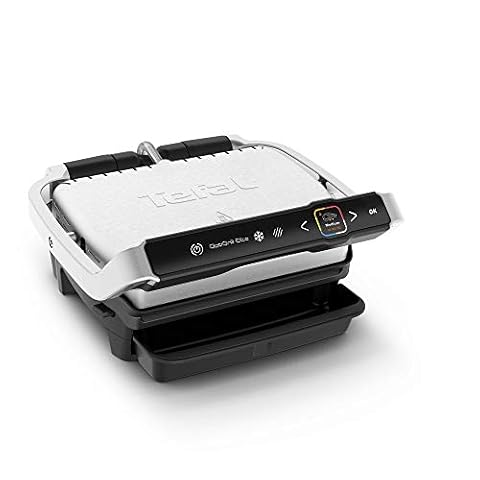
If this already sounds like the appliance you want, start with our teppanyaki grill guide. If you are really after weekday grilled sandwiches, burgers or chicken, compare indoor grills instead. For cheese-led shared meals with little pans, our raclette grill guide is the better place to begin.
Table space matters more than plate size
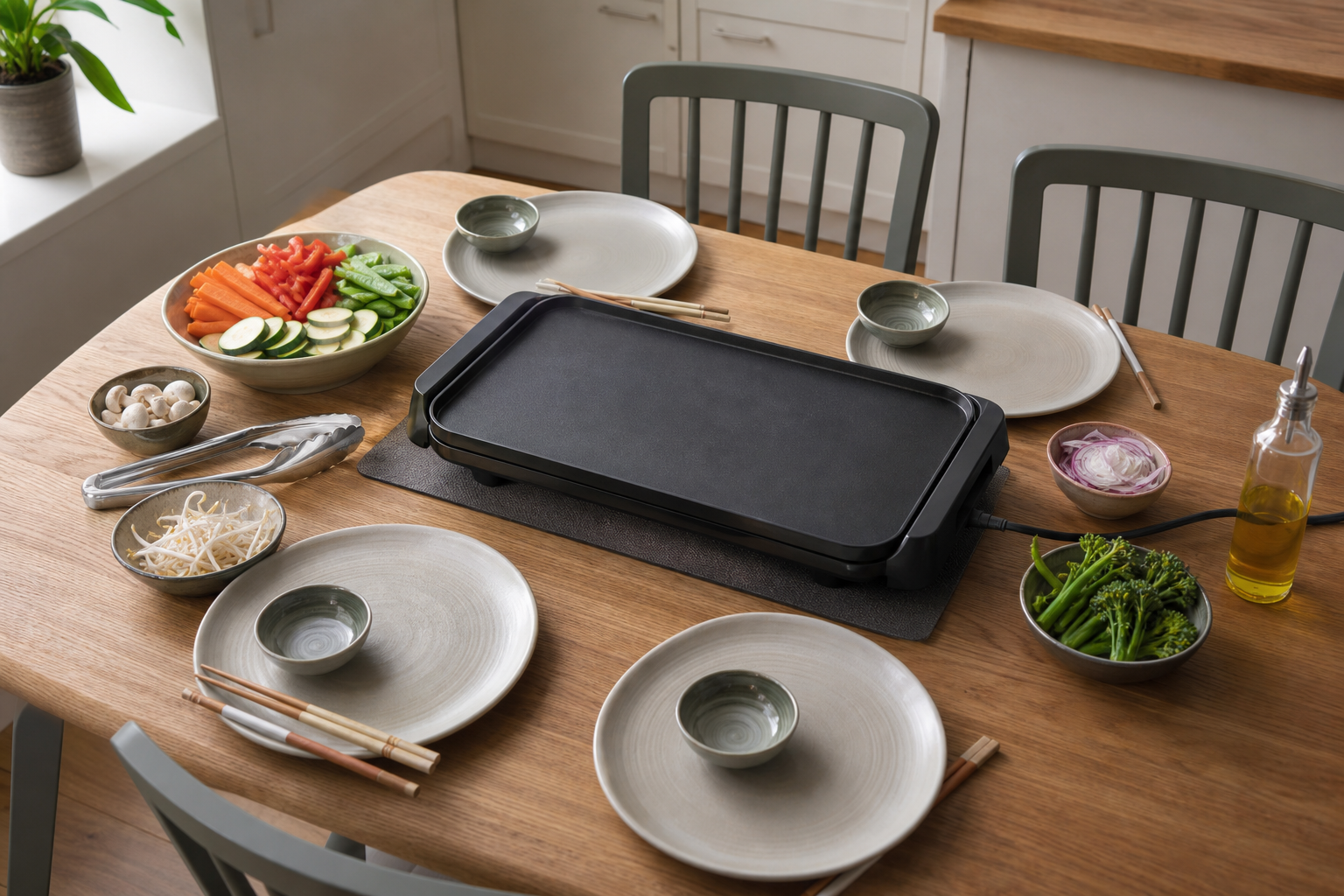
A large flat plate looks generous until you put it in the middle of a real table. You still need plates, serving bowls, utensils, sauces, a heatproof resting place and a sensible path for the power lead. If the grill leaves guests reaching across hot edges or trailing a cable between plates, it will feel more awkward than sociable.
For two people, a compact plate can be more pleasant than an oversized one because the food stays within reach and the table stays usable. For four or more, check the whole footprint rather than just the stated cooking area. A wide grill may cook more at once, but it can push ingredients and cooked food to the edge of the table.
Space check: measure the table with dinner plates in place, not just an empty worktop. The grill needs a safe central spot plus room for raw and cooked food to stay separate.
Temperature control decides how flexible it feels
Flat cooking gives you direct contact with the food, which is useful for vegetables, thin meat, prawns, pancakes and small pieces that cook quickly. It also means there is nowhere to hide poor heat control. A plate that runs too hot can scorch oil and sticky marinades. A plate that struggles to recover heat can steam food instead of browning it.
Look for a clear adjustable temperature control rather than a vague warm/hot switch. A removable probe-style controller can be convenient because it keeps the control away from the washing area, but it also needs to fit securely and be easy to remove before cleaning.
Teppanyaki-style cooking works best with small, evenly cut food. If you mainly want to cook thick burgers, chicken thighs or sausages indoors, a lidded indoor grill may be more forgiving because it gives heat from more than one direction.
Oil, drainage and smoke are linked
A flat plate does not automatically mean cleaner cooking. Oil, marinade and meat juices need somewhere to go. Some teppanyaki grills have a shallow channel, raised lip or removable drip tray. Others rely mostly on the cook using less oil and wiping the plate as they go.
That matters for smoke as well as mess. Oil sitting on a hot surface can smoke, especially if sugary marinades or fatty meat are involved. A drip tray will not remove every smell, but it can keep liquid away from the hottest part of the plate and make the clean-up more predictable.
- For vegetables, halloumi and seafood: a flat teppanyaki-style plate can feel flexible and fun.
- For fatty meat: look carefully for a grease channel, drip tray and easy access for wiping.
- For thick raw meat or poultry: check cooking thoroughly rather than judging by browning alone.
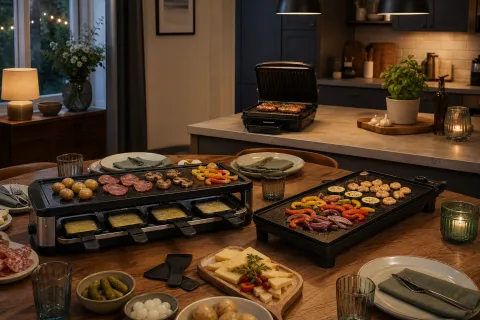
A raclette grill can be calmer for leisurely group meals because much of the cooking happens in small pans or on a modest top plate. An indoor grill can be better for grease-heavy food because the plate shape and drip tray are usually central to the design.
Cleaning: flat is simple, but only if the edges behave
The appeal of a teppanyaki grill is that the main cooking surface is flat. There are no deep ridges to scrub and no sandwich plates to unclip. In everyday use, that can make cleaning easier than a contact grill, especially after vegetables, pancakes or lightly oiled food.
The harder parts are the edges, corners, drip tray and control area. A raised rim that catches oil is useful while cooking, but annoying if it traps burnt bits. A drip tray is helpful only if it slides out cleanly and does not spill on the way to the sink. Non-stick coating also needs careful utensils and gentle cleaning; metal tools can shorten the life of the plate.
Before buying, imagine cleaning it while it is still slightly greasy but cool enough to handle. If the plate is fixed, the whole appliance must be wiped safely without getting electrical parts wet. If parts are removable, check exactly which pieces can go in the dishwasher rather than assuming the whole cooking surface can.
When a hot plate is the wrong buy
A hot plate is the wrong buy when the listing is really selling a portable hob, buffet warmer or very basic warming surface. Those appliances can be useful, but they do not replace a teppanyaki grill for shared cooking. A hob-style plate is built for a saucepan or frying pan, not for guests cooking small pieces of food directly on the surface.
Be especially careful with compact single-ring hot plates if your search started with tabletop grilling. They may be good for caravans, temporary kitchens or extra hob space, but they will not give you the same open cooking area. A warming tray may keep dishes hot, but it is not designed to brown food at the table.
| If the listing shows... | Treat it as... | Best next step |
|---|---|---|
| One or two round rings | A portable hob or extra cooking ring. | Buy only if you need saucepan or frying-pan support, not shared tabletop grilling. |
| A wide flat non-stick plate | A possible teppanyaki-style grill or griddle. | Check temperature control, grease handling, edge design and cleaning instructions. |
| A low tray for keeping dishes warm | A buffet warmer or warming plate. | Useful for serving food, but not a substitute for a cooking grill. |
| Ridges, a lid or press plates | An indoor grill or contact grill. | Better for pressed sandwiches, burgers and foods where drainage matters. |
When raclette or an indoor grill makes more sense
A teppanyaki grill is at its best when the flat plate is the point: quick cooking, turning food in front of guests and sharing ingredients in the middle of the table. It is less convincing if you mainly want melted cheese, covered cooking or a weekday grill that lives on the worktop.
Choose a raclette grill if the meal is more about slow sharing, cheese, potatoes, small pans and relaxed entertaining. Choose an indoor grill if you want stronger everyday usefulness for sandwiches, meat, fish, vegetables and controlled drainage away from the table.
The overlap is real, but the mood is different. Teppanyaki is active flat-plate cooking. Raclette is slower individual-pan eating. Indoor grilling is usually more practical and less theatrical.
The better buy is the one that matches the meal
Buy a teppanyaki grill if you want a broad flat surface for sociable cooking, sliced ingredients and a table-centred meal where people can cook and serve as they go. It is the clearer choice when the appliance will genuinely sit in the middle of dinner rather than behave like an extra hob.
Buy a hot plate only when the listing clearly describes the style you need. If it is a flat griddle-style plate with useful heat control, raised edges and a removable drip tray, it may do the same job. If it is a hob ring or warmer, it belongs to a different buying decision.
For many households, an indoor grill is still the stronger everyday appliance, and a raclette grill is the more relaxed entertaining buy. A teppanyaki grill earns its space when the flat plate itself is what makes the meal more enjoyable.
Sources and checks
These links help you check safety points that matter when an electric grill is used on a table or worktop.
- Electrical Safety First ovens and grills guidance: check advice on plugs, extension leads, positioning, cooling and cleaning before using a tabletop electric grill.
- GOV.UK cooking your food guidance: useful if you plan to cook burgers, sausages, poultry or other foods where browning alone is not enough.