In this article
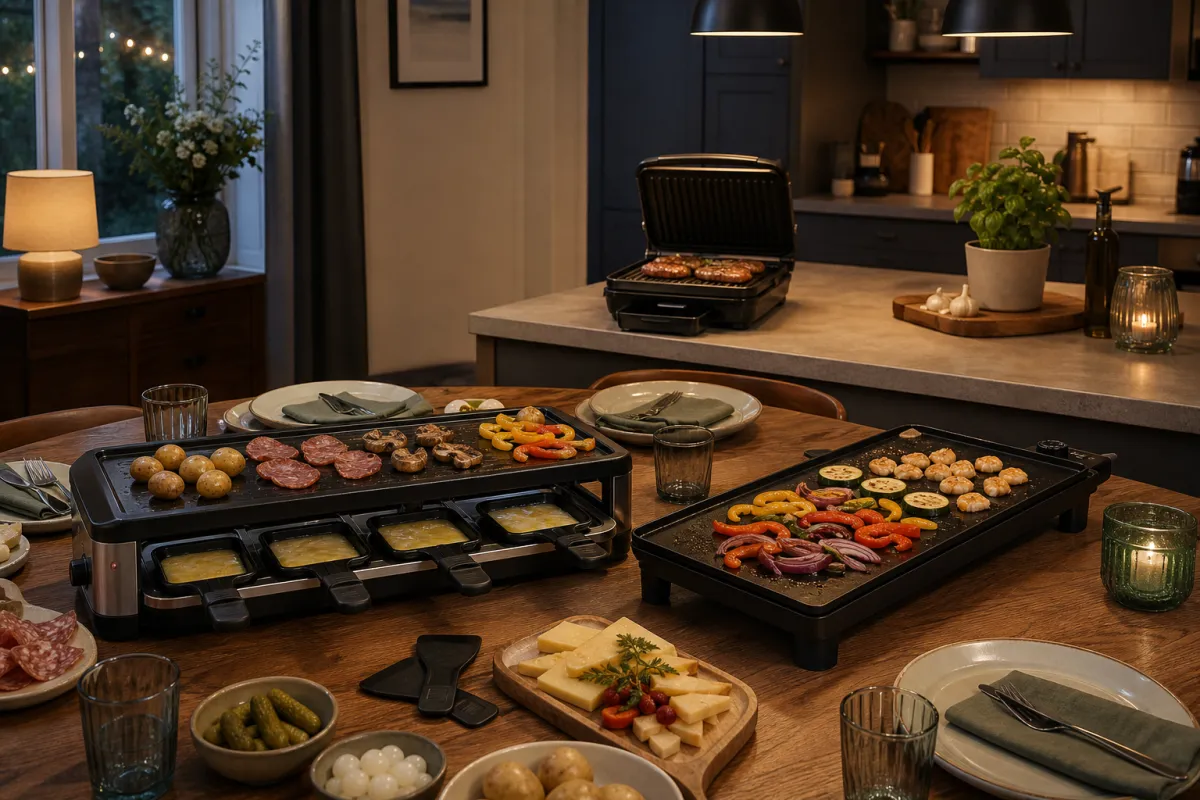
These appliances all put an electric cooking surface on a table or worktop, but they solve different problems. A raclette turns dinner into a slow, shared activity. A teppanyaki grill gives you one long, open hotplate for cooking in batches. An indoor grill is normally the practical kitchen choice for burgers, chicken, fish, toasties and vegetables.
Choose raclette for sociable meals, teppanyaki for flexible flat-plate cooking, and an indoor grill for faster everyday use. The difficult part is not deciding which looks most entertaining. It is deciding where the appliance will sit, how much smoke and washing up you will tolerate, and whether you want guests to cook at the table or food to arrive ready to eat.
The three formats do not create the same meal
| Format | Best for | Cooking style | Main compromise |
|---|---|---|---|
| Raclette grill | Long, shared meals where everyone cooks and melts their own portions | Food cooks on the top plate while individual pans melt cheese or warm small portions below | Many small parts to wash, a large table setup and a slower pace |
| Teppanyaki grill | Fajitas, breakfast, seafood, sliced meat and vegetables cooked on an open flat plate | One broad surface lets you turn and move food freely | Open cooking can spread grease, steam and smoke around the room |
| Indoor grill | Quicker weekday grilling, toasties, burgers, chicken, fish and vegetables | Ridged plates, often in a clamshell or lidded design, cook on one or both sides | Less of a shared-table experience and sometimes a smaller usable area |
Go straight to the format that fits
If the meal style is already clear, compare our raclette grills for shared cheese-and-grill evenings, teppanyaki grills for open flat-plate cooking, or indoor grills for everyday kitchen use.
Raclette is an event as much as an appliance
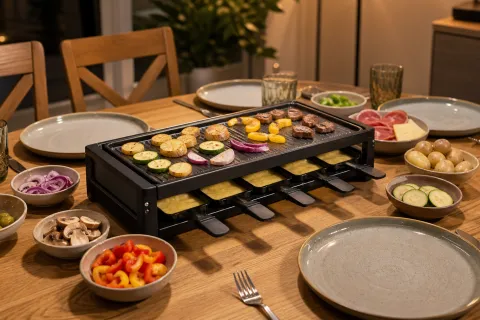
A raclette grill usually combines a top cooking plate with small pans that slide underneath the heating element. The top handles sliced meat, mushrooms, peppers, courgettes or potatoes while each diner uses a pan for cheese and small portions. That makes the appliance unusually good at keeping everyone involved.
The strength is control at the table. Diners can choose their own combinations, pace the meal and keep vegetarian ingredients separate more easily than they could with one mixed pan. It works particularly well when the point of the evening is to sit and talk rather than serve every plate at once.
The weakness is the same slow pace. A raclette is a poor answer to a quick dinner for two, and the top plate may not have the concentrated contact pressure or enclosed heat of an everyday indoor grill. Capacity claims also need scrutiny: eight pans do not necessarily mean eight people can cook generous portions on the top plate without queuing.
Count the pans, then measure the top plate. Check whether the cooking surface is flat, ridged, stone or reversible; whether the temperature is adjustable; and whether replacement pans and spatulas are available. If melted cheese is the only feature you care about, a smaller model may be easier to store and clean than a party-sized machine.
Teppanyaki gives you space to move food around
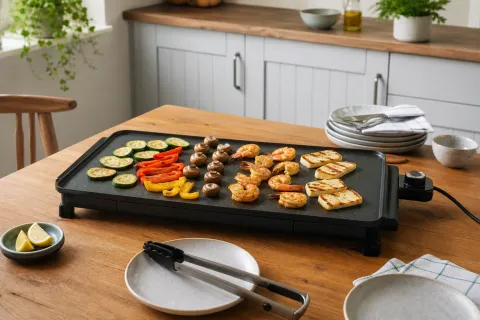
A domestic teppanyaki grill is essentially a long electric hotplate. Its flat surface suits chopped vegetables, prawns, fish, thin pieces of meat, eggs, pancakes and fajita ingredients because a spatula can slide underneath easily. You can keep cooked food on a cooler area while another batch sears, provided the model heats evenly enough.
That broad surface is useful for mixed diets and cooking in stages, but it is still one shared plate. Raw meat juices can travel, and a notional vegetable side is not suitable for someone who needs strict separation unless the instructions and setup genuinely support it. Use separate utensils and plates for raw and cooked food.
Teppanyaki also exposes the cooking process. Turning fatty meat, adding wet marinades and scraping ingredients across a hot plate can create splatter, steam and smoke. A drip channel and grease tray help only if liquid can reach them; a perfectly flat plate with a shallow lip can become messy when crowded.
Look for useful temperature control rather than the highest quoted heat alone. Delicate fish and vegetables benefit from control, while a loaded plate needs enough recovery to keep cooking rather than steaming. A detachable controller and immersible plate can simplify cleaning on some models, but the exact washing method is model-specific.
An indoor grill is the stronger everyday tool
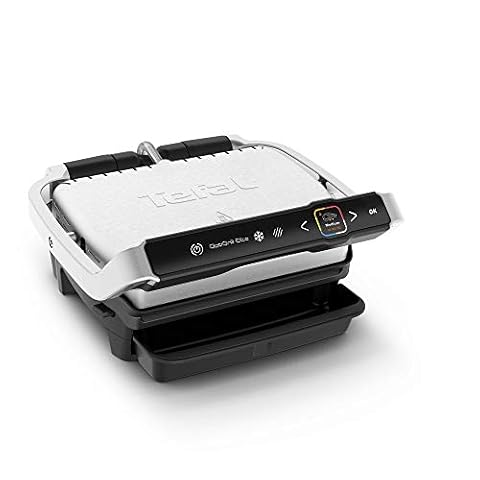
Indoor grills cover several shapes. A classic contact grill closes over food and cooks from both sides. Open ridged grills imitate a barbecue grate. Larger lidded models may add a flat plate, temperature probe, air-fry function or splatter screen. What joins them is a stronger focus on normal kitchen cooking than on passing pans around the dining table.
A clamshell grill is fast and compact for toasties, chicken portions, burgers, halloumi and sliced vegetables. Sloped plates and a drip tray can move rendered fat away from the food, while a floating hinge helps with thicker ingredients. The ridges create browned lines, though they reduce full-surface contact compared with a flat teppanyaki plate.
Lidded and screened designs can contain more splatter and reduce smoke, particularly when grease drains away from the hottest area. Low smoke does not mean no smoke. Fatty food, sugary marinades, old grease and oil heated beyond its smoke point can overwhelm the design. Good ventilation and prompt cleaning still matter.
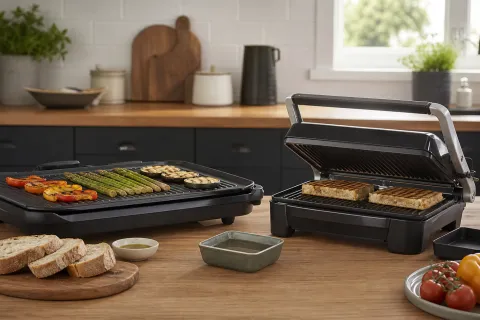
Do not pay for five cooking functions if you only want a toastie press. Equally, a larger indoor grill with interchangeable flat and ridged plates can replace a separate teppanyaki appliance when you want both surfaces but not table-centred entertaining.
Smoke depends on the food, heat and grease path
No electric tabletop grill can make high-heat cooking disappear into the background. Water turns to steam, browning creates aromas, and fat or sugary sauce on a hot surface can smoke. The appliance design changes where those by-products go.
Raclette: grease can collect on the top plate while cheese and crumbs gather around the pans and lower level.
Teppanyaki: the entire surface is open, so a crowded plate or wet marinade can spread steam and splatter.
Indoor grill: a lid, splatter screen, drip tray and controlled plate temperature may contain more mess, but those parts need cleaning to stay effective.
Use the extractor fan or open a suitable window where practical, keep the appliance clear of walls and cupboards as its manual requires, and remove old grease before the next meal. If smoke sensitivity is a major concern, favour a lidded low-smoke design and leaner food over an open teppanyaki plate in the middle of the room.
Cleaning is where enthusiasm often fades
Imagine the appliance after a meal, not in the product photograph. Raclette creates the most separate pieces: top plate, multiple pans, spatulas and the body around the heating element. Teppanyaki creates one large greasy surface that may be awkward to carry to the sink. A contact grill puts residue into ridges, hinges and a drip tray.
Removable plates are normally easier to clean than fixed ones, but dishwasher-safe claims are specific to the exact part and model. Non-stick surfaces need suitable utensils and gentle cleaning. The electrical body, lead and heating element should never be immersed unless the manufacturer's instructions explicitly describe a detachable, washable assembly.
The best grill is the one you can clean before grease hardens. Check how the controller detaches, whether the plate fits your sink or dishwasher, whether the drip tray slides out without spilling, and where eight small raclette pans will dry.
Table space and the power lead are buying criteria
A tabletop meal needs more room than the appliance dimensions suggest. Add dinner plates, raw ingredients, cooked-food dishes, sauces, utensils, hot pans and elbow room. Then plan a power-lead route that does not cross a walkway or invite someone to pull a hot appliance off the table.
Raclette and long teppanyaki plates suit a rectangular table where diners can reach the cooking surface without leaning over it. A large indoor grill may be better kept on a kitchen worktop, where one person cooks and brings finished food to the table.
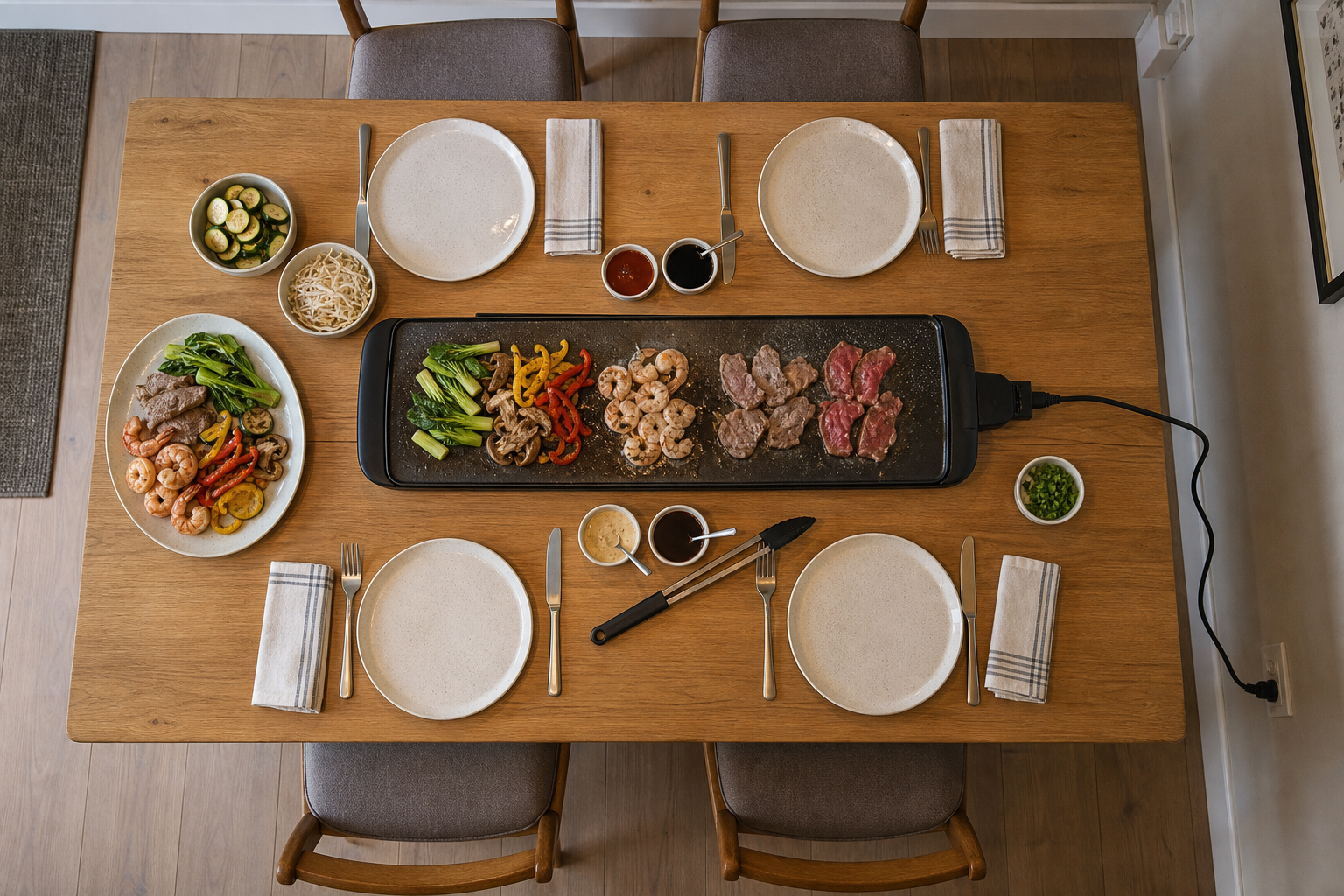 Measure the whole meal setup, not just the appliance: plates, raw and cooked food, utensils and the power lead all compete for table space.
Storage can reverse an apparently obvious choice. A slim teppanyaki plate may slide vertically into a cupboard if its controls detach, while an eight-person raclette can be broad and difficult to stack. Some contact grills store upright; larger lidded indoor grills may occupy as much room as an air fryer. Measure the shelf, including the plug, drip tray and accessories that must stay with the appliance.
Meat, fish and vegetables favour different surfaces
For thin meat, prawns, sliced vegetables and food that needs frequent turning, the flat teppanyaki surface is forgiving. A spatula reaches the whole ingredient, small pieces cannot fall between ridges, and you can move food between hotter and cooler areas if the plate has them.
For burgers, chicken portions, steaks, halloumi and toasties, a ridged or contact indoor grill is usually faster and tidier. Pressure from a top plate increases contact, but thick food can brown outside before the centre is ready if the heat is too aggressive. A floating hinge, temperature control and clean thermometer are more useful than decorative grill lines.
Raclette works best with small, quick-cooking pieces. It is not a reason to relax food safety. Poultry, pork, burgers, sausages and kebabs need thorough cooking; keep raw and cooked food, plates and utensils separate. If several guests are cooking, agree where raw food sits and where finished food goes before the first batch reaches the grill.
Use this checklist before you buy
Meal: do you want a shared activity or a faster way to cook dinner?
Surface: flat for small pieces and spatula work, ridged for drainage and grill marks, or both?
Capacity: can the usable plate cook a meaningful portion for the claimed number of people?
Smoke control: is there a lid, screen, grease channel or drip tray, and can you clean it easily?
Cleaning: which exact parts detach, fit the sink and are approved for dishwasher use?
Space: will the appliance, serving dishes and diners all fit safely on the table?
Power: can the supplied lead reach a suitable socket without a trip or pulling hazard?
Storage: where will the plate, pans, drip tray, controller and lead live together?
Which household suits each grill?
Choose raclette for relaxed group dinners
Raclette is the best fit when you enjoy long meals, guests like choosing their own ingredients, and the cooking is part of the entertainment. Skip it if you mainly cook for one or two, dislike washing small accessories, or need dinner finished quickly.
Choose teppanyaki for open, flexible hotplate cooking
Teppanyaki suits cooks who want one generous flat surface for vegetables, fish, breakfast and sliced meat. It is especially useful when spatula access matters more than ridges. Skip it if smoke and splatter are difficult to manage or your table cannot accommodate the plate and serving dishes.
Choose an indoor grill for repeat weekday use
An indoor grill is the sensible default when the appliance will live in the kitchen and cook familiar meals several times a week. Choose removable plates and effective grease management if easy cleaning matters. Skip a large multifunction model if a frying pan or simple toastie press already covers the jobs you repeat.
Verdict: buy the meal, not the novelty
A raclette is the most sociable choice. It earns its cupboard space when you will regularly build evenings around the appliance and do not mind a slower meal or several parts to wash.
A teppanyaki grill is the most flexible open surface. It is the right choice for moving small ingredients around a broad flat plate, but it demands table room and realistic expectations about smoke and splatter.
An indoor grill is the best everyday buy for most households. It is usually faster, easier to contain and better suited to cooking on a worktop before serving. A hybrid model with flat and ridged plates can cover much of the teppanyaki use case without becoming a permanent dining-table appliance.
The useful final question is not which grill can cook the longest list of foods. It is which style of meal you will repeat often enough to justify the cleaning and storage.
Sources and checks
These UK pages help you verify the safety, cooking and cleaning details that vary between tabletop grills.
Electrical Safety First grill safety: check how to position, power, inspect and clean an electric grill safely.
Food Standards Agency cooking guidance: check thorough-cooking and thermometer advice for poultry, pork, burgers, sausages and kebabs.
Tefal UK raclette instructions: see the parts, cooling time and model-specific cleaning checks involved in a typical raclette setup.
Ninja UK indoor grill and flat plate: see how interchangeable surfaces, a lid and grease catch can combine indoor-grill and teppanyaki-style cooking while reducing smoke and splatter.