In this article
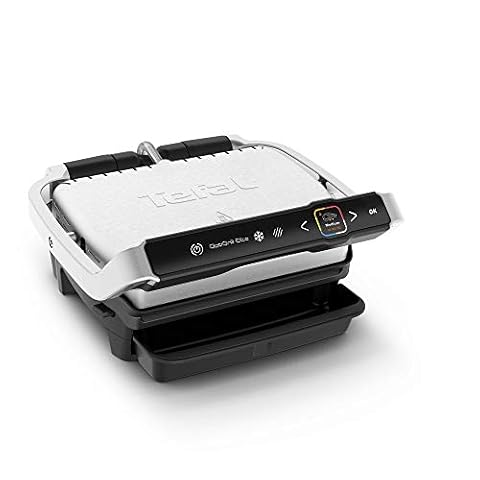
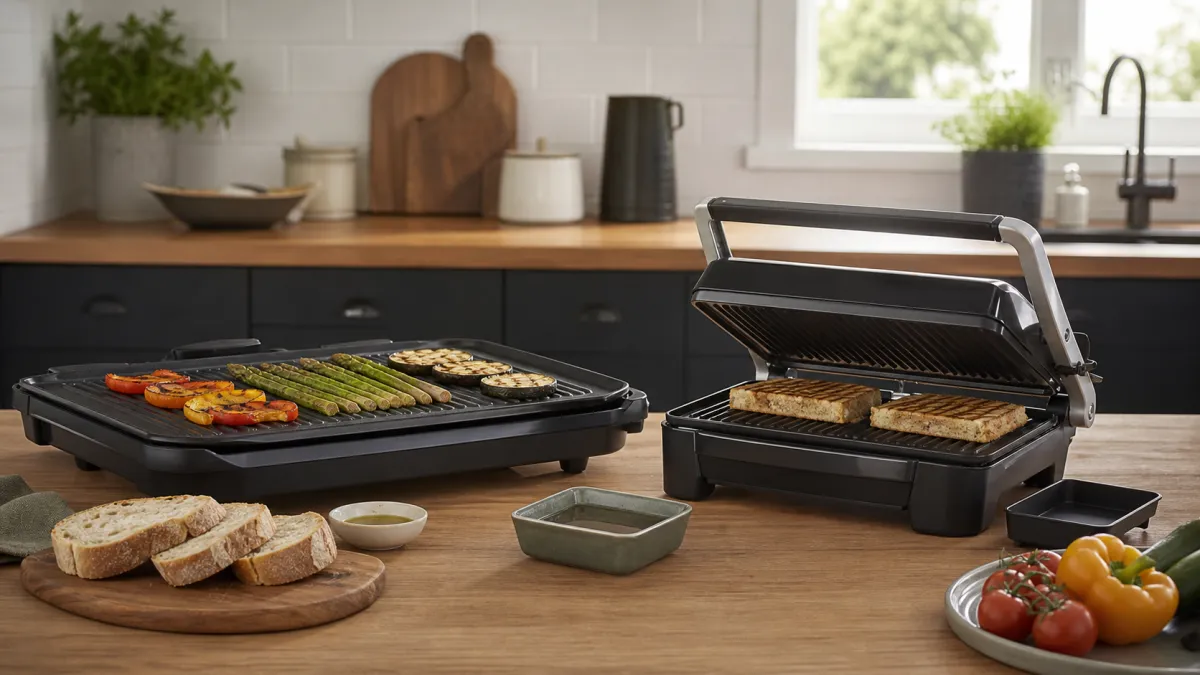
An indoor grill is any countertop electric grill designed for use in the kitchen. A contact grill is a more specific style: it has a hinged lid with a second hot plate, so food is pressed and heated from above and below at the same time.
The simple difference is movement. On an open indoor grill, you move and turn the food yourself. On a contact grill, the lid does some of that work by pressing the food between two heated plates. That affects how sandwiches crisp, how fat drains, how much smoke you create, how awkward the plates are to clean and how easily the appliance stores away.
The names overlap more than shoppers expect
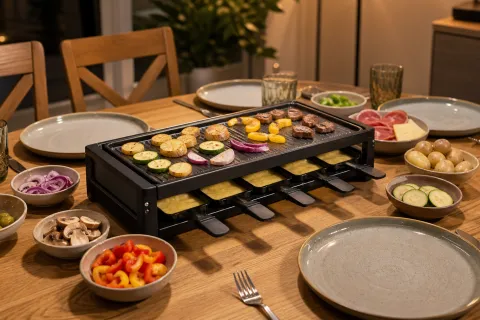
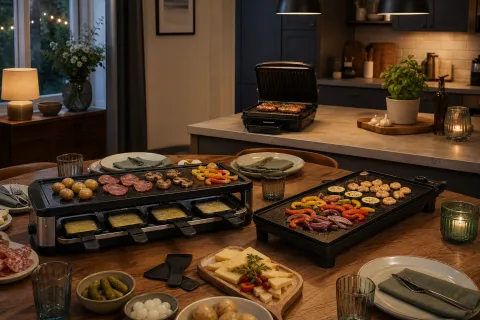
Retailers do not always use the terms consistently. Some pages call almost every electric grill an indoor grill. Others use contact grill for a George Foreman-style hinged appliance, panini press, health grill or two-sided grill. Hybrid models can open flat, swap between ribbed and flat plates, or include both grill and griddle surfaces.
That means the product name matters less than the physical shape. When you compare models, look for these details first:
- Does it have a heated top plate? If yes, it can work as a contact grill.
- Can it open flat? Some hinged grills double the cooking area when opened fully.
- Are the plates removable? This often matters more for long-term use than an extra cooking programme.
- Where do juices go? A proper drip tray and slight plate angle can reduce mess.
Which format fits the job?
| What you want to cook | Better fit | Why |
|---|---|---|
| Panini, ciabatta and pressed wraps | Contact grill | The heated top plate presses and browns both sides at once. |
| Mixed vegetables, halloumi and flatbreads | Open indoor grill or hybrid grill | You can move pieces around and avoid crushing delicate food. |
| Classic sealed toasties | Sandwich toaster | A toastie maker seals edges better than most grill plates. |
| Eggs, pancakes and delicate foods | Flat plate or non-stick frying pan | A smooth surface is usually easier than ridges or a heavy lid. |
| Burgers, bacon and meat portions | Contact grill with removable plates and drip tray | Two-sided heat and drainage can help, but thickness and thorough cooking still matter. |
If this already points you towards the broader appliance, start with our indoor grill guide. If the real job is sealed cheese toasties, our sandwich toaster guide is the more focused route. For eggs, fish and everyday hob cooking, a good non-stick frying pan may still be the more useful buy.
Open indoor grills feel more like hotplates
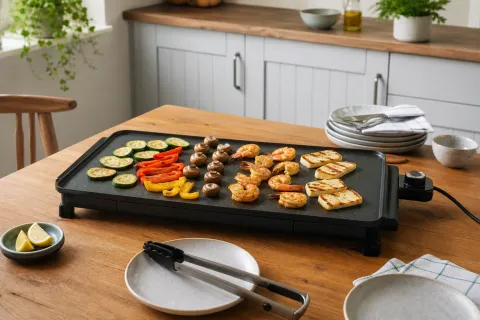
An open indoor grill gives you one heated surface. It may be ridged like a grill pan, smooth like a flat plate, or reversible. You place food on the surface, turn it when needed and move pieces around as they cook.
This style suits food that benefits from space: vegetables, halloumi, fish fillets, flatbreads, bacon, skewers and smaller burgers. It also suits households that want to see and manage the cooking rather than close a lid and hope the thickness is right.
If you want to shuffle food around, cook mixed vegetables, or keep delicate items from being squashed, an open grill is usually easier to live with.
The trade-off is that open grills normally cook from one side at a time. You may need to turn food, manage hot spots and allow more cooking time. They can also release more steam, smell and cooking vapour into the kitchen because the food is exposed.
Contact grills are built for pressing
A contact grill has a hinged upper plate that lowers onto the food. This makes it useful for panini, ciabatta, wraps, bacon, burgers, chicken pieces and vegetables that benefit from firm contact with the hot plates. The hinge may float to handle thicker food, or it may sit at a fixed angle on cheaper models.
Contact cooking can be quicker because heat reaches both sides at once. It can also leave sharper grill marks on bread and flatter foods. But it is less forgiving with bulky or uneven ingredients. Thick fillings can squeeze out of sandwiches, delicate fish can break, and taller vegetables may cook unevenly if the lid cannot sit level.
Think of a contact grill as a press, not just a grill. If pressing is part of the result you want, it is useful. If you want to stir, flip and rearrange food as it cooks, the hinge can get in the way.
Plates decide what the grill is pleasant to use for
The plate is the removable or fixed cooking surface. Ridged plates create grill marks and can lift food away from some juices. Flat plates behave more like a griddle and are often better for eggs, pancakes, some vegetables and foods that need full contact rather than stripes.
| Plate feature | Why it matters | Best for |
|---|---|---|
| Ridged plates | Lift food above some liquid and give the familiar grill-mark look, but grooves take more wiping. | Panini, burgers, halloumi and vegetables. |
| Flat plates | Give more even surface contact and are usually easier to wipe clean. | Flatbreads, eggs, pancakes and delicate foods. |
| Removable plates | Make cleaning more realistic, especially when cheese, marinade or meat juices are involved. | Regular grill users and messy lunches. |
| Reversible plates | Let one appliance swap between ridged and flat cooking. | Small kitchens where one appliance needs to cover several jobs. |
What this means: do not buy on grill marks alone. A plate you will actually clean is worth more than a dramatic ribbed surface that traps residue after every use.
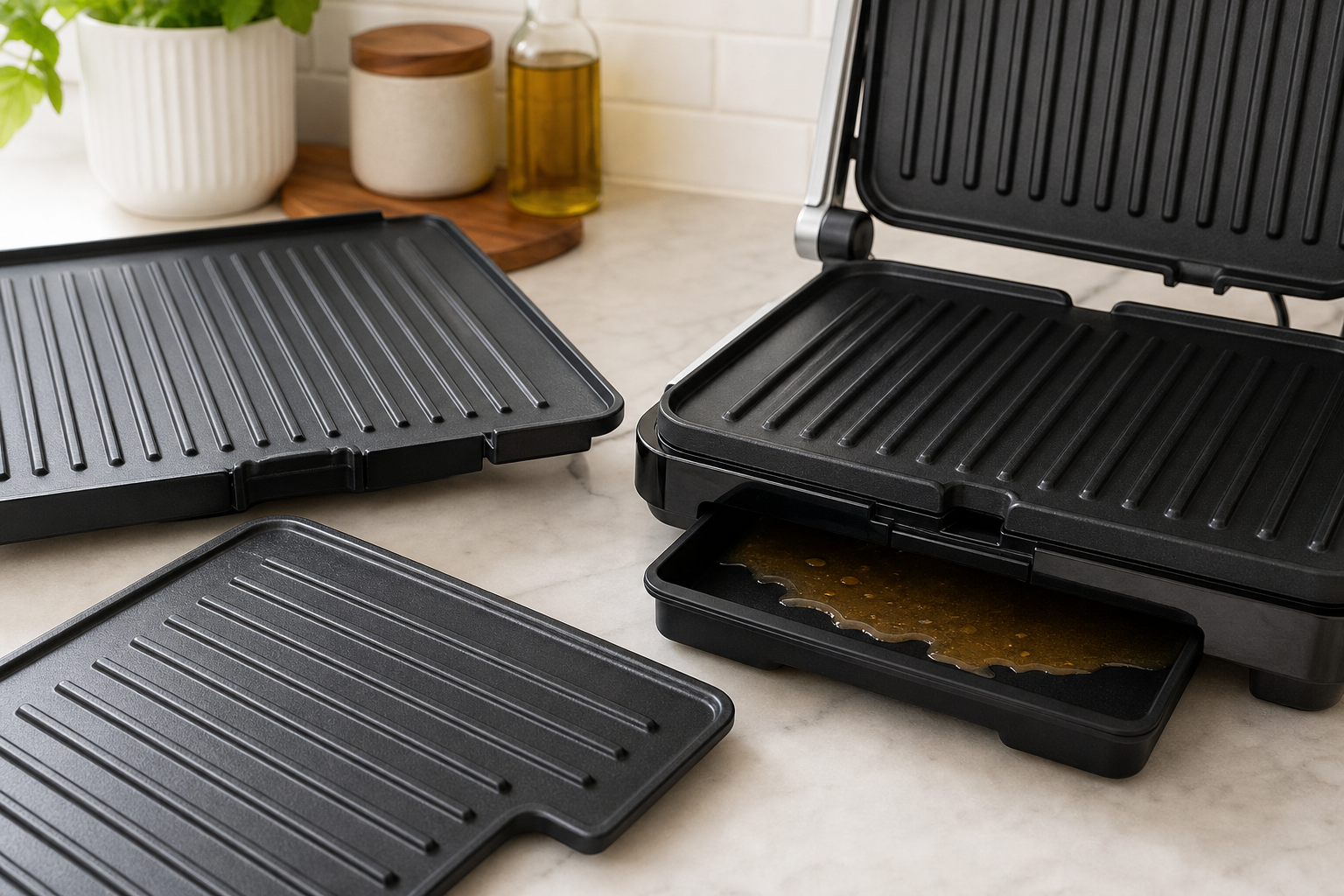 Removable plates and a proper drip tray often matter more in daily use than the grill name on the box.
Drainage changes mess, smoke and cleaning
Drainage is the route that oil, fat, water and cooking juices take away from the food. Many contact grills angle the plates towards a drip tray. Some open grills have a small channel or removable catcher. Others are almost flat, so liquid stays on the cooking surface until you wipe it away.
Good drainage helps when cooking bacon, burgers, sausages, marinated chicken or vegetables that release water. It can reduce pooling around food and make the grill easier to wipe while still warm. Poor drainage can leave sticky residue in grooves, around the hinge or under a plate edge.
It does not remove the need for normal cooking judgement. Grill marks can appear before thicker foods are cooked through, especially burgers, sausages, poultry and similar foods. Use the appliance instructions and normal thorough-cooking checks rather than relying on colour or stripes alone.
Smoke is usually about food, fat and heat
Indoor grills should not be treated like outdoor barbecues. In a kitchen, smoke and smell depend on the food, how much fat or marinade is present, how hot the plates are, and whether liquid can drain away cleanly.
An open grill can create more visible steam or cooking vapour because the food is exposed. A contact grill can feel more contained, but it can still smoke if fat reaches a very hot surface or old residue is left on the plates. A removable drip tray helps only if it is fitted correctly and emptied after use.
- For low-smoke cooking: avoid excess oil, preheat only as instructed, trim very fatty edges where practical and clean the plates after each use.
- For small flats: check whether you have enough ventilation and somewhere safe for the appliance to cool.
- For meat-heavy use: prioritise removable plates, a stable drip tray and clear temperature control.
Cleaning should be a buying criterion, not an afterthought
A grill that is awkward to clean becomes a cupboard appliance quickly. Contact grills often have more awkward corners around the hinge and drip path, but removable plates can make the main surfaces much easier. Open grills may have fewer moving parts, yet a broad ribbed plate can still take time to wipe properly.
Look beyond claims such as non-stick or dishwasher-safe. Non-stick surfaces still need gentle utensils and careful cleaning, and dishwasher-safe plates do not solve residue around the body, hinge or drip tray. If the plates are fixed, check whether you can reach the grooves without tipping the appliance or soaking electrical parts.
Storage can reverse the best choice
A compact contact grill may store upright like a sandwich toaster, which is useful in a small kitchen. Larger contact grills can be bulky because the lid, handle and hinge add height. Open grills may be slimmer, but broad plates can be awkward to fit in a cupboard.
Measure the shelf before buying, including the plug, drip tray and removable plates that need to stay with the appliance. If a grill will live at the back of a high cupboard, choose the lighter and simpler format. The best appliance is the one you will actually take out on a weeknight.
Final check before you choose
Choose an open indoor grill if you want space, visibility and control. Choose a contact grill if you want pressed sandwiches, quicker two-sided cooking and a more contained grill surface. Choose a sandwich toaster or frying pan if the grill would mainly be a workaround for a simpler job.
The practical test is cleaning plus storage. If you would use the grill often enough to wash the plates, empty the drip tray and give it a permanent cupboard spot, the extra flexibility can be worth it. If not, the smaller specialist appliance will probably serve you better.
Sources and checks
These references help shoppers check the appliance features and safety points behind the advice.
- George Foreman UK grills: compare common contact-grill features such as removable plates, drip trays, variable temperature controls and upright storage.
- Electrical Safety First grill safety: check practical advice on positioning, inspecting, using and cleaning an electric grill safely.
- Food Standards Agency cooking guidance: check thorough-cooking advice if you plan to cook burgers, sausages, poultry or similar foods on an indoor grill.