In this article
The first kitchen appliance worth upgrading is rarely the most exciting one. It is the one that removes a problem you feel several times a week: slow cooking, unreliable heating, awkward cleaning, wasted counter space, poor coffee, or a breakfast setup that never quite works.
Use this order before spending: replace anything unsafe or unreliable first, upgrade the appliance that causes the most daily friction second, and only then pay for visible quality-of-life improvements. A better-looking toaster can make a kitchen feel finished, but it should not jump ahead of a microwave that no longer heats evenly or an air fryer that would genuinely change weekday meals.
Best quick rule: upgrade the appliance that changes the most ordinary days, not the one that looks most tempting in a sale.
Start with the three upgrade triggers
Instead of ranking appliances by category, start with the reason for upgrading. The same appliance can be a sensible first upgrade in one home and a waste of money in another.
| Upgrade trigger | What it usually means | Appliances to consider first | Do not rush if |
|---|---|---|---|
| Reliability or safety | The appliance is damaged, inconsistent, overheating, tripping sockets, or subject to a recall. | Microwaves, kettles, toasters and any frequently used plug-in appliance. | The issue is only cosmetic and the appliance still works safely. |
| Daily friction | A repeated job takes too long, creates mess, or stops you cooking the way you want. | Air fryers, microwaves, food processors, blenders and hand blenders. | You would use the new appliance only for one occasional recipe. |
| Quality-of-life gain | The upgrade makes a routine noticeably nicer: better coffee, faster breakfast, easier drinks, neater counter space. | Coffee machines, kettles, toasters and matching kettle-and-toaster sets. | The old appliance already suits the routine and the upgrade is mainly novelty. |
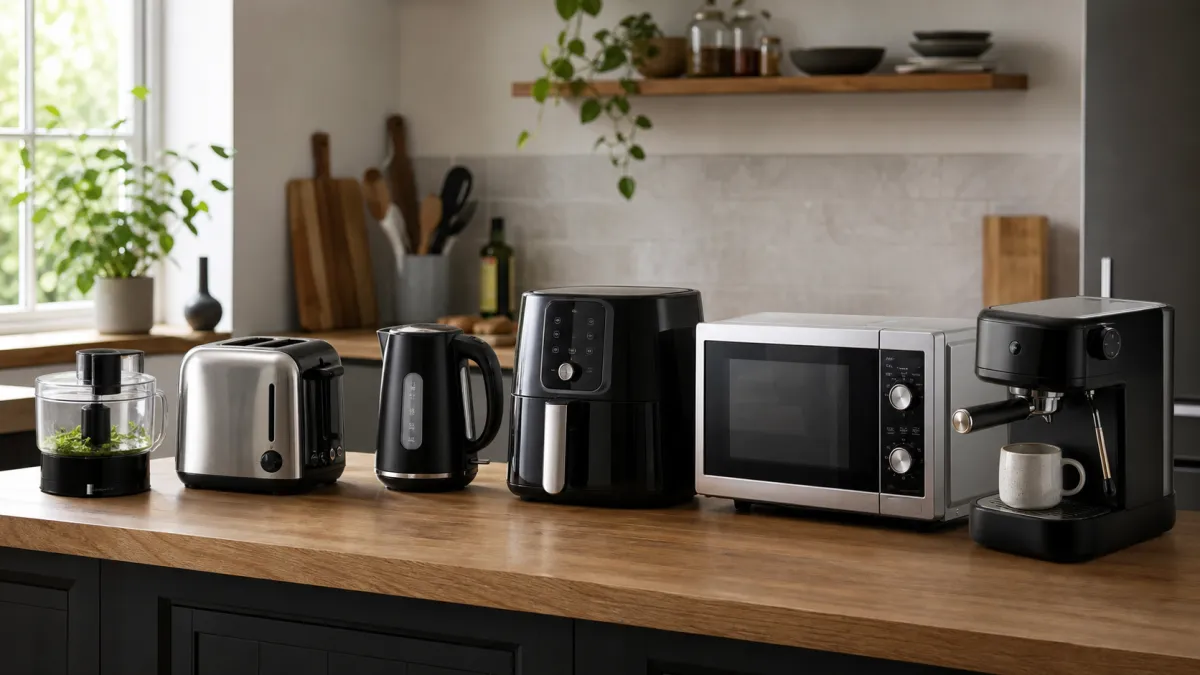
Already know the problem area? Start with the relevant shortlist: air fryers for fast small meals, microwaves for reheating and defrosting, coffee machines for daily drinks, kettles and toasters for the breakfast zone, or food processors when prep is what slows you down.
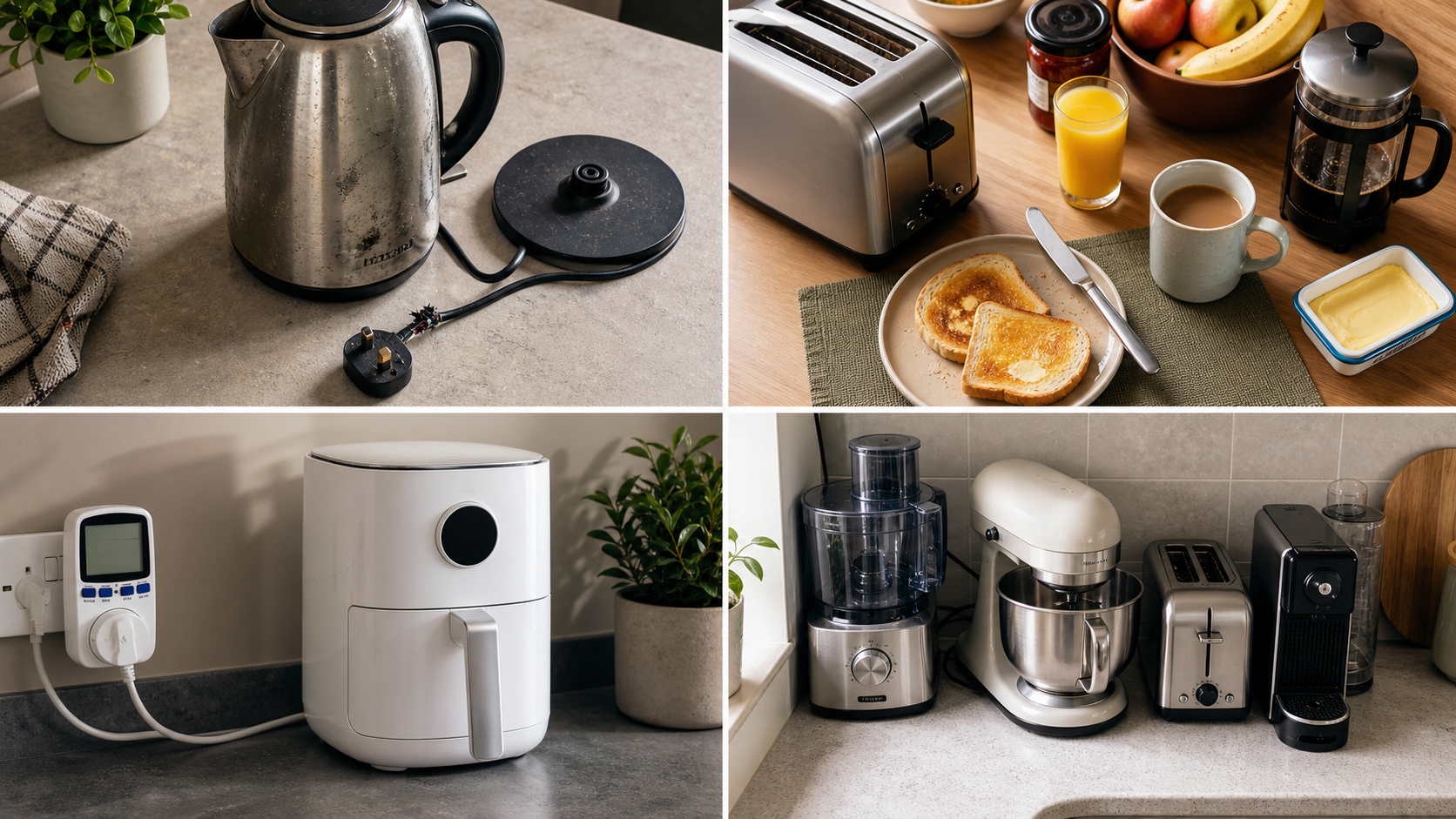 A useful upgrade order starts with reliability, then looks at daily friction, real running use and whether the appliance will earn its counter space.
Replace unreliable appliances before buying cleverer ones
An upgrade is not always about features. If a kettle leaks, a toaster smells scorched, a microwave door is damaged, or a plug or cable looks worn, replacement moves ahead of convenience upgrades. A flashy new appliance elsewhere in the kitchen will not compensate for something you do not trust using every day.
For older or questionable products, check the model number against official recalls and manufacturer safety notices. That matters most for electrical appliances bought second-hand, from unfamiliar marketplace sellers, or from brands you cannot easily contact. If there is a genuine safety concern, do not keep using the appliance while you shop around for an upgrade.
Air fryers are worth upgrading first when they change weekday meals
An air fryer is a strong first upgrade when your oven is too slow for small meals, you cook for one or two often, or you keep defaulting to takeaway because cooking feels like too much setup. The benefit is not just potential electricity saving; it is speed, preheating time, crisp results and easier portion control for repeat meals.
It is less urgent if you already use a compact oven, grill or good fan oven for the same jobs. A bulky dual-zone model can also be the wrong first upgrade in a small kitchen if it takes over the counter and needs awkward washing-up space. Match the basket size to the food you actually cook, not just the litre number on the box.
Microwaves should move up the list when heating is inconsistent
A microwave is easy to ignore until it becomes annoying several times a week. Upgrade sooner if your current model struggles with dinner plates, heats unevenly, has failing controls, or makes defrosting and reheating feel like guesswork. For some homes, a better microwave is more useful than adding another appliance because it improves leftovers, batch cooking, hot drinks, porridge, veg and quick lunches.
The decision is not only about wattage. Capacity, plate fit, door clearance, cleaning and control clarity all affect everyday use. So does the internal layout: a turntable rotates food on a glass plate, while a flatbed model has no rotating plate and can make larger dishes easier to fit. A solo microwave is enough for reheating and defrosting. A combination microwave makes more sense when you need oven or grill functions in a compact kitchen, but it is not automatically the better buy.
Coffee machines are a quality-of-life upgrade, not a universal priority
A coffee machine deserves an early upgrade slot when coffee is a daily habit and the current routine is either expensive, inconsistent or too much effort. The right machine can make mornings smoother and reduce café spending, but only if it fits how you drink coffee at home.
Pod machines are the low-friction route if speed and consistency matter most. Bean-to-cup machines cost more and need more care, but they can suit households that drink several coffees a day and want fresher-tasting drinks without learning manual espresso. Manual espresso machines and grinders are better treated as hobby upgrades, not default kitchen upgrades.
Kettles and toasters are worth upgrading when the breakfast zone is the problem
A kettle or toaster upgrade can feel small, but these are often the appliances people touch first thing in the morning. They move up the priority list when the kettle is heavy, slow, awkward to pour, hard to clean, visibly scaled, or has a minimum-fill level that wastes water. Toasters deserve attention when slot size, uneven browning, slow batches or crumb cleaning causes daily irritation.
Style can be a valid reason here because these appliances often live in view. Just keep it honest: a matching finish is a quality-of-life choice, not a performance guarantee. If you want a tidier breakfast setup, a kettle and toaster set can make sense, but check the kettle and toaster separately rather than buying the pair only because the colour matches.
Food-prep appliances pay off when prep stops you cooking
Food-prep upgrades are worth doing early when chopping, blending or mixing is the barrier between intention and actual meals. A food processor is best when slicing, grating, chopping and batch prep slow you down. A jug blender is stronger for smooth liquids and larger drink or soup batches. A hand blender is the compact compromise for soups, sauces and quick blending in the pan.
The risk is buying an impressive kit with attachments you will never wash, store or use. Upgrade food prep only when you can name the repeated job it will take over. If the answer is vague versatility, wait. If the answer is weekly soup, batch chopping, smoothies, sauces or family meal prep, it can be one of the most useful upgrades in the kitchen.
Running costs matter, but they should not dominate every decision
Electricity use is worth checking, especially for appliances used often. Ofgem's current price cap period from 1 July to 30 September 2026 puts the average Direct Debit electricity unit rate at 26.11p per kWh. A kWh, or kilowatt hour, is the unit your electricity bill uses for energy consumed; your actual tariff and region can differ. That means a small difference in usage can matter over time, but it rarely justifies replacing a safe, working appliance on its own.
Use running cost as a tie-breaker, not the only argument. A lower-wattage appliance used for longer may not be cheaper than a higher-wattage appliance used briefly, and the best comparison is kWh used for the job. If you want to test an existing plug-in appliance before replacing it, a plug-in energy monitor* can show real use more clearly than guessing from the wattage label.
Space can make a good upgrade a bad first buy
Counter space is part of the cost. An appliance that lives in a cupboard has to be useful enough to come out, while one that stays on the worktop has to earn permanent space. Before upgrading, measure the appliance, the space around it, the door or basket swing, the plug position and the cooling or ventilation clearance.
This is where small homes should be ruthless. A better microwave, kettle or toaster may improve daily use without adding another footprint. A large air fryer, bean-to-cup machine or food processor can be brilliant, but only if it fits the real kitchen. The best first upgrade is often the one that removes friction without creating a storage problem.
A practical upgrade order for most kitchens
There is no universal ranking, but this order is a useful starting point when your budget is limited:
- Replace unsafe, damaged or unreliable appliances. This comes before style, speed or extra features.
- Fix the busiest cooking bottleneck. For many households that means a better microwave, air fryer or food-prep appliance.
- Improve the routine you repeat daily. Coffee, kettle and toaster upgrades earn their place when they noticeably improve mornings or drinks.
- Pay for space and cleaning wins. Easy-clean baskets, clearer controls, removable parts and better storage can matter more than extra programmes.
- Leave occasional-use upgrades until last. If it only helps with entertaining, one recipe or a rare baking project, it can wait.
When not to upgrade yet
Do not upgrade just because a product category is fashionable. Wait if the current appliance is safe, reliable, easy to clean, the right size and still fits how you cook. Also pause if the upgrade would need accessories, capsules, filters, bags or cleaning products you are not ready to keep buying.
It is also sensible to wait when you are unsure which routine you want to change. A week of noticing what annoys you in the kitchen is more useful than browsing features cold. Write down the moments that waste time, create mess or stop you cooking. The first upgrade should answer one of those moments directly.
The verdict
The kitchen appliances worth upgrading first are the ones that solve repeated, visible friction: an unreliable microwave, a kettle or toaster that makes every morning worse, an air fryer that genuinely changes small meals, a coffee machine that fits a daily habit, or a food-prep tool that gets fresh cooking started.
Start with safety and reliability, then daily use, then running cost, space and quality-of-life gains. If an upgrade cannot explain its job in your kitchen, it is probably not first in the queue.
Sources and checks
These references are useful when checking energy-use claims, product safety concerns and appliance-efficiency details before buying.
- Ofgem energy price cap unit rates and standing charges shows the current GB electricity unit-rate context and explains why actual bills depend on usage, region and payment method.
- Energy Saving Trust home appliances and energy efficiency ratings explains how energy labels, kWh figures, appliance size and performance information help shoppers compare running use.
- GOV.UK Product Safety Alerts, Reports and Recalls lets shoppers check whether a product category or model has an official safety notice.