In this article
An ice cream maker is worth it when homemade frozen desserts will become a habit rather than a one-weekend experiment. It gives you control over flavour, sweetness, texture and ingredients, but it does not remove the work: most recipes need advance chilling, the machine needs cleaning, and freshly churned ice cream often needs extra freezer time before it scoops like a firm supermarket tub.
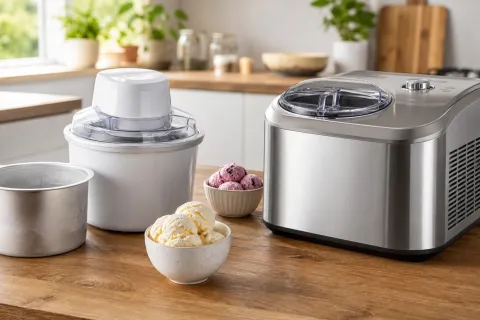
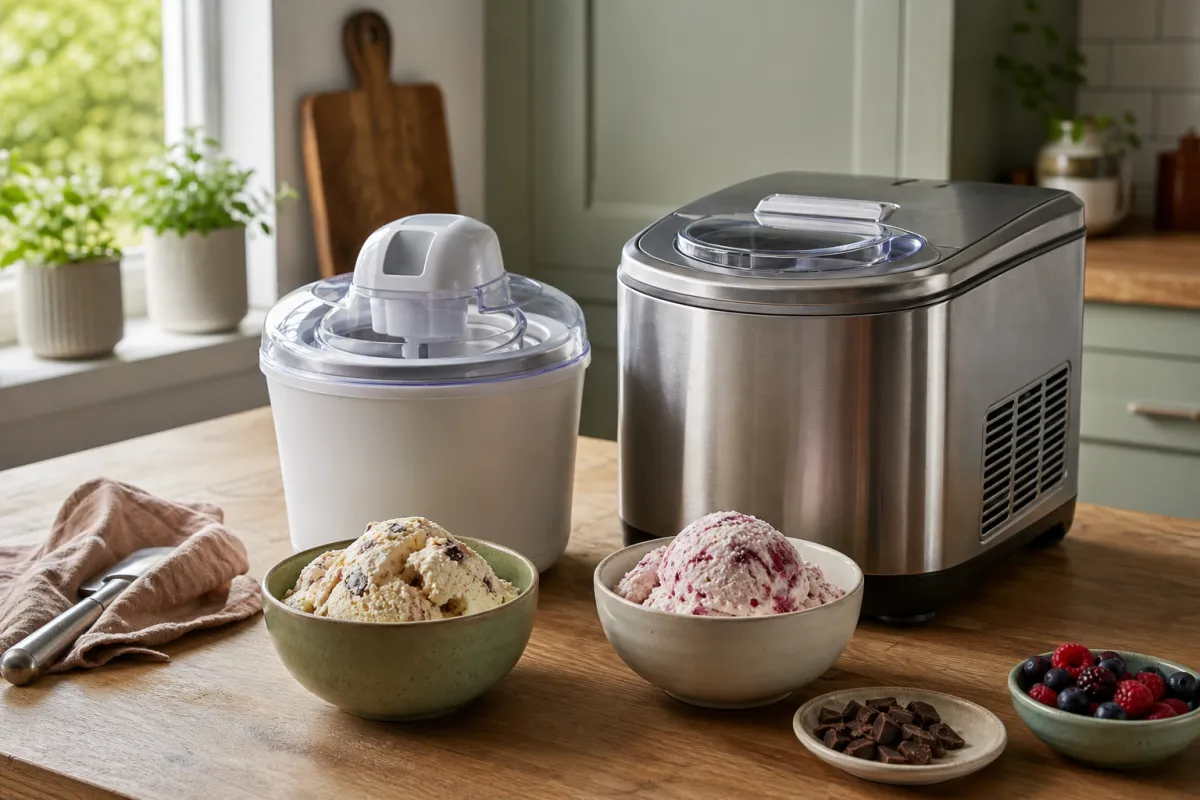
For most first-time buyers, a freezer-bowl machine is the sensible test. It costs less and takes up less worktop space, provided you can keep the bowl frozen. A compressor machine is worth the larger investment and footprint when you want to make ice cream without freezing a bowl first, produce batches back-to-back, or experiment often enough to value that convenience.
What ownership actually involves
| Question | Freezer-bowl machine | Compressor machine | Supermarket tub |
|---|---|---|---|
| Can you start immediately? | Only if the bowl is already fully frozen and the mixture is chilled | Usually no bowl pre-freeze, but a cold mixture still helps | Yes |
| Where does it live? | Motor unit in a cupboard; bulky bowl in the freezer before use | A large, heavy appliance on the worktop or a strong shelf | Freezer space only |
| Can you make another batch straight away? | Not normally with one bowl | Often yes, subject to the model's instructions | Not applicable |
| What do you gain? | A lower-cost route to custom flavours and ingredients | More spontaneity, repeat batches and finer process control | Consistency and no preparation or washing up |
| Main compromise | Advance planning and permanent freezer-bowl space | Purchase cost, weight and worktop footprint | Little control over the recipe and fewer unusual combinations |
Already know you will use one?
Compare our best ice cream makers when you are ready to choose between compact freezer-bowl models, self-freezing compressor machines and other formats.
It is worth buying for experimentation, not instant convenience
The strongest reason to own an ice cream maker is not that it makes dessert effortless. It is that it lets you make combinations that are difficult to buy: a less-sweet vanilla, a sharp fruit sorbet, a dairy-free recipe you actually enjoy, or a small batch built around seasonal fruit, coffee, nuts or chocolate.
That control matters to keen cooks and households managing preferences or selected ingredients. It can also make entertaining more personal. What the machine cannot promise is that every homemade recipe will be cheaper, lighter or better than a good shop-bought tub. Cream, chocolate, nuts, fruit and specialist alternatives can be expensive, while recipe balance still determines whether the result is smooth or icy.
Use frequency is the real value test: if you can name the next three flavours you would make and when you would serve them, the appliance has a job. If you only like the idea of making ice cream, it probably does not.
Choose the freezing system before the feature list
Freezer-bowl machines are the lower-risk first buy
A freezer-bowl model uses a double-walled bowl containing a freezing medium. The bowl must be thoroughly frozen before churning; current UK models can specify around 12 hours, though the exact requirement varies. Keeping it in the freezer makes the machine ready more often, but that reserves a sizeable area for an empty bowl.
Once the bowl warms, it cannot usually produce a second proper batch until it has been frozen again. That makes one-bowl machines best for planned desserts rather than parties with several flavours. They are generally compact and mechanically simple, which is why they make sense for occasional use.
Compressor machines buy spontaneity and repeat batches
A compressor model freezes its own removable bowl or chamber. You can start without sacrificing a freezer shelf to a pre-frozen bowl, and many machines can move into another batch after the first. That is the meaningful upgrade for frequent use.
The trade-off is physical as well as financial. Compressor machines are normally heavier and much deeper than basic churners. One current UK premium model measures more than 41cm deep, so a product photograph can disguise how much worktop it needs. Ventilation clearance, lifting weight and the route to a socket matter if the machine will be moved for every use.
Do not buy a compressor merely because it sounds more capable. Buy it because pre-freezing a bowl would stop you using a cheaper machine, or because consecutive batches are part of the plan.
Capacity is smaller than the bowl looks
Quoted capacity is a maximum, not an invitation to fill the bowl to the rim. A mixture expands as air is incorporated and can rise further when fruit, biscuit pieces or chocolate are added. Overfilling can slow the churn, spill into the machine or leave the batch uneven.
Think in portions you will genuinely eat and store. A compact machine can suit one or two people who want fresh small batches. A larger bowl is useful for a family or guests, but it also demands more chilled mixture, a larger storage container and enough freezer space for the finished dessert.
Texture is usually soft at the end of churning. If you want neat scoops, transfer the dessert to a shallow airtight container and allow time for it to firm in the freezer. Homemade ice cream can also freeze harder than many commercial recipes, so it may need a few minutes at room temperature before serving.
The freezer-space cost is easy to underestimate
A freezer-bowl machine occupies two spaces: the appliance in a cupboard and the bowl in the freezer. The bowl must sit level and cold enough for long enough, rather than being squeezed into a door shelf whenever you remember. The finished batch then needs its own sealed container.
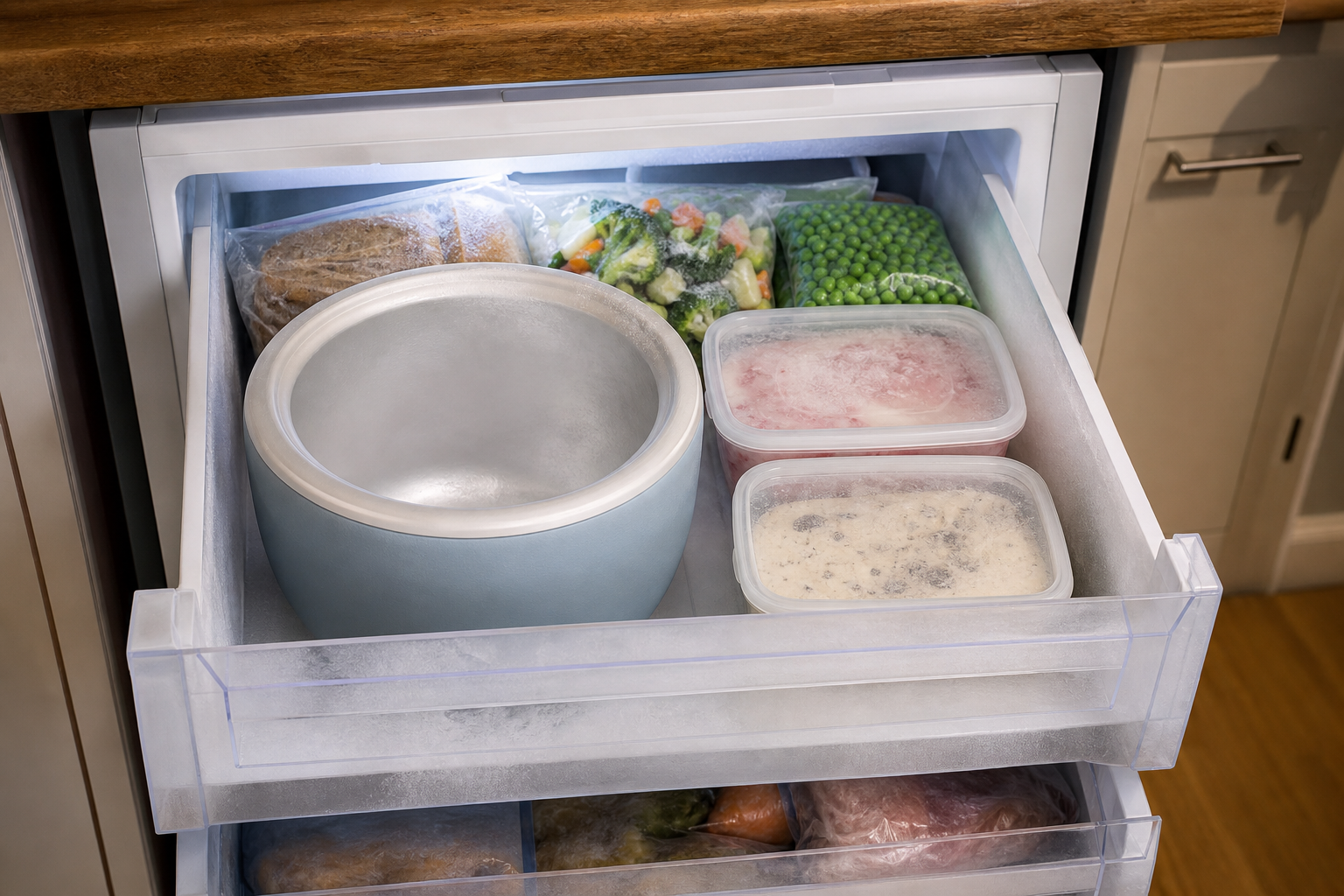 A freezer-bowl machine is easiest to use when the bowl has a permanent level space and the finished dessert has a separate airtight container.
Measure a freezer shelf before buying, including drawer height and the bowl's lid or protective bag. If freezer space is already contested by batch cooking, frozen vegetables and supermarket ice cream, a compact machine can still create more storage friction than a large compressor sitting on the worktop.
Ingredient control is useful, but recipe balance still matters
Homemade ice cream makes the ingredient list visible. You can adjust sweetness, choose dairy or plant-based ingredients, avoid an unwanted inclusion, and decide exactly how much fruit, chocolate or alcohol goes in. That is genuine control, not a guarantee of a particular nutritional result.
Sugar, fat, water and alcohol affect freezing and texture. Reducing one ingredient heavily can turn a proven recipe hard, icy or slow to freeze. Start with recipes designed for your type of machine, then change one variable at a time. Add chunky mix-ins when the recipe or manual directs so they remain distinct and do not obstruct the paddle.
Some custard-style recipes use raw or lightly cooked egg. Follow a reliable recipe and current UK food-safety guidance; the Food Standards Agency says vulnerable groups can eat raw or lightly cooked hen eggs when they carry the British Lion mark or come from the Laid in Britain assurance scheme. Alternatives include egg-free recipes or a properly cooked custard base.
Cleaning decides whether the machine becomes a habit
Every batch leaves a paddle, lid and bowl coated in a sugary dairy or fruit mixture. Removable parts help, but dishwasher-safe claims are part-specific. Freezer bowls are often hand-wash only, and a compressor body must not be immersed. Let very cold components return towards the temperature recommended by the manual before washing them, then dry everything thoroughly.
Look beyond the headline programme count and inspect the places mixture can reach:
Does the paddle pull apart or trap ice cream around its spindle?
Can the lid and ingredient chute be rinsed without awkward seams?
Is the bowl removable, and is its exterior easy to keep dry?
Can an accidental overflow reach a fixed chamber that is difficult to clean?
Will the parts fit your sink and drying rack?
A machine used twice a week can justify several hand-washed parts. A machine used twice a summer rarely can.
Supermarket ice cream remains the better answer for many households
A bought tub wins on speed, predictable texture, long-developed recipes and zero appliance storage. It is also easy to serve several flavours without making several batches. If you mainly want familiar vanilla, chocolate or salted caramel and are satisfied with the ingredients available, making them at home may add effort rather than value.
No-churn recipes occupy the middle ground. They let you experiment with flavour without buying a machine, although their texture and sweetness depend on the recipe and will not replicate every churned style. Making two or three no-churn desserts is a useful test of whether you enjoy the preparation and storage side before purchasing an appliance.
Use this seven-question test before buying
Frequency: will you make a batch at least monthly across more than one season?
Purpose: do you want flavours or ingredient choices that shops do not already provide?
Planning: will you remember to chill the mixture and, for a freezer-bowl model, freeze the bowl?
Space: is there a measured home for the appliance, bowl and finished containers?
Batching: is one flavour enough, or do you genuinely need consecutive batches?
Cleaning: are you willing to wash the bowl, paddle and lid soon after every use?
Alternative: have supermarket or no-churn options already solved the same need?
Five or more confident yes answers point towards a useful appliance. Several maybes usually point towards a freezer-bowl model rather than an expensive compressor. Mostly no answers mean the money and space are better kept.
Verdict: worth it for a repeat hobby, not a shortcut
An ice cream maker can be one of the most rewarding specialist appliances because the result is genuinely personal. It earns its place when you enjoy recipe tinkering, want control over ingredients or regularly make dessert for family and friends.
For most households, start with the least complicated format that removes the real barrier. Choose a freezer-bowl machine when cost matters and a frozen bowl can live permanently in the freezer. Choose a compressor when advance freezing would prevent use, consecutive batches matter, and the worktop has a measured permanent space.
Skip both when the attraction is mainly novelty. A machine cannot make homemade ice cream instant, and it cannot make an occasional craving more convenient than opening a good tub. The purchase is worthwhile when you want the making as well as the eating.
Sources and checks
These UK sources help you check the preparation, storage and model-specific details that affect everyday ownership.
Cuisinart UK freezer-bowl machine: see a current example of the bowl pre-freeze, stated capacity and churn routine to compare with your available freezer space.
Cuisinart UK compressor machine: see how a self-freezing model removes bowl pre-freezing and supports repeat batches.
Sage UK Smart Scoop: check the dimensions, removable parts and pre-cool or keep-cool features of a larger premium compressor design.
Food Standards Agency freezing guidance: check recommended freezer temperature, prompt freezing of homemade food and airtight storage advice.
Food Standards Agency egg guidance: check the current UK advice before making recipes with raw or lightly cooked egg.