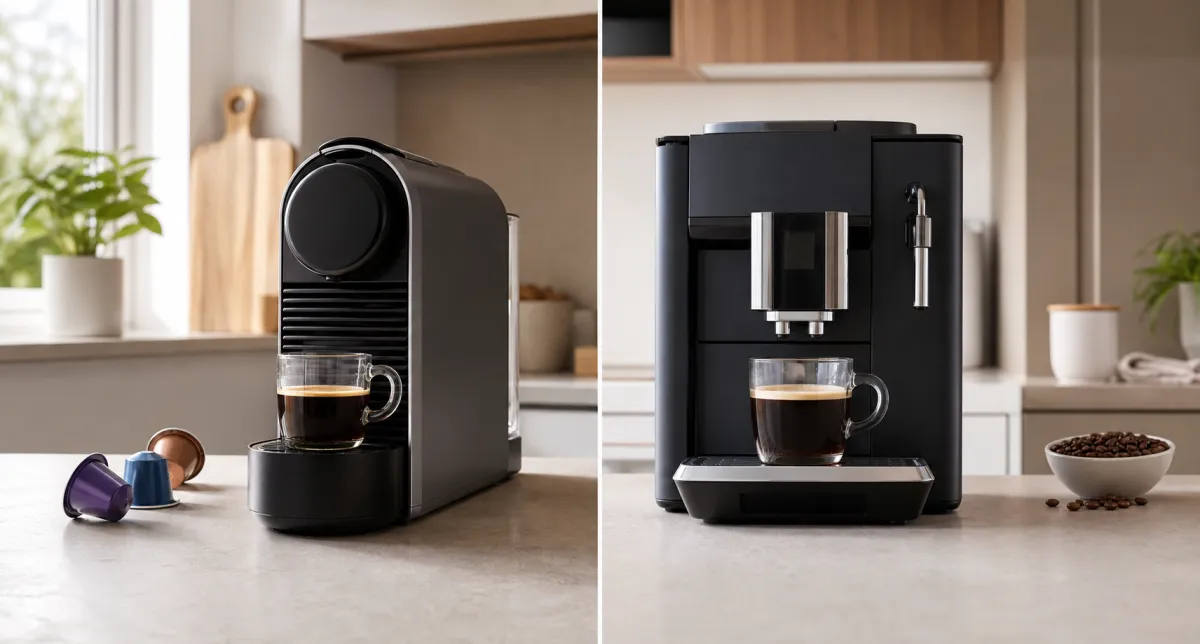
Pod and bean-to-cup coffee machines both promise an easy route to coffee at home, but they solve different problems. A pod machine keeps the daily routine short and predictable. A bean-to-cup machine asks for more space, cleaning and upfront commitment, then rewards regular use with freshly ground coffee and more control over each drink.
The simplest decision rule: choose pods when you want coffee to require as little thought as possible; choose bean-to-cup when you want the machine to do more of the barista work without giving up fresh beans.
The differences at a glance
| What matters | Pod machine | Bean-to-cup machine |
|---|---|---|
| Daily effort | Lowest: insert, brew, discard | More refilling, emptying and rinsing |
| Drink control | Mostly set by the capsule system | More adjustable: beans, strength, grind and volume |
| Best suited to | Occasional coffee, small kitchens and rushed mornings | Regular coffee drinkers and households making several drinks |
| Main compromise | Capsule choice, ongoing pod cost and recycling routine | Purchase price, worktop space, noise and cleaning |
Neither type wins every row. The better machine is the one whose compromises fit your normal week, not the one with the longest feature list.
How the daily routines differ
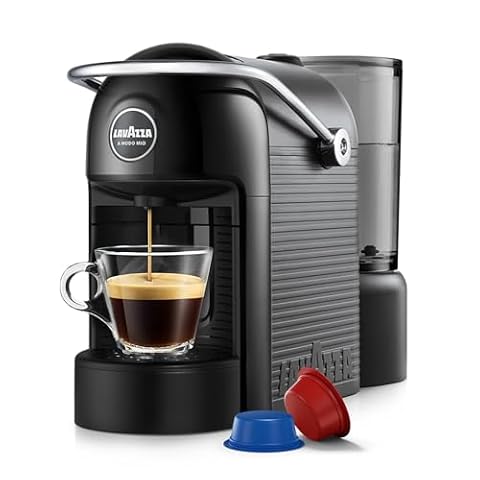
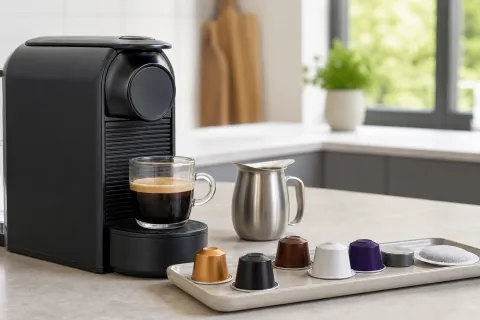
A pod machine seals pre-ground coffee into individual capsules. You insert one, press a button and discard the used pod. That makes the process consistent and tidy, with little measuring or clearing up.
A bean-to-cup machine stores whole beans, grinds a dose for each drink and brews it automatically. Many models also prepare milk drinks, although the milk system adds another part that needs prompt cleaning.
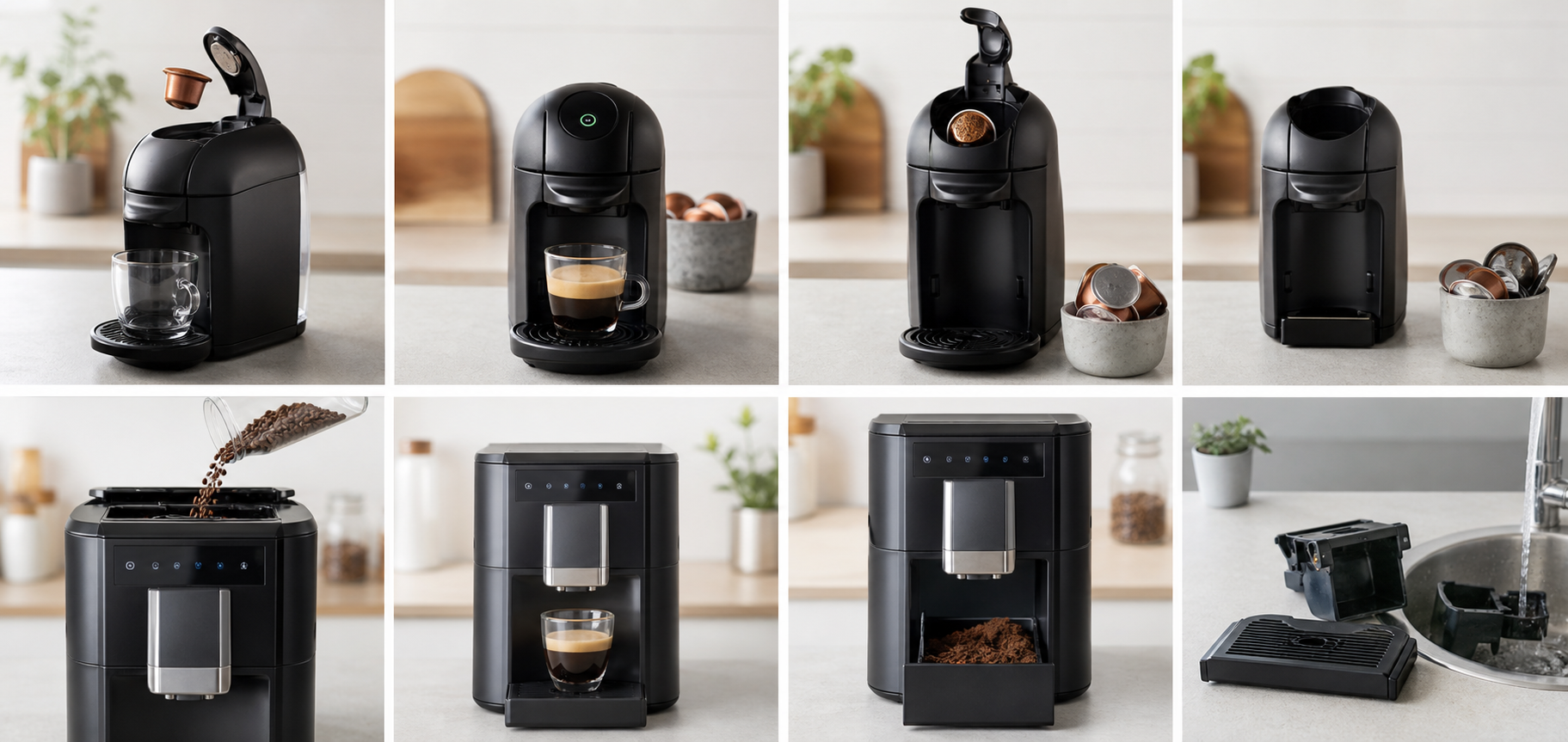
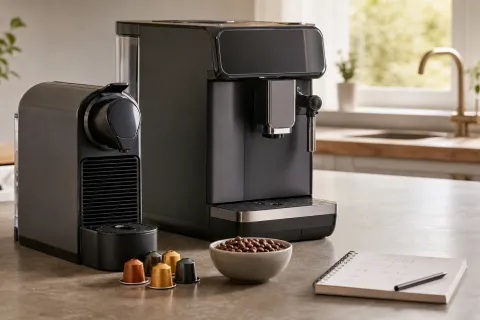
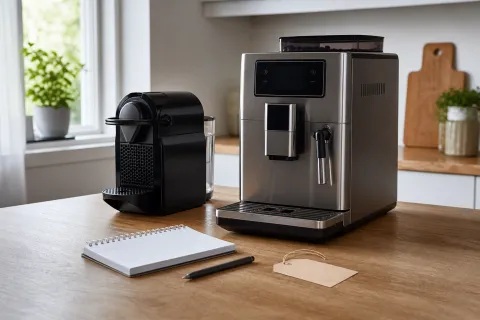
Visual guide: the top row shows the shorter pod routine; the bottom row shows the bean-to-cup cycle, including bean refilling, grounds disposal and removable-part cleaning.
Choose a pod machine if speed and simplicity come first
Pod machines make most sense when you want coffee without turning it into a hobby. They usually warm up quickly, need little work between drinks and take up less room than a full bean-to-cup machine. The sealed capsules also make it easy to keep several drink styles without opening multiple bags of beans.
The trade-off is that the capsule system sets the boundaries. Your choice of coffee, drink size and compatible pods depends on the machine you buy. Used pods also need sorting and returning through an appropriate recycling route if you want them recycled; they are not simply a no-effort alternative to loose coffee.
Choose bean-to-cup if coffee quality and flexibility matter more
Bean-to-cup machines grind coffee immediately before brewing, so you can change beans and adjust settings such as strength, grind and drink volume. That flexibility is useful when several people prefer different coffees or when you want to refine the result over time.
They are best suited to regular use. The machine costs more to buy, occupies more worktop space and creates a busier routine: refill the water and bean hopper, empty the grounds container and drip tray, clean milk parts, and run the machine's cleaning and descaling programmes when required.
Which is cheaper to run?
Do not judge this from the machine price alone. Pod machines are often cheaper to buy, but every drink uses a single capsule. Bean-to-cup machines usually cost more upfront, while whole beans can make regular daily use more economical over time.
The real break-even point depends on the machines, coffee and number of drinks you choose, so fixed cost-per-cup claims quickly become misleading. Compare the current price of the capsules or beans you would genuinely buy, then multiply it by your normal weekly coffee habit.
Cleaning: less work does not mean no work
A pod machine has fewer coffee-contact parts to manage, but it still needs its water tank, drip tray and capsule container cleaned, plus regular descaling in line with the instructions.
A bean-to-cup machine handles more of the brewing process, so there is more to maintain. Automatic rinse and cleaning programmes help, but they do not replace emptying containers, wiping away loose grounds or cleaning a milk system after use. Before buying, check whether the brewing unit is removable and how the milk system comes apart.
Think about space, noise and the morning routine
Measure the worktop depth as well as width, and allow room to lift lids, remove the water tank and pull out trays. Pod machines are generally easier to place in a tight kitchen. Bean-to-cup machines can be deeper and noisier while grinding, which matters in an open-plan home or during early starts.
Also picture the whole routine. If one quick black coffee on the way out is typical, a pod machine's simplicity is hard to beat. If several coffees are made every morning, the larger hopper and fresh grinding of a bean-to-cup machine can justify the extra maintenance.
Use this three-question test
How many coffees will the machine make in a normal week? Occasional use favours the lower commitment of pods; frequent use makes bean-to-cup easier to justify.
Would you rather choose capsules or tune the coffee? Pods offer a menu of ready-made choices. Bean-to-cup lets you change beans and settings.
Will you actually clean the extra parts? If the honest answer is no, the flexibility of bean-to-cup may become a frustration rather than a benefit.
What about waste?
Bean-to-cup machines leave coffee grounds that can often go into food-waste or compost systems where local rules allow. Pod machines leave a capsule as well as coffee grounds. Recycling schemes are available for participating pod systems in the UK, but using them means collecting and returning the capsules correctly.
Whichever machine you choose, keeping it for longer and maintaining it properly matters. Buy the machine that fits your real routine rather than the one with the longest feature list.
Verdict
Choose a pod machine when you value a compact machine, predictable results and the least daily effort. It is especially sensible for occasional coffee drinkers or households where convenience matters more than fine-tuning.
Choose bean-to-cup when you drink coffee regularly, want freshly ground beans and will use the extra adjustment. It earns its place only if you will use it often and keep up with the cleaning.
The best choice is the one you will use without resenting the routine. Pods suit quick, tidy coffee with predictable results; bean-to-cup makes more sense when fresh beans, drink control and regular use justify the extra cleaning and counter space.
Sources and checks
Use these links to check two practical details before you buy: how you would recycle used pods, and what cleaning a bean-to-cup machine may involve.
- Podback coffee pod recycling explains the UK pod-recycling scheme and helps you check whether your preferred capsule system has a practical return route.
- De'Longhi bean-to-cup cleaning support shows the kind of removable-part cleaning detail worth checking before you choose a bean-to-cup machine.