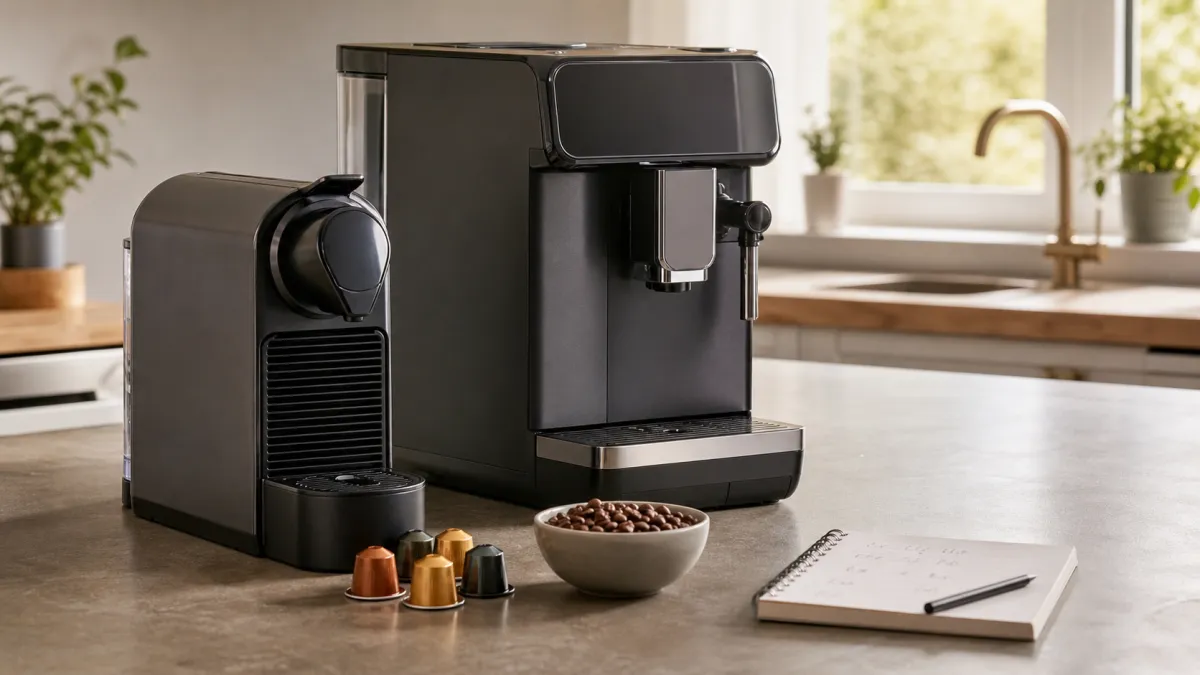
In this article
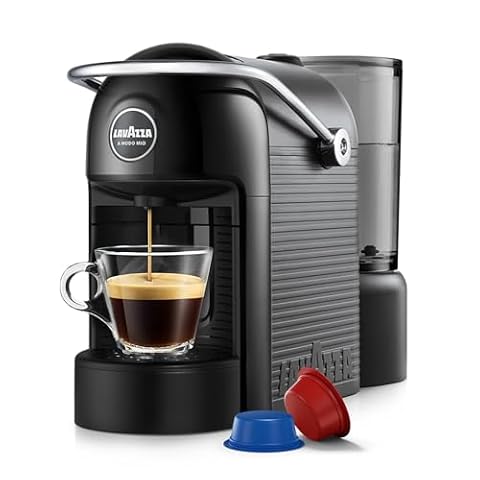
A pod coffee machine can look like the cheapest way into decent coffee at home. The machine is often compact, simple and discounted; the expensive part arrives later, one capsule at a time.
In most daily households, pod coffee costs more per drink than beans. That does not automatically make a pod machine a bad buy. It can still be the right choice if you drink coffee occasionally, value speed over control, hate messy grounds, or want a small machine that guests can use without instruction.
The long-run question is not only "pods versus beans". It is whether the whole ownership routine suits your kitchen: capsules, milk drinks, recycling, descaling, cleaning, replacement parts and the number of coffees you make each week.
The short answer
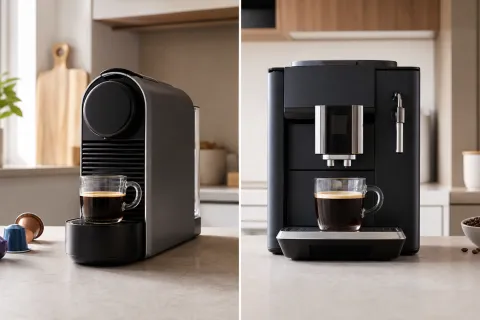
Pod machines usually cost less to buy and more to feed. Bean-to-cup machines usually cost more upfront and less per black coffee once you are using whole beans regularly.
The tipping point depends on household volume. One or two pod coffees at the weekend may never justify a larger, dearer machine. Two or three coffees every day can make the capsule habit feel expensive, especially if several people in the house use the machine.
Decision rule: if the machine is for occasional convenience, pods can be good value. If it is replacing cafe coffee or serving several daily drinkers, compare bean-to-cup before you buy another box of capsules.
How the costs build up
| Household pattern | Pod machine cost pressure | Bean-to-cup cost pressure | Likely better route |
|---|---|---|---|
| Occasional coffee | Capsules cost more per drink, but the total yearly spend may stay modest. | The machine may be too expensive and too large for light use. | Pod machine, if you like the drinks and accept the system. |
| One daily drinker | The capsule spend becomes visible, especially for larger drinks or branded pods. | Upfront cost is still the main barrier, but beans can start to look sensible. | Close call: choose around convenience, drink style and space. |
| Several daily drinkers | Every extra cup repeats the capsule cost and creates more pod waste to handle. | The machine cost is spread across many drinks; cleaning becomes the real chore. | Bean-to-cup is often better long term if everyone likes fresh-bean coffee. |
| Milk-drink household | Capsule-plus-milk systems can get expensive and lock you into specific drink formats. | Automatic milk systems are convenient but add cleaning and maintenance. | Compare carefully; milk routine matters as much as coffee cost. |
If the table already points you towards a format, use the comparison links in the panel above to start with the right shortlist. Keep reading if the ownership cost is still close.
Pods are convenient because the cost is packaged
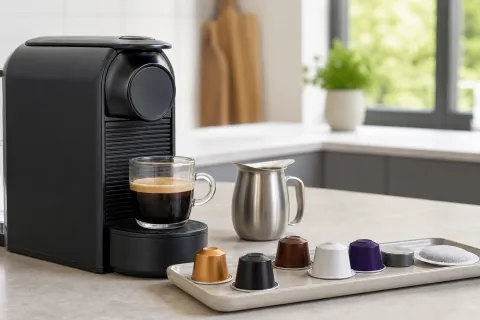
A capsule is not just coffee. It is a measured portion, packaging, system compatibility and convenience bundled together. That is why pod coffee can feel tidy and predictable: you do not need to buy a grinder, weigh beans, tamp coffee, empty a grounds container or learn a brewing routine.
The same packaging is why costs climb. With a pod machine, you are usually committed to a capsule system or a compatible third-party ecosystem. Larger drinks and milk-based capsules can cost more than simple espresso-style pods, and promotions can make the shelf price look less steady than the daily habit really is.
Check the capsule price before the machine price. A cheap machine is not a bargain if the pods you actually drink are dear, hard to find, or tied to a narrow set of flavours.
Beans make more sense when volume is high
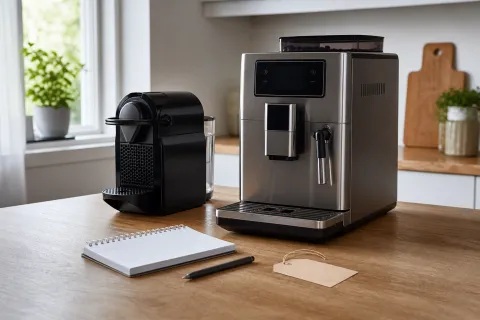
Bean-to-cup machines flip the cost pattern. You pay more for the appliance because the grinder, brew unit, water tank, waste container and controls live inside one body. After that, each drink depends mostly on the beans you buy and the dose the machine uses.
Whole beans are not automatically cheap. Supermarket beans, speciality beans and subscription beans can sit in very different price bands, and a stronger drink uses more coffee. But beans are flexible: you can change supplier, buy larger bags, choose a cheaper everyday roast, or spend more on beans only when the flavour matters.
That flexibility is the long-run advantage. A pod system makes every drink a system purchase. A bean-to-cup machine lets the machine stay while the coffee changes.
Milk drinks can change the answer
Black coffee is the cleanest comparison. Milk drinks are messier because the cost and effort move into milk handling, frothing and cleaning.
Some pod systems sell milk capsules or two-pod drinks. They are simple, but the per-drink cost can rise quickly and the drink style may be less flexible than using fresh milk. Other pod machines use a separate milk frother, which can be cheaper per drink but adds another part to wash.
Bean-to-cup machines with automatic milk carafes or tubes are convenient for cappuccinos and lattes, but they are not maintenance-free. Milk parts need prompt cleaning, and some systems use cleaning cycles that add time, water and occasional cleaning product cost. If you mostly drink milky coffees, judge the machine by the milk routine as much as the espresso.
Maintenance is small, but it is not optional
Electricity is rarely the deciding cost for coffee machines. The more useful checks are descaling, filters, cleaning tablets, milk-system cleaning and whether the parts are easy to rinse. Hard-water households should pay particular attention because scale can affect taste, flow and machine life.
Both pod and bean-to-cup machines need descaling. Some also use replaceable water filters or branded cleaning products. If your machine manual asks for regular descaling, budget for a suitable coffee machine descaler* rather than waiting until the machine slows down or starts tasting stale.
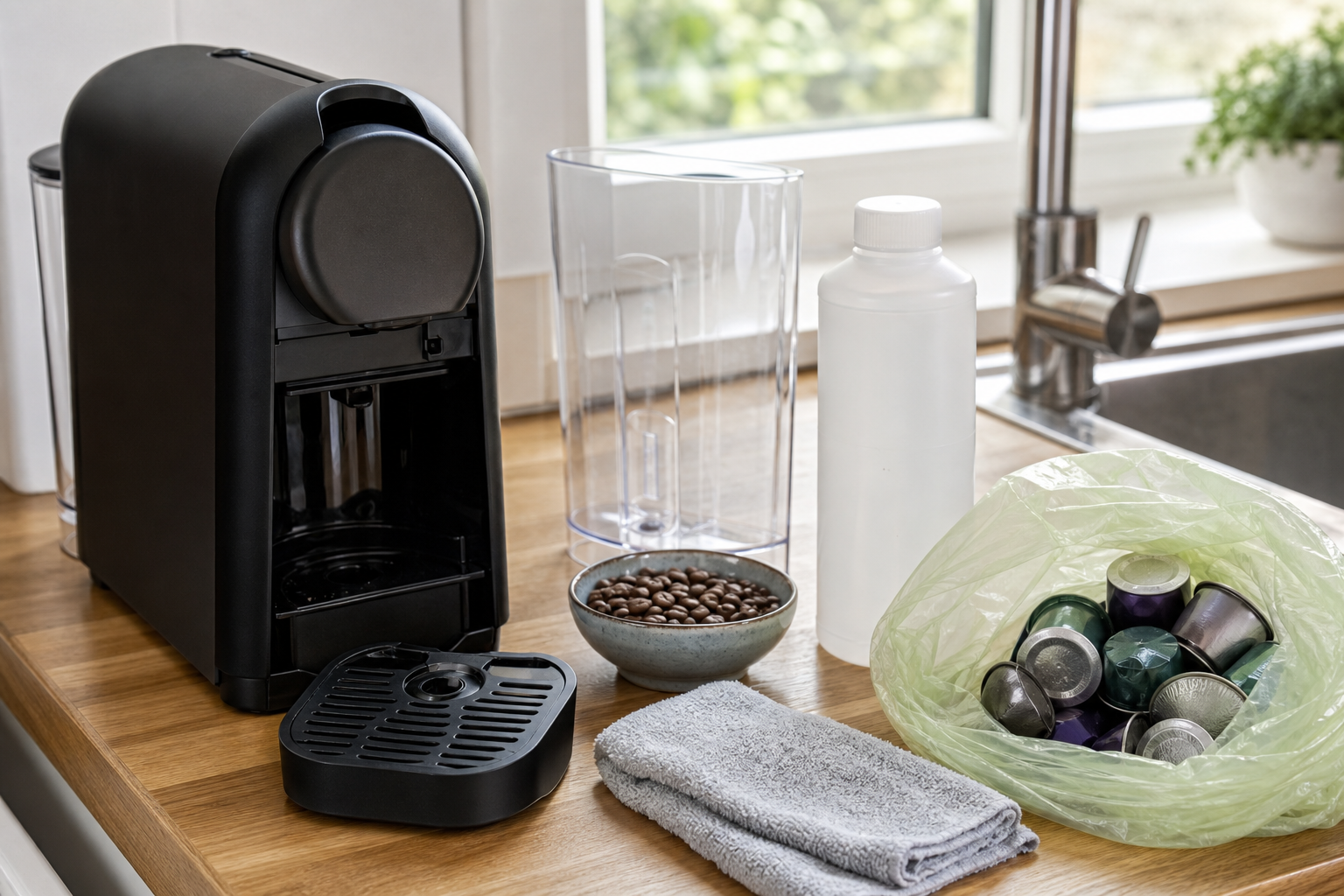
Descaling, recycling and cleaning are part of the long-run cost, not just the coffee itself.
The service question is also practical. Can you remove the water tank without dragging the machine forward? Does the drip tray fit your sink? Are capsules, grounds or milk parts easy to empty before they become unpleasant? A machine that is cheap to run but annoying to clean can still be the wrong buy.
Recycling and waste are part of the ownership cost
Pod systems create a physical job after the drink. Used capsules need collecting, storing and sending through the right recycling route if you want to avoid treating them as ordinary waste. That can be straightforward in some areas and irritating in others.
Bean-to-cup machines create spent coffee grounds instead. Grounds are usually easier to empty, but the machine may produce wetter pucks, more internal rinsing water and larger trays to clean. Neither route is effortless; they are different kinds of chore.
Before buying a pod machine, check the recycling route for the system you are considering. If the scheme does not fit your household, the long-run cost is not just money. It is the friction of storing used pods or the discomfort of throwing away packaging every time you make coffee.
When pods still make financial sense
- You drink coffee occasionally. Low volume keeps the capsule spend under control.
- You mostly want convenience. A quick pod drink may stop you buying takeaway coffee, which changes the comparison.
- You have limited space. A compact pod machine can be easier to justify than a larger bean-to-cup appliance.
- You want predictable results for guests. Capsules remove much of the skill and adjustment.
- You dislike coffee mess. No loose grounds, no grinder and fewer daily decisions can be worth paying for.
When bean-to-cup starts to pay back
- Several people drink coffee most days. More cups spread the machine cost and expose capsule pricing.
- You want fresh beans without manual espresso practice. Bean-to-cup gives a cleaner route than a separate grinder and manual machine.
- You want to change coffee easily. Beans let you switch roast, supplier and price point without changing the machine system.
- You make mostly black coffees. That keeps the comparison simpler and reduces milk-system upkeep.
- You already know you will maintain it. A bean-to-cup machine is poor value if the cleaning routine makes you stop using it.
Use this before you upgrade
Work out your real weekly coffee count before replacing a pod machine. Multiply the number of drinks by the pod price you actually pay, then compare that with the beans and maintenance you would buy for a bean-to-cup machine. Do not forget the machine price: a more expensive appliance needs enough use to earn back the difference.
Then add the service reality. If the bean-to-cup machine would live permanently on the worktop, get used every morning and be cleaned properly, it may be the better long-run buy. If it would feel bulky, noisy or fussy, a pod machine may still be the better value even when each drink costs more.
The strongest upgrade case is a household that already drinks several pod coffees a day and wants fresher coffee, not just cheaper coffee. The weakest case is a household that drinks pods occasionally and would buy a large automated machine mainly because the capsule maths looks bad on paper.
Verdict: pods cost more per cup, but not always more in real life
Pod coffee machines usually cost more to run per drink because every cup depends on a capsule. For heavy households, that can make a cheap pod machine expensive over time.
But ownership cost is not only arithmetic. Pods buy simplicity, small size and predictable drinks. Bean-to-cup machines buy flexibility, fresh beans and a lower per-drink path when the machine is used heavily enough. They also bring cleaning, size, noise and a higher upfront price.
The right choice is the one where the money and routine both make sense. If you drink a lot of coffee and want room to improve the flavour, bean-to-cup deserves a serious look. If you drink occasionally and value speed, a pod machine can still be a rational long-term buy.
Sources and checks
These references help you check the system, recycling and energy context before buying.
- Nespresso UK coffee capsules: useful for checking capsule system compatibility, drink formats, recycling information and current pod availability before choosing a machine.
- Podback coffee-pod recycling: explains UK coffee-pod recycling options and helps you check whether a pod recycling route fits your household.
- Ofgem energy price cap guidance: explains why electricity costs depend on usage and unit rates, which is why this article treats machine energy as a smaller variable rather than the main coffee-cost driver.