Start with one raclette pan per person, then check whether the top plate and your table can handle the meal. A two-person household can manage with two to four pans, four people should usually look at a four- or six-pan grill, and six to eight guests are better served by an eight-pan model.
The pan count is not the only size check. A raclette pan is the small tray that slides under the hot plate so each person can melt cheese or warm small toppings. The top plate still needs enough room for potatoes, vegetables, meat or bread, and the whole grill has to fit safely on the table with plates, bowls and a power lead.
Use this pan-count guide first
Match heated pan positions to the people eating at once. That gives each guest a tray for cheese, but it does not guarantee a full dinner cooking at the same time. Hungry diners, thick ingredients and a crowded top plate can still mean waiting between portions.
| Usual table size | Sensible pan count | Best fit |
|---|---|---|
| 1-2 people | 2-4 pans | Couples, small flats and occasional raclette nights. |
| 3-4 people | 4-6 pans | Families who want a compact grill but do not want every tray occupied all evening. |
| 5-6 people | 6-8 pans | Small dinner parties with individual cheese portions and food cooked in manageable batches. |
| 7-8 people | 8 pans | Larger households and shared meals with guests. |
| More than 8 people | Two grills, staggered eating or a different appliance | Large parties where table space and socket safety matter as much as pan count. |
Already know the size you need? Compare models in our raclette grill guide, then check the table footprint, plate type and cleaning details before you buy.
Two people do not always need the smallest grill
A two-pan electric raclette can be enough for two people, especially with side dishes prepared separately. A four-pan model gives each person a spare heated position for another portion, provided its top plate and body fit the table. A single candle-heated pan is different again: it melts a shared cheese topping rather than providing two individual cooking spaces.
Buy the smallest model only when storage and table space matter more than flexibility. A compact grill can suit a flat, an occasional meal for two or a kitchen where every cupboard shelf is already full. If raclette becomes a regular shared meal, extra heated pan positions give more flexibility. Check the complete body size rather than assuming the next pan count up is only slightly larger.
Four people need more than four handles
For four guests, four pans is the minimum rather than a luxury. It works best when everyone eats at the same pace and the top plate is wide enough for potatoes, vegetables, bread and any raw food you plan to cook.
If you are feeding hungry adults or older children, a six- or eight-pan model can be a calmer choice even for a table of four. Extra heated positions let people melt a second portion while they eat the first. Check the usable top-plate area separately; more pan slots do not always mean proportionately more grilling room.
The better question is not just "how many people?", but whether each person can cook without reaching across a crowded plate.
Six to eight guests should usually use an eight-pan grill
Once you reach six people, a raclette meal becomes more about table flow. Guests need space to reach their tray, lift food from the top plate and put the hot pan down without nudging glasses or bowls. This is where eight-pan models make the most sense.
An eight-pan grill is not only for eight people. It can be the right size for six if you want spare trays, a longer hotplate and more relaxed entertaining. The trade-off is storage, cleaning and table footprint. Some eight-pan grills are long enough to dominate a small dining table, especially once you add bowls of potatoes, cheese and vegetables.
 Compare the whole table setup: extra pan positions help with second portions, but the larger body still needs room for place settings and serving bowls.
Check the top plate, not just the pan slots
The pan count tells you how many trays fit underneath. The top plate tells you how much food can cook at once. A small plate may be fine for cheese accompaniments but leave little room for vegetables or meat. Spread ingredients out rather than piling them together, and allow room to turn them. Wattage alone does not establish how evenly or quickly a grill will cook.
- Flat plates suit vegetables, bread, halloumi-style cheese and softer food that needs a stable surface.
- Ridged plates help drain some fat and give grill marks, but small pieces can be harder to move around.
- Stone plates can hold heat well, but they are heavier and may need more careful cooling and cleaning.
- Mixed surfaces let you choose where different ingredients sit. Check whether the surfaces work side by side or are interchangeable tops that must be swapped before cooking.
If the top plate looks cramped in the product photos, the extra pan count may not make the meal feel bigger. For entertaining, a longer hotplate is usually more useful than a compact body that squeezes the trays tightly together.
Measure the table before you buy
A raclette grill sits in the middle of the meal, so table size matters more than it does with many kitchen appliances. You need room for the appliance, individual plates, serving bowls, a heat-safe gap around the grill and a cable route that does not run where people will catch it.
Before buying, check the grill dimensions against your actual table, not just your cupboard. With the appliance off the table, mark out its footprint using paper or a tape measure, then add plates and serving bowls around that space. This is only a size check: remove the markers before cooking and use the heat-resistant surface and clearances specified in the manual. If elbows, glasses and serving dishes already feel squeezed, a larger model may make the meal awkward even if the pan count is right.
Spare pans are useful only if they fit your exact model
Spare pans can be handy when one tray is cooling, soaking or being used for a second portion. They can also help if a pan gets scratched or lost. The catch is compatibility: raclette pans are not universal, and the handle length, tray shape and runner height can vary between models.
For most shoppers, it is safer to buy a grill with the pan count you need from the start. If you are buying replacement pans later, check the exact brand, model number and tray dimensions. A cheap pack of generic pans is poor value if the handles do not sit properly or the tray catches under the heating element.
Do not buy bigger just because you entertain occasionally
An eight-pan grill looks like the safe choice, but it is not automatically better. If you usually cook for two and host six people once a year, a smaller grill may be easier to store, lift and clean. You can make raclette work for guests by serving in rounds, using a second hotplate, or keeping side dishes warm separately.
A larger model earns its keep when it suits normal use as well as occasional guests. If friends and family often join the meal, spare heated pan positions may be worth the extra cupboard space and cleaning.
When a teppanyaki or indoor grill makes more sense
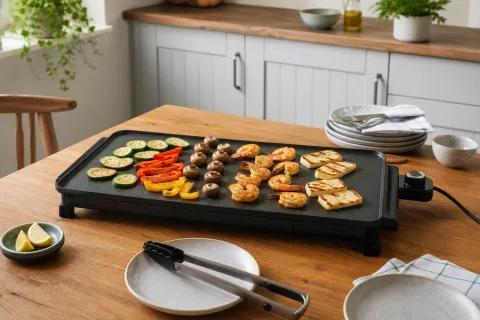
A raclette grill is at its best when the meal is slow, shared and table-centred. If you mainly want one large hotplate for cooking food quickly, a teppanyaki grill may be simpler. It gives you more continuous cooking space and avoids the pan-count question altogether.
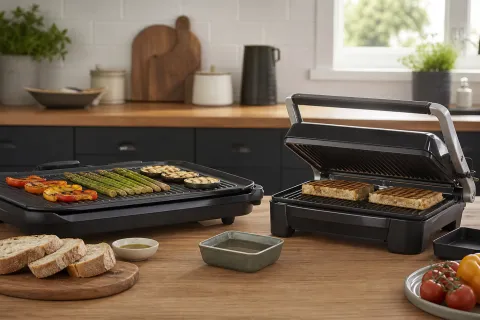
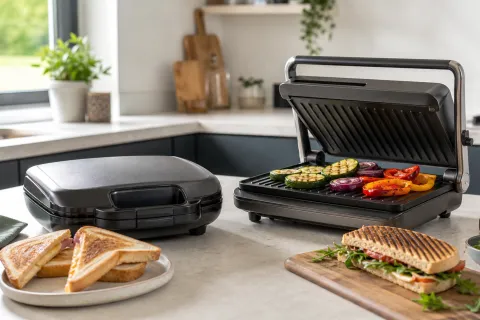
If you want a grill for repeat weekday meals, toasted sandwiches, burgers or chicken portions, an indoor grill can be the better everyday appliance. It is less of an event, but it is usually easier to use as a normal cooking tool.
Choose raclette for the table meal, teppanyaki for shared hotplate cooking, and an indoor grill for more regular kitchen use.
Simple checks before you choose
- Count the people who will eat at once. One pan each is the baseline.
- Decide whether spare trays matter. They help with relaxed grazing and second portions.
- Look at the top plate. It should be large enough for the food you actually plan to cook.
- Measure your table. Leave room for plates, bowls, heat-safe gaps and the power lead.
- Check cleaning before buying. Removable plates and simple tray shapes make a big difference after a long meal.
- Think about storage. Stone plates and eight-pan bodies can be heavy and awkward to lift.
The sensible raclette size for most homes
For two people, choose two pans when small portions and easy storage matter most, or four when spare heated positions will be useful. Four people can start with four to six pans; six to eight diners should look at eight, while checking the actual top-plate area and reach across the table.
The best raclette grill is not simply the one with the most pans. It is the one that lets everyone reach, melt, cook and eat comfortably around your actual table. Get that right, and the meal feels relaxed rather than crowded.
Sources and checks
Check the exact appliance measurements, operating clearances and care instructions before buying.
- VonShef 2000064 dimensions and contents shows how an eight-pan set’s body size, weight and interchangeable tops affect table space and storage.
- Salter EK4513 instruction manual explains stable heat-resistant placement, cooling and cleaning for that model.