In this article
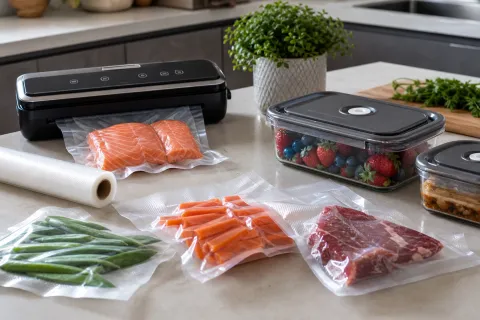
A vacuum sealer is worth it when you freeze food often enough for trapped air, awkward packaging or inconsistent portions to be a recurring problem. It can make packs flatter, reduce air around the food and create tidy portions for batch cooking or sous-vide preparation. It also brings an appliance, specialist bags or rolls, extra sealing steps and another surface to clean.
For occasional leftovers and food you will use soon, good freezer bags are usually enough. Press out as much air as practical, seal them carefully, freeze suitable food promptly and label each pack. Buy a vacuum sealer when you regularly freeze meat, fish, grated cheese, prepared ingredients or batch-cooked portions and you can point to food quality or freezer-space problems it would solve.
Vacuum sealer or freezer bags at a glance
| Decision | Ordinary freezer bags | Vacuum sealer |
|---|---|---|
| Best for | Occasional leftovers, soups, sauces and food used within a normal rotation | Frequent freezing, compact portions, awkward cuts and repeat sous-vide preparation |
| Air removal | Manual; good technique can remove most large pockets | More consistent around firm, dry foods |
| Wet or delicate food | Simple to fill and seal without crushing | Needs pulse/moist control, pre-freezing or a different container method |
| Pack sizes | Choose from standard bag sizes | Ready-made bags are quick; rolls can be cut for long or irregular items |
| Ongoing cost and waste | Low equipment cost; bags remain a consumable | Machine plus compatible textured bags or rolls; offcuts and double seals add up |
| Storage burden | A box or drawer of bags | Appliance, cable, spare rolls and a clear area for sealing |
Already know trapped air is the problem?
Compare our best vacuum sealers when you are ready to choose between compact basic machines and models with roll storage, cutters or gentler controls for moist and delicate food.
What removing air actually changes
Freezer burn happens when frozen food is exposed to cold, dry air and loses moisture. The Food Standards Agency describes it as a quality problem rather than a safety problem: the surface can dry out, develop ice crystals and become less pleasant to eat. Any sound airtight pack helps, so a vacuum sealer does not have exclusive ownership of the solution.
The sealer's advantage is repeatability. A pump draws a close-fitting bag around firm food before a heated strip closes the open end. That can leave less air around chops, steaks, fish portions, cheese and prepared vegetables than hurried hand-packing. The resulting packs are often compact and stack neatly.
The useful question is not whether vacuum sealing works. It is whether you lose enough food quality, time or freezer space for more consistent air removal to repay the equipment and consumables.
It cannot rescue food that is already deteriorating, sterilise a pack or make chilled food shelf-stable. Keep following use-by dates and food-specific storage instructions. Cool, refrigerate, freeze and defrost safely whether the pack contains air or not.
When freezer bags are all you need
Freezer bags* are the better tool when the food is wet, will be used soon or can be packed with little air. Soups, stews and sauces can be cooled, portioned and frozen flat without asking a suction channel to cope with liquid. Soft bread and delicate fruit are also less likely to be compressed.
Technique matters more than the appliance badge. Choose bags intended for freezing, use the right size, remove obvious air without forcing food towards the closure, and check the seal before the pack goes into a drawer. Flattening liquid food on a tray creates stackable packs once frozen. Labelling the contents, portion and date prevents a technically perfect seal from becoming an unidentified block at the back of the freezer.
Freezer bags also win for irregular leftovers. If you freeze one or two portions after an occasional roast or curry, taking out a machine, cutting material and making seals may be more work than the quality gain is worth.
Batch cooking is where a sealer can earn its place
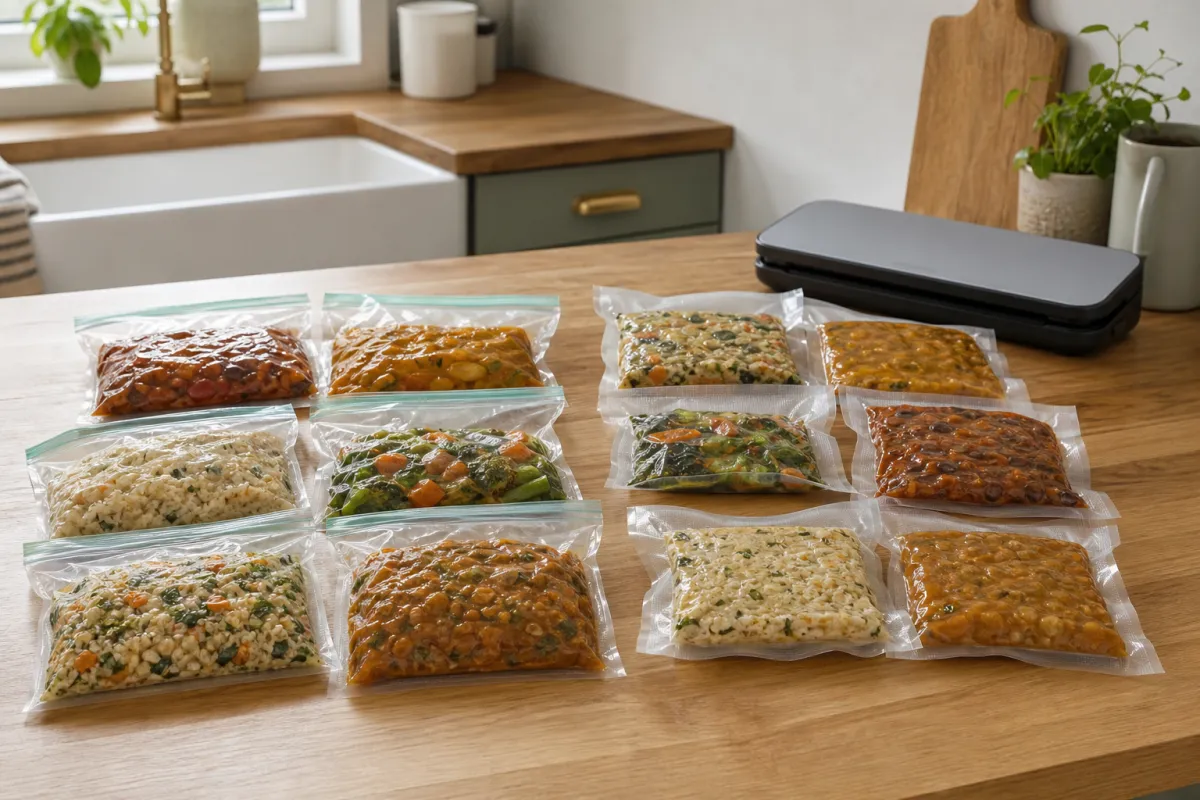
Frequent batch cooking changes the calculation because repetition rewards a repeatable process. Ten similar portions can be sealed, labelled and stacked with fewer bulky corners than a mixture of containers and loosely filled bags. Separating meat, fish, grated cheese or prepared ingredients into meal-sized packs also means you can defrost only what you need.
Cooked leftovers still need safe handling. The FSA advises cooling cooked food and putting it in the fridge or freezer within one to two hours, and freezing leftovers if they will not be eaten within 48 hours. A vacuum bag does not grant extra time on the worktop. Cool and portion first, then seal without contaminating the mouth of the bag.
The biggest gains tend to come from solid or partly frozen foods. For a saucy meal, freeze the portion in a suitable container or bag until firm before vacuum sealing if your machine's instructions permit it. That keeps liquid away from the pump and helps produce a clean seal.
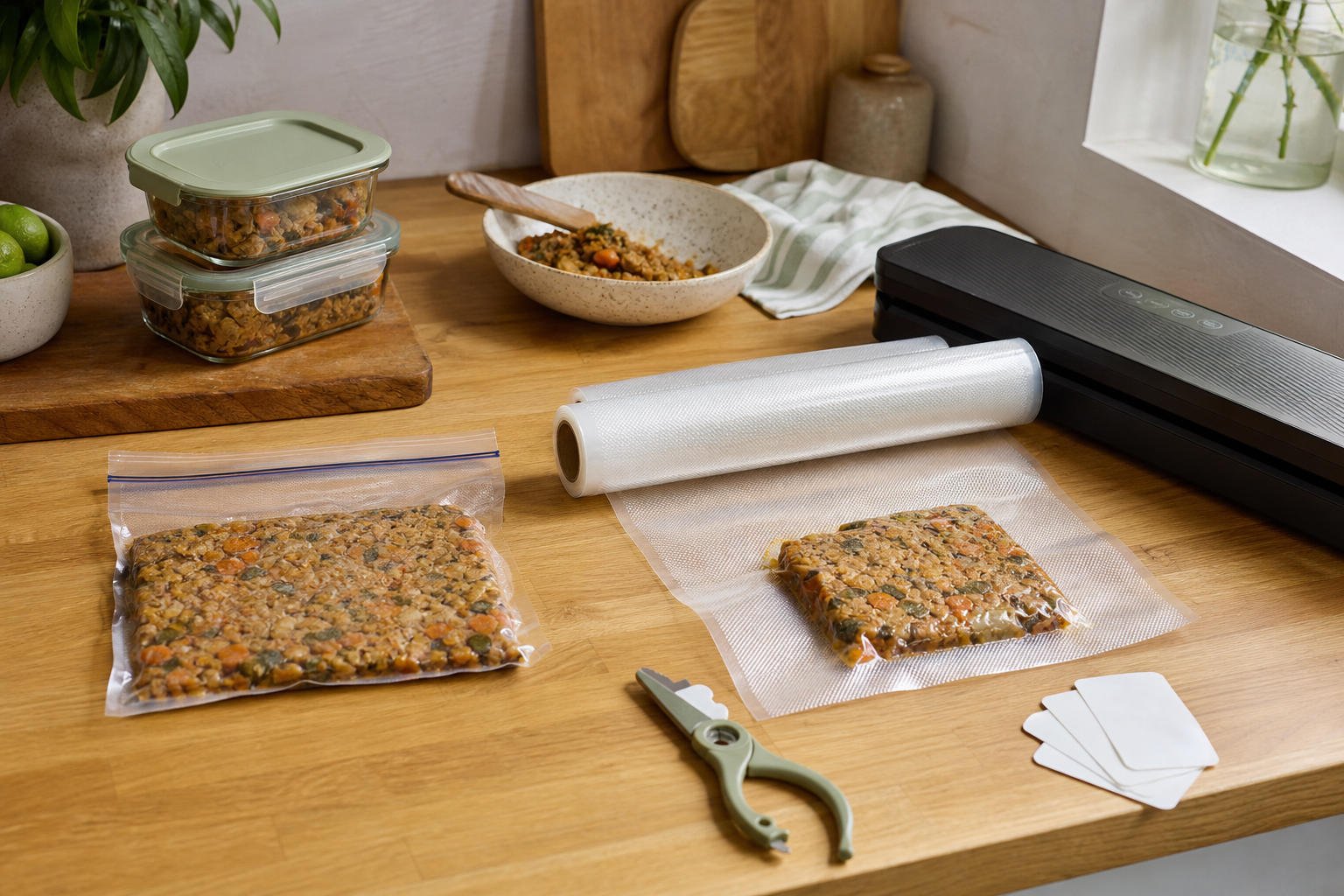 Portion first, keep sealing areas clean and label every pack. Rolls suit awkward sizes, while ready-made bags reduce preparation and extra seals.
Ready-made bags and rolls solve different problems
Pre-cut bags save time: fill the bag, keep the mouth clean and make one seal. They suit households that repeatedly freeze similar portions and know which sizes they use. Buying several sizes avoids wasting a large bag on a small amount of food.
Rolls let you choose the length, which is useful for long cuts, whole fish, bread or batches that do not fit standard bags. The trade-off is an extra seal at one end and the temptation to leave too much spare material. A built-in cutter and roll store can make this workflow quicker, but they also increase the machine's footprint.
Check compatibility before buying consumables. External-suction machines normally need textured or channelled material so air can travel to the pump; a smooth generic storage bag may not work. For heated cooking, use bags that the manufacturer explicitly states are suitable for the intended sous-vide temperature and duration. A bag being freezer-safe does not automatically make it a cooking bag.
Wet, delicate and sharp foods need more care
Liquid can be drawn towards the sealing area, while strong suction can squash berries, soft bread and fragile baked goods. Machines with pulse, gentle or moist-food controls offer more intervention, but they do not remove the need to prepare the pack carefully.
For wet food: chill it thoroughly, leave generous headroom and consider pre-freezing before sealing.
For delicate food: stop the vacuum early or freeze the item until firm enough to hold its shape.
For sharp bones or edges: protect the contact point and inspect the bag for punctures.
For powdery food: keep flour, spices or fine crumbs away from the suction channel and seal area.
Marinate modes can make it easier to contain meat and marinade neatly, and some machines cycle the vacuum automatically. Treat that as a convenience rather than a reason to buy the appliance. Flavour still depends on the ingredients, cut, surface area and time; follow the recipe and keep perishable food chilled.
Sous-vide cooking makes the case stronger, but not automatic
A vacuum sealer creates compact, closely wrapped packs that are convenient for sous-vide preparation, especially when you portion several meals at once. It can reduce floating caused by trapped air and make a labelled freezer-to-water-bath routine easier.
It is not essential for every sous-vide cook. Suitable resealable cooking bags can work for many recipes when air is displaced carefully. A sealer becomes more compelling when sous-vide is frequent, portions are prepared in advance or reliable repeatable packs matter more than keeping equipment to a minimum.
Follow the sous-vide machine and bag manufacturer's instructions for temperatures, cooking times, cooling and storage. Vacuum packaging changes the atmosphere around food; it does not replace food-safety controls.
Count the worktop and workflow cost
A slim sealer can still be awkward if it needs to be retrieved from a high cupboard, plugged in, allowed space for a long bag and then cleaned after every small job. Measure the machine and the working area in front of it. A model with internal roll storage may be deeper than a basic sealing bar, while a separate roll and cutter need their own drawer space.
Also consider noise, warm-up or cool-down pauses between repeated seals, and whether replacement rolls are easy to obtain. The cheapest machine is poor value if compatible bags are inconvenient or expensive enough that you avoid using it.
Cleaning is usually light when bag mouths remain dry and clean. Wet food changes that quickly. Removable drip trays help, but the best habit is to turn back the bag edge while filling, wipe it before sealing and avoid drawing liquid into the machine.
Use this six-question test before buying
Frequency: do you freeze solid food or meal portions most weeks?
Quality: do you regularly find trapped air, ice crystals or dried surfaces on food you intended to keep?
Volume: would compact labelled packs make a noticeable difference to freezer organisation?
Food type: are most packs firm enough to vacuum without crushing or pulling liquid into the seal?
Cooking: will you prepare sous-vide portions often enough to value consistent sealed bags?
Friction: is there an accessible place for the machine, rolls and cutting space?
Four or more confident yes answers make a sealer plausible. Two or three suggest improving your freezer-bag technique first. If most answers are no, the machine is likely to add more storage and plastic than useful convenience.
Verdict: worth it for a repeated storage problem
A vacuum sealer is not a general upgrade from freezer bags. It is a specialist answer to repeated air-removal and portioning problems. Frequent batch cooks, bulk buyers, anglers, households freezing meat or cheese, and regular sous-vide users are the most likely to benefit.
For everyone else, well-chosen freezer bags remain cheap, compact and capable. Pack food in useful portions, remove excess air, freeze it promptly and label it clearly. If that routine already keeps food in good condition until you use it, there is little for a sealer to improve.
Buy the appliance when you can name the weekly job it will do, not because vacuum-packed food looks organised.
Sources and checks
These UK sources help you verify the storage, safety and machine-feature details behind the decision.
Food Standards Agency freezing guidance: check current advice on cooling leftovers, freezer temperature, airtight packing, freezer burn, labelling and defrosting.
Food Standards Agency vacuum-packaging guidance: understand why removing oxygen does not replace strict temperature and shelf-life controls. The detailed guidance is written for food businesses, so household users should continue to follow product instructions and consumer storage advice.
FoodSaver UK multi-use sealer: see a current example of roll widths, an integrated cutter and moist, pulse, marinate and sous-vide modes before deciding which features would be useful.